APEC Second Senior Officials' Meeting Opens in Shanghai
Author
Date Published
Reading Time

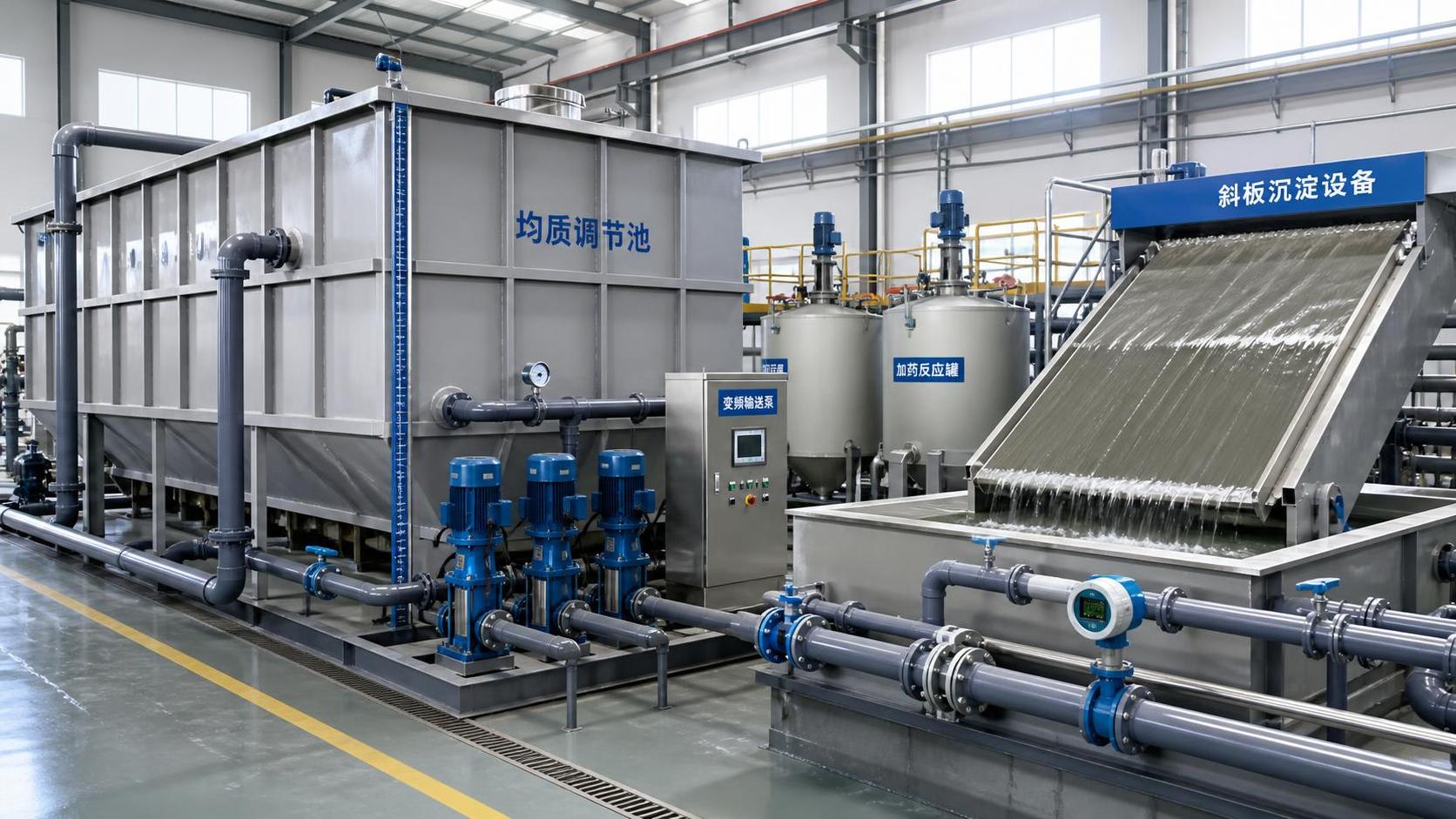
APEC’s Second Senior Officials’ Meeting opened in Shanghai on May 19, 2026, with China proposing the ‘Green Supply Chain Resilience Initiative’ and the ‘APEC Digital Customs Mutual Recognition Framework’. The initiative targets mutual recognition of industrial carbon footprint accounting methods, electronic consignment notes (e-CMR), and blockchain-based origin certificate verification. Industrial water treatment equipment, air purifiers, and dust control systems — key low-carbon industrial products — are among those expected to benefit from accelerated compliance and market access across APEC economies.
Event Overview
The APEC Second Senior Officials’ Meeting commenced in Shanghai on May 19, 2026. During the meeting, Chinese officials introduced two coordinated proposals: the ‘Green Supply Chain Resilience Initiative’ and the ‘APEC Digital Customs Mutual Recognition Framework’. These aim to harmonize technical standards across APEC member economies, specifically covering industrial carbon footprint calculation methodologies, electronic cargo manifests (e-CMR), and blockchain-secured origin certificates. No implementation timeline, participating economies list, or binding agreement status has been publicly confirmed at this stage.
Industries Affected
Industrial Equipment Exporters (e.g., Water Treatment Systems, Air Purifiers, Dust Collection Units)
These manufacturers face direct implications because their products fall within the scope of low-carbon industrial goods cited in the initiative. Impact centers on future regulatory alignment: standardized carbon accounting and digital customs documentation may reduce conformity assessment delays and duplicate testing requirements when exporting to APEC markets.
Supply Chain Service Providers (e.g., Logistics Platforms, Certification Bodies, Blockchain Infrastructure Providers)
Service providers supporting cross-border trade operations — especially those offering e-CMR integration, carbon data verification, or distributed ledger solutions for trade documents — may see increased demand as APEC economies begin aligning systems. Their role is operational rather than strategic; adoption depends on national implementation choices, not the initiative itself.
Importers and Distributors in APEC Markets
Companies importing industrial environmental equipment into APEC economies could experience shorter clearance times and reduced administrative friction — but only after domestic regulatory authorities adopt and enforce the proposed frameworks. Current impact remains preparatory, not operational.
What Enterprises and Practitioners Should Monitor and Do Now
Track official APEC working group outputs and national regulatory roadmaps
The initiative is currently a proposal under discussion. Enterprises should monitor publications from APEC’s Committee on Trade and Investment (CTI) and its subgroups — particularly the Standards and Conformance Steering Group — for draft technical specifications or pilot program announcements. National customs and standardization bodies (e.g., SAC in China, JISC in Japan, ANSI in the U.S.) will determine local adoption paths.
Identify priority export markets where digital customs infrastructure is already advanced
Not all APEC economies possess equivalent readiness for e-CMR or blockchain-based origin verification. Countries with existing national single-window systems (e.g., Singapore, Australia, South Korea) are more likely to pilot or implement elements of the framework first. Exporters should prioritize engagement in these jurisdictions for early feedback and alignment.
Distinguish between policy signal and enforceable requirement
This is not a binding agreement or regulation. Analysis shows it functions primarily as a coordination mechanism — signaling intent, not mandating action. Companies should avoid treating it as an immediate compliance trigger; instead, treat it as a medium-term horizon for documentation and sustainability reporting system upgrades.
Review current carbon data collection and digital document workflows
Manufacturers exporting industrial air/water/dust control equipment should audit whether their product-level carbon footprint data meets ISO 14067 or PAS 2050 conventions — common reference points in APEC discussions. Similarly, assess whether ERP or logistics platforms support structured e-CMR data exchange (e.g., via UN/CEFACT standards). Gaps identified now can inform phased IT upgrades over the next 12–24 months.
Editorial Perspective / Industry Observation
Observably, this initiative reflects a growing institutional emphasis on interoperability — not just environmental performance — as a driver of supply chain efficiency. It does not introduce new emissions targets or tariffs, but seeks to lower transaction costs for verified low-carbon goods. From an industry perspective, it is best understood as a procedural signal: one that prioritizes harmonized measurement and trusted digital records over substantive policy convergence. Its real-world impact remains contingent on voluntary national implementation and technical capacity building — meaning sustained attention over multiple APEC cycles is warranted, rather than expecting near-term regulatory shifts.
Conclusion
While the APEC Second Senior Officials’ Meeting marks a formal step toward greener and more digitally integrated trade governance, its immediate effect on industrial equipment exporters and service providers is limited to agenda-setting and coordination. It signals emerging priorities in carbon data transparency and paperless customs processes — but does not yet constitute an operational framework. Currently, it is more appropriately understood as a diplomatic milestone with procedural implications, not a regulatory inflection point.
Information Sources
Main source: Official APEC Secretariat announcement regarding the May 19, 2026, Second Senior Officials’ Meeting in Shanghai.
Note: Technical details of the ‘Green Supply Chain Resilience Initiative’ and ‘Digital Customs Mutual Recognition Framework’, including scope, participating economies, and implementation milestones, remain under intergovernmental consultation and are subject to change. Continued observation of APEC working group outputs is recommended.
Technical Specifications
- How to Select Electronic Hotel Key Card Locks for Guest Rooms and Staff AreasAuthor :Safety Compliance Lead
- How to Select Lab Instruments for Reliable Chemical Analysis WorkflowsAuthor :Precision Metrology Expert
- How to Size a UPS for Server Rooms: Load, Runtime, and Redundancy FactorsAuthor :Grid Infrastructure Analyst
Expert Insights

Chief Security Architect
Dr. Thorne specializes in the intersection of structural engineering and digital resilience. He has advised three G7 governments on industrial infrastructure security.
Related Analysis
- Sep 17, 2026How to Select Electronic Hotel Key Card Locks for Guest Rooms and Staff AreasAuthor :Safety Compliance Lead
- Sep 16, 2026How to Select Lab Instruments for Reliable Chemical Analysis WorkflowsAuthor :Precision Metrology Expert
- Sep 15, 2026How to Size a UPS for Server Rooms: Load, Runtime, and Redundancy FactorsAuthor :Grid Infrastructure Analyst
Core Sector // 01
Security & Safety
- How to Size a Wafer Butterfly Valve for HVAC Chilled-Water and Heating LoopsAuthor :Environmental Engineering Director

- How Pressure Class and Joint Design Affect Long-Term Performance of Ductile Iron Pipes in Drainage InfrastructureAuthor :Environmental Engineering Director

- How Ductile Iron Pipe Joints Affect Installation Reliability and Leak ControlAuthor :Environmental Engineering Director

- How to Size Effluent Treatment Equipment for Variable Industrial Wastewater LoadsAuthor :Environmental Engineering Director

- US Battery Push Raises New Entry Rules for SuppliersAuthor :Environmental Engineering Director

- EU EMC Rule Tightens for Water Treatment ExportsAuthor :Environmental Engineering Director

- EU REACH Restriction Targets PFAS Water Treatment ImportsAuthor :Environmental Engineering Director

- EU Mandates EN 14113:2026 for Water Treatment ExportsAuthor :Environmental Engineering Director