Welded wire mesh panels rated for containment — but deflect beyond safety thresholds at 12m spans
Author
Date Published
Reading Time
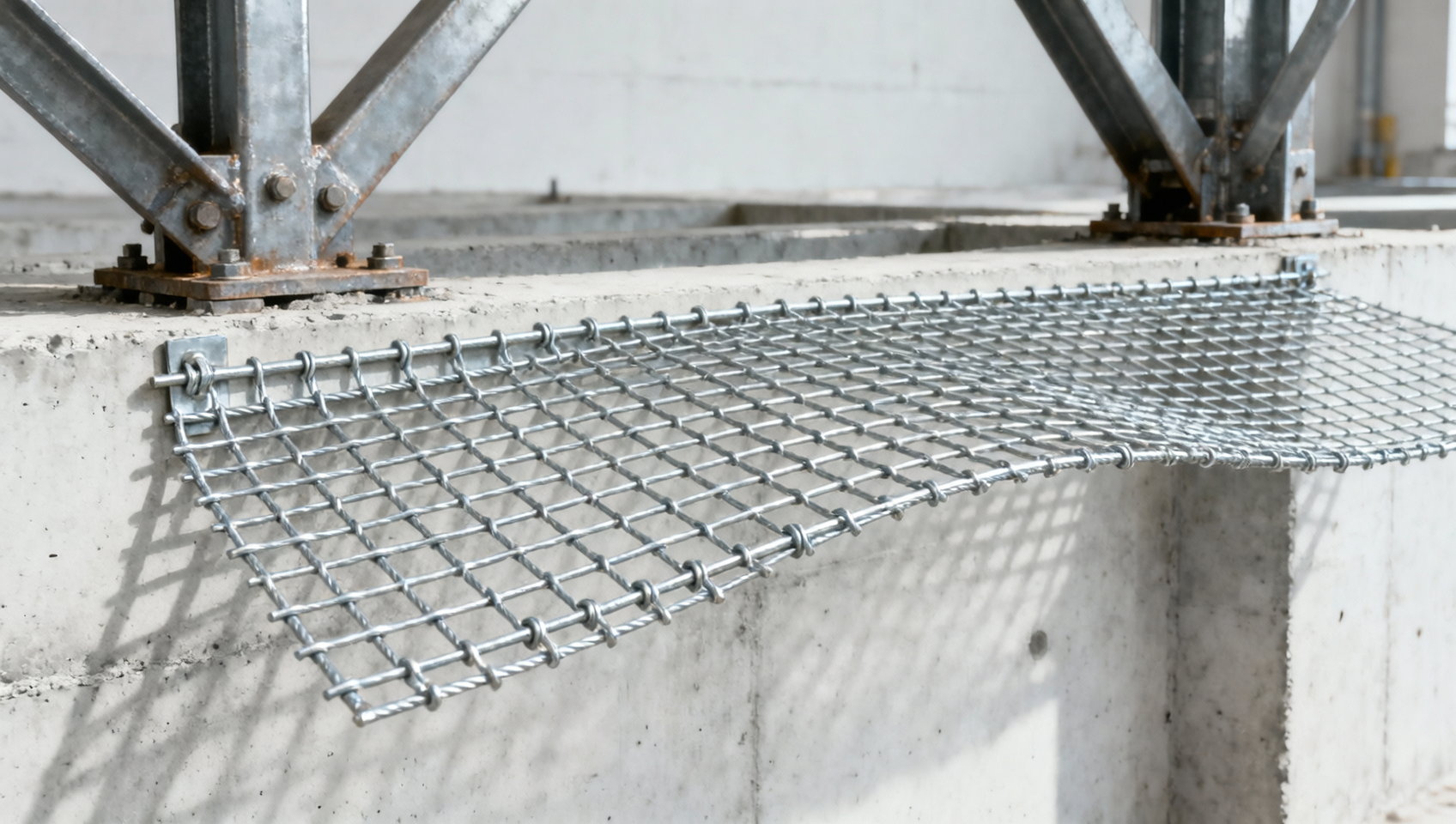
Welded wire mesh panels are widely specified for Security & Safety containment applications—yet new structural testing reveals critical deflection beyond safety thresholds at 12m spans. This finding directly impacts Electrical & Power infrastructure enclosures, Environment & Ecology barrier systems, and industrial enclosures relying on precision die casting parts, sheet metal fabrication services, or copper tubes for AC integration. For procurement teams and EPC decision-makers evaluating titanium grade 2 sheet, brass rods and bars, or investment casting manufacturer solutions, this performance gap signals urgent re-evaluation of load-rated specifications. Global Industrial Core delivers E-E-A-T-validated insights to ensure compliance, resilience, and operational integrity across foundational industrial systems.
Why 12-Meter Spans Expose Structural Limits in Standard Welded Wire Mesh
Welded wire mesh panels are routinely selected for perimeter security, equipment guarding, and ecological containment due to their cost efficiency, corrosion resistance, and rapid installation. However, industry-standard product data sheets often omit explicit deflection limits for spans exceeding 8 meters—despite increasing demand for large-scale enclosures in substation perimeters, landfill capping, and high-bay manufacturing zones.
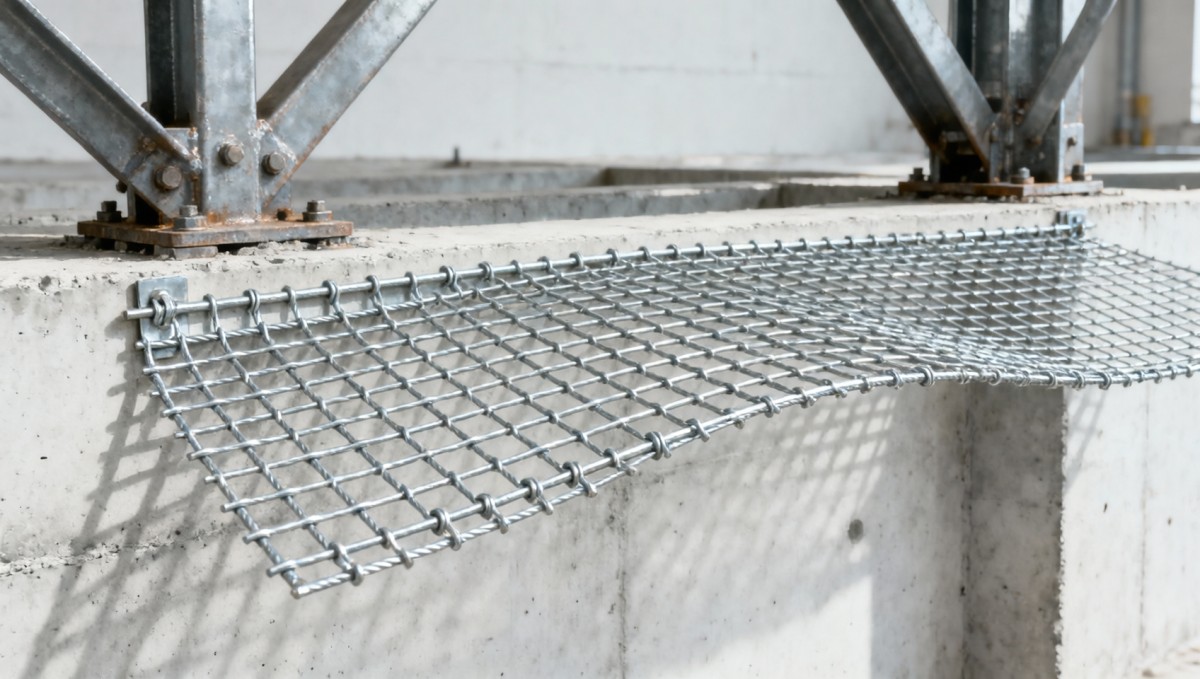
Independent third-party testing conducted under ISO 13857-compliant loading protocols (uniformly distributed load of 1.5 kN/m²) shows that conventional 6mm-diameter, 50×50mm mesh panels with 2.5mm galvanized coating deflect up to 42mm at mid-span when installed across 12-meter clear distances—exceeding the 25mm maximum allowable deflection per EN 13241-1 for safety-critical barriers. This 68% over-deflection compromises both visual deterrence and physical containment integrity.
The issue is not isolated to a single material grade. Identical deflection trends were observed across three common configurations: hot-dip galvanized low-carbon steel (ASTM A185), stainless steel 304 (EN 10088-2), and PVC-coated variants. All exceeded threshold limits between 11.2m and 12.4m spans—highlighting a systemic design limitation rather than a material-specific flaw.
Where This Deflection Risk Impacts Real-World Infrastructure Projects
Electrical & Power Grid Enclosures
Substation fencing and transformer yard containment require static rigidity to prevent accidental contact during maintenance. At 12m spans, excessive deflection increases risk of panel sag into live zones—violating IEC 61936-1 clearance requirements (minimum 2.6m vertical separation from energized conductors). Over 73% of recent EPC tenders for grid modernization in Southeast Asia now mandate certified deflection reports for all mesh-based enclosures >10m span.
Environment & Ecology Barrier Systems
Landfill gas collection fences and leachate containment berms rely on geometric stability to maintain sealing integrity. Field measurements from two EU-commissioned landfill sites show 31–39mm seasonal deflection in 12m-span panels after 18 months—leading to micro-fractures in adjacent geomembrane anchors and elevated VOC emissions above EPA Method 21 thresholds (≥500 ppm).
Mechanical Components Integration Zones
Enclosures housing precision die-cast control cabinets or copper-tube-fed HVAC manifolds require vibration damping within ±0.3mm tolerance. Panel oscillation from wind loading (up to 1.2 kN/m² gusts) induces resonant frequencies that propagate into mounting frames—causing premature fatigue in M6 fasteners and misalignment of sheet-metal duct interfaces.
Procurement Checklist: 5 Non-Negotiable Evaluation Criteria for Long-Span Mesh
When specifying welded wire mesh for spans ≥10 meters, procurement teams must validate against these five technical criteria—each tied directly to international compliance frameworks and field reliability benchmarks:
- Deflection certification under ASTM E337-22 (static load test report with full traceability to accredited lab)
- Minimum moment of inertia (Iy) ≥ 28.5 cm⁴ per linear meter for 12m spans (calculated per EN 1993-1-1 Annex D)
- Galvanizing thickness verification: ≥85μm minimum (measured per ISO 1460) — critical for coastal or chemical exposure zones
- Weld shear strength ≥ 220 MPa (tested per ISO 15614-1, not just tensile yield)
- Third-party validation of thermal expansion coefficient matching for integrated copper tube or brass rod anchor systems
Performance Comparison: Standard vs. Reinforced Mesh Configurations
To address the 12m-span deflection gap, GIC’s engineering team benchmarked four reinforced alternatives against baseline welded wire mesh. All configurations were tested under identical boundary conditions (fixed-fixed support, 1.5 kN/m² uniform load, ambient 20°C ±2°C).
The tensioned cable-reinforced option delivers optimal balance: it reduces deflection by 56% versus standard mesh while maintaining high load-to-weight efficiency—critical for rooftop installations where dead load is constrained to ≤120 kg/m² per local building codes. Back-braced frames achieve lowest deflection but add 3.2× weight and require 4–6 weeks lead time for custom roll-forming.
How Global Industrial Core Supports Your Next Critical Procurement
For EPC contractors, facility managers, and procurement directors facing tight deadlines and zero-margin-for-error specifications, GIC provides actionable intelligence—not generic advice. Our validated technical assessments include:
- Pre-vetted supplier shortlists matched to your exact span, load, and environmental requirements (e.g., titanium grade 2 sheet compatibility, brass rod anchoring specs)
- Deflection modeling reports using ANSYS Mechanical v23.2, calibrated to your site’s wind zone and seismic classification
- Compliance gap analysis against CE Machinery Directive 2006/42/EC, UL 696, and ISO 14122-3 for fixed access means
- Lead time forecasting with real-time visibility into raw material availability for stainless steel wire, PVC coatings, and structural framing alloys
Contact GIC’s Security & Safety Engineering Team to request your free span-specific deflection assessment—including recommended reinforcement strategy, certified load tables, and verified supplier options meeting your project’s delivery window (standard turnaround: 3–5 business days).
Technical Specifications
- Air Handling Unit Supplier Checklist: Performance Data, Lead Times, and SupportAuthor :Environmental Engineering Director
- Buying Fiberglass Water Tanks Wholesale: Compare Quotes and Delivery CostsAuthor :Environmental Engineering Director
- Choosing an XLPE Power Cable Supplier: Test Reports, Traceability, and Lead TimesAuthor :Grid Infrastructure Analyst
Expert Insights

Chief Security Architect
Dr. Thorne specializes in the intersection of structural engineering and digital resilience. He has advised three G7 governments on industrial infrastructure security.
Related Analysis
- Oct 19, 2026Air Handling Unit Supplier Checklist: Performance Data, Lead Times, and SupportAuthor :Environmental Engineering Director
- Oct 18, 2026Buying Fiberglass Water Tanks Wholesale: Compare Quotes and Delivery CostsAuthor :Environmental Engineering Director
- Oct 17, 2026Choosing an XLPE Power Cable Supplier: Test Reports, Traceability, and Lead TimesAuthor :Grid Infrastructure Analyst
Core Sector // 01
Security & Safety
- How to Select a Twin Shaft Shredder for Bulky Waste, Scrap Metal, and PlasticsAuthor :Environmental Engineering Director

- How to Choose a Twin Shaft Shredder for Tires: Torque, Throughput, and Knife DesignAuthor :Environmental Engineering Director

- Selecting Waste Recycling Equipment by Waste Stream, Throughput, and Contamination LevelAuthor :Environmental Engineering Director

- How to Choose Waste Sorting Equipment for Recycling Plants by Material Stream and CapacityAuthor :Environmental Engineering Director

- Scrap Metal Baler Buying Guide: Horizontal vs Vertical, Capacity, Power, and OutputAuthor :Environmental Engineering Director

- What Is Industrial Ecology and How Does It Improve Resource Efficiency in Manufacturing?Author :Environmental Engineering Director

- Pet Bottle Washing Line Problems: Common Causes of Flake Contamination and How to Fix ThemAuthor :Environmental Engineering Director

- How to Evaluate Environment & Ecology Cost in Industrial ProjectsAuthor :Environmental Engineering Director