How to vet an Environment & Ecology exporter for reliable delivery
Author
Date Published
Reading Time
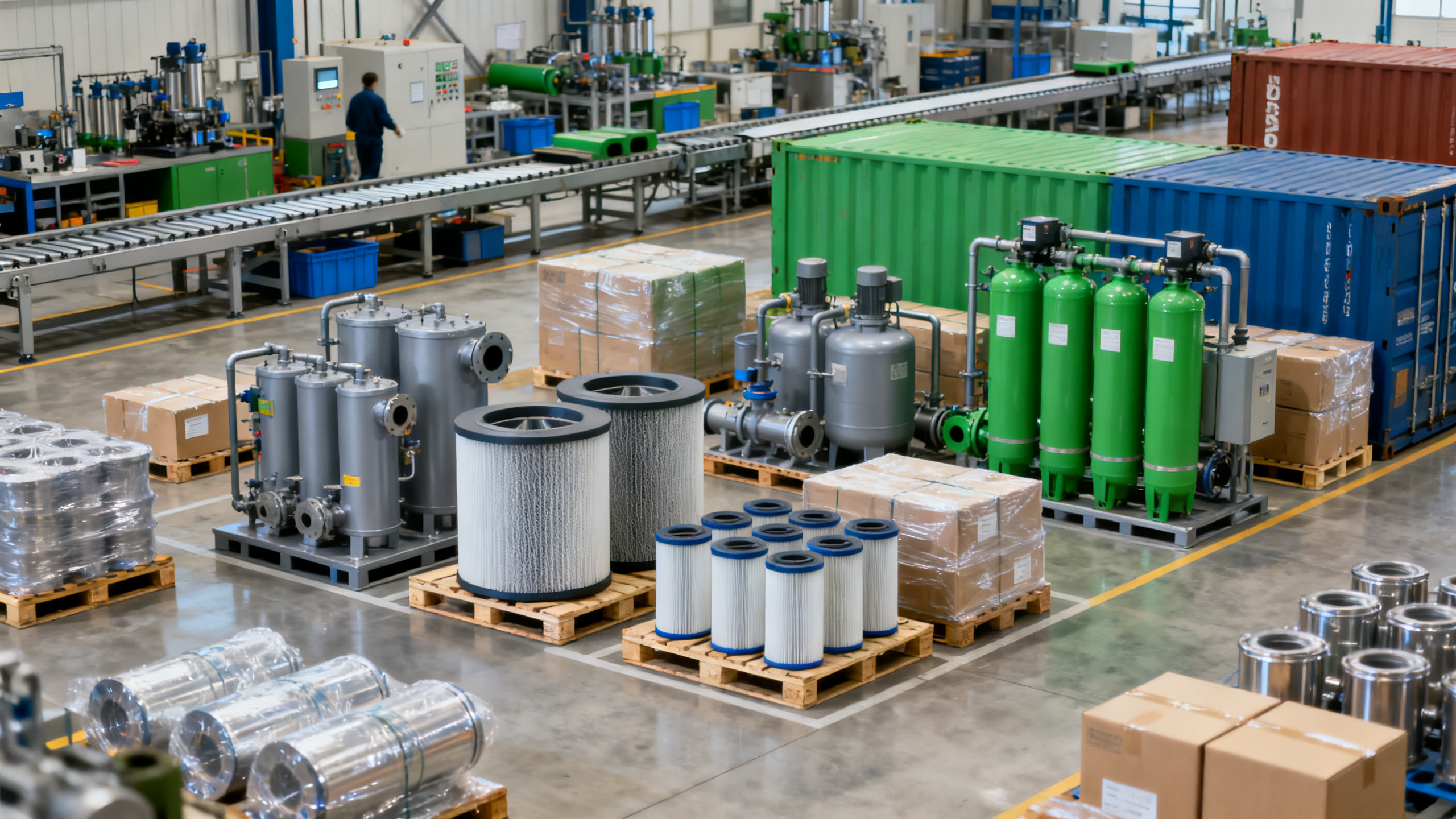
Choosing the right Environment & Ecology exporter can determine whether your projects stay on schedule or face costly disruptions. For distributors, agents, and channel partners, vetting an exporter goes beyond price—it requires checking compliance, production stability, logistics capability, and after-sales responsiveness. This guide outlines how to assess suppliers with confidence and secure reliable delivery in competitive industrial markets.
In industrial supply chains, environmental and ecological products often support air filtration, wastewater treatment, dust control, emissions management, spill containment, and related compliance-driven applications. A missed shipment of 2 weeks can stall an EPC package, delay commissioning, or expose an end user to regulatory penalties. That is why a reliable Environment & Ecology exporter should be evaluated as an operational partner, not just a vendor.
For distributors and agents, the challenge is sharper. You are expected to protect margin, reduce claim rates, and preserve customer trust across multiple markets at once. A structured vetting process helps you compare exporters on measurable criteria such as document accuracy, lead-time consistency, packaging standards, and response speed when issues occur.
Define what reliable delivery really means in Environment & Ecology trade
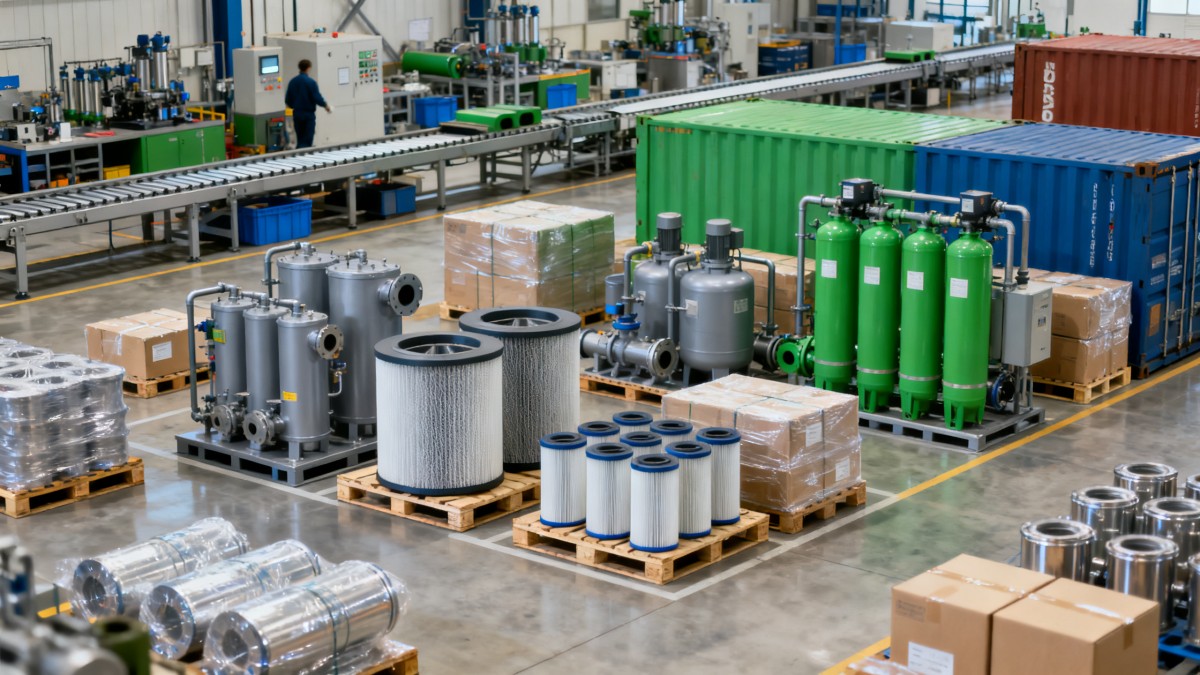
Before screening any Environment & Ecology exporter, clarify what “reliable delivery” means for your business model. In most industrial channels, it includes 4 core outcomes: compliant products, stable production, predictable transit, and effective post-shipment support. If one of these fails, the total landed cost rises quickly through rework, penalties, storage charges, or emergency sourcing.
A distributor handling environmental equipment may accept a 25–35 day standard lead time if quality variation stays within agreed tolerances and shipping documents are correct on the first submission. By contrast, an agent supporting project tenders may need partial deliveries in 7–10 day batches and technical files within 48 hours. The exporter should be assessed against your real order pattern, not a generic benchmark.
Typical product categories with delivery sensitivity
- Water and wastewater treatment components
- Air pollution control media and filtration elements
- Industrial absorbents, liners, and containment materials
- Dust suppression, odor control, and site remediation supplies
- Monitoring accessories linked to environmental compliance systems
What channel partners should measure
Ask whether the Environment & Ecology exporter can hold a 90%+ on-time shipment rate over a 6- to 12-month period, maintain batch traceability for at least 3 years, and provide replacement or corrective action within 72 hours after a documented quality complaint. These are more practical indicators than marketing claims about service excellence.
The table below helps define the main delivery-risk dimensions that matter when selecting an exporter for industrial environmental supply.
This framework shows why the lowest quote rarely equals the safest choice. In many Environment & Ecology projects, one documentation error or one damaged shipment can erase the savings from a 3%–5% price advantage.
Verify compliance, technical fit, and document control
A serious Environment & Ecology exporter should be able to present technical and commercial documents in a controlled, repeatable format. This includes specifications, inspection records, packaging lists, certificates where applicable, and product identification tied to batches or production dates. If documents change each time or arrive late, delivery reliability is already at risk.
Check documents in 3 layers
- Product layer: data sheets, materials, dimensions, compatibility, operating range.
- Compliance layer: market-required declarations, test references, labeling, HS code accuracy.
- Shipment layer: packing list, invoice, marks, origin documents, inspection notes.
Technical points distributors often miss
For environmental consumables and components, small specification gaps can become field failures. Examples include media density, micron rating, corrosion resistance, chemical compatibility, temperature range, or dimensional tolerance such as ±1 mm versus ±3 mm. A buyer should match these parameters to the end-use environment instead of relying only on a catalog description.
If the exporter supplies site-critical items for wastewater or air handling systems, ask for pre-shipment verification against 5 to 8 key parameters. This is especially useful when the order includes mixed SKUs, custom-cut items, or private-label packaging for regional resale.
Questions to ask before the first trial order
- How many working days are needed to issue a full documentation set?
- Can the exporter maintain the same bill of materials for 12 months?
- What percentage of orders require corrective shipping documents?
- Which items are made in-house and which are outsourced?
- Is there a lot-number system for tracing complaints back to production?
A reliable Environment & Ecology exporter should answer these clearly and without delay. Slow or vague responses during qualification usually become bigger problems once volume increases.
Assess production capacity and supply continuity
Delivery performance depends on more than factory size. What matters is whether the exporter can absorb demand swings, manage raw-material substitution carefully, and keep lead times stable during peak periods. For many industrial environmental products, actual risk appears when monthly volume doubles or when a key input becomes constrained.
Look beyond nominal capacity
Nominal capacity may show what a factory can produce in ideal conditions, but channel partners need usable capacity. Ask for normal monthly output, peak output, and average lead time under both conditions. For example, a plant may quote 20,000 units per month, but only 12,000 units may be realistic with standard quality checks and export packing.
Also confirm whether the Environment & Ecology exporter depends on a single upstream source for specialty media, activated materials, molded parts, or chemical inputs. If there is no approved backup source, a 1- or 2-week supply interruption can affect every order in the queue.
Use the following scorecard to compare production resilience across shortlisted exporters.
This comparison often reveals whether an exporter is prepared for regional distribution growth. A supplier that performs well at 2 pallets may struggle at 2 containers unless systems, staffing, and sourcing discipline are already in place.
How to validate with a staged trial
Instead of jumping directly into annual volume, run a 3-step qualification. Start with a sample or pilot batch, then place a mixed-SKU trial order, and finally test a repeat order under tighter timing. This sequence can be completed in 6–10 weeks and gives better insight than a factory presentation alone.
Audit logistics execution and packaging discipline
Even when product quality is acceptable, poor logistics can damage trust quickly. Environmental materials may be moisture-sensitive, crush-prone, chemically reactive, or difficult to handle after arrival. A dependable Environment & Ecology exporter should control packaging, labeling, loading sequence, and shipping communication with the same rigor used in production.
Key logistics checks for channel partners
- Carton and pallet labeling must match invoice and packing list exactly.
- Outer packaging should reflect transport mode: courier, LCL, FCL, or project cargo.
- Photos of packed goods should be available before dispatch.
- Container loading plans should prevent compression, moisture intrusion, and mixed-SKU confusion.
- Shipping updates should follow agreed milestones every 3–5 days for longer routes.
Incoterms clarity reduces avoidable disputes
Many delivery disputes are commercial, not technical. If the Environment & Ecology exporter uses EXW, FOB, CIF, or DDP inconsistently, costs and responsibilities become blurred. Make sure quotation terms, insurance expectations, pallet standards, and destination handling assumptions are confirmed before order release.
For repeat business, it is worth building a logistics checklist with 8 to 10 fixed control points. This reduces dependence on individual sales staff and makes shipment quality more repeatable across different order sizes and destinations.
Review communication discipline, claims handling, and long-term fit
A strong Environment & Ecology exporter is not judged only by the orders that go well. The real test comes when specifications change, customs request additional files, or a customer reports field issues. Exporters that respond within 24 hours, assign clear owners, and provide corrective action timelines are much easier to scale with in distribution networks.
Signs of a mature exporter relationship model
- Named contact points for sales, documentation, quality, and logistics.
- Complaint acknowledgment within 1 business day.
- Root-cause feedback within 3–7 business days for standard cases.
- Agreed remedy path: replacement, credit, rework, or technical guidance.
- Quarterly review of delivery, quality, and forecast alignment.
Common red flags
Be cautious if the exporter avoids plant visibility, changes specifications without formal notice, refuses sample retention, or provides inconsistent answers between sales and operations teams. Another warning sign is aggressive pricing tied to unclear packaging, mixed production routes, or unexplained minimum order jumps.
For distributors and agents, long-term fit also includes market support. Can the exporter supply neutral packaging, multilingual labels where legally required, and stable documentation for tenders? Can they support forecast planning over 90-day windows? These factors affect your ability to grow account penetration without recurring friction.
A practical decision model
Use a weighted review across 5 categories: compliance, quality consistency, capacity, logistics, and service response. Many channel partners assign 20% to each category, while project-driven buyers may raise compliance and logistics to 25% each. Score each exporter on a 1-to-5 scale and require a minimum total of 4.0 before approving them for larger-volume business.
Vetting an Environment & Ecology exporter in this way helps prevent hidden delivery costs and protects downstream customer relationships. It also gives your team a repeatable process for onboarding new supply partners across different environmental product lines.
Reliable delivery in the Environment & Ecology segment comes from disciplined supplier evaluation: clear compliance checks, realistic capacity validation, strong logistics control, and responsive after-sales support. For distributors, agents, and industrial channel partners, the best exporter is usually the one that can deliver consistent performance across 3, 6, and 12 months—not simply the one with the fastest quote or lowest opening price.
If you are comparing exporters for environmental and industrial infrastructure supply, Global Industrial Core can help you sharpen your sourcing criteria, reduce qualification risk, and identify suppliers that fit demanding delivery requirements. Contact us to discuss your sourcing scenario, request a tailored evaluation framework, or explore more Environment & Ecology solutions for your market.
Technical Specifications
- How to Select an Emissions Monitoring System Analyzer for Compliance ReportingAuthor :Precision Metrology Expert
- How to Select an Access Control Management System for Multi-Site FacilitiesAuthor :Safety Compliance Lead
- Portable Gas Monitor Calibration: How Often Is It Needed for Safe Confined-Space Work?Author :Precision Metrology Expert
Expert Insights

Chief Security Architect
Dr. Thorne specializes in the intersection of structural engineering and digital resilience. He has advised three G7 governments on industrial infrastructure security.
Related Analysis
- Sep 21, 2026How to Select an Emissions Monitoring System Analyzer for Compliance ReportingAuthor :Precision Metrology Expert
- Sep 20, 2026How to Select an Access Control Management System for Multi-Site FacilitiesAuthor :Safety Compliance Lead
- Sep 19, 2026Portable Gas Monitor Calibration: How Often Is It Needed for Safe Confined-Space Work?Author :Precision Metrology Expert
Core Sector // 01
Security & Safety
- How to Choose a Twin Shaft Shredder for Tires: Torque, Throughput, and Knife DesignAuthor :Environmental Engineering Director

- Selecting Waste Recycling Equipment by Waste Stream, Throughput, and Contamination LevelAuthor :Environmental Engineering Director

- How to Choose Waste Sorting Equipment for Recycling Plants by Material Stream and CapacityAuthor :Environmental Engineering Director

- Scrap Metal Baler Buying Guide: Horizontal vs Vertical, Capacity, Power, and OutputAuthor :Environmental Engineering Director

- What Is Industrial Ecology and How Does It Improve Resource Efficiency in Manufacturing?Author :Environmental Engineering Director

- Pet Bottle Washing Line Problems: Common Causes of Flake Contamination and How to Fix ThemAuthor :Environmental Engineering Director

- How to Evaluate Environment & Ecology Cost in Industrial ProjectsAuthor :Environmental Engineering Director

- Why does a magnetic separator machine lose efficiency?Author :Environmental Engineering Director