What drives Environment & Ecology costs in new projects
Author
Date Published
Reading Time
For finance approvers evaluating new capital projects, understanding what shapes Environment & Ecology cost is essential to controlling risk, ensuring compliance, and protecting long-term returns.
From permitting and emissions control to waste treatment, site conditions, and monitoring requirements, these costs can escalate quickly if overlooked.
This article explains the main cost drivers, where budgets usually fail, and how early planning supports stronger investment decisions.
What finance approvers need to know first about Environment & Ecology cost
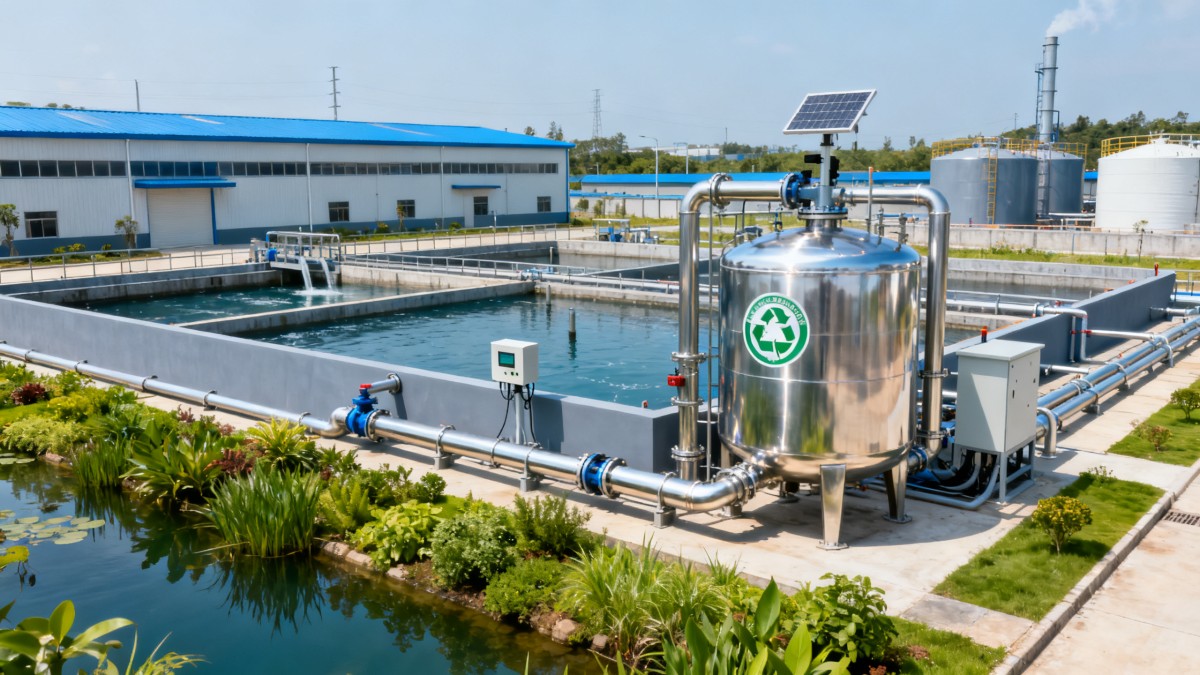
The biggest driver of Environment & Ecology cost is not a single equipment line item. It is the combined effect of compliance scope, site-specific risk, and lifecycle obligations.
In new projects, environmental spending rises fastest when decisions are delayed. Late studies, incomplete design inputs, and underestimated permit conditions typically create the largest budget gaps.
For financial reviewers, the key question is simple: are environmental costs being treated as a strategic project requirement, or as a late-stage compliance add-on?
Projects in manufacturing, energy, processing, warehousing, mining, and infrastructure all face this issue. The exact mix changes, but the cost pattern is consistent across sectors.
Early planning usually reduces rework, procurement changes, schedule slippage, and exposure to penalties. That makes Environment & Ecology cost a capital efficiency issue, not only a regulatory one.
Why these costs vary so much from one project to another
Finance teams often expect environmental budgets to scale mainly with project size. In reality, cost variation is more strongly influenced by impact profile, location, and regulatory complexity.
A mid-sized project in a sensitive watershed or near residential areas may cost more environmentally than a larger project on a low-risk industrial site.
The approval pathway also matters. Some jurisdictions require extensive baseline studies, public consultation, biodiversity review, and long-term post-approval monitoring.
Where multiple agencies are involved, timelines lengthen and consultant costs increase. Design revisions may also be required to satisfy conflicting or evolving permit conditions.
For this reason, finance approvers should not benchmark Environment & Ecology cost only by percentage of total capex. Risk-adjusted context is the better lens.
Permitting and regulatory approvals are often the first major cost driver
Permitting is usually the earliest visible environmental expense, but it is rarely limited to application fees. The larger cost lies in the technical work needed to secure approvals.
This may include environmental impact assessments, air dispersion modeling, groundwater studies, stormwater plans, noise analysis, habitat surveys, and community documentation.
If the project site has contamination history, protected species, wetlands, or water discharge restrictions, the supporting studies become more extensive and more expensive.
Schedule pressure makes this worse. Expedited studies, revised submissions, and prolonged regulator engagement increase soft costs before any physical mitigation system is installed.
For finance decision-makers, a useful test is whether the permit budget includes both direct filing charges and the full technical package needed to obtain approval.
Emissions control and pollution abatement can reshape capital budgets quickly
Air emissions control is one of the most significant contributors to Environment & Ecology cost in industrial projects. It often affects both capex and long-term operating expenditure.
Required systems may include scrubbers, bag filters, catalytic reduction units, thermal oxidizers, dust collection systems, vapor recovery units, or stack monitoring equipment.
The final cost depends on pollutant type, process intensity, local emissions thresholds, and redundancy requirements. Tighter limits usually mean more sophisticated technology and higher installation complexity.
Pollution control costs also extend beyond the equipment package. Ducting, structural supports, controls integration, utilities demand, and footprint changes can materially alter project economics.
Finance approvers should ask whether the chosen process design minimizes treatment needs upstream. Prevention at source is often cheaper than end-of-pipe correction.
Water, wastewater, and stormwater management are frequent sources of underestimation
Many new projects underestimate water-related environmental obligations. Yet intake, discharge, storage, reuse, and runoff control can become major budget drivers very early in design.
Costs typically include wastewater treatment units, oil-water separation, chemical dosing, lined containment, drainage networks, retention ponds, and discharge monitoring systems.
If the process generates complex effluent, treatment requirements rise sharply. Heavy metals, hydrocarbons, salinity, process chemicals, and variable flow loads all increase system design cost.
Stormwater management is another common blind spot. Large paved areas, erosion risk, flood exposure, and local runoff regulations may require substantial civil and ecological mitigation.
For finance teams, the important issue is whether water assumptions are tied to actual site hydrology and discharge standards, rather than generic engineering allowances.
Waste handling, disposal, and circularity requirements add more than transport costs
Waste management is often treated too narrowly during approval reviews. The real Environment & Ecology cost includes segregation, storage, containment, treatment, transport, documentation, and final disposal liability.
Hazardous waste streams can significantly increase project cost because they require specialized packaging, licensed contractors, manifest systems, and stricter storage infrastructure.
Construction-phase waste can also be substantial. Soil spoil, demolition residues, packaging waste, contaminated materials, and process commissioning waste all affect the total budget.
In some markets, circular economy or recovery targets influence equipment selection and site layout. That can increase upfront cost while improving long-term waste economics.
Finance approvers should review whether waste assumptions are based on actual material balances and classification rules, not broad percentages from unrelated projects.
Site conditions and ecological sensitivity can trigger major cost escalation
Site-specific factors are among the strongest hidden drivers of Environment & Ecology cost. Two otherwise similar facilities can have very different budgets because of land and ecology conditions.
Brownfield sites may need contamination assessment, remediation, soil management plans, groundwater controls, and worker protection measures before construction can begin.
Greenfield sites may face vegetation clearing restrictions, habitat offsets, wetland protection, erosion controls, and biodiversity compensation requirements.
Topography, floodplain status, seismic risk, and nearby communities also affect environmental design. These conditions can change drainage systems, bunding, noise barriers, and layout decisions.
From a finance perspective, site due diligence should happen before capex confidence levels are presented. Otherwise, the budget may appear disciplined while carrying major hidden exposure.
Monitoring, reporting, and compliance systems create long-tail cost obligations
Some environmental spending does not peak during construction. Instead, it continues across commissioning and operations through testing, reporting, audits, and continuous monitoring obligations.
Examples include continuous emissions monitoring systems, water quality sampling, leak detection, ambient noise surveys, groundwater wells, and third-party compliance verification.
These requirements create both capital and recurring cost. Software integration, calibration, maintenance, data storage, and specialist staffing may be needed for years.
Where lenders, insurers, or export-credit agencies are involved, reporting expectations can become stricter than minimum local law, adding another budget layer.
Finance approvers should therefore examine total lifecycle Environment & Ecology cost, not only the installation budget inside the project sanction request.
Design maturity and procurement strategy strongly influence final cost
Environmental budgets are highly sensitive to design maturity. If process loads, emissions profiles, waste streams, or water balances remain uncertain, cost estimates are usually weak.
Procurement timing matters as well. Late sourcing of treatment systems or specialist contractors reduces competition and increases the risk of premium pricing and redesign.
In global supply chains, certification requirements, material compatibility, local code adaptation, and spare-parts expectations can further widen environmental cost variance.
Integrated procurement planning helps finance teams compare total value rather than just purchase price. A lower-cost package may create higher installation, energy, maintenance, or compliance expense later.
This is especially relevant for finance approvers responsible for return-on-capital quality, not only initial budget approval.
How finance approvers can evaluate whether the budget is credible
Financial reviewers do not need to become environmental engineers, but they do need a practical framework to test whether proposed numbers are realistic.
First, confirm that the estimate covers studies, permits, mitigation systems, construction controls, monitoring, and post-approval obligations. Missing categories are a common warning sign.
Second, ask whether the budget reflects actual site conditions and jurisdictional requirements. Generic benchmark pricing is useful, but only after location-specific risks are understood.
Third, examine the level of design certainty behind key assumptions. Unconfirmed discharge limits, undefined waste classes, or preliminary emissions factors should trigger contingency review.
Fourth, check whether environmental cost has been coordinated across engineering, procurement, legal, and operations teams. Fragmented ownership often leads to duplicated or omitted allowances.
Fifth, evaluate contingency quality. A credible contingency is tied to identifiable uncertainty drivers, not added as a flat percentage without explanation.
Common reasons Environment & Ecology cost overruns happen after approval
Most overruns come from predictable sources. The first is incomplete baseline information, which leads to permit surprises, redesign, or additional mitigation after commitments are already made.
The second is under-scoped compliance interpretation. Teams may budget to current assumptions, then discover stricter monitoring, discharge, or community protection requirements during review.
The third is design change. Capacity increases, process substitutions, fuel changes, and layout revisions can all alter emissions, waste, or water management needs.
The fourth is construction reality. Unexpected soil conditions, contaminated materials, runoff controls, or contractor noncompliance can create substantial cost additions.
The fifth is weak commissioning planning. Performance testing failures or inability to meet permit conditions at startup may require retrofit spending that was never included initially.
Where early investment usually produces the best financial return
For finance approvers, not every environmental expense should be minimized. Some early investments produce outsized value by preventing downstream cost and delay.
High-return actions often include early site characterization, front-end environmental studies, integrated process and treatment design, and pre-application regulator engagement.
These steps improve budget accuracy, reduce redesign risk, and strengthen schedule confidence. They also help teams compare technology options before procurement decisions become locked in.
In many cases, the most economical outcome comes from reducing the environmental burden of the process itself, rather than layering controls onto a suboptimal design.
That distinction is important because it shifts Environment & Ecology cost from a defensive line item into an active lever for project value protection.
Conclusion: treat Environment & Ecology cost as a core investment risk, not a secondary compliance line
What drives Environment & Ecology cost in new projects is the interaction of regulation, site conditions, process impacts, design maturity, and long-term compliance obligations.
For finance approvers, the central insight is clear: the highest costs often come from uncertainty, delay, and under-scoped assumptions rather than from visible equipment alone.
A strong review process should test scope completeness, site-specific realism, lifecycle implications, and contingency logic before capital is approved.
When environmental planning starts early and is integrated with engineering and procurement, budgets become more reliable and returns become easier to defend.
In that sense, disciplined management of Environment & Ecology cost is not just about avoiding penalties. It is about protecting project viability from the start.
Technical Specifications
- Air Handling Unit Supplier Checklist: Performance Data, Lead Times, and SupportAuthor :Environmental Engineering Director
- Buying Fiberglass Water Tanks Wholesale: Compare Quotes and Delivery CostsAuthor :Environmental Engineering Director
- Choosing an XLPE Power Cable Supplier: Test Reports, Traceability, and Lead TimesAuthor :Grid Infrastructure Analyst
Expert Insights

Chief Security Architect
Dr. Thorne specializes in the intersection of structural engineering and digital resilience. He has advised three G7 governments on industrial infrastructure security.
Related Analysis
- Oct 19, 2026Air Handling Unit Supplier Checklist: Performance Data, Lead Times, and SupportAuthor :Environmental Engineering Director
- Oct 18, 2026Buying Fiberglass Water Tanks Wholesale: Compare Quotes and Delivery CostsAuthor :Environmental Engineering Director
- Oct 17, 2026Choosing an XLPE Power Cable Supplier: Test Reports, Traceability, and Lead TimesAuthor :Grid Infrastructure Analyst
Core Sector // 01
Security & Safety
- How to Select a Twin Shaft Shredder for Bulky Waste, Scrap Metal, and PlasticsAuthor :Environmental Engineering Director

- How to Choose a Twin Shaft Shredder for Tires: Torque, Throughput, and Knife DesignAuthor :Environmental Engineering Director

- Selecting Waste Recycling Equipment by Waste Stream, Throughput, and Contamination LevelAuthor :Environmental Engineering Director

- How to Choose Waste Sorting Equipment for Recycling Plants by Material Stream and CapacityAuthor :Environmental Engineering Director

- Scrap Metal Baler Buying Guide: Horizontal vs Vertical, Capacity, Power, and OutputAuthor :Environmental Engineering Director

- What Is Industrial Ecology and How Does It Improve Resource Efficiency in Manufacturing?Author :Environmental Engineering Director

- Pet Bottle Washing Line Problems: Common Causes of Flake Contamination and How to Fix ThemAuthor :Environmental Engineering Director

- How to Evaluate Environment & Ecology Cost in Industrial ProjectsAuthor :Environmental Engineering Director