Global Solid Waste Incinerator Exports Surge: SEA Orders Up 68%
Author
Date Published
Reading Time
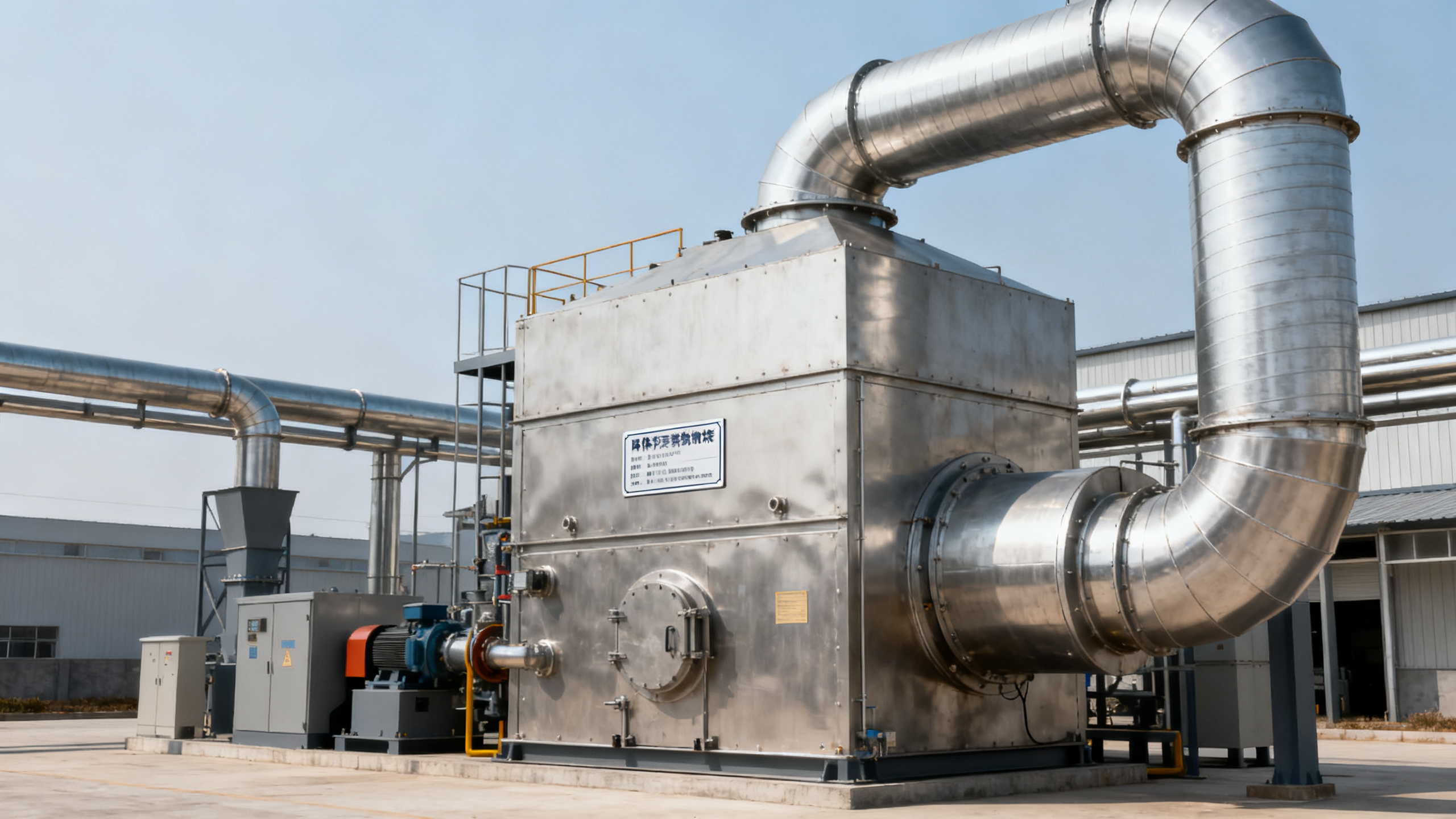
According to the United Nations Environment Programme (UNEP) report Global Waste Infrastructure Investment Pulse, released on 9 May 2026, industrial solid waste incinerator orders in Southeast Asia rose 68% year-on-year in Q1 2026 — driven by new national waste laws in Indonesia and Vietnam. This development is particularly relevant for manufacturers of thermal waste treatment equipment, environmental compliance service providers, and exporters engaged in EU-standard-aligned infrastructure projects.
Event Overview
The UNEP report, published on 9 May 2026, states that industrial solid waste incinerator orders in Southeast Asia increased by 68% year-on-year in the first quarter of 2026. The surge is attributed to newly enacted solid waste legislation in Indonesia and Vietnam. Of all reported orders, 82% explicitly require compliance with the European Union’s Regulation (EU) 2023/2782 on emissions from waste incineration. Chinese incinerator manufacturers are actively pursuing TÜV-issued declarations of conformity to EU 2023/2782.
Industries Affected
Equipment Exporters & OEM Manufacturers
Export-oriented incinerator manufacturers — especially those based in China — face intensified demand for EU-compliant hardware. The 68% order growth reflects not just volume but a tightening of technical specification requirements: 82% of orders mandate adherence to EU 2023/2782, which governs emission limits, continuous monitoring, and operational reporting. This shifts competitive advantage toward firms with verified compliance pathways, not just price or delivery speed.
Environmental Compliance & Certification Service Providers
Third-party certification bodies (e.g., TÜV, SGS, DEKRA) and local compliance consultants are seeing rising demand for EU 2023/2782 gap assessments, technical documentation review, and conformity declaration support. As more Southeast Asian procurement tenders embed EU regulatory language, localized interpretation and verification capacity become critical — especially where national enforcement frameworks remain under development.
Engineering, Procurement & Construction (EPC) Contractors
EPC firms bidding on waste-to-energy or industrial residue treatment projects in Indonesia and Vietnam must now treat EU 2023/2782 compliance as a contractual prerequisite — not just a technical footnote. This affects equipment selection, commissioning protocols, and long-term O&M scope definition. Non-compliant legacy designs risk rejection during tender evaluation or post-award verification.
What Stakeholders Should Monitor and Do Now
Track National Implementation Timelines — Not Just Law Enactment
While Indonesia and Vietnam have introduced new solid waste laws, their respective implementing regulations — especially those specifying enforcement mechanisms, monitoring frequency, and penalties for non-compliance with EU 2023/2782 — remain pending or draft-stage. Stakeholders should monitor official gazettes and ministry circulars, not assume full enforcement begins upon law promulgation.
Prioritize EU 2023/2782 Documentation Readiness Over Hardware Modifications
For manufacturers, the immediate bottleneck is not engineering redesign but demonstrable traceability: technical files, type-test reports, and declarations of conformity aligned to EU 2023/2782 Annexes I–IV. Firms should verify whether their current TÜV engagement covers full scope — including flue gas cleaning system validation and automated monitoring interface specifications — rather than focusing solely on emissions test results.
Distinguish Between Tender Language and Operational Reality
Many recent Southeast Asian tenders cite EU 2023/2782 verbatim, yet lack domestic reference methods or accredited labs for ongoing compliance verification. Buyers may accept third-country conformity statements provisionally. Companies should clarify — in pre-bid dialogue — whether conformity declarations will be accepted at award stage, or if on-site testing or local certification will be required prior to commissioning.
Update Supply Chain Agreements to Reflect Compliance Liability
Sub-suppliers of critical components (e.g., flue gas analyzers, baghouse filters, refractory linings) must be contractually bound to meet EU 2023/2782-related performance criteria. Equipment integrators should revise procurement terms to include documentation handover obligations and audit rights — ensuring end-product conformity is traceable across tiers.
Editorial Perspective / Industry Observation
Observably, this 68% order increase signals a structural shift — not just cyclical demand — in how Southeast Asian markets procure thermal waste infrastructure. It reflects growing alignment with EU environmental governance models, especially where domestic regulatory capacity lags. However, analysis shows this is still an early-phase signal: actual enforcement of EU 2023/2782 remains limited outside pilot zones, and most orders are in the procurement or design phase, not operational deployment. From an industry perspective, the trend is better understood as a tightening of procurement gateways — one that rewards preparation over reaction, and documentation rigor over hardware novelty.
Conclusion: This UNEP data point does not indicate immediate market saturation or regulatory enforcement, but it does mark a clear inflection in technical procurement expectations across Southeast Asia’s waste infrastructure sector. For stakeholders, it is less about reacting to a new rule — and more about recognizing that EU-aligned compliance is now a baseline entry requirement for competitive positioning in key regional markets. Current conditions favor methodical, documentation-first preparation — not rapid hardware iteration.
Source: United Nations Environment Programme (UNEP), Global Waste Infrastructure Investment Pulse, 9 May 2026. Note: Implementation timelines for Indonesia’s and Vietnam’s new solid waste laws — particularly regarding EU 2023/2782 enforcement — remain subject to further official guidance and are under active observation.
Technical Specifications
- Air Handling Unit Supplier Checklist: Performance Data, Lead Times, and SupportAuthor :Environmental Engineering Director
- Buying Fiberglass Water Tanks Wholesale: Compare Quotes and Delivery CostsAuthor :Environmental Engineering Director
- Choosing an XLPE Power Cable Supplier: Test Reports, Traceability, and Lead TimesAuthor :Grid Infrastructure Analyst
Expert Insights

Chief Security Architect
Dr. Thorne specializes in the intersection of structural engineering and digital resilience. He has advised three G7 governments on industrial infrastructure security.
Related Analysis
- Oct 19, 2026Air Handling Unit Supplier Checklist: Performance Data, Lead Times, and SupportAuthor :Environmental Engineering Director
- Oct 18, 2026Buying Fiberglass Water Tanks Wholesale: Compare Quotes and Delivery CostsAuthor :Environmental Engineering Director
- Oct 17, 2026Choosing an XLPE Power Cable Supplier: Test Reports, Traceability, and Lead TimesAuthor :Grid Infrastructure Analyst
Core Sector // 01
Security & Safety
- How to Select a Twin Shaft Shredder for Bulky Waste, Scrap Metal, and PlasticsAuthor :Environmental Engineering Director

- How to Choose a Twin Shaft Shredder for Tires: Torque, Throughput, and Knife DesignAuthor :Environmental Engineering Director

- Selecting Waste Recycling Equipment by Waste Stream, Throughput, and Contamination LevelAuthor :Environmental Engineering Director

- How to Choose Waste Sorting Equipment for Recycling Plants by Material Stream and CapacityAuthor :Environmental Engineering Director

- Scrap Metal Baler Buying Guide: Horizontal vs Vertical, Capacity, Power, and OutputAuthor :Environmental Engineering Director

- What Is Industrial Ecology and How Does It Improve Resource Efficiency in Manufacturing?Author :Environmental Engineering Director

- Pet Bottle Washing Line Problems: Common Causes of Flake Contamination and How to Fix ThemAuthor :Environmental Engineering Director

- How to Evaluate Environment & Ecology Cost in Industrial ProjectsAuthor :Environmental Engineering Director