Southeast Asia Raises Tariffs on Industrial Dust Monitors
Author
Date Published
Reading Time
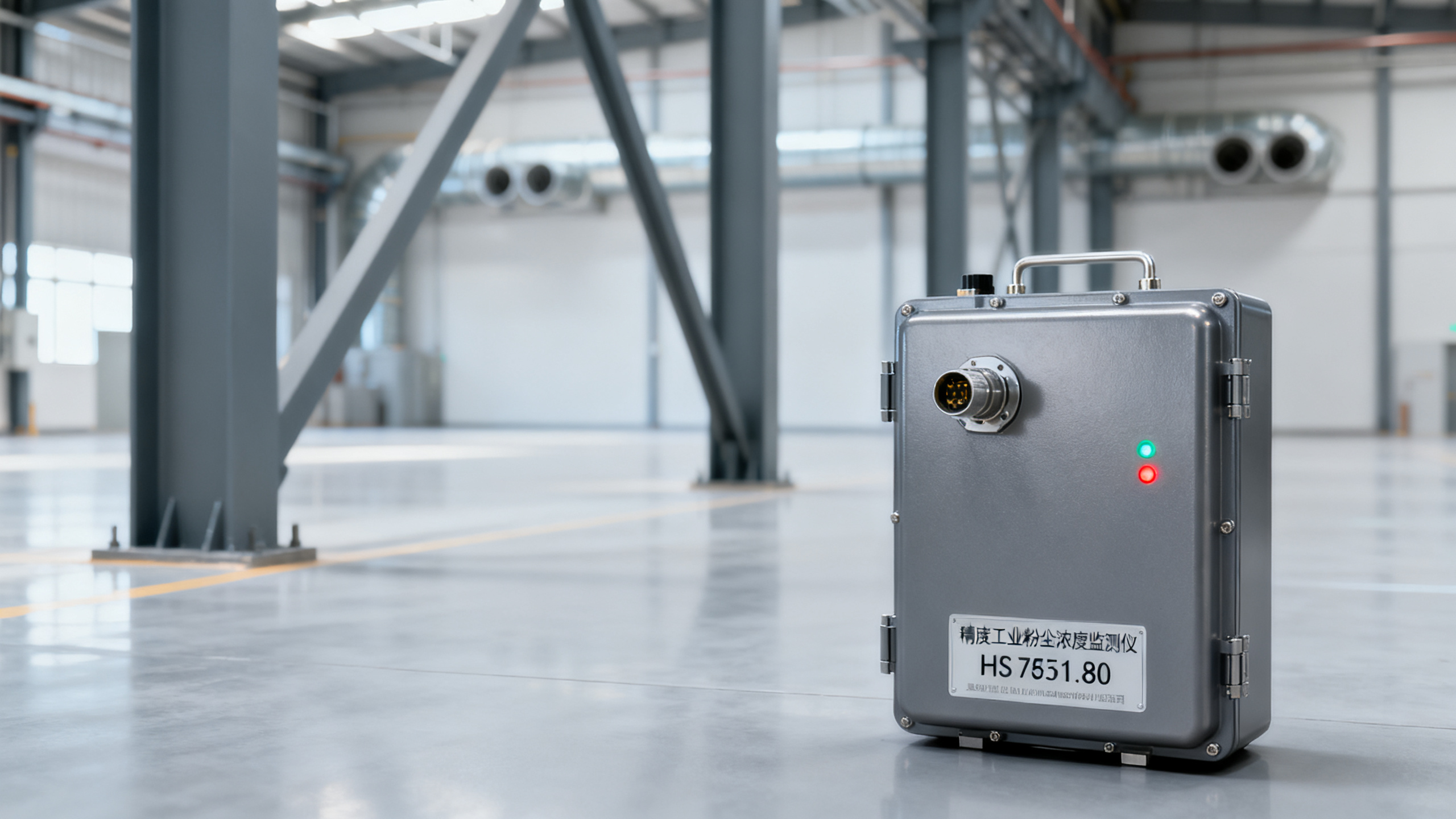
On May 10–12, 2026, Thailand, Indonesia, and Vietnam imposed new import surcharges of 3–5 percentage points on industrial dust concentration monitors (HS code 8531.80), citing protection of domestic environmental monitoring industries. This development directly affects manufacturers, exporters, and integrators of air purifiers and dust control systems — particularly those reliant on Chinese-sourced monitoring hardware.
Event Overview
Thailand announced the tariff increase effective May 10, 2026; Indonesia followed on May 11; and Vietnam on May 12. The measure applies specifically to industrial-grade dust concentration monitoring instruments under HS code 8531.80. Authorities in all three countries cited ‘support for local environmental monitoring industry development’ as the official rationale. Chinese exporters have responded with price adjustments, raising quoted prices for these devices by 8–12% for Southeast Asian markets. Some regional distributors are now requesting quotations for locally assembled units — though core sensors remain sourced from China.
Industries Affected by Segment
Direct Exporters & Trading Firms
These firms face immediate margin pressure due to the 8–12% cost increase on HS 8531.80 devices. Since the tariff applies at customs clearance, landed costs rise without corresponding flexibility in end-market pricing — especially where contracts were negotiated pre-announcement.
System Integrators & OEMs of Air Purifiers & Dust Control Equipment
Integrators embedding these monitors into air purification or industrial dust suppression systems encounter higher BOM (bill-of-materials) costs. Lead times may also extend if distributors delay orders pending clarity on local assembly viability — even though sensor modules remain China-dependent.
Distribution & Channel Partners in Southeast Asia
Distributors are shifting procurement discussions toward locally assembled alternatives, but current technical documentation, calibration protocols, and after-sales support infrastructure remain aligned with original Chinese-supplied units. This creates operational friction in service delivery and inventory planning.
Supply Chain Service Providers (e.g., Customs Brokers, Logistics Operators)
These providers must now verify updated HS code classifications and tariff treatment for shipments containing HS 8531.80 devices — including whether bundled systems qualify for different classification. Misclassification risks increased duty assessments or shipment delays.
What Enterprises and Practitioners Should Monitor and Do Now
Track official implementation guidance and exceptions
Monitor national customs bulletins and Ministry of Trade notices from Thailand, Indonesia, and Vietnam over the next 30 days. Clarifications may emerge on whether fully assembled air purifier units (containing the monitor) fall under the same surcharge — or if only standalone monitors are targeted.
Identify and prioritize high-impact SKUs and markets
Map current export SKUs against HS 8531.80 and assess exposure by country: e.g., shipments to Vietnam (effective May 12) require immediate rate verification, while Thai imports cleared before May 10 may avoid the surcharge if documentation is dated accordingly.
Distinguish policy intent from near-term execution capacity
Although authorities cite ‘local industry protection’, observable local assembly activity remains limited — especially for calibrated, certified dust sensors. Short-term reliance on Chinese components is likely to persist, meaning tariff-driven cost shifts may not translate into rapid supply chain reconfiguration.
Prepare contingency plans for procurement and customer communication
Review open purchase orders and contract terms for force majeure or price-adjustment clauses. Proactively engage key distributors with transparent timelines on revised lead times and pricing — avoiding assumptions about local assembly scalability in Q3 2026.
Editorial Perspective / Industry Observation
Observably, this is a coordinated regulatory signal rather than an isolated trade action — with three major ASEAN economies aligning timing and justification. Analysis shows it reflects broader regional efforts to localize environmental compliance infrastructure, not merely revenue generation. However, the current impact remains largely cost-pass-through, not structural supply chain displacement. From an industry perspective, this is better understood as an early-stage policy test: its long-term significance hinges on whether supporting measures (e.g., certification incentives, R&D grants for local sensor development) follow in 2026–2027.
Conclusion
This tariff adjustment signals tightening regulatory conditions for environmental monitoring hardware exports to key ASEAN markets — but does not yet indicate a fundamental shift in sourcing dependency. For now, it functions primarily as a near-term cost and compliance management issue, not a strategic pivot point. Enterprises should treat it as a data point in ongoing ASEAN market risk assessment — not as an irreversible barrier.
Information Sources
- Official tariff announcements: Thailand Department of Customs (May 10, 2026), Indonesia Directorate General of Taxes (May 11, 2026), Vietnam Ministry of Finance (May 12, 2026)
- Export pricing data reported by Chinese industry associations (as of May 13, 2026)
- Market feedback from ASEAN-based distributors (unverified beyond initial inquiry patterns; ongoing observation recommended)
Technical Specifications
- How to Select Electronic Hotel Key Card Locks for Guest Rooms and Staff AreasAuthor :Safety Compliance Lead
- How to Select Lab Instruments for Reliable Chemical Analysis WorkflowsAuthor :Precision Metrology Expert
- How to Size a UPS for Server Rooms: Load, Runtime, and Redundancy FactorsAuthor :Grid Infrastructure Analyst
Expert Insights

Chief Security Architect
Dr. Thorne specializes in the intersection of structural engineering and digital resilience. He has advised three G7 governments on industrial infrastructure security.
Related Analysis
- Sep 17, 2026How to Select Electronic Hotel Key Card Locks for Guest Rooms and Staff AreasAuthor :Safety Compliance Lead
- Sep 16, 2026How to Select Lab Instruments for Reliable Chemical Analysis WorkflowsAuthor :Precision Metrology Expert
- Sep 15, 2026How to Size a UPS for Server Rooms: Load, Runtime, and Redundancy FactorsAuthor :Grid Infrastructure Analyst
Core Sector // 01
Security & Safety
- Environmental Technologies for Heavy Industry: Choosing Cleaner Production SolutionsAuthor :Environmental Engineering Director

- Selecting Air Compliance Equipment for Dust, Fumes, and VOC ControlAuthor :Environmental Engineering Director

- EU Rule Tightens EN 1822-2 for Industrial Air PurifiersAuthor :Environmental Engineering Director

- EU Eco-Design Rules Tighten for Air PurifiersAuthor :Environmental Engineering Director

- Low-Maintenance Dust and Fume Control Systems: Best Options for Welding ShopsAuthor :Environmental Engineering Director

- EPA Sets VOC Labeling Rule for Air PurifiersAuthor :Environmental Engineering Director

- Saudi SASO Rule Adds Real-Time Logging for Air SystemsAuthor :Environmental Engineering Director

- Saudi SASO Rules Tighten for Air PurifiersAuthor :Environmental Engineering Director