Southeast Asia Raises Tariffs on Dust Monitors, Hitting Chinese Exports
Author
Date Published
Reading Time
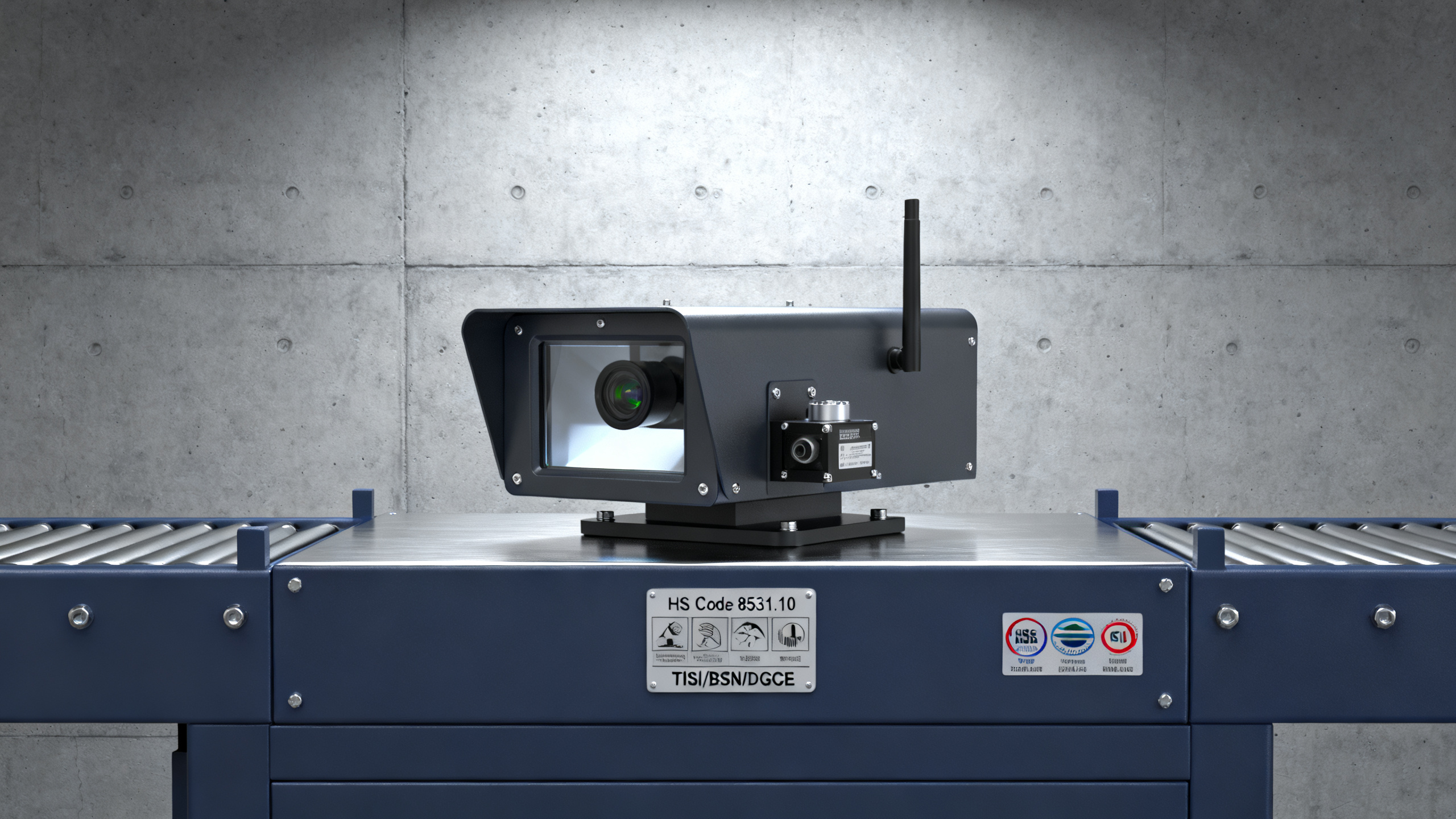
Effective June 1, 2026, customs authorities in Vietnam, Thailand, and Indonesia jointly imposed new special adjustment duties on industrial dust monitoring instruments (HS code 8531.10), significantly increasing export costs for Chinese manufacturers of air purifiers and dust control equipment by 8–12%. The move reflects tightening environmental compliance requirements—and growing regional emphasis on local calibration standards—across key ASEAN markets.
Event Overview
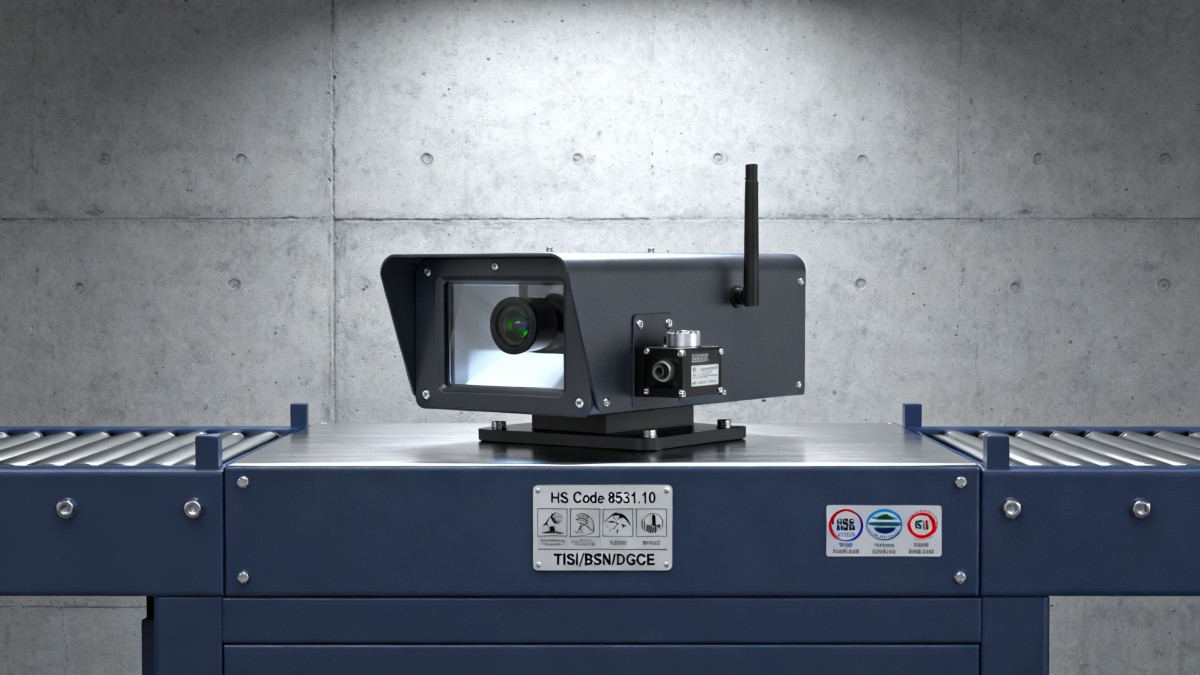
Vietnam, Thailand, and Indonesia’s customs agencies jointly announced the new tariff measures on May 12–14, 2026. The regulation takes effect on June 1, 2026. Under the measure, a special adjustment duty is applied to HS code 8531.10 (industrial dust monitoring instruments): +10% in Vietnam, +8% in Thailand, and +12% in Indonesia. Only products certified by each country’s respective Ministry of Environment—and validated through local PM2.5 sensor calibration protocols—are exempt. Chinese exporters must complete national export filing with local customs and obtain product-specific environmental certification to qualify for exemption; otherwise, they face both the new tariff and certification-related compliance costs.
Industries Affected
Direct Trading Enterprises
Export-oriented trading firms specializing in air quality instrumentation are directly exposed to margin compression. Since the tariff applies at import clearance, pricing competitiveness erodes unless absorbed or passed on—neither option is sustainable without renegotiated contracts or revised market positioning. Non-compliant shipments risk delays or rejection at port, adding operational uncertainty.
Raw Material Procurement Enterprises
Firms sourcing optical sensors, laser scattering modules, or calibrated reference filters from Chinese OEMs may face upstream price adjustments. Though not subject to tariffs themselves, their procurement cost structures tighten as suppliers reallocate R&D and certification budgets—potentially delaying component deliveries or triggering minimum-order quantity (MOQ) revisions to offset compliance overhead.
Contract Manufacturing Enterprises
OEM/ODM manufacturers producing dust monitors for international brands now bear dual responsibilities: ensuring end-product compliance with host-country calibration standards *and* managing tariff-incurred cost volatility. This increases pre-shipment verification cycles and necessitates closer collaboration with local certification bodies—extending time-to-market and raising internal compliance staffing needs.
Supply Chain Service Providers
Freight forwarders, customs brokers, and regulatory consultants report rising demand for integrated tariff-classification support and PM2.5 sensor validation coordination. However, capacity remains fragmented: few service providers currently offer end-to-end support across all three countries’ distinct certification pathways—creating bottlenecks and premium pricing for multi-jurisdictional filings.
Key Focus Areas and Recommended Actions
Verify HS Code Classification & Local Certification Pathways
Chinese exporters must confirm whether their specific instrument model falls under HS 8531.10—and whether it qualifies for exemption via national environmental ministry recognition. Each country maintains separate calibration protocols (e.g., Thailand’s TISI PM2.5 Reference Standard TIS 2527-2562); overlapping certification is not assumed.
Assess Cost Impact Across Product Lines
Not all dust monitoring devices carry identical sensitivity to the tariff. High-precision continuous emission monitors (CEMs) face stricter scrutiny than basic particulate counters. Companies should segment SKUs by calibration dependency, target market, and unit value to prioritize certification investment and revise landed-cost models accordingly.
Engage Local Certification Bodies Early
Lead times for PM2.5 sensor calibration validation range from 6–10 weeks per jurisdiction. Delays compound when documentation lacks Vietnamese/Thai/Indonesian translations or fails to meet local metrological traceability requirements. Proactive engagement—not reactive filing—is critical to avoid Q3 2026 shipment disruptions.
Editorial Perspective / Industry Observation
Observably, this is not merely a protectionist tariff action but part of a broader ASEAN regulatory convergence trend—where environmental instrumentation is increasingly treated as critical infrastructure rather than generic industrial hardware. Analysis shows that similar calibration-linked duties are under technical review in Malaysia and the Philippines, suggesting potential regional expansion. From an industry perspective, the policy shift signals a structural pivot: compliance is no longer about paperwork alone, but about embedded metrological sovereignty. Current more-than-tariff impact lies in the fragmentation of certification ecosystems—making scalability harder for SME exporters.
Conclusion
This regulatory development underscores how environmental policy is reshaping trade logistics—not only through cost but through technical gatekeeping. For Chinese air quality equipment exporters, June 2026 marks the start of a new operational threshold: one where tariff management must be paired with metrological diplomacy. A rational interpretation is that long-term resilience will depend less on cost arbitrage and more on co-development of calibration frameworks with ASEAN partners.
Source Attribution
Official announcements published by: Vietnam General Department of Vietnam Customs (Notice No. 192/TCHQ-TXNK, May 12, 2026); Royal Thai Customs Department (Circular No. 14/2569, May 13, 2026); Directorate General of Customs and Excise, Indonesia (Regulation No. PMK-87/BC/2026, May 14, 2026). Note: Implementation guidelines—including approved calibration labs and translation requirements—are still pending publication in all three jurisdictions and remain under active monitoring.
Technical Specifications
- How to Select Electronic Hotel Key Card Locks for Guest Rooms and Staff AreasAuthor :Safety Compliance Lead
- How to Select Lab Instruments for Reliable Chemical Analysis WorkflowsAuthor :Precision Metrology Expert
- How to Size a UPS for Server Rooms: Load, Runtime, and Redundancy FactorsAuthor :Grid Infrastructure Analyst
Expert Insights

Chief Security Architect
Dr. Thorne specializes in the intersection of structural engineering and digital resilience. He has advised three G7 governments on industrial infrastructure security.
Related Analysis
- Sep 17, 2026How to Select Electronic Hotel Key Card Locks for Guest Rooms and Staff AreasAuthor :Safety Compliance Lead
- Sep 16, 2026How to Select Lab Instruments for Reliable Chemical Analysis WorkflowsAuthor :Precision Metrology Expert
- Sep 15, 2026How to Size a UPS for Server Rooms: Load, Runtime, and Redundancy FactorsAuthor :Grid Infrastructure Analyst
Core Sector // 01
Security & Safety
- Environmental Technologies for Heavy Industry: Choosing Cleaner Production SolutionsAuthor :Environmental Engineering Director

- Selecting Air Compliance Equipment for Dust, Fumes, and VOC ControlAuthor :Environmental Engineering Director

- EU Rule Tightens EN 1822-2 for Industrial Air PurifiersAuthor :Environmental Engineering Director

- EU Eco-Design Rules Tighten for Air PurifiersAuthor :Environmental Engineering Director

- Low-Maintenance Dust and Fume Control Systems: Best Options for Welding ShopsAuthor :Environmental Engineering Director

- EPA Sets VOC Labeling Rule for Air PurifiersAuthor :Environmental Engineering Director

- Saudi SASO Rule Adds Real-Time Logging for Air SystemsAuthor :Environmental Engineering Director

- Saudi SASO Rules Tighten for Air PurifiersAuthor :Environmental Engineering Director