SABIC Force Majeure Pressures Filter Material Costs
Author
Date Published
Reading Time
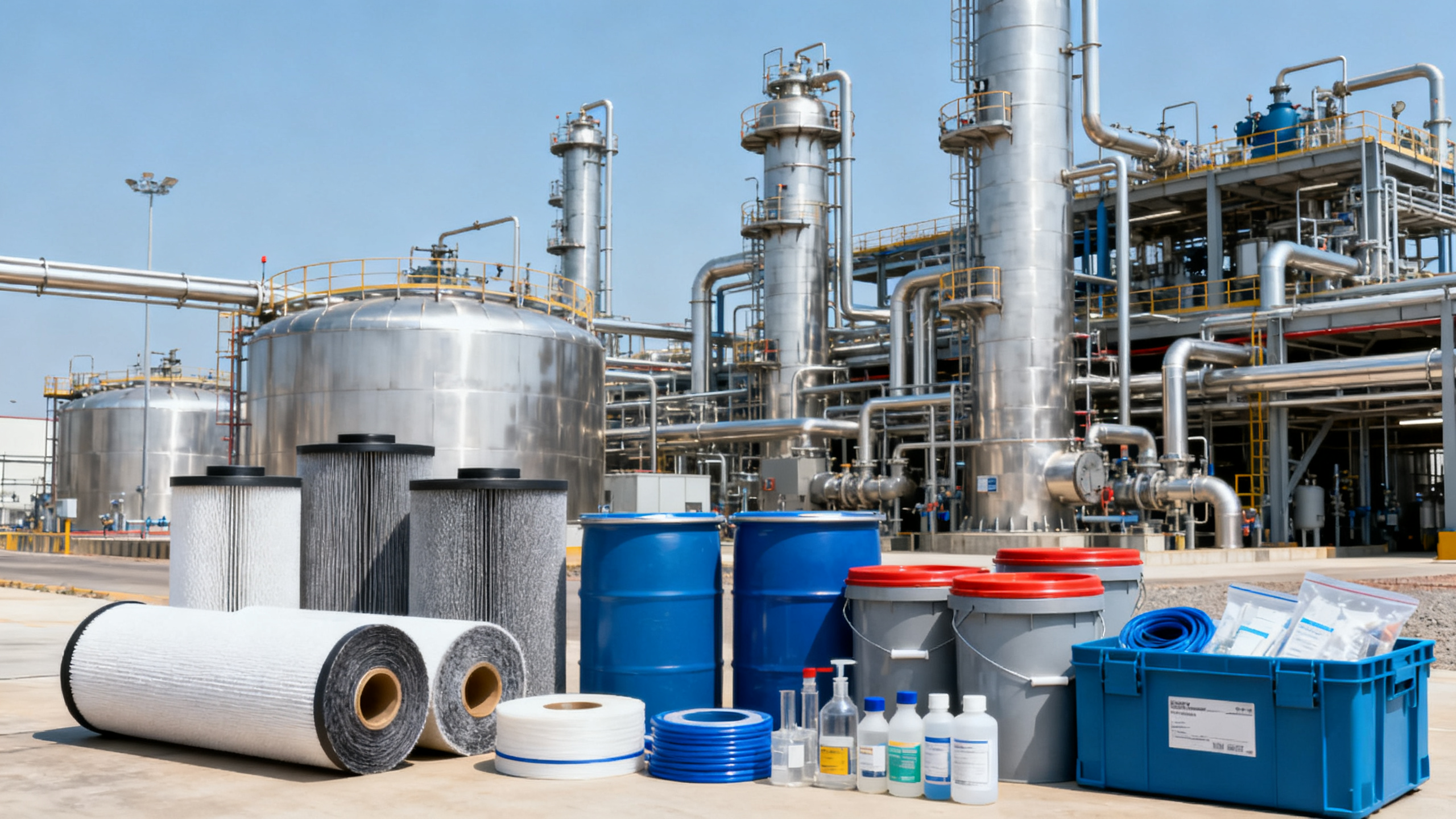
On March 27, 2026, Saudi Basic Industries Corporation, known as SABIC, announced force majeure affecting methanol and styrene production at its Jubail site. The development deserves attention from industrial air filtration, sealing materials, PPE, explosion-proof equipment, laboratory consumables, raw material procurement, and chemical distribution sectors because methanol and styrene derivatives are connected to several downstream manufacturing cost structures.
Event Overview
According to the disclosed information, SABIC, the world’s largest methanol producer, announced on March 27 that its Jubail production lines for methanol, with annual capacity of 4.7 million tons, and styrene, with annual capacity of 1.8 million tons, had encountered force majeure.
The same information states that chemical plants in multiple Middle Eastern countries suspended production at the same time. Methanol is used as a key raw material for binders in industrial air filters, activated carbon regenerants, and certain sealants. Styrene derivatives are widely used in PPE protective clothing, explosion-proof enclosures, and laboratory consumables.
The disclosed information also notes that the global supply gap has led related raw material prices to rise by 5.93% in a single day, accelerating cost transmission to downstream manufacturing.
Which Segments May Be Affected
Direct Chemical Trading Companies
Direct trading companies may be affected because methanol and styrene-related materials are now connected to a sudden supply-side disruption. Their immediate pressure is likely to appear in spot availability, quotation validity, and order execution risk.
From an industry perspective, traders handling methanol, styrene derivatives, or related intermediates need to pay close attention to whether existing delivery commitments can be fulfilled under the changed supply environment. The main impact is not only price movement, but also uncertainty around allocation, delivery timing, and customer communication.
Raw Material Procurement Teams
Procurement teams in industrial filtration, sealing materials, PPE, explosion-proof housing, and laboratory consumables may face increased difficulty in evaluating purchasing windows. Methanol is linked to binders, activated carbon regeneration, and some sealant raw materials, while styrene derivatives are used in multiple protective and industrial application scenarios.
Analysis shows that procurement pressure may be reflected in shorter quote cycles, increased supplier review workload, and the need to reassess inventory coverage for key materials. The disclosed one-day price increase of 5.93% suggests that cost changes are already being transmitted to downstream buyers.
Processing and Manufacturing Enterprises
Manufacturers using industrial purification filter media, sealing compounds, PPE protective clothing, explosion-proof enclosures, or laboratory consumables may experience pressure on production cost accounting. The reason is that the affected materials are not isolated commodities; they are linked to formulations, components, or auxiliary production processes.
Observably, the main impact for manufacturers may appear in cost recalculation, quotation adjustment, production scheduling, and customer delivery discussions. For products with fixed-price orders or long delivery cycles, the gap between earlier cost assumptions and current raw material quotations may become more visible.
Channel Distribution Companies
Channel distributors may be affected through both price transmission and customer expectation management. When upstream raw materials rise quickly, distributors often need to clarify whether existing inventory, pending orders, and future replenishment will be priced under different cost assumptions.
What deserves closer attention is the difference between available stock and forward supply. Distributors serving industrial filtration, safety protection, laboratory, and sealing material customers may need more frequent updates from suppliers to avoid mismatches between sales commitments and replenishment costs.
Supply Chain Service Providers
Supply chain service companies supporting procurement coordination, warehousing, logistics, and order fulfillment may face more complex scheduling requirements. The event involves production disruption, regional plant shutdowns, and downstream cost transmission, which can increase the need for closer tracking of order status and delivery reliability.
From an industry perspective, these companies should focus on information accuracy and response speed. Their value in this situation lies in helping clients distinguish confirmed supply changes from market speculation and align purchasing, warehousing, and delivery plans accordingly.
What Companies and Practitioners Should Watch and How to Respond
Track Subsequent Official Statements
Companies should continue to monitor SABIC’s follow-up statements and any additional official updates related to the affected methanol and styrene production lines. Current publicly disclosed information confirms the force majeure event and the affected capacities, but further details on duration, production recovery, and downstream allocation still require continued observation.
It is more appropriate to understand this as a developing supply-side event rather than a fully settled market outcome. Procurement and sales teams should avoid making long-term assumptions based only on the first price reaction.
Focus on Materials Directly Linked to Methanol and Styrene Derivatives
Enterprises should identify whether their products involve industrial air filter binders, activated carbon regeneration materials, certain sealants, PPE protective clothing, explosion-proof enclosures, or laboratory consumables. These are the application areas directly mentioned in the disclosed information.
Analysis shows that prioritizing these categories can make internal risk assessment more practical. Instead of broadly reviewing all chemicals, companies should first check materials and components with clear exposure to methanol or styrene derivative supply.
Separate Price Signals from Actual Order Execution
The disclosed information states that related raw material prices rose by 5.93% in a single day. However, companies still need to distinguish between price signals and actual business execution, including confirmed supplier quotations, inventory availability, delivery schedules, and contract terms.
Observably, a rapid price movement can affect negotiation behavior before it fully affects delivered costs. For this reason, procurement, finance, and sales departments should align internally before revising customer quotations or adjusting production plans.
Prepare Procurement and Communication Contingency Plans
Companies with near-term demand for affected materials should review existing purchase orders, supplier confirmations, and inventory coverage. For orders involving industrial purification filter media, sealants, PPE, explosion-proof housings, or laboratory consumables, earlier communication with suppliers and customers may reduce misunderstanding caused by fast-moving costs.
From an industry perspective, the practical response should include confirming supply status, checking whether alternative delivery schedules are needed, and preparing transparent explanations for customers if cost changes begin to affect quotations or lead times.
Editor’s View / Industry Observation
Analysis shows that this event is significant because it links a force majeure declaration at a major methanol and styrene production base with cost pressure in several downstream industrial material categories. The immediate concern is not limited to chemical trading; it also extends to filtration media, sealing materials, safety protection products, industrial enclosures, and laboratory consumables.
It is more appropriate to understand this event as both an immediate cost signal and a supply-chain risk reminder. The disclosed one-day price increase indicates that the market has already responded, but the longer-term impact will depend on subsequent official updates, production recovery progress, and how quickly downstream costs are passed through.
What deserves closer attention is the speed of cost transmission. When key upstream materials are connected to specialized industrial applications, even a short-term disruption can affect quotation cycles, procurement strategies, and customer communication. The industry therefore needs continuous monitoring rather than a one-time reaction.
Conclusion
The SABIC force majeure announcement on March 27, 2026 has brought renewed attention to the vulnerability of methanol and styrene-related supply chains. For industrial filtration, sealing materials, PPE, explosion-proof equipment, laboratory consumables, trading, procurement, distribution, and supply chain service companies, the main issue is how quickly upstream disruption turns into cost and delivery pressure.
Current information should be viewed in a rational and neutral way. The event has already produced a visible price response, but it is still more appropriate to understand it as a developing supply-chain signal that requires close tracking of official updates, material availability, and downstream cost transmission.
Information Source Statement
- Main source: SABIC announcement disclosed on March 27, 2026.
- Main source: Provided event summary on methanol, styrene, related downstream applications, and the reported one-day raw material price increase.
- Items requiring continued observation: subsequent official updates on the duration of force majeure, production resumption, regional plant operating status, supply availability, and downstream cost transmission.
Technical Specifications
- How to Select Electronic Hotel Key Card Locks for Guest Rooms and Staff AreasAuthor :Safety Compliance Lead
- How to Select Lab Instruments for Reliable Chemical Analysis WorkflowsAuthor :Precision Metrology Expert
- How to Size a UPS for Server Rooms: Load, Runtime, and Redundancy FactorsAuthor :Grid Infrastructure Analyst
Expert Insights

Chief Security Architect
Dr. Thorne specializes in the intersection of structural engineering and digital resilience. He has advised three G7 governments on industrial infrastructure security.
Related Analysis
- Sep 17, 2026How to Select Electronic Hotel Key Card Locks for Guest Rooms and Staff AreasAuthor :Safety Compliance Lead
- Sep 16, 2026How to Select Lab Instruments for Reliable Chemical Analysis WorkflowsAuthor :Precision Metrology Expert
- Sep 15, 2026How to Size a UPS for Server Rooms: Load, Runtime, and Redundancy FactorsAuthor :Grid Infrastructure Analyst
Core Sector // 01
Security & Safety
- Environmental Technologies for Heavy Industry: Choosing Cleaner Production SolutionsAuthor :Environmental Engineering Director

- Selecting Air Compliance Equipment for Dust, Fumes, and VOC ControlAuthor :Environmental Engineering Director

- EU Rule Tightens EN 1822-2 for Industrial Air PurifiersAuthor :Environmental Engineering Director

- EU Eco-Design Rules Tighten for Air PurifiersAuthor :Environmental Engineering Director

- Low-Maintenance Dust and Fume Control Systems: Best Options for Welding ShopsAuthor :Environmental Engineering Director

- EPA Sets VOC Labeling Rule for Air PurifiersAuthor :Environmental Engineering Director

- Saudi SASO Rule Adds Real-Time Logging for Air SystemsAuthor :Environmental Engineering Director

- Saudi SASO Rules Tighten for Air PurifiersAuthor :Environmental Engineering Director