Cartridge Dust Collector Sizing: Airflow, Filter Area, and Dust Load Explained
Author
Date Published
Reading Time
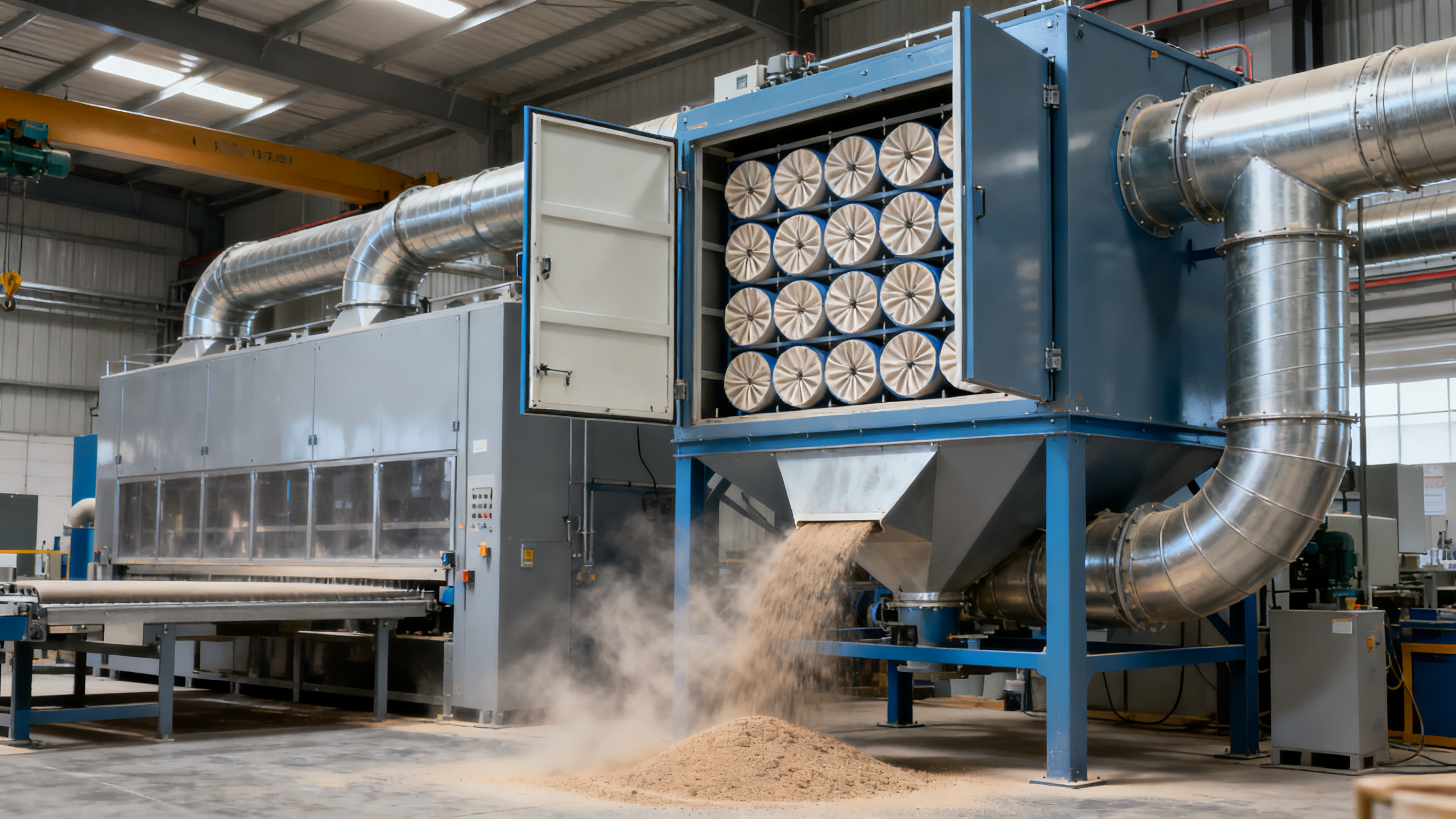
Correctly sizing a cartridge dust collector is a technical decision that directly affects capture efficiency, filter life, energy consumption, and regulatory compliance.
The challenge is not simply selecting a nominal airflow rating. Real performance depends on dust behavior, filter area, pressure drop, duty cycle, and cleaning strategy.
This guide explains airflow, filter area, and dust load through practical operating scenarios, helping industrial teams specify safer and more reliable dust control systems.
Cartridge Dust Collector Sizing Starts With the Operating Scenario
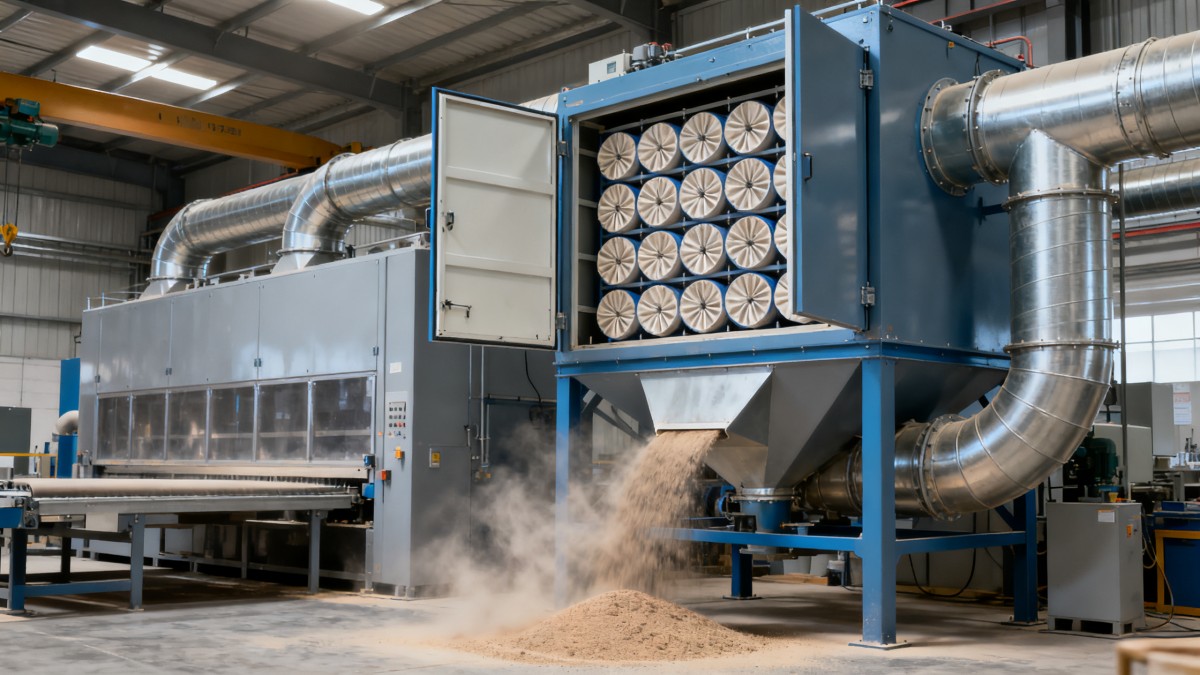
A cartridge dust collector must be sized around the process, not around a catalog number. Similar airflow values can produce very different outcomes.
Welding fumes, sanding dust, metal fines, food powder, and composite dust behave differently. Each creates a different loading pattern across filter media.
The first question is where dust is created. Open processes usually need higher capture velocity than enclosed machinery or ducted transfer points.
The second question is how dust enters the collector. Steady loading is easier to manage than pulsed dumping or batch discharge.
The third question is how long the system runs. Continuous duty requires more conservative sizing than intermittent operation with long idle periods.
Airflow Requirements Change by Capture Condition
Airflow is usually expressed in CFM or m³/h. It represents the air volume needed to pull dust away from the source.
For a cartridge dust collector, airflow must satisfy two needs. It must capture dust at the source and transport it through ductwork.
If airflow is too low, visible dust escapes. If airflow is too high, energy use rises and filters may load faster.
Open Workstations Need Stronger Capture Margins
Grinding, polishing, and sanding stations often release dust into open air. The hood must overcome cross-drafts and operator movement.
In these scenarios, face velocity and hood position matter as much as total collector airflow. Poor hood geometry wastes capacity quickly.
A cartridge dust collector serving open workstations should include allowances for process variation, duct loss, and future station expansion.
Enclosed Machines Can Use More Targeted Airflow
CNC machines, laser cutting enclosures, and packaging equipment often allow more controlled extraction. Airflow can be matched to enclosure leakage.
Here, oversizing may create unnecessary turbulence. It can pull fine dust deeper into the filter pack and shorten cleaning intervals.
The better approach is measuring required capture points, then confirming duct velocity remains sufficient to prevent settling.
Filter Area Determines the Air-to-Cloth Ratio
Filter area is the total media surface available for airflow. In a cartridge dust collector, pleated cartridges provide compact filtration area.
The air-to-cloth ratio compares airflow to filter area. A lower ratio usually means gentler loading and longer filter life.
A higher ratio may reduce equipment footprint, but it can increase pressure drop, pulse cleaning frequency, and maintenance demand.
Fine Dust Requires More Media Area
Fine particulate can penetrate deeper into media. This raises resistance and makes dust cake release more difficult.
For fine powders, a cartridge dust collector often needs a lower air-to-cloth ratio and media with suitable surface treatment.
Examples include pharmaceutical powder, silica-containing dust, toner, additive manufacturing residue, and lightweight mineral dust.
Coarse Dust Still Needs Correct Loading Control
Coarse dust may seem easier to filter, but heavy loading can overload the hopper or block cartridges.
Woodworking, grain handling, and bulk material transfer may require pre-separation before the cartridge dust collector inlet.
Cyclonic pre-separators, drop-out boxes, or inlet baffles can reduce direct impact and extend cartridge service life.
Dust Load Defines How Fast the Collector Becomes Stressed
Dust load describes the amount of particulate entering the system over time. It is often more important than peak airflow alone.
A light-load process can run efficiently with moderate filter area. A heavy-load process may need larger housings and stronger cleaning capacity.
A cartridge dust collector exposed to sudden loading spikes must manage both airflow stability and rapid dust release from the media.
Low Dust Load, High Airflow Applications
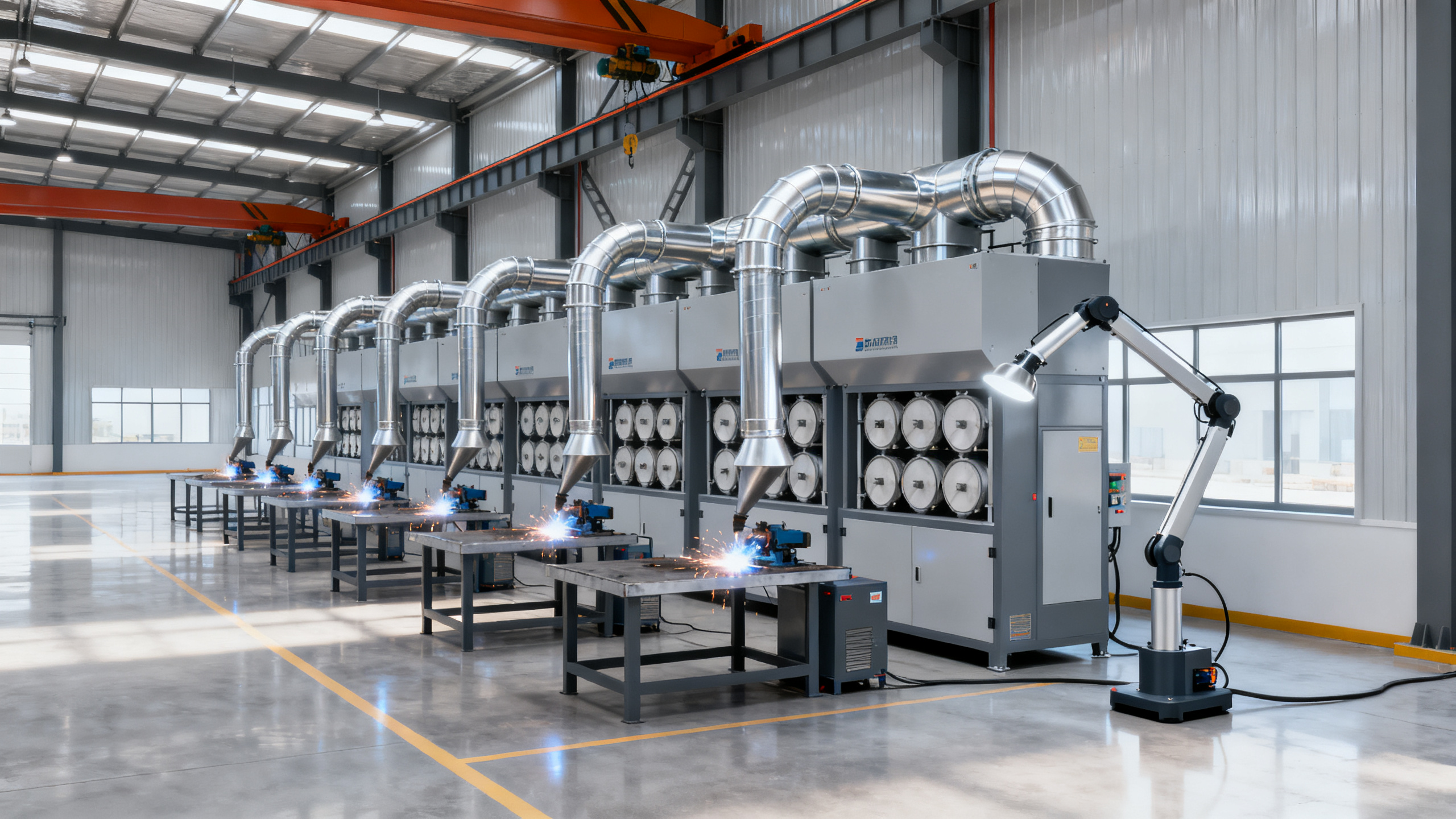
Some ventilation systems move large air volumes but capture relatively small particulate mass. Light welding smoke is a common example.
In this case, airflow distribution, media efficiency, and low pressure drop become key performance criteria.
The cartridge dust collector should maintain stable suction while avoiding excessive fan power and unnecessary compressed-air consumption.
High Dust Load, Moderate Airflow Applications
Other processes generate dense particulate streams at moderate airflow. Examples include powder filling, blasting recovery, and bulk solids handling.
Here, hopper design, discharge method, inlet protection, and cleaning energy become critical.
The system should prevent re-entrainment, bridging, and dust accumulation that could compromise safety or process continuity.
Scenario Comparison for Cartridge Dust Collector Selection
This comparison shows why one airflow rating cannot define the best cartridge dust collector for every industrial process.
Sizing Variables That Should Be Checked Together
Sizing should be treated as an integrated calculation. Changing one variable often changes fan demand, filter life, and cleaning stability.
- Required airflow at each pickup point, including diversity and future expansion.
- Duct velocity needed to carry dust without settling in horizontal runs.
- Total filter area and target air-to-cloth ratio for the dust type.
- Expected dust load during normal operation and peak events.
- Initial and final pressure drop across the cartridge dust collector.
- Pulse cleaning capacity, compressed-air quality, and valve response.
- Hopper volume, discharge equipment, and material handling compatibility.
- Compliance needs related to emissions, combustible dust, and worker exposure.
A strong specification identifies acceptable pressure drop limits. This helps prevent a system that performs well only when filters are new.
It also defines cleaning logic. Continuous pulsing may hide sizing problems while increasing cartridge wear and compressed-air cost.
Filter Media Choices Depend on Dust Behavior
Filter media selection is not separate from sizing. Media permeability and release characteristics influence required filter area.
Cellulose blends may suit dry, general dust. Synthetic media can offer better moisture resistance and dimensional stability.
Nanofiber media supports surface loading for fine particles. Membrane media may improve release where dust is sticky or very fine.
For abrasive dust, durability and inlet design matter. The best cartridge dust collector sizing cannot compensate for direct media erosion.
For combustible dust, media, grounding, housing design, and explosion protection must be evaluated as one safety system.
Common Sizing Mistakes in Real Industrial Settings
The most common mistake is selecting a cartridge dust collector by fan rating only. Fan capacity does not guarantee capture at the source.
Another mistake is ignoring duct losses. Long runs, elbows, blast gates, and dirty filters all reduce available suction.
A third mistake is using an aggressive air-to-cloth ratio to reduce footprint. The result may be frequent alarms and short filter life.
Some systems overlook dust discharge. If the hopper cannot empty reliably, collected dust can re-enter the airflow path.
Moisture is another frequent issue. Hygroscopic dust can cake, bridge, or blind media faster than dry test data suggests.
Finally, safety classifications are sometimes reviewed too late. Combustible dust decisions should be made before final equipment selection.
Scenario-Based Specification Checklist
A practical sizing request should include process details, not just airflow. Better input produces a more accurate cartridge dust collector recommendation.
- Describe each dust source, including open hoods, enclosures, or direct machine connections.
- Estimate airflow per pickup point and note whether all points operate simultaneously.
- Provide dust type, particle size, moisture content, abrasiveness, and bulk density.
- State expected dust load during normal operation, cleaning events, and batch discharge.
- Define allowable emissions, exposure limits, and any relevant environmental requirements.
- Confirm whether combustible dust evaluation, isolation, or explosion venting is required.
- Document available power, compressed air, installation space, and maintenance access.
- Request predicted pressure drop at start-up and at stabilized operating condition.
This checklist supports fair comparison between different cartridge dust collector proposals. It also reduces hidden costs during installation and commissioning.
How to Balance Performance, Energy, and Filter Life
The best sizing decision balances capture reliability with lifecycle efficiency. Oversized systems may waste energy, while undersized systems create recurring downtime.
Fan selection should account for the operating pressure range, not only clean-filter conditions. Variable speed control may improve stability.
Filter area should be generous enough for dust release, especially when the process runs continuously or handles fine particulate.
Pulse cleaning should restore airflow without over-cleaning. Excessive pulsing can damage media and increase compressed-air consumption.
Monitoring differential pressure is essential. It reveals whether the cartridge dust collector is stabilizing or slowly moving toward restriction.
From Sizing Data to a Reliable Dust Control Decision
A reliable cartridge dust collector specification starts with the process scenario, then connects airflow, filter area, and dust load.
Airflow defines capture and transport. Filter area defines loading intensity. Dust load defines how quickly the system becomes stressed.
When these variables are reviewed together, the result is a safer, cleaner, and more predictable industrial environment.
For the next step, collect source data, dust characteristics, duty cycle, and compliance requirements before comparing equipment options.
A data-driven review helps confirm the right cartridge dust collector size, avoid premature filter failure, and support long-term operational resilience.
Technical Specifications
- How to Select Electronic Hotel Key Card Locks for Guest Rooms and Staff AreasAuthor :Safety Compliance Lead
- How to Select Lab Instruments for Reliable Chemical Analysis WorkflowsAuthor :Precision Metrology Expert
- How to Size a UPS for Server Rooms: Load, Runtime, and Redundancy FactorsAuthor :Grid Infrastructure Analyst
Expert Insights

Chief Security Architect
Dr. Thorne specializes in the intersection of structural engineering and digital resilience. He has advised three G7 governments on industrial infrastructure security.
Related Analysis
- Sep 17, 2026How to Select Electronic Hotel Key Card Locks for Guest Rooms and Staff AreasAuthor :Safety Compliance Lead
- Sep 16, 2026How to Select Lab Instruments for Reliable Chemical Analysis WorkflowsAuthor :Precision Metrology Expert
- Sep 15, 2026How to Size a UPS for Server Rooms: Load, Runtime, and Redundancy FactorsAuthor :Grid Infrastructure Analyst
Core Sector // 01
Security & Safety
- Environmental Technologies for Heavy Industry: Choosing Cleaner Production SolutionsAuthor :Environmental Engineering Director

- Selecting Air Compliance Equipment for Dust, Fumes, and VOC ControlAuthor :Environmental Engineering Director

- EU Rule Tightens EN 1822-2 for Industrial Air PurifiersAuthor :Environmental Engineering Director

- EU Eco-Design Rules Tighten for Air PurifiersAuthor :Environmental Engineering Director

- Low-Maintenance Dust and Fume Control Systems: Best Options for Welding ShopsAuthor :Environmental Engineering Director

- EPA Sets VOC Labeling Rule for Air PurifiersAuthor :Environmental Engineering Director

- Saudi SASO Rule Adds Real-Time Logging for Air SystemsAuthor :Environmental Engineering Director

- Saudi SASO Rules Tighten for Air PurifiersAuthor :Environmental Engineering Director