Is an HVAC Ozone Generator Safe for Odor Control?
Author
Date Published
Reading Time
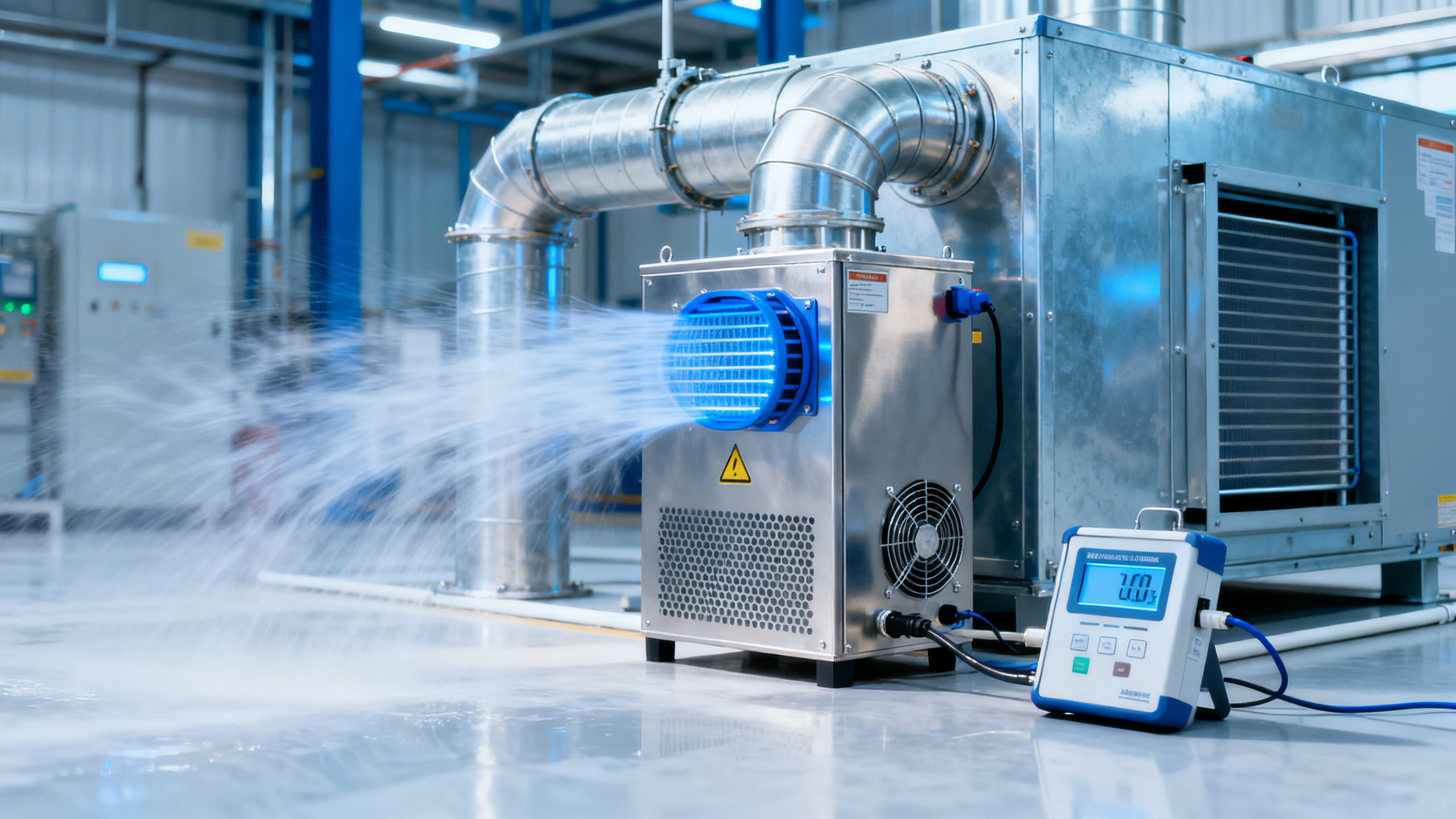
Odor complaints in HVAC systems can indicate contamination, weak ventilation, microbial activity, or process leakage. An hvac ozone generator is often promoted as a fast odor control option.
Yet ozone treatment requires careful review of exposure limits, material compatibility, shutdown procedures, and regulatory guidance before any facility-wide use.
Is an HVAC Ozone Generator Safe for Odor Control?
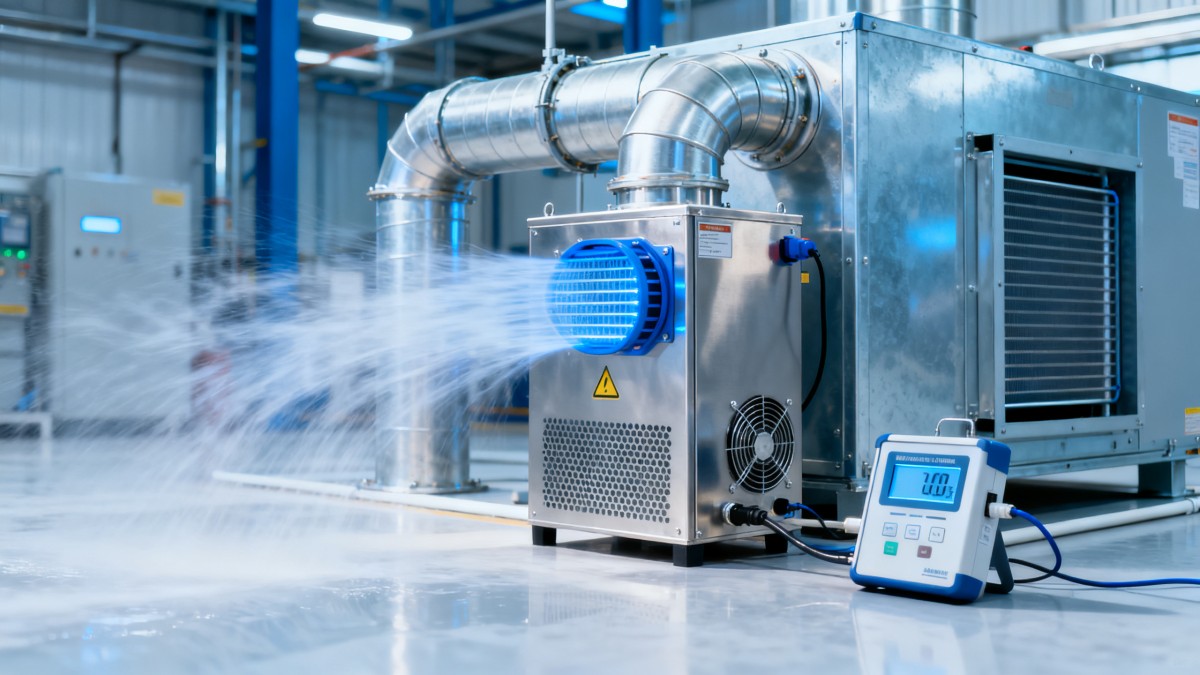
An hvac ozone generator produces ozone, a reactive oxidizing gas that can break down some odor-causing compounds in ducts, coils, and air-handling spaces.
The same reactivity creates safety concerns. Ozone can irritate the respiratory system, react with materials, and form secondary byproducts under certain conditions.
The central question is not whether ozone can reduce odors. It is whether the hvac ozone generator can be controlled without exposing people or damaging assets.
Why a Checklist-Based Decision Is Necessary
Odor problems rarely have one cause. A burnt smell, musty odor, solvent note, or sewage-like complaint can point to different failure paths.
Using an hvac ozone generator without diagnosis can mask root causes. It may also delay maintenance that protects air quality and equipment performance.
A structured checklist helps separate acceptable remediation from unsafe improvisation. It also creates documentation for compliance review and post-treatment verification.
The safest use cases usually involve unoccupied spaces, isolated HVAC zones, trained operators, and measured clearance before re-entry.
Core Safety Checklist Before Using an HVAC Ozone Generator
- Identify the odor source before treatment, including drains, filters, coils, insulation, process emissions, water intrusion, and return-air contamination paths.
- Confirm that the hvac ozone generator will operate only in unoccupied areas, with access controls, warning signage, and locked entry points.
- Review applicable exposure limits from OSHA, NIOSH, ACGIH, local authorities, and internal environmental health and safety procedures.
- Calculate treatment volume using duct layout, room size, air changes, leakage paths, and return-air routing before selecting generator capacity.
- Isolate sensitive zones by closing dampers, disabling normal occupancy ventilation routes, and preventing ozone migration into adjacent occupied areas.
- Verify material compatibility for rubber seals, wiring insulation, gaskets, electronic components, coated metals, elastomers, and filtration media.
- Use calibrated ozone monitoring devices during treatment and clearance, rather than relying on odor perception or fixed timer assumptions.
- Document pre-treatment readings, generator settings, operating duration, ventilation purge time, post-treatment ozone levels, and final re-entry approval.
Control Measures That Should Be Non-Negotiable
- Shut down occupancy access before the hvac ozone generator starts, including contractors, cleaners, visitors, and personnel working in connected zones.
- Place warning notices at all entry points, mechanical rooms, roof access doors, and connected service corridors before activation.
- Set a purge cycle using outdoor air or exhaust, then verify ozone levels before restoring normal HVAC operation.
- Assign one responsible person to approve start, stop, emergency response, monitoring results, and safe re-entry documentation.
If any control measure cannot be verified, the hvac ozone generator should not be used. Odor control does not justify uncontrolled chemical exposure.
When Ozone Treatment May Be Considered
Post-Event Odor Remediation
After smoke, minor fire events, or short-term odor incidents, an hvac ozone generator may support remediation after debris removal and surface cleaning.
The system should remain unoccupied during application. Clearance testing must confirm safe ozone levels before air circulation returns to normal operation.
Duct and Air-Handling Unit Odor Control
In ductwork, ozone may contact odor residues on internal surfaces. However, airflow patterns can create uneven distribution and untreated pockets.
An hvac ozone generator should not replace coil cleaning, drain pan sanitation, filter replacement, or duct inspection when biological growth is suspected.
Industrial and Process-Adjacent Spaces
In facilities near production, laboratories, storage areas, or waste handling zones, odors may involve chemicals that react unpredictably with ozone.
Before using an hvac ozone generator, review safety data sheets, exhaust design, pressure relationships, and possible reaction byproducts.
When an HVAC Ozone Generator Becomes a Hazard
The highest-risk scenario is occupied operation. Ozone should not be intentionally introduced into occupied air for routine odor masking.
Another hazard is excessive output. Oversized equipment can leave residual ozone in porous materials, ceiling spaces, duct liners, and adjacent rooms.
Poor isolation also creates risk. An hvac ozone generator in one zone can affect offices, control rooms, laboratories, or tenant spaces through return air.
Ozone may also degrade susceptible materials. Repeated treatment can accelerate cracking, embrittlement, corrosion, or premature failure of HVAC components.
Commonly Overlooked Items in Ozone Odor Control
Secondary Chemistry
Ozone can react with terpenes, solvents, cleaning chemicals, and volatile organic compounds. These reactions may create aldehydes, fine particles, or irritant byproducts.
Before approving an hvac ozone generator, review recent cleaning products, stored chemicals, production emissions, and known indoor air contaminants.
False Sense of Sanitization
Odor reduction does not prove disinfection. Ozone concentration, contact time, humidity, surface access, and contamination load all influence treatment results.
An hvac ozone generator should not be marketed internally as a guaranteed sterilization tool unless validated testing supports that specific claim.
Sensor Placement Errors
A single monitor near the generator may not represent remote rooms, return ducts, ceiling voids, or downstream occupied areas.
Use multiple measurement points when the hvac ozone generator is applied across complex HVAC layouts or multi-zone systems.
Regulatory and Insurance Review
Some jurisdictions restrict ozone-generating air cleaners, especially for occupied spaces. Insurance policies may also require documented hazard controls.
Keep records showing why the hvac ozone generator was selected, how exposure was prevented, and who authorized re-entry.
Practical Execution Plan for Safer Use
- Investigate the odor source first, then correct moisture, filtration, drainage, ventilation, or contamination defects before considering ozone treatment.
- Prepare a written method statement covering scope, generator output, isolation controls, monitoring points, purge process, and emergency response.
- Operate the hvac ozone generator during scheduled downtime, with restricted access and verified communication to all affected service areas.
- Measure ozone before treatment, during operation, after purge, and before re-entry using calibrated instruments with recorded readings.
- Inspect treated equipment afterward for odor recurrence, material damage, filter loading, residue, moisture, and unexpected performance changes.
For recurring odors, ozone should be treated as a temporary remediation aid. Persistent complaints require engineering investigation, not repeated chemical oxidation.
A well-governed hvac ozone generator program should integrate industrial hygiene, HVAC maintenance, facility operations, and environmental compliance records.
Alternatives to Consider Before Ozone
- Improve outdoor air delivery, pressure balance, and exhaust capture when odors originate from poor ventilation or cross-contamination.
- Replace filters and inspect bypass leakage where odor particles or residues are moving around filter banks.
- Clean coils, drain pans, humidifiers, and duct sections when microbial odor, stagnant water, or biofilm is suspected.
- Use activated carbon or specialty media when vapor-phase contaminants are known and compatible filtration is available.
These options may solve root causes with less exposure risk. An hvac ozone generator should be selected only after simpler controls are assessed.
Summary and Action Guide
An hvac ozone generator can help reduce certain odors, but safe use depends on controlled conditions, unoccupied treatment, verified monitoring, and documented clearance.
It should not be used as a routine occupied-space air cleaner, a substitute for maintenance, or a shortcut around ventilation defects.
Before approval, complete a source investigation, regulatory review, material compatibility check, isolation plan, monitoring plan, and re-entry protocol.
The practical next step is simple: build a written ozone-use checklist, validate it on a limited zone, and require measured results before wider deployment.
Technical Specifications
- How to Select Electronic Hotel Key Card Locks for Guest Rooms and Staff AreasAuthor :Safety Compliance Lead
- How to Select Lab Instruments for Reliable Chemical Analysis WorkflowsAuthor :Precision Metrology Expert
- How to Size a UPS for Server Rooms: Load, Runtime, and Redundancy FactorsAuthor :Grid Infrastructure Analyst
Expert Insights

Chief Security Architect
Dr. Thorne specializes in the intersection of structural engineering and digital resilience. He has advised three G7 governments on industrial infrastructure security.
Related Analysis
- Sep 17, 2026How to Select Electronic Hotel Key Card Locks for Guest Rooms and Staff AreasAuthor :Safety Compliance Lead
- Sep 16, 2026How to Select Lab Instruments for Reliable Chemical Analysis WorkflowsAuthor :Precision Metrology Expert
- Sep 15, 2026How to Size a UPS for Server Rooms: Load, Runtime, and Redundancy FactorsAuthor :Grid Infrastructure Analyst
Core Sector // 01
Security & Safety
- Environmental Technologies for Heavy Industry: Choosing Cleaner Production SolutionsAuthor :Environmental Engineering Director

- Selecting Air Compliance Equipment for Dust, Fumes, and VOC ControlAuthor :Environmental Engineering Director

- EU Rule Tightens EN 1822-2 for Industrial Air PurifiersAuthor :Environmental Engineering Director

- EU Eco-Design Rules Tighten for Air PurifiersAuthor :Environmental Engineering Director

- Low-Maintenance Dust and Fume Control Systems: Best Options for Welding ShopsAuthor :Environmental Engineering Director

- EPA Sets VOC Labeling Rule for Air PurifiersAuthor :Environmental Engineering Director

- Saudi SASO Rule Adds Real-Time Logging for Air SystemsAuthor :Environmental Engineering Director

- Saudi SASO Rules Tighten for Air PurifiersAuthor :Environmental Engineering Director