INMETRO New Rule for Industrial Circuit Breakers in Brazil (2026)
Author
Date Published
Reading Time
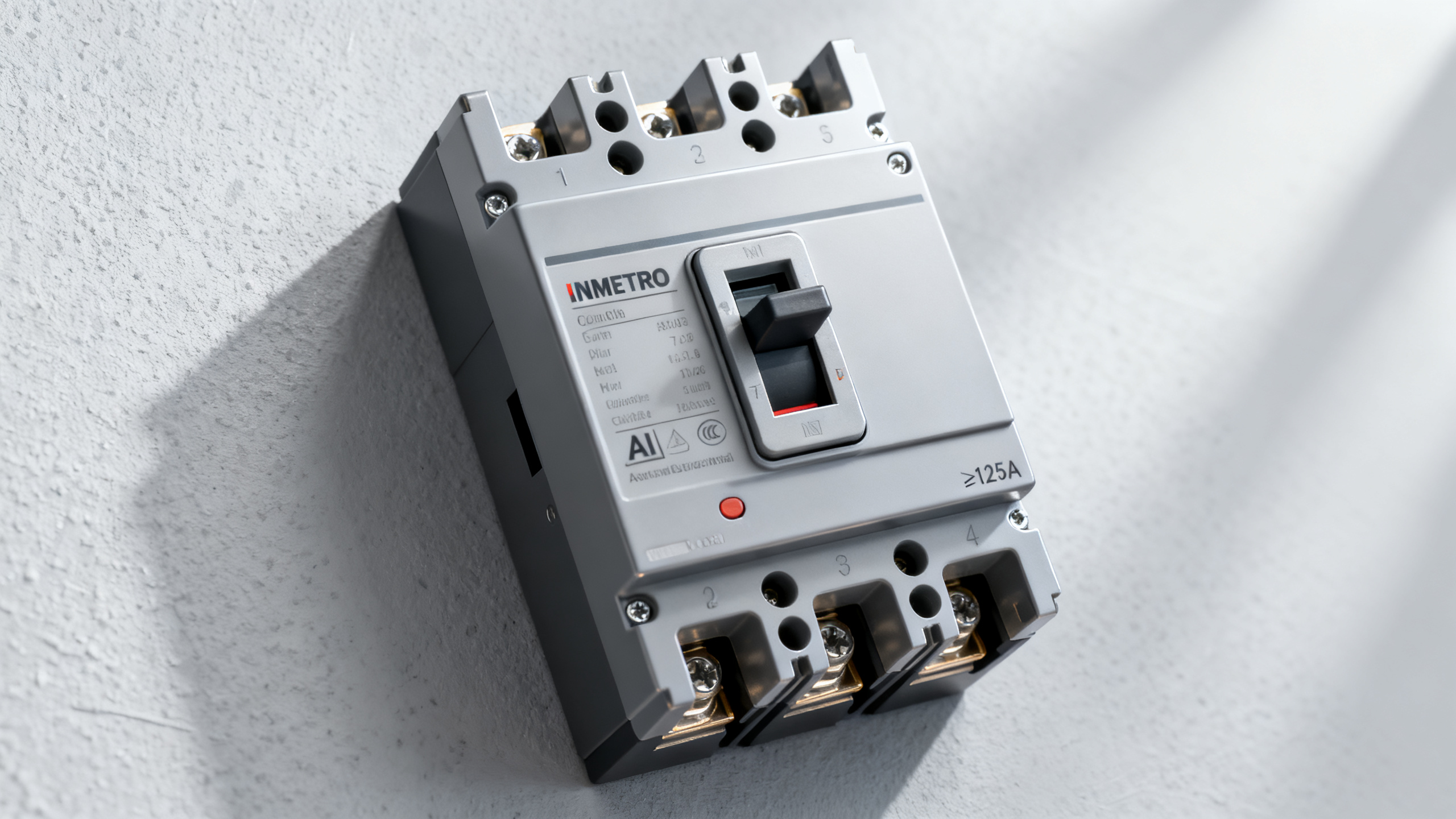
Brazil’s National Institute of Metrology, Standardization and Industrial Quality (INMETRO) issued Portaria No. 88/2026 on May 7, 2026, mandating AI-enabled overload prediction capabilities for industrial circuit breakers — a requirement that directly affects manufacturers, exporters, and grid-integration service providers supplying to the Brazilian industrial power market.
Event Overview
On May 7, 2026, INMETRO published Portaria No. 88/2026, stipulating that, effective October 1, 2026, all industrial circuit breakers with rated current ≥125 A seeking INMETRO certification must integrate an AI-based overload prediction module compliant with ABNT NBR 16953-2:2026 and expose a standardized RESTful API v2.1 interface. This API must support real-time data exchange with Brazil’s national grid dispatch systems. Additionally, Chinese exporters are required to obtain concurrent certification to UL 62841-2-11:2026 and this INMETRO regulation.
Industries Affected
Direct Exporters (especially from China)
Exporters supplying industrial circuit breakers to Brazil will face dual-certification obligations starting October 2026. The requirement introduces new hardware, firmware, and documentation compliance layers beyond existing safety standards — notably embedding AI inference logic and exposing production-grade API endpoints under local regulatory validation.
Manufacturers (OEMs & ODMs)
Manufacturers producing ≥125 A industrial circuit breakers must redesign product firmware and hardware architecture to host certified AI prediction modules and implement secure, auditable API v2.1 interfaces. Certification testing will assess both functional accuracy of load forecasting and interface interoperability with simulated grid调度 systems — not just electrical safety.
Supply Chain & Component Suppliers
Suppliers of microcontrollers, edge AI accelerators, or embedded communication modules may see revised technical specifications from OEMs, particularly around real-time inference latency, on-device model update mechanisms, and cryptographic signing of API payloads per ABNT NBR 16953-2:2026 Annex D.
Testing & Certification Service Providers
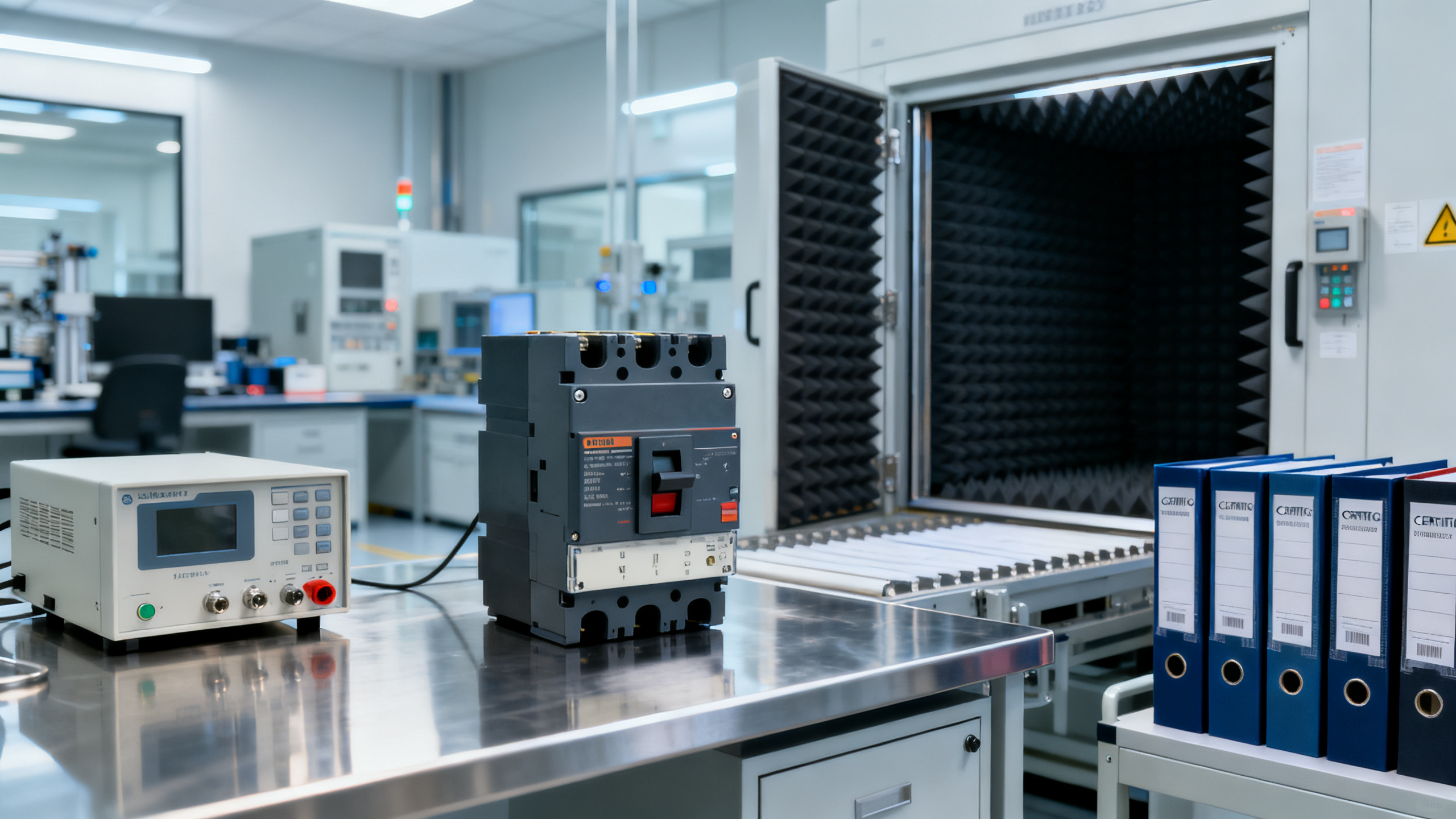
Laboratories accredited for INMETRO certification must now validate AI model behavior (e.g., prediction accuracy under harmonic distortion, thermal drift, and partial-load transients), in addition to traditional dielectric and mechanical tests. UL 62841-2-11:2026 alignment adds cross-standard traceability requirements for firmware versioning and API logging.
What Enterprises and Practitioners Should Focus On Now
Monitor official INMETRO guidance on API v2.1 conformance testing
Portaria No. 88/2026 references ABNT NBR 16953-2:2026 but does not yet publish the full test protocol for API v2.1 interoperability. Enterprises should track INMETRO’s upcoming Technical Circulars — expected by July 2026 — which will define mandatory payload schemas, authentication methods, and response time thresholds.
Identify product lines subject to the ≥125 A threshold and map certification timelines
The rule applies only to devices with rated current ≥125 A. Companies should audit their current portfolio to isolate affected SKUs and assess whether legacy models can be retrofitted or require full re-design. Note: INMETRO does not recognize grandfathering — all new certifications submitted after October 1, 2026 must comply.
Distinguish between regulatory signal and operational readiness
While the rule takes effect in October 2026, early submissions for certification may begin as early as August 2026. However, labs report limited capacity for AI-model validation; enterprises should reserve testing slots by Q3 2026 and avoid assuming API v2.1 implementation is purely a software-only upgrade.
Prepare for concurrent UL and INMETRO audit coordination
UL 62841-2-11:2026 includes firmware security controls (e.g., signed OTA updates) not explicitly required in prior versions. Exporters must align documentation packages — especially change logs, threat models, and API access control matrices — across both standards to avoid duplicate audits or conflicting findings.
Editorial Perspective / Industry Observation
Observably, this regulation marks Brazil’s first enforceable mandate integrating AI functionality into low-voltage industrial protection equipment — shifting certification focus from passive safety to active system intelligence. Analysis shows it functions less as a standalone technical update and more as a strategic signal: INMETRO is aligning national infrastructure standards with Brazil’s Grid Modernization Program (PDE 2030), where predictive load management is a stated priority. From an industry perspective, the dual-certification requirement reflects tightening interoperability expectations between international equipment vendors and domestic utility ecosystems — not merely compliance formalities. Current evidence suggests the rule is already shaping R&D roadmaps among Tier-1 manufacturers, though widespread commercial deployment remains contingent on grid-side API integration readiness.
Conclusion
This regulation signals a structural shift in how industrial power equipment is evaluated in regulated markets — moving beyond electrical performance to include embedded intelligence and system-level interoperability. It is neither a temporary pilot nor a fully matured framework; rather, it represents an early-stage, binding policy intervention requiring coordinated engineering, certification, and supply chain adaptation. For stakeholders, it is better understood as a calibrated step toward grid-aware equipment standards — one that demands attention not only for compliance but for its implications on future product architecture and regional market access strategy.
Information Sources
Main source: INMETRO Portaria No. 88/2026, published May 7, 2026.
Note: Details on API v2.1 test procedures, lab accreditation status for AI module validation, and UL-INMETRO mutual recognition arrangements remain pending official release and are subject to ongoing observation.
Technical Specifications
- How to Select an Emissions Monitoring System Analyzer for Compliance ReportingAuthor :Precision Metrology Expert
- How to Select an Access Control Management System for Multi-Site FacilitiesAuthor :Safety Compliance Lead
- Portable Gas Monitor Calibration: How Often Is It Needed for Safe Confined-Space Work?Author :Precision Metrology Expert
Expert Insights

Chief Security Architect
Dr. Thorne specializes in the intersection of structural engineering and digital resilience. He has advised three G7 governments on industrial infrastructure security.
Related Analysis
- Sep 21, 2026How to Select an Emissions Monitoring System Analyzer for Compliance ReportingAuthor :Precision Metrology Expert
- Sep 20, 2026How to Select an Access Control Management System for Multi-Site FacilitiesAuthor :Safety Compliance Lead
- Sep 19, 2026Portable Gas Monitor Calibration: How Often Is It Needed for Safe Confined-Space Work?Author :Precision Metrology Expert
Core Sector // 01
Security & Safety
- Can SPDs Handle Repeated Voltage Spikes in Tropical Grids?Author :Grid Infrastructure Analyst

- How to Evaluate IEC-Compliant Power Protection Devices for Industrial PanelsAuthor :Grid Infrastructure Analyst

- How to Choose Smart Industrial Control Equipment for Harsh Plant EnvironmentsAuthor :Grid Infrastructure Analyst

- EU EMC Update Triggers Re-Certification for BreakersAuthor :Grid Infrastructure Analyst

- How to Select the Right SPD for Solar Inverter Protection in PV Systems?Author :Grid Infrastructure Analyst

- Industrial Valve Systems Factory Checklist: What Buyers Should Verify Before OrderingAuthor :Grid Infrastructure Analyst

- Breaker and Relay Lead Times Hit 24 WeeksAuthor :Grid Infrastructure Analyst

- IEC 61850-10-3 Sets Cybersecurity Bar for Grid DevicesAuthor :Grid Infrastructure Analyst