How to Evaluate IEC-Compliant Power Protection Devices for Industrial Panels
Author
Date Published
Reading Time
How to Evaluate IEC-Compliant Power Protection Devices for Industrial Panels
Selecting power protection devices IEC compliant for industrial panels is not just a box-ticking exercise—it directly affects safety, uptime, and long-term system reliability. For technical evaluators, the challenge lies in verifying standards alignment, fault performance, coordination, and suitability for demanding operating environments. This guide outlines a practical framework to assess IEC-compliant protection solutions with confidence and procurement accuracy.
In industrial projects, the consequences of a weak choice show up later: nuisance trips that interrupt production, poor selectivity that cuts power to the wrong branch, or device ratings that look acceptable on paper but fail once the panel is installed in a hot, dusty, vibrating environment. That is why evaluation should start with the application, not the catalog. A device may be IEC compliant and still be a poor fit for the panel architecture, the fault level, or the maintenance model.
Start with the exact standard the device is claiming
“IEC-compliant” is broad language. In practice, you need to identify which IEC standard applies to the device and whether the claim is relevant to the function you need. A circuit breaker, surge protective device, fuse, contactor, or power supply will not be assessed against the same document. The device should be linked to the correct IEC product standard, and the supporting documentation should show the tested ratings, not just a declaration of conformity.
For evaluators, the useful question is simple: does the supplied evidence match the duty of the actual panel? A label that says IEC compliant does not tell you whether the device was tested for breaking capacity, insulation coordination, temperature rise, or endurance in the way your application requires. If the supplier cannot show the exact standard reference and the relevant test basis, that is a warning sign rather than a detail to chase later.
Documentation matters more than claims
Look for product data sheets, type-test references, installation instructions, and any third-party certification that is genuinely tied to the model or series you intend to use. Internal declarations can be useful, but they should not replace evidence. In industrial panels, the document set is part of the engineering deliverable. If the paperwork is vague, outdated, or inconsistent across regions, the risk often reappears during inspection, commissioning, or later replacement work.
Check electrical ratings in the context of the panel
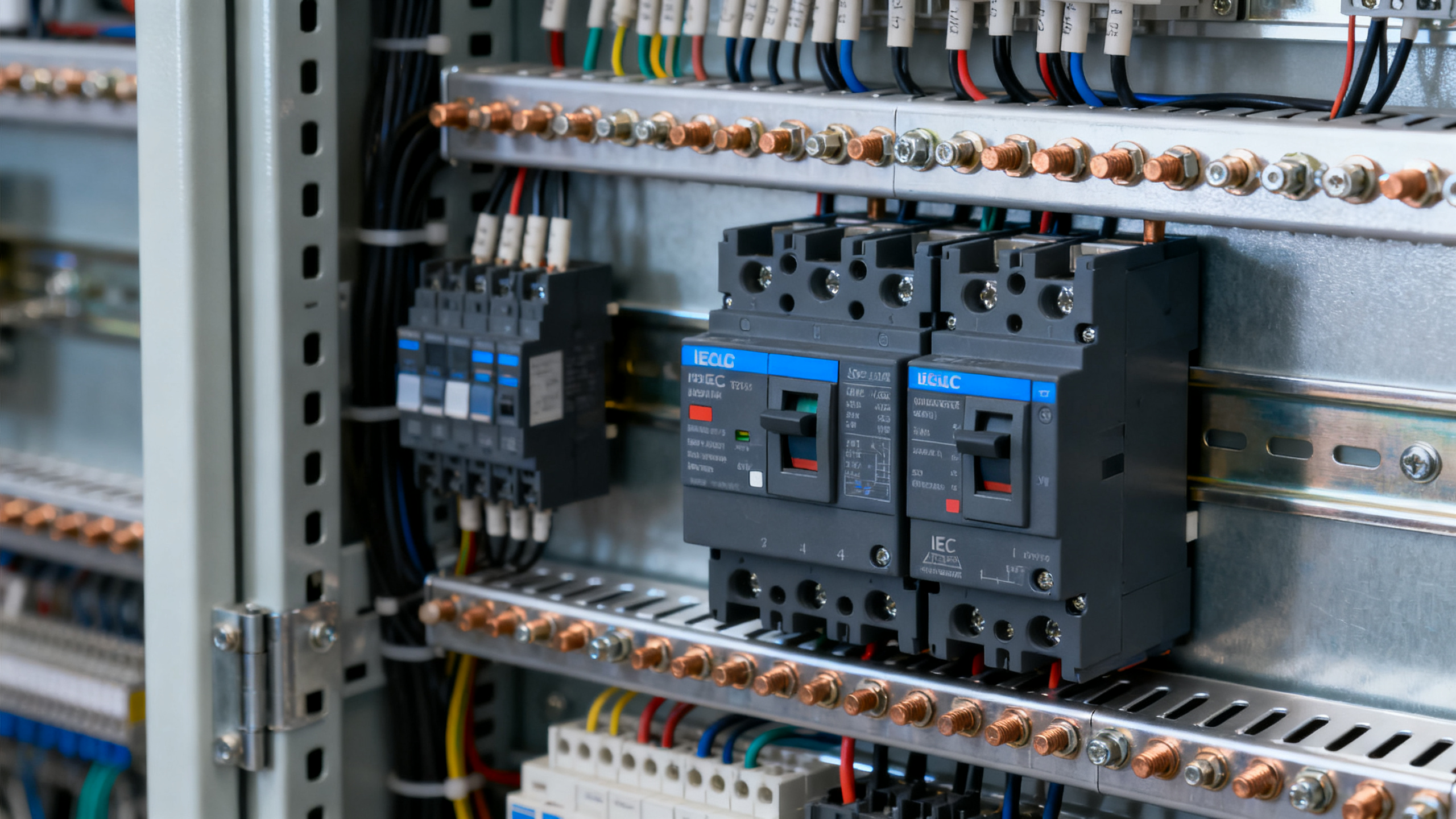
A common mistake is evaluating a device by one headline number. Industrial panel design is about relationships: operating voltage, rated current, impulse withstand, short-circuit performance, and coordination with upstream and downstream devices. The device must be rated not only for normal operation but also for the fault conditions the system may actually experience.
Breaking capacity deserves particular attention. If the prospective short-circuit current at the installation point is higher than the device can interrupt, the protection concept is already flawed. The same logic applies to insulation level and pollution degree assumptions. A device can look suitable in a clean indoor specification and become marginal once installed in a harsher industrial enclosure or near equipment that generates heat and electrical noise.
The real test is not whether the device is “strong enough” in isolation. It is whether the protection curve, interrupting behavior, and coordination strategy make sense for the entire panel. That is especially important in mixed loads, where drives, control circuits, heaters, and instrumentation may all sit behind the same assembly but tolerate faults very differently.
Do not ignore the installation environment
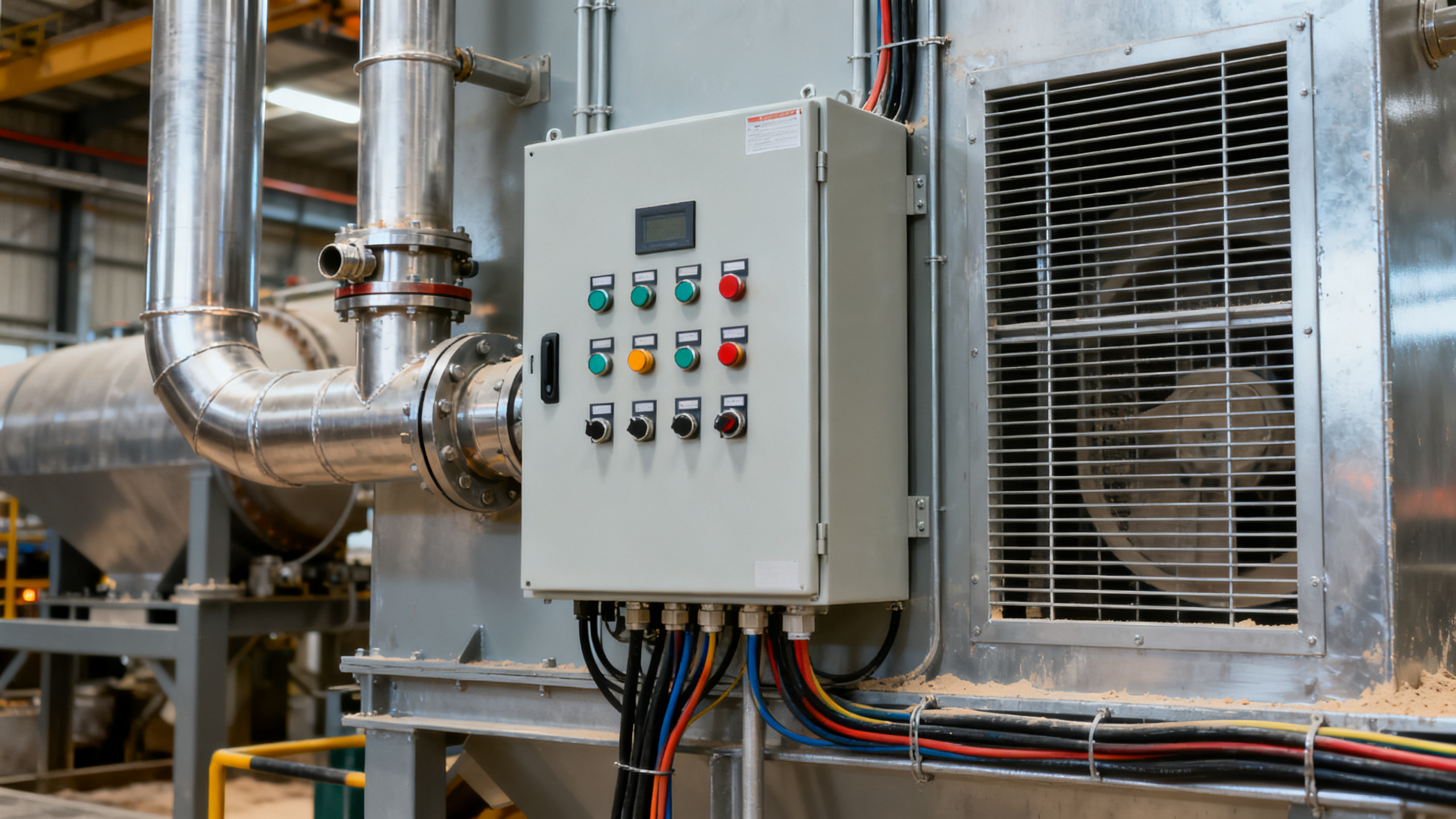
Industrial panels rarely live in ideal conditions. Heat, humidity, vibration, dust, altitude, and electromagnetic disturbance all influence whether power protection devices IEC compliant will perform as expected over time. A device that passes a standard test in controlled conditions may still need derating, additional enclosure protection, or alternative mounting arrangements in the field.
This is where technical evaluators often add value beyond basic procurement. Ask how the product behaves across the actual temperature range of the site. Check whether the enclosure leaves enough room for air circulation. Consider whether maintenance access will be practical after cabling is complete. If the panel will be used in remote or mission-critical infrastructure, replacement lead time and spare strategy also become part of the evaluation, even if they are not part of the IEC test itself.
Coordination is where many good products fail as a system
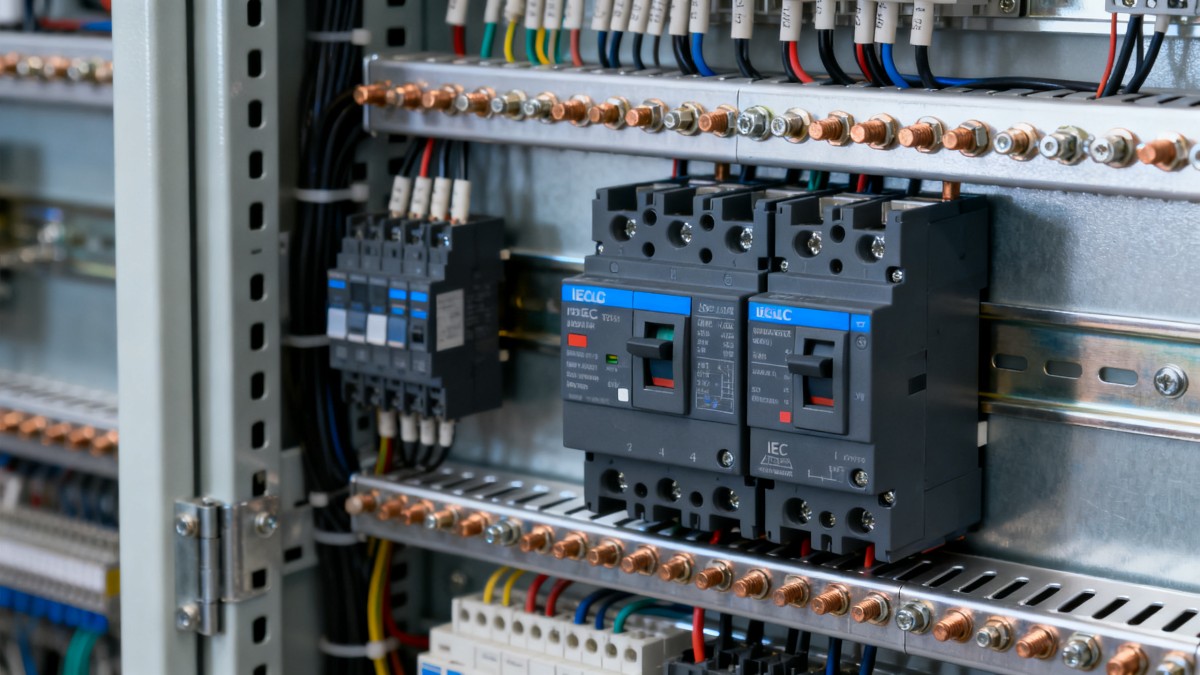
A panel can contain perfectly acceptable individual devices and still behave badly when a fault occurs. Coordination between upstream and downstream protection is often the difference between a local interruption and a plant-wide shutdown. In industrial settings, that distinction matters more than marginal price differences.
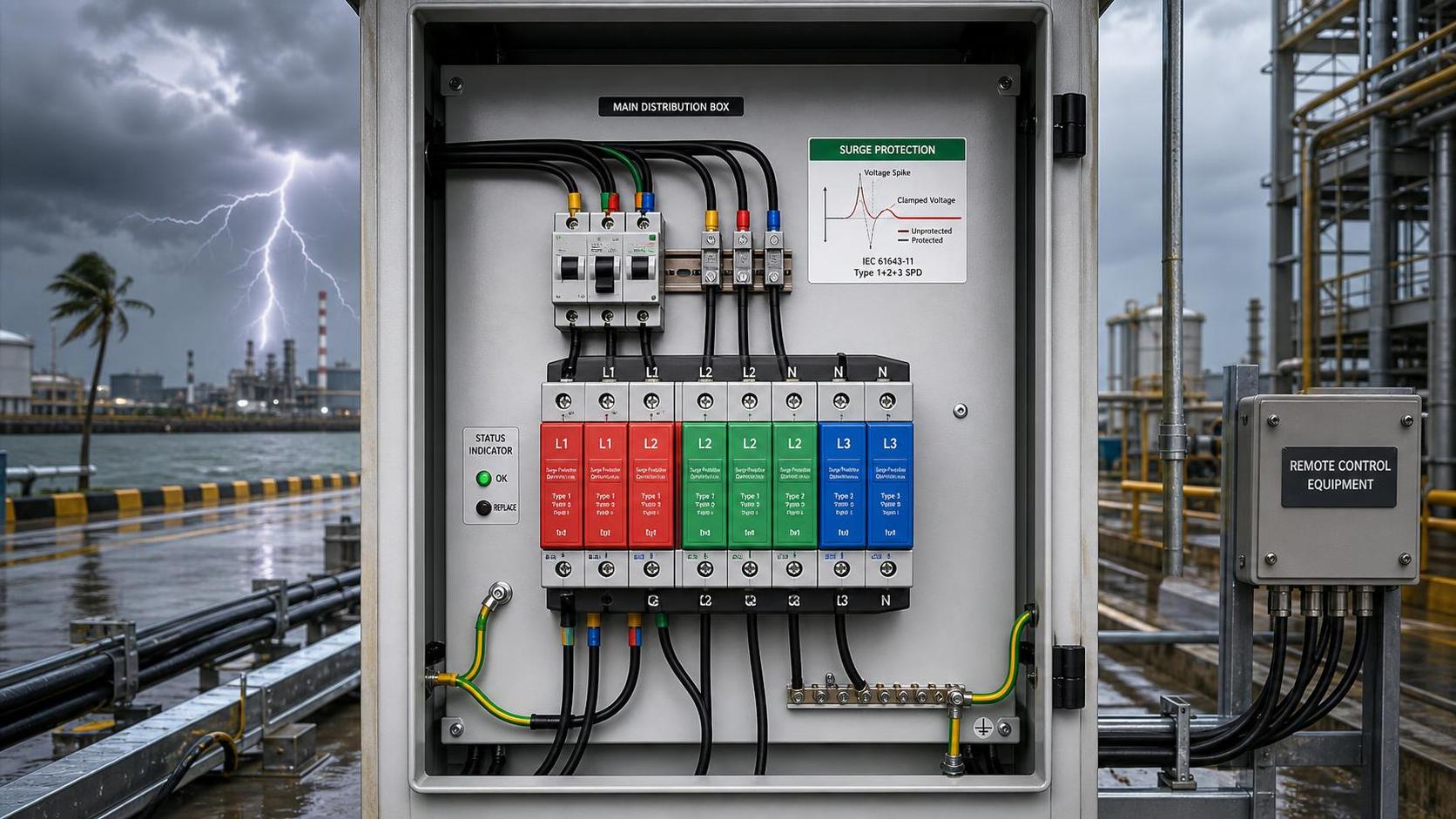
Evaluate time-current characteristics, selectivity tables, and any manufacturer coordination guidance carefully, but do not treat them as automatic guarantees. They are starting points, not substitutes for system design. If your loads include sensitive electronics, motor starters, or variable frequency drives, the protective device must work with those components, not against them. The same goes for surge protection: it should be integrated into the panel’s earthing and bonding concept, not added as an isolated item at the end.
Pay attention to maintainability and lifecycle risk
Technical evaluation does not end once the device is selected. You also need to know how the panel will be maintained after commissioning. Are the terminals accessible with standard tools? Can the device be inspected without dismantling nearby components? Is there a clear replacement path if the original series is discontinued? These questions sound practical because they are practical.
In global industrial projects, lifecycle risk often comes from inconsistency across sites. One plant may build around a device family that is easy to source locally, while another site faces long lead times or version changes. For EPC teams and facility managers, it is worth checking whether the chosen protection architecture can be replicated across regions without forcing a redesign every time the supply chain shifts.
A useful evaluation sequence for technical teams
A disciplined review usually follows a simple sequence: confirm the exact IEC standard, match the electrical ratings to the panel fault and load profile, review coordination with adjacent devices, check installation constraints, and then verify documentation quality. If any one of those steps is weak, the final decision is still premature.
This approach also makes supplier comparison much cleaner. Instead of comparing marketing language, you compare evidence. That is the level of discipline industrial buyers need when selecting protection equipment for panels that sit at the center of operations. GIC’s editorial work is built around the same principle: technical claims are only useful when they can be traced back to standards, test logic, and real engineering context. For teams working through sourcing reviews, that is usually the difference between a confident approval and a costly rework later.
If a proposal still leaves unanswered questions, slow down and ask for the missing parameters before release. In this category, uncertainty is rarely harmless. A device that is well documented, properly rated, and correctly coordinated will usually be easier to defend in design review, easier to commission, and easier to maintain over the life of the panel.
Technical Specifications
- Air Handling Unit Supplier Checklist: Performance Data, Lead Times, and SupportAuthor :Environmental Engineering Director
- Buying Fiberglass Water Tanks Wholesale: Compare Quotes and Delivery CostsAuthor :Environmental Engineering Director
- Choosing an XLPE Power Cable Supplier: Test Reports, Traceability, and Lead TimesAuthor :Grid Infrastructure Analyst
Expert Insights

Chief Security Architect
Dr. Thorne specializes in the intersection of structural engineering and digital resilience. He has advised three G7 governments on industrial infrastructure security.
Related Analysis
- Oct 19, 2026Air Handling Unit Supplier Checklist: Performance Data, Lead Times, and SupportAuthor :Environmental Engineering Director
- Oct 18, 2026Buying Fiberglass Water Tanks Wholesale: Compare Quotes and Delivery CostsAuthor :Environmental Engineering Director
- Oct 17, 2026Choosing an XLPE Power Cable Supplier: Test Reports, Traceability, and Lead TimesAuthor :Grid Infrastructure Analyst
Core Sector // 01
Security & Safety
- Can SPDs Handle Repeated Voltage Spikes in Tropical Grids?Author :Grid Infrastructure Analyst

- How to Evaluate IEC-Compliant Power Protection Devices for Industrial PanelsAuthor :Grid Infrastructure Analyst

- How to Choose Smart Industrial Control Equipment for Harsh Plant EnvironmentsAuthor :Grid Infrastructure Analyst

- EU EMC Update Triggers Re-Certification for BreakersAuthor :Grid Infrastructure Analyst

- How to Select the Right SPD for Solar Inverter Protection in PV Systems?Author :Grid Infrastructure Analyst

- Industrial Valve Systems Factory Checklist: What Buyers Should Verify Before OrderingAuthor :Grid Infrastructure Analyst

- Breaker and Relay Lead Times Hit 24 WeeksAuthor :Grid Infrastructure Analyst

- IEC 61850-10-3 Sets Cybersecurity Bar for Grid DevicesAuthor :Grid Infrastructure Analyst