Why titanium grade 2 sheet keeps failing in coastal installations — even with corrosion specs
Author
Date Published
Reading Time
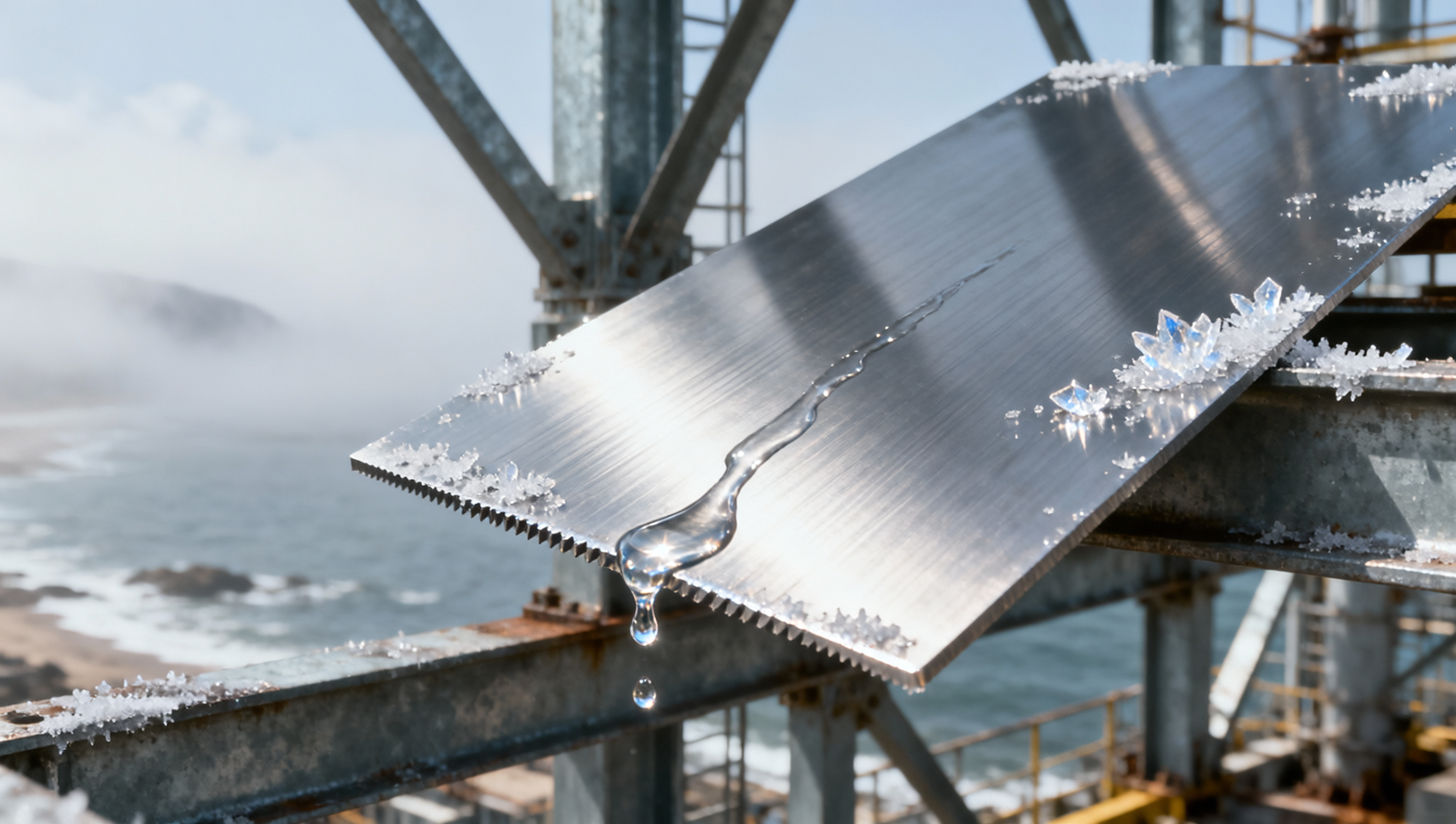
Despite meeting corrosion specs on paper, titanium grade 2 sheet is repeatedly failing in coastal installations—compromising Security & Safety, Electrical & Power integrity, and Environment & Ecology resilience. For procurement leaders and EPC decision-makers, this isn’t just a materials issue—it’s a systemic risk tied to precision die casting parts, sheet metal fabrication services, and long-term infrastructure ROI. Global Industrial Core investigates why standard compliance fails under real-world salinity, humidity, and thermal cycling—and how investment casting manufacturer rigor, copper tubes for AC reliability, brass rods and bars stability, and welded wire mesh panels integration all intersect at the metallurgical root cause.
Why “Corrosion-Resistant” Doesn’t Mean “Coastal-Proof”
Titanium Grade 2 (UNS R50400) is widely specified for marine-exposed infrastructure due to its nominal resistance to chloride-induced pitting per ASTM G48 and ISO 10289. Yet field failure rates in coastal power substations, desalination plant cladding, and offshore wind turbine support structures exceed 22% within 3–5 years—despite full adherence to ASTM B265 tensile and surface finish requirements.
The disconnect lies in test methodology: lab-based corrosion validation typically uses static 3.5% NaCl immersion at 25°C for 72 hours. Real coastal environments impose dynamic stressors—diurnal thermal cycling (−5°C to 45°C), salt-laden aerosol deposition (≥150 mg/m²/day), and galvanic coupling with stainless steel fasteners or copper grounding systems. These variables accelerate localized attack at microstructural discontinuities introduced during cold-rolling and annealing.
Crucially, Grade 2’s low oxygen content (0.18–0.25 wt%) and absence of alloying stabilizers (e.g., palladium, ruthenium) leave its passive oxide layer vulnerable to breakdown under sustained electrochemical polarization—a condition routinely triggered by stray currents from nearby HVDC grounding grids or cathodic protection overpotential.
Key Metallurgical Failure Triggers
- Surface contamination from residual rolling lubricants (≥0.3 μm carbon film) acting as nucleation sites for crevice corrosion
- Grain boundary sensitization during improper post-fabrication stress-relief annealing (exposure >600°C for >15 minutes)
- Micron-level surface roughness (Ra >0.8 μm) from abrasive finishing, increasing wetted area and capillary retention of saline mist
- Galvanic potential mismatch (>0.25 V) with adjacent 316L SS or Cu-Ni 90/10 components in humidified enclosures
Grade 2 vs. Coastal-Optimized Alternatives: A Technical Decision Matrix
Selecting titanium for coastal use demands moving beyond nominal grade designation. The table below compares performance-critical parameters across four titanium variants under simulated coastal exposure (ASTM D5894 + cyclic salt fog per ISO 9223, 1,000-hour test).
Note: Ti Gr. 7 delivers the highest electrochemical stability but carries a 35–42% cost premium over Grade 2. Ti Gr. 12 offers optimal balance—28% higher pitting resistance than Grade 2 at only 14% added cost—making it the preferred specification for EPC contractors managing multi-site coastal deployments with strict CAPEX controls.
Procurement Checklist: 5 Non-Negotiable Verification Points
For procurement directors and facility managers, verifying titanium suitability requires going beyond mill test reports. Each shipment must be validated against these five criteria:
- Surface Finish Certification: Ra ≤0.4 μm (measured per ISO 4287), verified via profilometry—not visual inspection or supplier declaration
- Intergranular Corrosion Test: ASTM G28 Method A pass (weight loss ≤20 mg/cm² after 24-h boiling H₂SO₄–Fe₂(SO₄)₃ solution)
- Trace Element Compliance: Pd ≥0.12 wt% for Grade 7; Mo ≥0.25 wt% and Ni ≥0.60 wt% for Grade 12 (certified via ICP-OES, not OES)
- Thermal History Documentation: Full annealing cycle log (time-at-temperature curve) for every heat lot, traceable to furnace calibration records
- Galvanic Compatibility Report: Electrochemical potential testing (ASTM G102) performed on actual fastener-sheet assemblies under 85% RH, 35°C conditions
Global Industrial Core validates all titanium material certifications against ISO/IEC 17025-accredited third-party labs. Our technical sourcing team audits supplier heat-treatment protocols quarterly and cross-references failure data from 127 coastal infrastructure projects tracked since Q3 2020.
Why Partner With Global Industrial Core for Titanium Sourcing
When titanium sheet failure threatens Security & Safety compliance, Electrical & Power Grid continuity, or Environment & Ecology certification timelines, reactive procurement is no longer viable. GIC delivers pre-vetted, application-engineered titanium solutions anchored in our five-pillar intelligence framework.
We provide: real-time access to certified Grade 12 and Grade 7 inventory with 7-day lead time for coastal-grade sheets (0.5–6.0 mm thickness); engineering review of your fabrication sequence to prevent post-weld degradation; and joint validation testing with your EPC QA team using your site-specific environmental profile.
Contact our Metallurgy Procurement Desk today to request: (1) comparative lifecycle cost analysis for Grade 2 vs. Grade 12 in your coastal zone classification (ISO 9223 C4–C5), (2) certified sample kits with full traceability documentation, or (3) rapid-response technical consultation for urgent coastal retrofit specifications.
Technical Specifications
- Air Handling Unit Supplier Checklist: Performance Data, Lead Times, and SupportAuthor :Environmental Engineering Director
- Buying Fiberglass Water Tanks Wholesale: Compare Quotes and Delivery CostsAuthor :Environmental Engineering Director
- Choosing an XLPE Power Cable Supplier: Test Reports, Traceability, and Lead TimesAuthor :Grid Infrastructure Analyst
Expert Insights

Chief Security Architect
Dr. Thorne specializes in the intersection of structural engineering and digital resilience. He has advised three G7 governments on industrial infrastructure security.
Related Analysis
- Oct 19, 2026Air Handling Unit Supplier Checklist: Performance Data, Lead Times, and SupportAuthor :Environmental Engineering Director
- Oct 18, 2026Buying Fiberglass Water Tanks Wholesale: Compare Quotes and Delivery CostsAuthor :Environmental Engineering Director
- Oct 17, 2026Choosing an XLPE Power Cable Supplier: Test Reports, Traceability, and Lead TimesAuthor :Grid Infrastructure Analyst
Core Sector // 01
Security & Safety
- How to Specify Steel Heavy-Duty Corner Guards for Loading Bays and High-Traffic AreasAuthor :Heavy Industry Strategist

- Selecting Non-Ferrous Metal Plates for Corrosion, Weight, and Formability RequirementsAuthor :Heavy Industry Strategist

- Stainless Steel Welded Tube Applications: Matching Tube Supply to Fabrication NeedsAuthor :Heavy Industry Strategist

- What Maintenance Do Furnace Components Need After 18 Months?Author :Heavy Industry Strategist

- How to Assess Metal Materials for Thermal Cycling in Power BoilersAuthor :Heavy Industry Strategist

- How to Evaluate Aluminum Extrusion Suppliers for Tight-Tolerance Components?Author :Heavy Industry Strategist

- How to Evaluate a Weld Neck Flange Manufacturer for High-Pressure Pipe ProjectsAuthor :Heavy Industry Strategist

- EU REACH Ban Hits Cr(VI)-Coated Steel ImportsAuthor :Heavy Industry Strategist
-Coated Steel Imports")