UL Broadens UL 62443-4-2 for Grid Equipment
Author
Date Published
Reading Time

On 27 June 2026, UL Solutions announced a rule change with direct implications for grid-equipment procurement and compliance: its UL 62443-4-2 cybersecurity certification program now covers medium-voltage transformers and intelligent switchgear systems, with the expanded scope taking effect on 15 August 2026. For manufacturers, certification-related service providers, procurement teams, and suppliers serving grid-connected projects, the development is worth close attention because it links product cybersecurity requirements more directly to tender access in specific utility markets.
What the certification expansion now covers
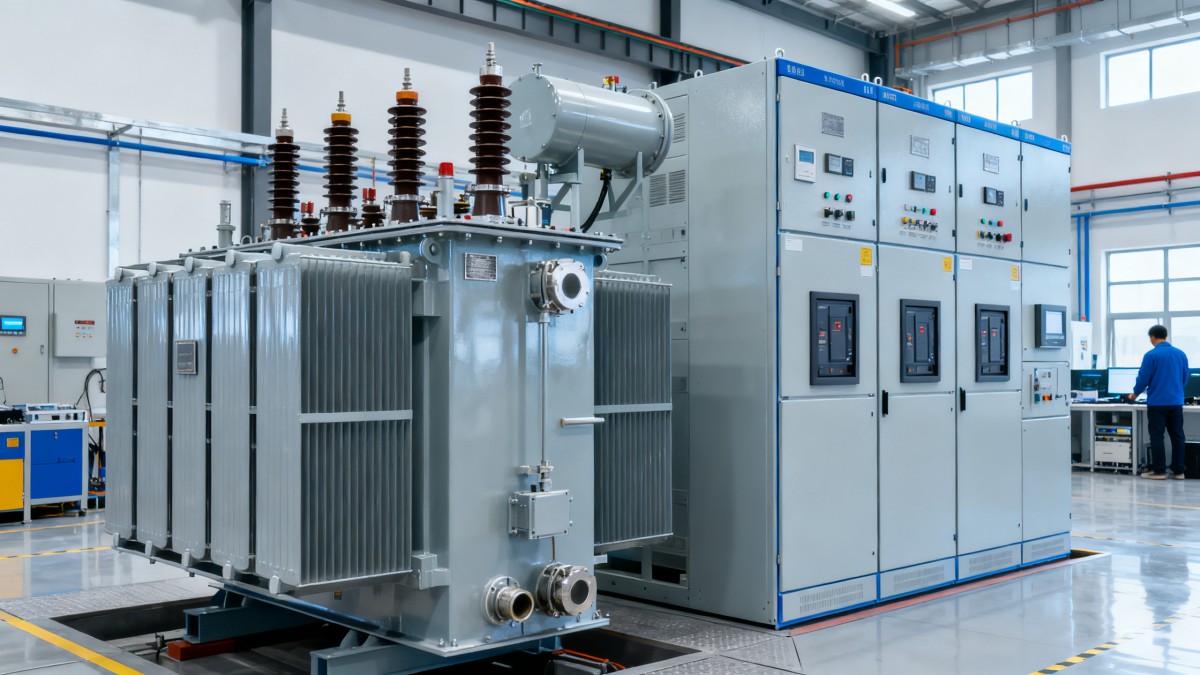
According to the provided event summary, UL Solutions has extended the scope of its UL 62443-4-2 cybersecurity certification program to include medium-voltage transformers and intelligent switchgear systems. The expanded scope becomes effective on 15 August 2026.
The same update introduces three stated requirements: firmware integrity checks, secure boot, and remote access logging.
The provided information also states that major utilities in Australia, Canada, and the UAE now require this certification in procurement tenders for grid-connected projects.
Where the new requirement may start to affect business execution
Product suppliers facing tender-access changes
From an industry perspective, manufacturers and exporters of medium-voltage transformers and intelligent switchgear may be affected first because certification status can influence whether a product is considered eligible in grid-connected procurement tenders. The practical impact is likely to appear in bid preparation, technical documentation, qualification review, and delivery planning where proof of compliance may become a procurement gate.
What deserves closer attention is whether existing product documentation, firmware-related records, and cybersecurity feature descriptions are sufficient to support tender submissions once buyers begin checking for UL 62443-4-2 coverage under the expanded scope.
Procurement teams and project buyers tightening specifications
Utilities and procurement departments connected to grid projects may see the change as a clearer technical and compliance filter in supplier selection. The immediate business effect is likely to be felt in technical specifications, supplier prequalification, bid evaluation language, and contract conditions tied to certification status.
Analysis shows that buyers will need to pay closer attention to how certification is referenced in tender documents, especially where grid-connected procurement already treats the certification as a requirement rather than a preference.
Certification and testing support functions under more review pressure
Certification-related service providers, testing support teams, and internal compliance departments may also be affected because the new scope introduces product categories and specified cybersecurity controls that must be addressed in a verifiable way. In practice, the pressure point is likely to sit in document readiness, evidence preparation, and alignment between product design claims and certification expectations.
Observably, even where full execution details are not yet provided in the input, the compliance workload may shift earlier into the product qualification cycle rather than remaining only a final tender-stage issue.
After-sales and remote access management entering the compliance conversation
Because the update explicitly mentions remote access logging, after-sales service teams and system support functions may need to watch how service access practices are documented and controlled. The main area of attention is not only product shipment, but also whether post-delivery support arrangements align with the cybersecurity controls that are now named in the certification scope.
What companies should review now
Check whether covered products fall within the new scope
Companies supplying medium-voltage transformers or intelligent switchgear should first review whether their relevant product lines are now expected to fall under the expanded UL 62443-4-2 certification scope for target projects. This is a basic but necessary screening step for firms serving utilities or integrators involved in grid-connected procurement.
Re-examine technical files around the named cybersecurity controls
The provided summary identifies firmware integrity checks, secure boot, and remote access logging as required elements. Companies should therefore review whether existing technical files, product descriptions, test materials, and compliance records clearly address these points. Where the input does not provide formal implementation detail, it is more appropriate to treat this as a documentation and readiness review issue rather than assume a settled audit practice.
Track tender language in affected utility markets
Since major utilities in Australia, Canada, and the UAE are stated to require this certification for grid-connected tenders, suppliers should monitor whether bid documents, qualification forms, and technical schedules begin to reflect that requirement more explicitly. This matters for quotation timing, bid/no-bid decisions, and supplier qualification planning.
Watch delivery planning and supplier qualification timing
Analysis shows that certification-linked procurement conditions can affect delivery sequencing even before any shipment issue appears. Companies should pay attention to whether project schedules, supplier approvals, or contract award timing start to depend on proof of certification under the expanded scope. At this stage, the input does not confirm specific delays or market outcomes, so this remains a practical risk to monitor rather than an established result.
Why this looks like an execution signal, not just a standards update
Observably, this development is not only about the formal expansion of a certification scope. The stronger signal comes from the stated procurement requirement already appearing in grid-connected tenders from major utilities in Australia, Canada, and the UAE. That makes the update more relevant to market access and tender compliance than to standards discussion alone.
At the same time, analysis should remain measured. The provided information confirms the certification expansion, its effective date, the named cybersecurity requirements, and the existence of procurement use in specific utility markets. It does not, however, provide broader enforcement detail, transition arrangements, or a complete picture of how different buyers will apply the requirement in practice. That is why continued observation of certification wording, tender implementation, and supplier response remains necessary.
How this update is best understood for now
For the industry, the immediate significance of this event lies in the closer connection between cybersecurity certification and procurement eligibility for certain grid-connected equipment categories. It is more appropriate to understand this as a concrete compliance and tender-access signal that has already moved beyond abstract policy discussion, while still leaving room for further clarification in execution.
A cautious reading is therefore warranted: the rule change is real, the effective date is defined, and procurement relevance is already visible in the provided markets, but the full market impact will depend on how certification expectations are reflected in bid documents, qualification reviews, and delivery workflows over time.
Basis of this article and what still needs verification
This article is based on the user-provided news title, event date, and event summary. For developments of this kind, commonly relevant source types may include official announcements, regulatory releases, information from trade or customs authorities, industry association updates, standards organization documents, and reporting by authoritative media.
No specific official source link was provided in the input, so the precise official reference still needs to be verified on an ongoing basis. What still merits continued follow-up includes any detailed certification interpretation, implementation wording, changes in tender documents, market feedback from buyers and suppliers, and actual enterprise execution in affected procurement processes.
Technical Specifications
- Air Handling Unit Supplier Checklist: Performance Data, Lead Times, and SupportAuthor :Environmental Engineering Director
- Buying Fiberglass Water Tanks Wholesale: Compare Quotes and Delivery CostsAuthor :Environmental Engineering Director
- Choosing an XLPE Power Cable Supplier: Test Reports, Traceability, and Lead TimesAuthor :Grid Infrastructure Analyst
Expert Insights

Chief Security Architect
Dr. Thorne specializes in the intersection of structural engineering and digital resilience. He has advised three G7 governments on industrial infrastructure security.
Related Analysis
- Oct 19, 2026Air Handling Unit Supplier Checklist: Performance Data, Lead Times, and SupportAuthor :Environmental Engineering Director
- Oct 18, 2026Buying Fiberglass Water Tanks Wholesale: Compare Quotes and Delivery CostsAuthor :Environmental Engineering Director
- Oct 17, 2026Choosing an XLPE Power Cable Supplier: Test Reports, Traceability, and Lead TimesAuthor :Grid Infrastructure Analyst
Core Sector // 01
Security & Safety
- Choosing a Step-Down Transformer Supplier: Test Reports, Lead Times, and WarrantyAuthor :Grid Infrastructure Analyst

- Metallurgy Processes That Improve Conductivity and Reliability in Power Grid ComponentsAuthor :Grid Infrastructure Analyst

- How to Size a UPS for Server Rooms: Load, Runtime, and Redundancy FactorsAuthor :Grid Infrastructure Analyst

- How to Choose a Step-Down Transformer for a Control Panel: Key Sizing FactorsAuthor :Grid Infrastructure Analyst

- How Often Should Overseas Power Systems Undergo Safety Inspections?Author :Grid Infrastructure Analyst

- How to Choose Panels for Extreme-Cold Industrial Sites?Author :Grid Infrastructure Analyst

- What Should a Cross-Border EPC Equipment Procurement Reference Include?Author :Grid Infrastructure Analyst

- How to Compare Low-Voltage Equipment for Panel IntegrationAuthor :Grid Infrastructure Analyst