UK Introduces National Security Procurement Framework for Transformers and Switchgear
Author
Date Published
Reading Time
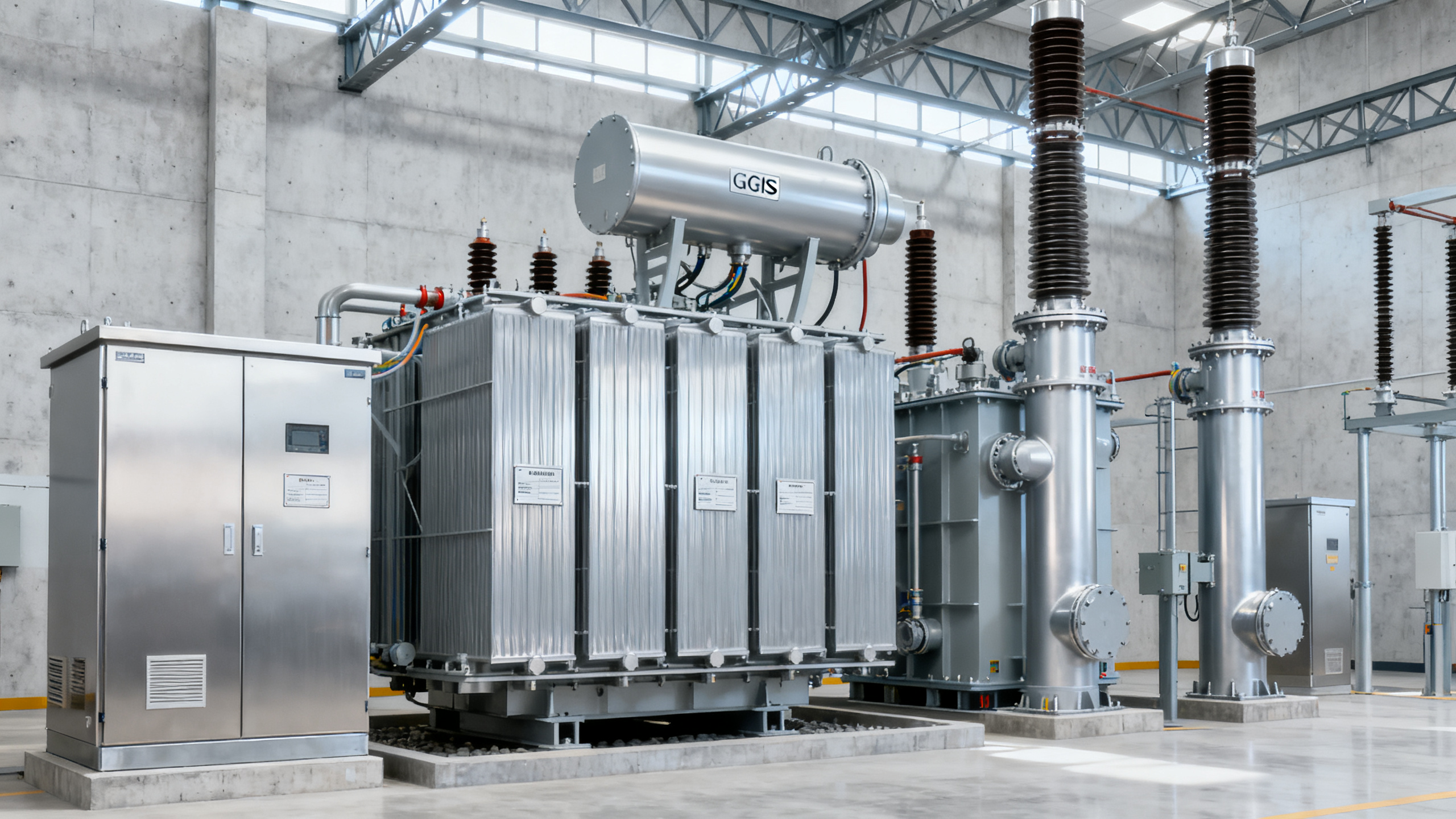
On 26 March 2026, the UK Cabinet Office launched a new National Security Procurement Framework, designating transformers and switchgear as critical to national security. This policy mandates preferential procurement from UK-based manufacturers for all government infrastructure projects — with strict requirements for risk assessment if imports are used. The rule takes effect in Q2 2026 public tenders and directly affects supply pathways for Chinese enterprises engaged in UK power infrastructure projects.
Event Overview
On 26 March 2026, the UK Cabinet Office published official guidance establishing the National Security Procurement Framework. Under this framework, transformers and switchgear are formally classified as ‘national security-critical goods’. For all public-sector procurement involving these products — including electricity transmission, distribution, and grid modernisation projects — contracting authorities must prioritise suppliers headquartered and manufacturing in the UK. Where non-UK-sourced equipment is proposed, bidders must submit a detailed, Cabinet Office–approved security risk assessment report. The requirement has been incorporated into mandatory clauses for all central government and arm’s-length body tenders issued from April 2026 onward.
Industries Affected
Direct Exporters and Trade Enterprises
Companies exporting transformers or switchgear from China (or other non-UK jurisdictions) into UK public infrastructure projects face immediate procedural barriers. The need to prepare and submit formal security risk assessments adds time, cost, and uncertainty to bid preparation — especially where product origin, component traceability, or software supply chains lack full documentation.
Manufacturers with UK Subsidiaries or Joint Ventures
Firms operating UK-based production facilities — even if majority-owned offshore — may qualify under the ‘UK-based manufacturer’ definition, provided final assembly, testing, and quality control occur domestically. However, eligibility hinges on verifiable local operational capacity, not just legal registration. Companies without physical UK manufacturing infrastructure will not meet the threshold.
Supply Chain and Integration Service Providers
System integrators, EPC contractors, and turnkey solution providers bidding on UK government energy contracts must now verify and validate the provenance of all transformer and switchgear components. Subcontractor declarations alone are insufficient; primary contractors bear responsibility for compliance — including audit readiness and documentation retention for minimum three years post-contract award.
What Stakeholders Should Monitor and Do Now
Track Official Guidance Updates and Interpretive Notes
The Cabinet Office has indicated that supplementary technical guidance — including definitions of ‘UK-based manufacturer’, acceptable risk assessment methodologies, and exemptions for legacy or interoperability-critical systems — will be published by mid-April 2026. Stakeholders should subscribe to the UK Government’s Procurement Policy Note (PPN) alerts and monitor updates via the Crown Commercial Service portal.
Map Product Lines Against the Defined Scope
‘Transformers & switchgear’ refers specifically to medium- and high-voltage equipment used in transmission and distribution networks (e.g., power transformers ≥10 MVA, GIS/AIS switchgear ≥36 kV). Low-voltage panels, consumer units, or small dry-type transformers fall outside current scope. Companies should cross-reference their UK-project product portfolios against the Cabinet Office’s published classification annex (Annex A, PPN 04/26).
Distinguish Between Policy Signal and Operational Enforcement
While the framework applies mandatorily to central government procurements from Q2 2026, devolved administrations (e.g., Scottish Government, Welsh Government) and local authorities retain discretion on adoption timing and scope. Early enforcement is expected in National Grid and Distribution Network Operator (DNO) projects — but regional variations are likely. Treat initial tenders as test cases, not universal benchmarks.
Prepare Documentation and Internal Alignment Now
Exporters and integrators should begin compiling evidence packages: UK manufacturing site certifications (if applicable), Bill of Materials with country-of-origin tagging, firmware/software supply chain maps, and third-party cybersecurity attestations (e.g., ISO/IEC 27001, NIST SP 800-161 alignment). Internal cross-functional alignment — between sales, compliance, engineering, and procurement teams — is required before submitting any Q2 2026 tender.
Editorial Perspective / Industry Observation
Observably, this framework represents a strategic recalibration — not merely a procurement tweak — in how the UK defines and governs critical infrastructure supply resilience. Analysis shows it aligns with broader trends across G7 economies toward ‘trusted supplier’ frameworks, rather than blanket import restrictions. From an industry perspective, the policy functions primarily as a signal: it signals tightening thresholds for market access, heightened scrutiny of upstream supply chains, and growing linkage between cyber-physical security and commercial eligibility. It does not yet constitute a full ban on non-UK equipment, nor does it apply retroactively to existing contracts. However, its inclusion in mandatory tender clauses means early compliance posture directly influences bid competitiveness — making it a near-term operational priority, not a long-term strategic consideration.
Conclusion: This policy marks a structural shift in UK public procurement criteria for electrical infrastructure equipment — one that elevates origin, traceability, and security governance to the same level as price and performance. It is best understood not as a temporary trade barrier, but as an institutionalised layer of due diligence embedded in the procurement lifecycle. For affected stakeholders, proactive documentation, scope-specific alignment, and close tracking of implementation guidance remain the most operationally relevant responses.
Source: UK Cabinet Office, Procurement Policy Note (PPN) 04/26, published 26 March 2026.
Note: Implementation details for devolved administrations and sector-specific exemptions remain under review and will be updated in subsequent PPNs. These aspects require ongoing monitoring.
Technical Specifications
- How to Select Electronic Hotel Key Card Locks for Guest Rooms and Staff AreasAuthor :Safety Compliance Lead
- How to Select Lab Instruments for Reliable Chemical Analysis WorkflowsAuthor :Precision Metrology Expert
- How to Size a UPS for Server Rooms: Load, Runtime, and Redundancy FactorsAuthor :Grid Infrastructure Analyst
Expert Insights

Chief Security Architect
Dr. Thorne specializes in the intersection of structural engineering and digital resilience. He has advised three G7 governments on industrial infrastructure security.
Related Analysis
- Sep 17, 2026How to Select Electronic Hotel Key Card Locks for Guest Rooms and Staff AreasAuthor :Safety Compliance Lead
- Sep 16, 2026How to Select Lab Instruments for Reliable Chemical Analysis WorkflowsAuthor :Precision Metrology Expert
- Sep 15, 2026How to Size a UPS for Server Rooms: Load, Runtime, and Redundancy FactorsAuthor :Grid Infrastructure Analyst
Core Sector // 01
Security & Safety
- How to Select Electronic Hotel Key Card Locks for Guest Rooms and Staff AreasAuthor :Safety Compliance Lead

- How to Select Lab Instruments for Reliable Chemical Analysis WorkflowsAuthor :Precision Metrology Expert

- How to Size a UPS for Server Rooms: Load, Runtime, and Redundancy FactorsAuthor :Grid Infrastructure Analyst

- Stainless Steel Welded Tube Applications: Matching Tube Supply to Fabrication NeedsAuthor :Heavy Industry Strategist

- Selecting Low-Friction Pneumatic Seals for High-Cycle, Low-Pressure CylindersAuthor :Heavy Industry Strategist

- Selecting Spherical Roller Bearings for Mining: Load, Contamination, and Service LifeAuthor :Heavy Industry Strategist

- What to Check When Sourcing Vibration Meters Wholesale for Industrial MaintenanceAuthor :Precision Metrology Expert

- How to Size a Wafer Butterfly Valve for HVAC Chilled-Water and Heating LoopsAuthor :Environmental Engineering Director