EU Imposes 50% Tariff on Steel Imports, Raising Export Costs for Structural Steel & Metal Profiles
Author
Date Published
Reading Time
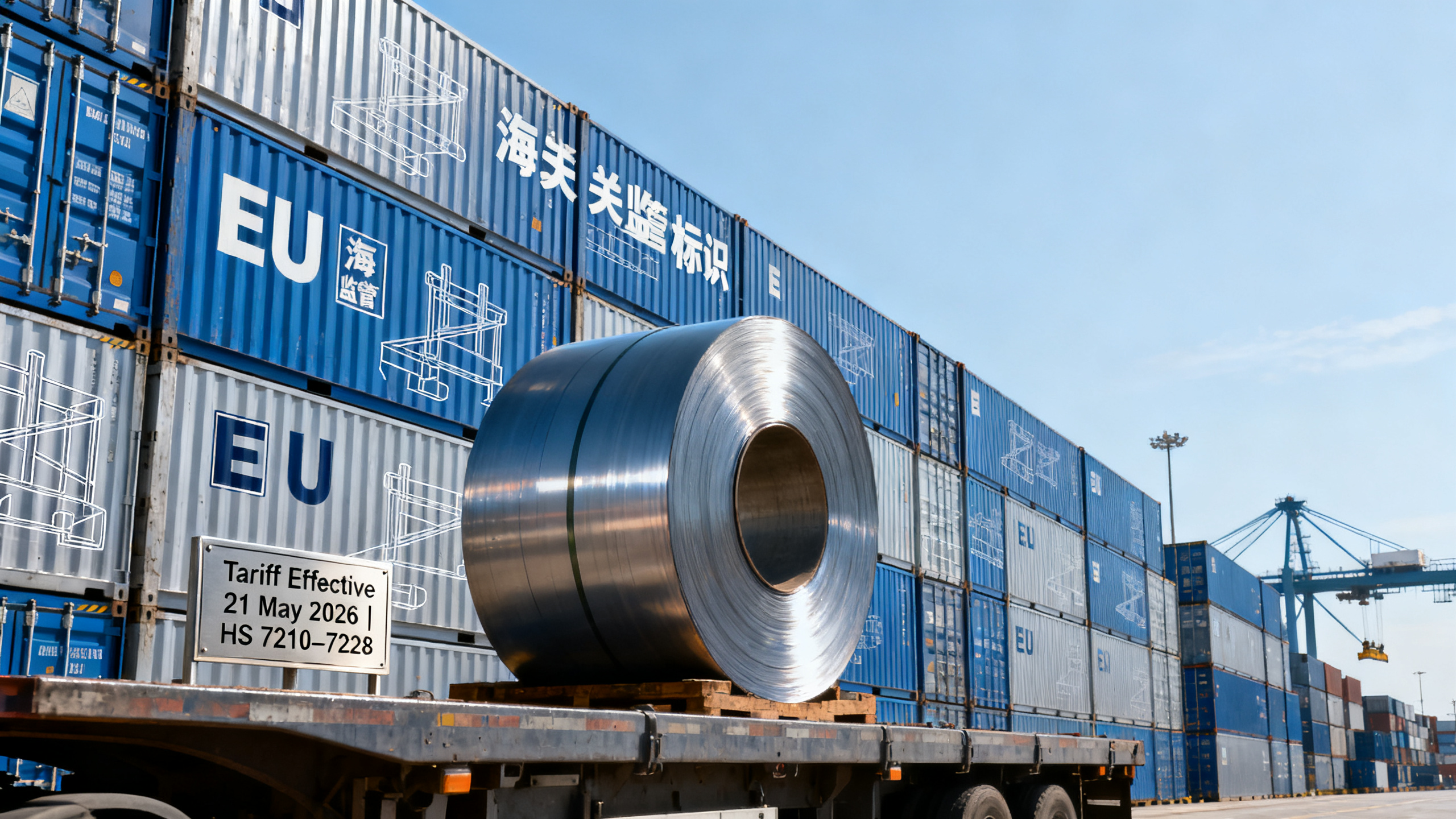
On 21 May 2026, the European Union implemented a new 50% import tariff on key steel products—including hot-rolled coils, H-beams, and I-beams—significantly increasing landed costs and eroding price competitiveness for structural steel and metal profiles exported from non-free-trade-partner countries such as China, Turkey, and Vietnam.
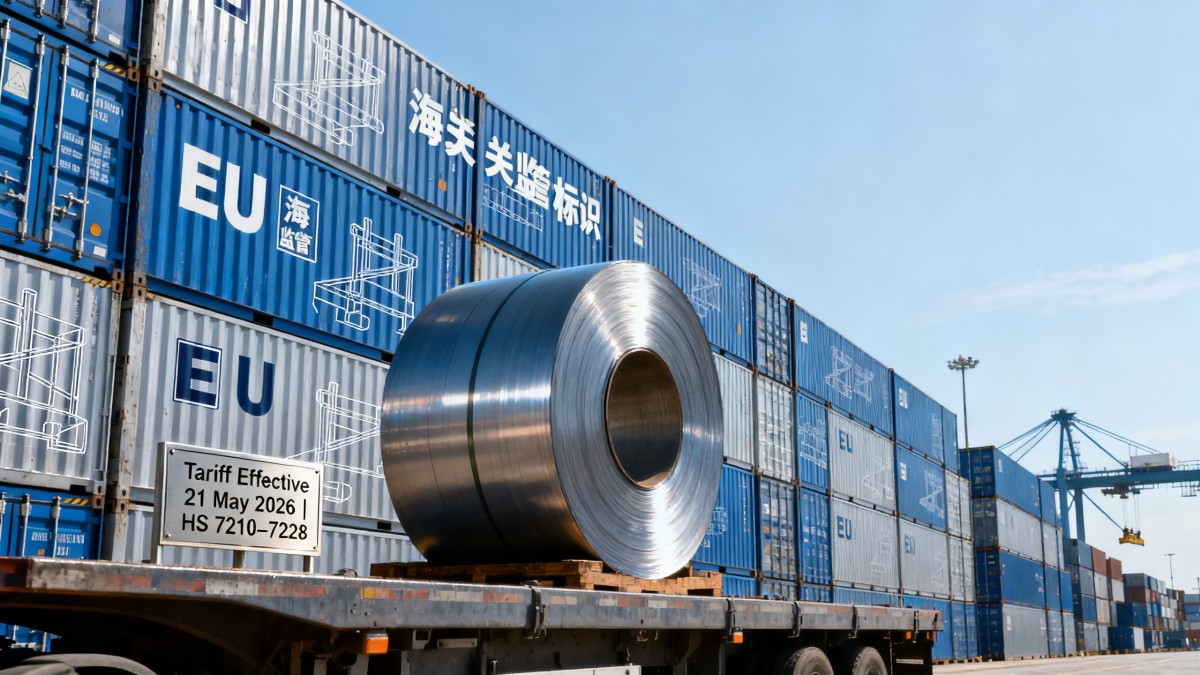
EU Tariff Measure Enters Into Force Immediately
Effective 21 May 2026, the European Commission applied a 50% ad valorem tariff on imported steel products classified under Harmonized System (HS) codes covering hot-rolled coils, H-beams, and I-beams. The measure applies uniformly to all WTO members without a bilateral free trade agreement with the EU, including China, Turkey, and Vietnam. It directly affects shipments of Steel & Metal Profiles—defined internationally as standardized structural sections used in construction, infrastructure, and industrial equipment. No transitional period or phased implementation was announced; the tariff took effect on the date of official publication.
Impact Across the Steel Supply Chain
Export-Oriented Trading Companies
Companies engaged in direct export of structural steel products face immediate margin compression due to the tariff’s pass-through effect. Pricing negotiations with EU-based distributors and EPC contractors must now account for this additional duty, requiring revised commercial terms and updated Incoterms® clauses—particularly shifts toward DAP or DPU to clarify tariff liability.
Raw Material Procurement Entities
Firms sourcing semi-finished steel inputs (e.g., billets, slabs) for downstream processing may experience upstream cost pressure if suppliers adjust domestic pricing in anticipation of reduced export demand. Procurement teams must reassess supplier contracts for tariff-contingent clauses and monitor inventory turnover rates amid potential order deferrals.
Steel Fabrication & Manufacturing Firms
Manufacturers producing finished components—such as pre-engineered steel buildings, trusses, or custom metal cladding systems—face dual challenges: higher input costs for imported base materials and diminished competitiveness in EU public tenders where price scoring dominates evaluation criteria.
Supply Chain & Logistics Service Providers
Freight forwarders, customs brokers, and bonded warehousing operators report increased documentation scrutiny for steel consignments entering EU ports. Pre-clearance verification of origin certificates, HS code classification accuracy, and compliance with EU Steel Import Monitoring System (SIMS) reporting requirements has become operationally critical.
Key Actions for Affected Enterprises
Review Origin Certification & Customs Classification
Verify whether current Certificate of Origin (Form A or EUR.1) meets EU preferential rules of origin criteria—and confirm precise HS code alignment for each product line, as misclassification may trigger penalties or retroactive duty assessments.
Reassess Procurement Timelines & Inventory Strategy
Given the immediate applicability of the tariff, procurement departments must revise lead-time assumptions, accelerate pre-tariff stockpiling where feasible, and evaluate just-in-case buffer stocks for high-volume SKUs like standard H-beam grades.
Evaluate Local Sourcing & Assembly Options in the EU
EPC contractors and large-scale buyers are actively exploring nearshoring alternatives—including licensed fabrication partnerships within EU member states—to bypass the tariff entirely while maintaining project compliance with EN 1090-1 (execution of steel structures) and CE marking requirements.
Update Technical Documentation for Tender Submissions
Bid teams must ensure that technical specifications, mill test reports (EN 10204 3.1), and conformity declarations explicitly reference applicable EU standards—not only for mechanical properties but also for traceability and CE marking validity under Regulation (EU) No 305/2011 (CPR).
Industry Perspective: Beyond Tariffs, a Shift in Strategic Sourcing Logic
Analysis shows this measure is not merely a short-term trade barrier but signals a broader recalibration of EU procurement priorities—emphasizing resilience over cost alone. Observably, EPC firms are accelerating dual-sourcing strategies and integrating local certification readiness (e.g., EN 1090-2 execution class validation) into early-stage vendor selection. What deserves closer attention is how rapidly alternative supply routes—such as third-country assembly hubs with EU-aligned quality systems—may gain traction, especially where lead time sensitivity outweighs marginal cost differences.
Strategic Implications for Global Steel Trade
This tariff underscores a structural shift: regulatory compliance and geographic proximity are becoming co-determinants of market access—not just product specification or price. For exporters, long-term competitiveness will hinge less on production scale and more on agile certification management, localized technical support capacity, and demonstrable alignment with EU construction product regulation frameworks.
Source Attribution & Ongoing Monitoring
This article is based exclusively on the user-provided information: title, event date (21 May 2026), and summary description. Specific official source links were not provided in the input and should be verified continuously. Stakeholders are advised to monitor updates from the European Commission’s Directorate-General for Trade, the EU Steel Import Monitoring System (SIMS), national customs authorities, and upcoming revisions to public procurement guidelines under the revised EU Green Public Procurement (GPP) criteria.
Technical Specifications
- How to Select Electronic Hotel Key Card Locks for Guest Rooms and Staff AreasAuthor :Safety Compliance Lead
- How to Select Lab Instruments for Reliable Chemical Analysis WorkflowsAuthor :Precision Metrology Expert
- How to Size a UPS for Server Rooms: Load, Runtime, and Redundancy FactorsAuthor :Grid Infrastructure Analyst
Expert Insights

Chief Security Architect
Dr. Thorne specializes in the intersection of structural engineering and digital resilience. He has advised three G7 governments on industrial infrastructure security.
Related Analysis
- Sep 17, 2026How to Select Electronic Hotel Key Card Locks for Guest Rooms and Staff AreasAuthor :Safety Compliance Lead
- Sep 16, 2026How to Select Lab Instruments for Reliable Chemical Analysis WorkflowsAuthor :Precision Metrology Expert
- Sep 15, 2026How to Size a UPS for Server Rooms: Load, Runtime, and Redundancy FactorsAuthor :Grid Infrastructure Analyst
Core Sector // 01
Security & Safety
- How to Select Electronic Hotel Key Card Locks for Guest Rooms and Staff AreasAuthor :Safety Compliance Lead

- How to Select Lab Instruments for Reliable Chemical Analysis WorkflowsAuthor :Precision Metrology Expert

- How to Size a UPS for Server Rooms: Load, Runtime, and Redundancy FactorsAuthor :Grid Infrastructure Analyst

- Stainless Steel Welded Tube Applications: Matching Tube Supply to Fabrication NeedsAuthor :Heavy Industry Strategist

- Selecting Low-Friction Pneumatic Seals for High-Cycle, Low-Pressure CylindersAuthor :Heavy Industry Strategist

- Selecting Spherical Roller Bearings for Mining: Load, Contamination, and Service LifeAuthor :Heavy Industry Strategist

- What to Check When Sourcing Vibration Meters Wholesale for Industrial MaintenanceAuthor :Precision Metrology Expert

- How to Size a Wafer Butterfly Valve for HVAC Chilled-Water and Heating LoopsAuthor :Environmental Engineering Director