Siemens SGT Gas Turbine Service Rights Transferred to Hangzhou Steam Turbine in China
Author
Date Published
Reading Time
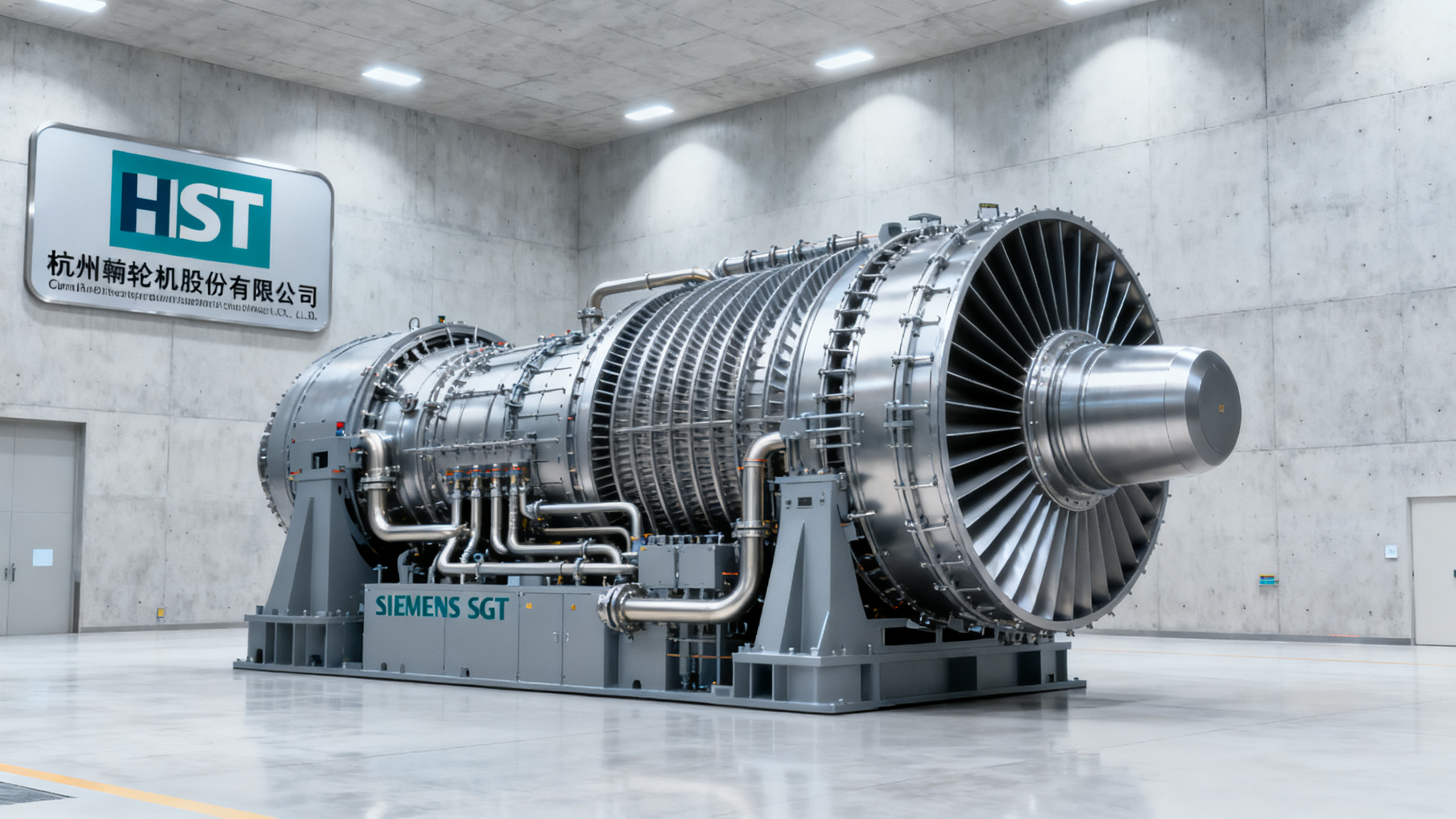
Hangzhou Steam Turbine Co., Ltd. (HST) assumed full responsibility for the promotion and lifecycle technical services of Siemens’ SGT-series gas turbines in the Chinese market starting in 2025. This development is particularly relevant to stakeholders in distributed energy, international EPC contracting, power equipment localization support, and cross-border engineering services — as it signals a structural shift in how global OEM service capabilities are delivered and trusted within China’s energy infrastructure ecosystem.
Event Overview
Effective from 2025, Hangzhou Steam Turbine formally took over the marketing and full-lifecycle technical service rights for Siemens’ SGT-series gas turbines in mainland China. The arrangement includes technical support, maintenance, spare parts supply, and field engineering services across the product’s operational life. No further details on contractual scope, duration, or geographic exclusivity beyond mainland China have been publicly disclosed.
Impact on Specific Industry Segments
Distributed Energy Project Developers
This transfer strengthens local technical credibility for distributed generation projects relying on SGT-series units. Developers may experience shorter response times for commissioning support and faster resolution of operational issues — especially where remote diagnostics or on-site intervention by Siemens’ global teams previously faced logistical or language barriers.
International EPC Contractors Operating in China
EPC firms bidding on overseas projects that specify Siemens SGT turbines now benefit from enhanced local validation of after-sales capability. Analysis shows this improves bid competitiveness when Chinese contractors partner with international clients requiring demonstrable, localized service readiness — particularly in emerging markets where Siemens’ own regional service footprint remains limited.
Domestic Power Equipment Service Providers
The agreement elevates HST’s role as a de facto authorized service integrator for high-end industrial gas turbines. Observably, this may accelerate consolidation trends among Tier-2 and Tier-3 service providers who previously handled fragmented aftermarket work — as end users increasingly prioritize single-point accountability aligned with OEM standards.
Engineering Procurement & Commissioning (EPC) Subcontractors
Subcontractors involved in balance-of-plant integration, control system interfacing, or turbine-generator alignment must now coordinate more closely with HST’s technical teams — not just Siemens’ global engineering centers. From industry perspective, this shifts documentation handover protocols, warranty claim pathways, and training requirements for joint site personnel.
What Relevant Enterprises or Practitioners Should Focus On Now
Monitor official service boundary definitions
Current public information does not clarify whether HST’s mandate covers retrofit upgrades, digital twin integration, or emissions compliance modifications. Stakeholders should track any forthcoming service bulletins or technical notices issued jointly by Siemens and HST to confirm scope limitations.
Assess implications for overseas project bids with SGT specifications
For EPC firms preparing tenders in Southeast Asia, Africa, or the Middle East, current practice requires verifying whether HST’s China-based support can be extended under contractual terms — including spares logistics, engineer deployment timelines, and multilingual documentation availability.
Distinguish between policy signal and operational readiness
While the 2025 start date marks formal transition, field service capacity — such as certified technician headcount, regional service center locations, and spare parts inventory depth — remains unconfirmed. Companies planning long-term maintenance agreements should request updated service capability statements before committing.
Update internal technical coordination workflows
Engineering teams working on SGT-integrated plants should revise interface management plans to reflect HST as primary technical contact for post-commissioning support. This includes updating vendor liaison matrices, spare parts procurement channels, and training syllabi for operations staff.
Editorial Perspective / Industry Observation
This transfer is better understood as an institutional signal — not yet a fully matured service delivery model. Observably, it reflects growing recognition by global OEMs that localized trust, rather than brand presence alone, drives adoption in complex infrastructure projects. Analysis suggests it is less about Siemens withdrawing from China and more about optimizing service architecture through strategic delegation. The pace at which HST scales certified field engineers and expands its diagnostic toolset will determine whether this becomes a replicable model for other Western OEM–domestic partner arrangements in rotating equipment sectors.
Conclusion: The handover signifies a calibrated recalibration of service governance — one that prioritizes responsiveness and familiarity over centralized control. It does not replace Siemens’ global engineering authority but repositions how that authority interfaces with local execution. For industry participants, it is best interpreted not as a discontinuity, but as an evolution in the localization pathway for high-value industrial equipment support.
Information Source: Official announcement by Hangzhou Steam Turbine Co., Ltd. (2025); confirmed scope reported in publicly available corporate communications. Note: Details regarding service coverage outside mainland China, long-term contract renewal terms, and third-party certification status remain subject to ongoing observation.
Technical Specifications
- How to Select Electronic Hotel Key Card Locks for Guest Rooms and Staff AreasAuthor :Safety Compliance Lead
- How to Select Lab Instruments for Reliable Chemical Analysis WorkflowsAuthor :Precision Metrology Expert
- How to Size a UPS for Server Rooms: Load, Runtime, and Redundancy FactorsAuthor :Grid Infrastructure Analyst
Expert Insights

Chief Security Architect
Dr. Thorne specializes in the intersection of structural engineering and digital resilience. He has advised three G7 governments on industrial infrastructure security.
Related Analysis
- Sep 17, 2026How to Select Electronic Hotel Key Card Locks for Guest Rooms and Staff AreasAuthor :Safety Compliance Lead
- Sep 16, 2026How to Select Lab Instruments for Reliable Chemical Analysis WorkflowsAuthor :Precision Metrology Expert
- Sep 15, 2026How to Size a UPS for Server Rooms: Load, Runtime, and Redundancy FactorsAuthor :Grid Infrastructure Analyst
Core Sector // 01
Security & Safety
- How to Select Electronic Hotel Key Card Locks for Guest Rooms and Staff AreasAuthor :Safety Compliance Lead

- How to Select Lab Instruments for Reliable Chemical Analysis WorkflowsAuthor :Precision Metrology Expert

- How to Size a UPS for Server Rooms: Load, Runtime, and Redundancy FactorsAuthor :Grid Infrastructure Analyst

- Stainless Steel Welded Tube Applications: Matching Tube Supply to Fabrication NeedsAuthor :Heavy Industry Strategist

- Selecting Low-Friction Pneumatic Seals for High-Cycle, Low-Pressure CylindersAuthor :Heavy Industry Strategist

- Selecting Spherical Roller Bearings for Mining: Load, Contamination, and Service LifeAuthor :Heavy Industry Strategist

- What to Check When Sourcing Vibration Meters Wholesale for Industrial MaintenanceAuthor :Precision Metrology Expert

- How to Size a Wafer Butterfly Valve for HVAC Chilled-Water and Heating LoopsAuthor :Environmental Engineering Director