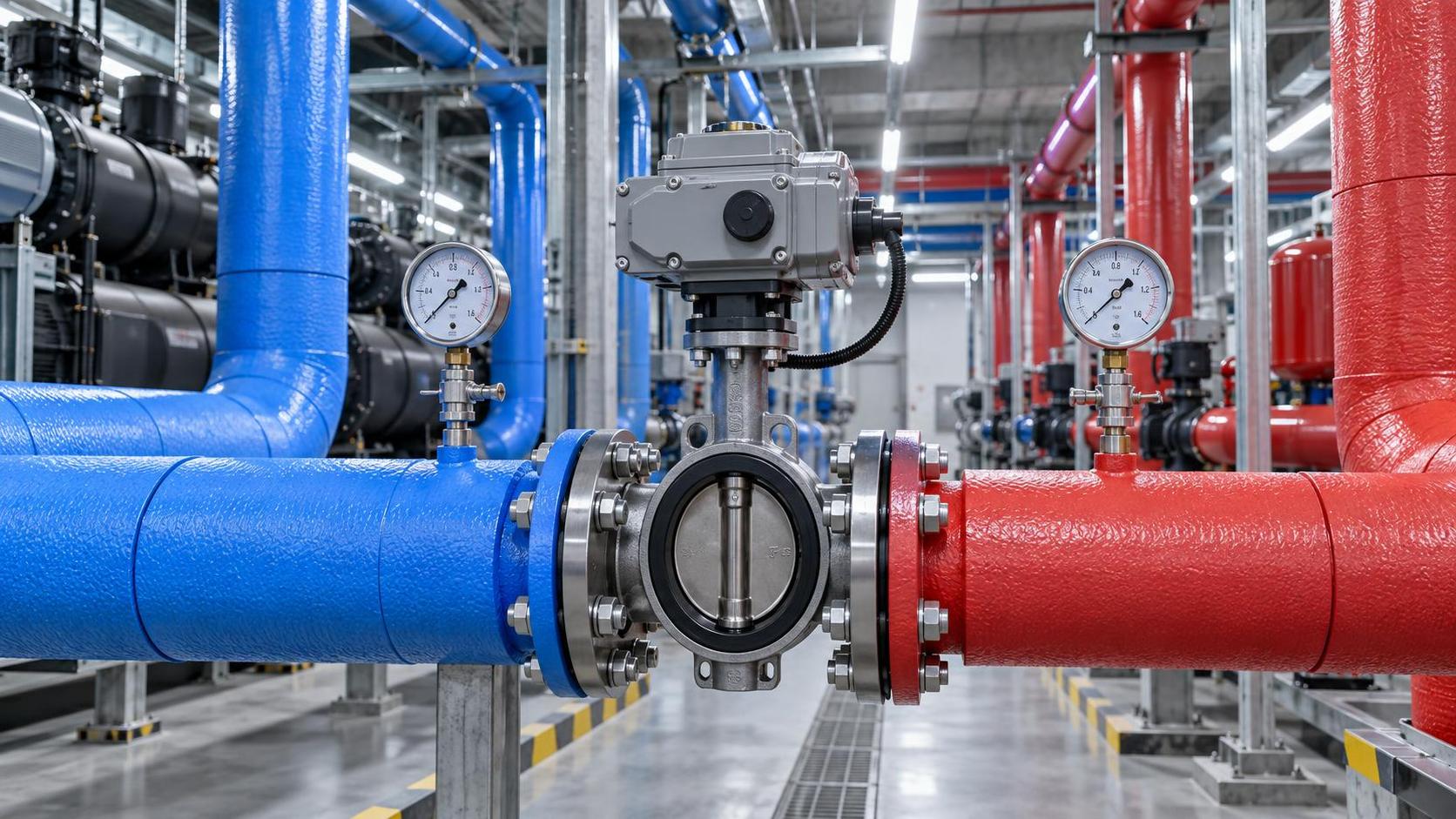
China's Industrial Steam Turbine Capacity Hits 500 Units Annually; Overseas Orders Surge
Author
Date Published
Reading Time

As of early 2026—when the second-phase extreme-condition and 72+24-hour continuous operation tests for domestically developed gas turbines commenced—China’s industrial steam turbine manufacturing capacity and export performance have entered a new phase of maturity, directly influencing procurement expectations, delivery planning, and after-sales service requirements across global energy infrastructure projects.
Confirmed Production and Export Milestones
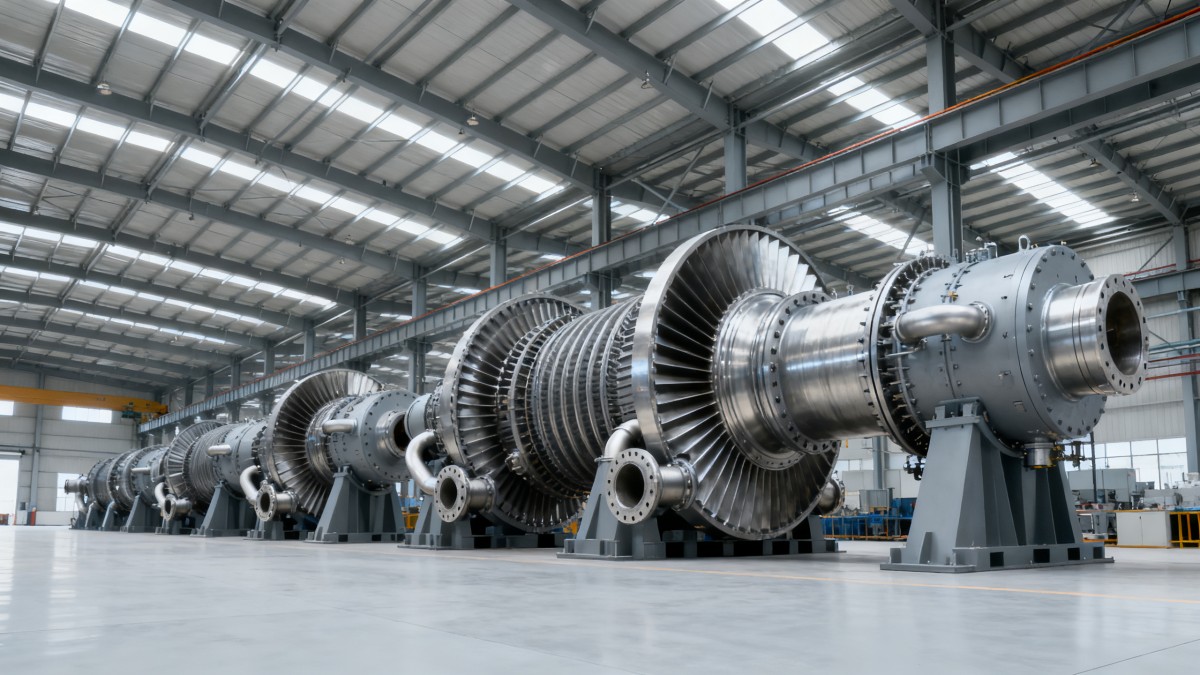
Hangzhou Steam Turbine Power Co., Ltd. disclosed that its annual industrial steam turbine production capacity has stabilized at 500 units. In 2025, overseas orders increased significantly year-on-year, with primary demand originating from Central Asia, Southeast Asia, Africa, and the Middle East. The company is accelerating the second-phase validation tests—including extreme operating conditions and extended 72+24-hour continuous runtime—to reinforce equipment reliability. These capacity and verification outcomes directly support EPC contractors’ and energy investors’ expectations regarding delivery timelines, localized service capability, and long-term operational maintenance assurance for critical rotating equipment.
Impacts Across the Energy Equipment Value Chain
Export-Oriented Equipment Manufacturers
Manufacturers supplying steam turbines and related rotating machinery face heightened scrutiny on certified delivery lead times and proven field reliability. With growing demand in emerging markets, timely compliance with regional certification schemes (e.g., GOST-R, SASO, SONCAP) and local language technical documentation becomes essential—not just for customs clearance but for tender eligibility.
Raw Material and Component Suppliers
Suppliers of high-grade alloy steels, precision castings, and control system components must align delivery schedules with accelerated testing and production ramp-ups. Longer lead-time materials—especially those requiring ASME Section II or ISO 9001-compliant traceability—now require earlier procurement commitments to avoid bottlenecks during validation cycles.
Equipment Assembly and Integration Firms
Firms integrating steam turbines into larger power or process systems must adapt technical bid alignment to reflect verified 72+24-hour runtime data and failure-mode analysis from recent test campaigns. This affects specification compliance, warranty scope definition, and commissioning protocols in cross-border EPC contracts.
After-Sales and Technical Support Providers
Local service partners in target markets must demonstrate readiness for rapid response, spare parts logistics, and condition-based monitoring integration—capabilities increasingly treated as contractual prerequisites rather than optional enhancements in tender evaluations.
Strategic Priorities for Industry Stakeholders
Validate Operational Reliability Documentation
Procurement teams and technical bidders should prioritize review of test reports covering extreme-service conditions and extended continuous operation—particularly where tenders reference IEC 60034 or API RP 686 requirements for rotating equipment qualification.
Align with Regional Certification Timelines
Exporters targeting Central Asia and the Middle East must verify current certification validity windows for local conformity marks (e.g., EAC, GCC Conformity Mark), as regulatory authorities increasingly link approval to demonstrated long-duration operational data—not just factory acceptance tests.
Strengthen Localized Service Infrastructure
EPC contractors and end users are now factoring in service network coverage—such as certified technician availability and spare parts warehouse locations—as weighted criteria in bid evaluation. Pre-qualified local partners may gain competitive advantage in upcoming tenders.
Update Delivery and Logistics Planning
With confirmed 500-unit annual capacity, lead time predictability improves—but only if upstream supply chain coordination accounts for concurrent validation cycles. Procurement plans should incorporate buffer periods for final-stage testing sign-offs before shipment scheduling.
Industry Perspective: Beyond Capacity Numbers
Analysis shows that this milestone reflects more than scaled-up output—it signals a maturing capability in mission-critical reliability validation. From an industry perspective, the shift toward demanding 72+24-hour continuous operation evidence suggests evolving buyer expectations: technical specifications are increasingly tied to real-world performance thresholds, not just design compliance. What deserves closer attention is how this raises the bar for lifecycle documentation standards—particularly for spare parts traceability, failure mode reporting, and software version control in digital twin-enabled assets. It is more appropriate to understand this as a quiet tightening of technical entry requirements in international energy tenders, especially where sovereign financing or multilateral development bank funding applies.
Broader Significance for Global Energy Infrastructure Procurement
This development underscores a structural shift: Chinese-origin rotating equipment is no longer evaluated solely on cost or delivery speed, but on verifiable operational resilience under demanding service conditions. For international buyers, it reinforces the need to integrate manufacturer-led validation data into risk assessment frameworks—especially when evaluating total cost of ownership over 20+ year asset lifecycles. The trend does not imply automatic market displacement, but rather a recalibration of technical due diligence rigor across procurement workflows.
Source Attribution and Verification Guidance
This article was generated exclusively from the provided title, event timing (early 2026), and summary statement. Specific official source links were not provided in the input and should be verified continuously. Stakeholders are advised to monitor updates from national standardization bodies (e.g., SAC), international certification agencies (e.g., TÜV Rheinland, DNV), and regional energy ministries for implementation details on certification enforcement, tender specification revisions, and field performance reporting requirements—particularly as second-phase test results become publicly referenced in technical bids later in 2026.
Technical Specifications
- How to Select Electronic Hotel Key Card Locks for Guest Rooms and Staff AreasAuthor :Safety Compliance Lead
- How to Select Lab Instruments for Reliable Chemical Analysis WorkflowsAuthor :Precision Metrology Expert
- How to Size a UPS for Server Rooms: Load, Runtime, and Redundancy FactorsAuthor :Grid Infrastructure Analyst
Expert Insights

Chief Security Architect
Dr. Thorne specializes in the intersection of structural engineering and digital resilience. He has advised three G7 governments on industrial infrastructure security.
Related Analysis
- Sep 17, 2026How to Select Electronic Hotel Key Card Locks for Guest Rooms and Staff AreasAuthor :Safety Compliance Lead
- Sep 16, 2026How to Select Lab Instruments for Reliable Chemical Analysis WorkflowsAuthor :Precision Metrology Expert
- Sep 15, 2026How to Size a UPS for Server Rooms: Load, Runtime, and Redundancy FactorsAuthor :Grid Infrastructure Analyst
Core Sector // 01
Security & Safety
- How to Select Electronic Hotel Key Card Locks for Guest Rooms and Staff AreasAuthor :Safety Compliance Lead

- How to Select Lab Instruments for Reliable Chemical Analysis WorkflowsAuthor :Precision Metrology Expert

- How to Size a UPS for Server Rooms: Load, Runtime, and Redundancy FactorsAuthor :Grid Infrastructure Analyst

- Stainless Steel Welded Tube Applications: Matching Tube Supply to Fabrication NeedsAuthor :Heavy Industry Strategist

- Selecting Low-Friction Pneumatic Seals for High-Cycle, Low-Pressure CylindersAuthor :Heavy Industry Strategist

- Selecting Spherical Roller Bearings for Mining: Load, Contamination, and Service LifeAuthor :Heavy Industry Strategist

- What to Check When Sourcing Vibration Meters Wholesale for Industrial MaintenanceAuthor :Precision Metrology Expert

- How to Size a Wafer Butterfly Valve for HVAC Chilled-Water and Heating LoopsAuthor :Environmental Engineering Director