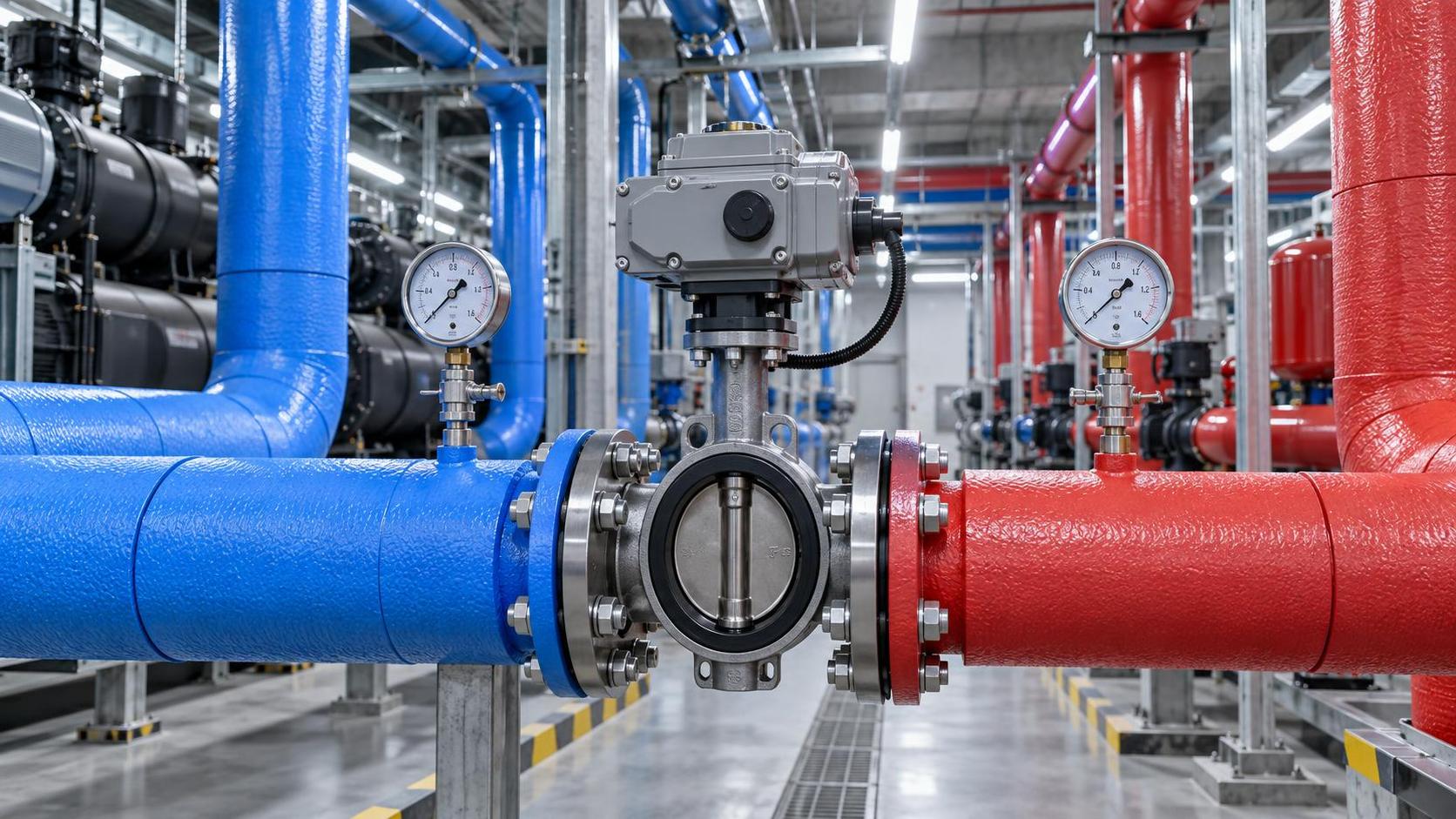
Hormuz Strait Transit Plummets 94%; Water Treatment Equipment Shipping Delays Extend by 10–14 Days
Author
Date Published
Reading Time
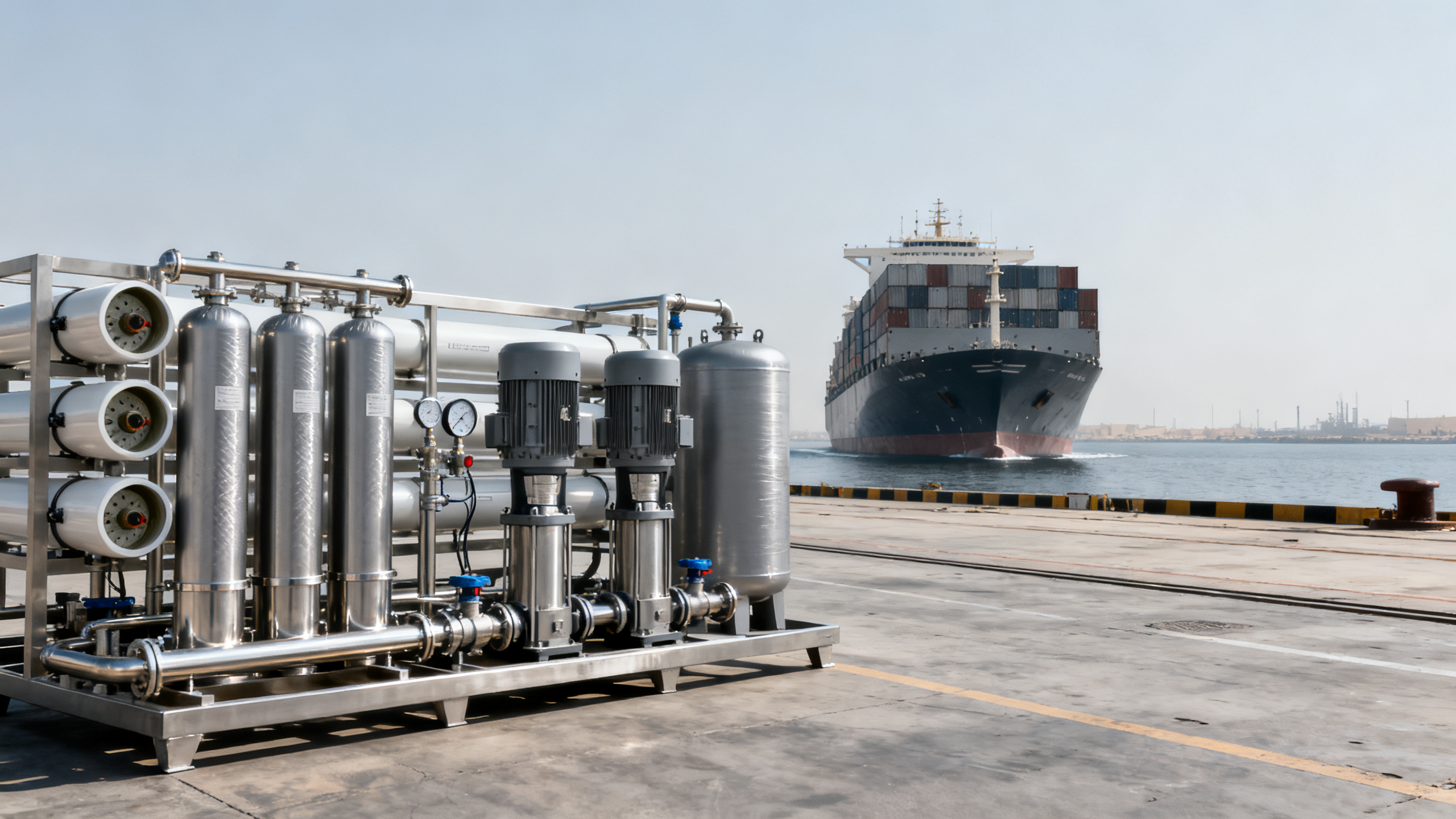
From May 20 to May 27, 2026, vessel transit through the Strait of Hormuz dropped 94% year-on-year amid escalating Middle East geopolitical tensions. This disruption — compounded by the常态化 (now常态化) rerouting of vessels around the Red Sea — has extended average maritime lead times for industrial water treatment systems, membrane modules, and pump-valve assemblies shipped from Middle Eastern, South Asian, and European ports. The event directly impacts procurement planning, delivery reliability, and cost management for companies engaged in water infrastructure, process engineering, and industrial facility operations.
Event Overview
Between May 20 and May 27, 2026, confirmed data indicate a 94% year-on-year decline in vessel passage volume through the Strait of Hormuz. Concurrently, sustained Red Sea rerouting has become standard practice for major container and bulk carriers. As a result, average shipping durations for industrial water treatment equipment — including complete treatment skids, reverse osmosis membranes, and integrated pump-valve assemblies — increased by 10–14 days across key Asia–Europe and Middle East–global trade lanes. Major shipping lines have announced surcharges on Asia–Europe routes; delivery stability is now under measurable pressure.
Impact on Specific Industry Segments
Direct Trading Enterprises: Companies exporting or importing water treatment systems face extended order-to-delivery cycles. Since many contracts specify fixed delivery windows — especially for EPC projects with penalty clauses — delayed arrivals risk contractual non-compliance and financial exposure.
Raw Material & Component Procurement Firms: Firms sourcing critical subcomponents (e.g., high-pressure pumps, specialty membranes, or corrosion-resistant valves) from suppliers in the UAE, India, or Germany are encountering longer inbound lead times. Inventory buffers built on pre-2026 transit assumptions are now insufficient, increasing stockout risk for assembly lines.
Equipment Manufacturing & Integration Providers: OEMs and system integrators relying on just-in-time (JIT) logistics for final assembly — particularly those serving municipal utilities or petrochemical clients — report scheduling conflicts. Delayed arrival of imported membrane housings or control panels disrupts production sequencing and commissioning timelines.
Supply Chain & Logistics Service Providers: Third-party logistics (3PL) providers and freight forwarders handling water treatment cargo are revising transit time guarantees and reallocating contingency capacity. Documentation workflows (e.g., customs pre-clearance, certificate of origin validation) must now accommodate extended dwell times at transshipment hubs like Jebel Ali or Piraeus.
What Relevant Enterprises Should Monitor and Do Now
Track official maritime advisories and carrier service updates
Monitor real-time notifications from the International Maritime Organization (IMO), UK Maritime Trade Operations (UKMTO), and individual carriers (e.g., Maersk, MSC, CMA CGM) for changes in scheduled sailings, port call suspensions, or revised estimated time of arrival (ETA) windows — especially for shipments routed via Suez Canal alternatives.
Reassess lead time assumptions for priority SKUs and regions
Identify high-impact items — such as spiral-wound RO membranes, stainless-steel multistage pumps, and PLC-integrated control panels — and map their current origin ports and routing paths. Adjust internal procurement calendars and customer delivery commitments accordingly, applying a minimum +12-day buffer for orders placed after May 27, 2026.
Distinguish between policy signals and operational reality
While diplomatic efforts to de-escalate regional tensions continue, observed vessel traffic data (May 20–27, 2026) reflect actual operational constraints — not hypothetical risk scenarios. Treat any near-term improvement in transit volumes as provisional until verified by three consecutive weeks of stable throughput metrics.
Activate contingency planning for critical project milestones
For ongoing EPC or brownfield upgrade projects, review upcoming commissioning dates and identify components most vulnerable to delay. Where feasible, source alternative regional suppliers for non-proprietary parts (e.g., general-purpose valves, instrumentation cables) to reduce dependency on long-haul sea freight.
Editorial Perspective / Industry Observation
Observably, this event reflects an acute supply chain stress test — not merely a transient bottleneck. The 94% drop in Hormuz transit is unprecedented in recent peacetime records, and the concurrent normalization of Red Sea detours suggests structural recalibration rather than short-term adjustment. Analysis shows that while spot freight rates remain volatile, the more persistent impact lies in predictability erosion: delivery windows are widening, forecasting accuracy is declining, and inventory turnover models require recalibration. From an industry perspective, this is less a one-off incident and more a signal that maritime route reliability — once treated as a background assumption — must now be treated as a primary input in procurement, pricing, and project planning frameworks.
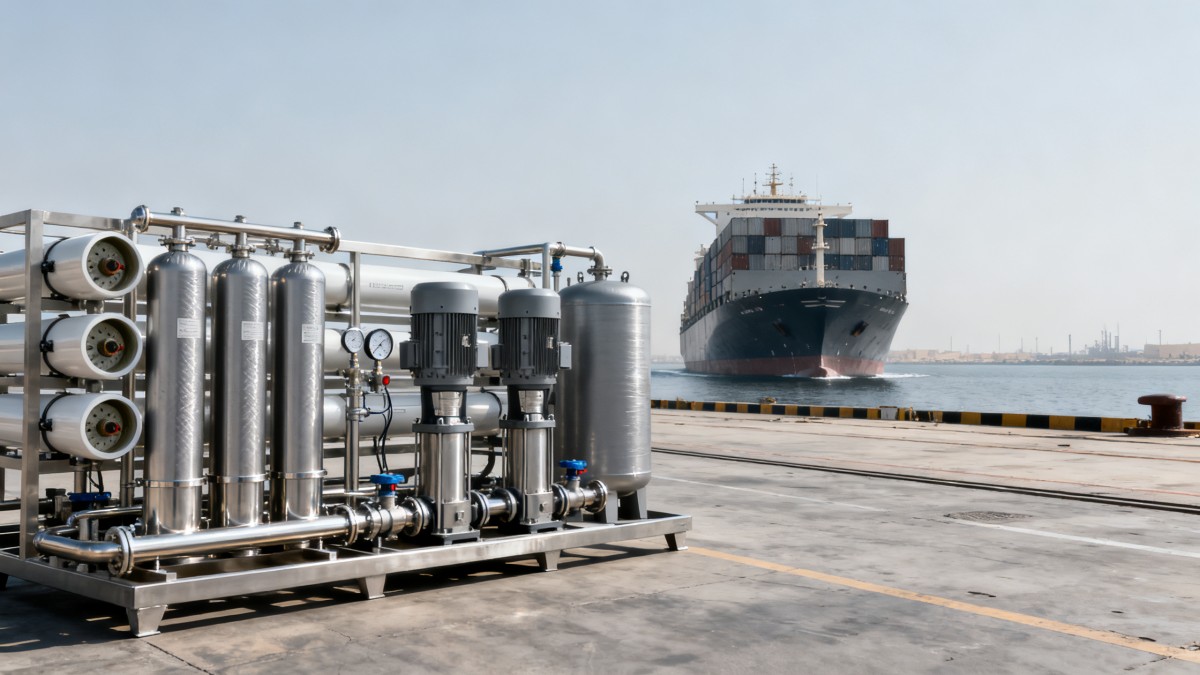
Conclusion: This development underscores how geopolitical volatility directly reshapes industrial logistics economics — particularly for capital-intensive, time-sensitive equipment sectors like industrial water treatment. It does not yet indicate systemic collapse of global maritime trade, but it does confirm that route resilience can no longer be assumed. Current conditions are better understood as a sustained operational constraint requiring adaptive planning — not a temporary anomaly awaiting reversal.
Source Disclosure: Primary data derived from publicly reported vessel traffic statistics (May 20–27, 2026) issued by the United Arab Emirates’ National Transport Authority and corroborated by Lloyd’s List Intelligence maritime analytics. Carrier surcharge announcements were confirmed via official press releases from Maersk and MSC dated May 26–27, 2026. Ongoing monitoring is advised for updates on Strait of Hormuz traffic recovery and Suez Canal authority advisories.
Technical Specifications
- How to Select Electronic Hotel Key Card Locks for Guest Rooms and Staff AreasAuthor :Safety Compliance Lead
- How to Select Lab Instruments for Reliable Chemical Analysis WorkflowsAuthor :Precision Metrology Expert
- How to Size a UPS for Server Rooms: Load, Runtime, and Redundancy FactorsAuthor :Grid Infrastructure Analyst
Expert Insights

Chief Security Architect
Dr. Thorne specializes in the intersection of structural engineering and digital resilience. He has advised three G7 governments on industrial infrastructure security.
Related Analysis
- Sep 17, 2026How to Select Electronic Hotel Key Card Locks for Guest Rooms and Staff AreasAuthor :Safety Compliance Lead
- Sep 16, 2026How to Select Lab Instruments for Reliable Chemical Analysis WorkflowsAuthor :Precision Metrology Expert
- Sep 15, 2026How to Size a UPS for Server Rooms: Load, Runtime, and Redundancy FactorsAuthor :Grid Infrastructure Analyst
Core Sector // 01
Security & Safety
- How to Select Electronic Hotel Key Card Locks for Guest Rooms and Staff AreasAuthor :Safety Compliance Lead

- How to Select Lab Instruments for Reliable Chemical Analysis WorkflowsAuthor :Precision Metrology Expert

- How to Size a UPS for Server Rooms: Load, Runtime, and Redundancy FactorsAuthor :Grid Infrastructure Analyst

- Stainless Steel Welded Tube Applications: Matching Tube Supply to Fabrication NeedsAuthor :Heavy Industry Strategist

- Selecting Low-Friction Pneumatic Seals for High-Cycle, Low-Pressure CylindersAuthor :Heavy Industry Strategist

- Selecting Spherical Roller Bearings for Mining: Load, Contamination, and Service LifeAuthor :Heavy Industry Strategist

- What to Check When Sourcing Vibration Meters Wholesale for Industrial MaintenanceAuthor :Precision Metrology Expert

- How to Size a Wafer Butterfly Valve for HVAC Chilled-Water and Heating LoopsAuthor :Environmental Engineering Director