US Proposes USMCA Revision to Impose Tariffs on Industrial Circuit Breakers, Relays
Author
Date Published
Reading Time
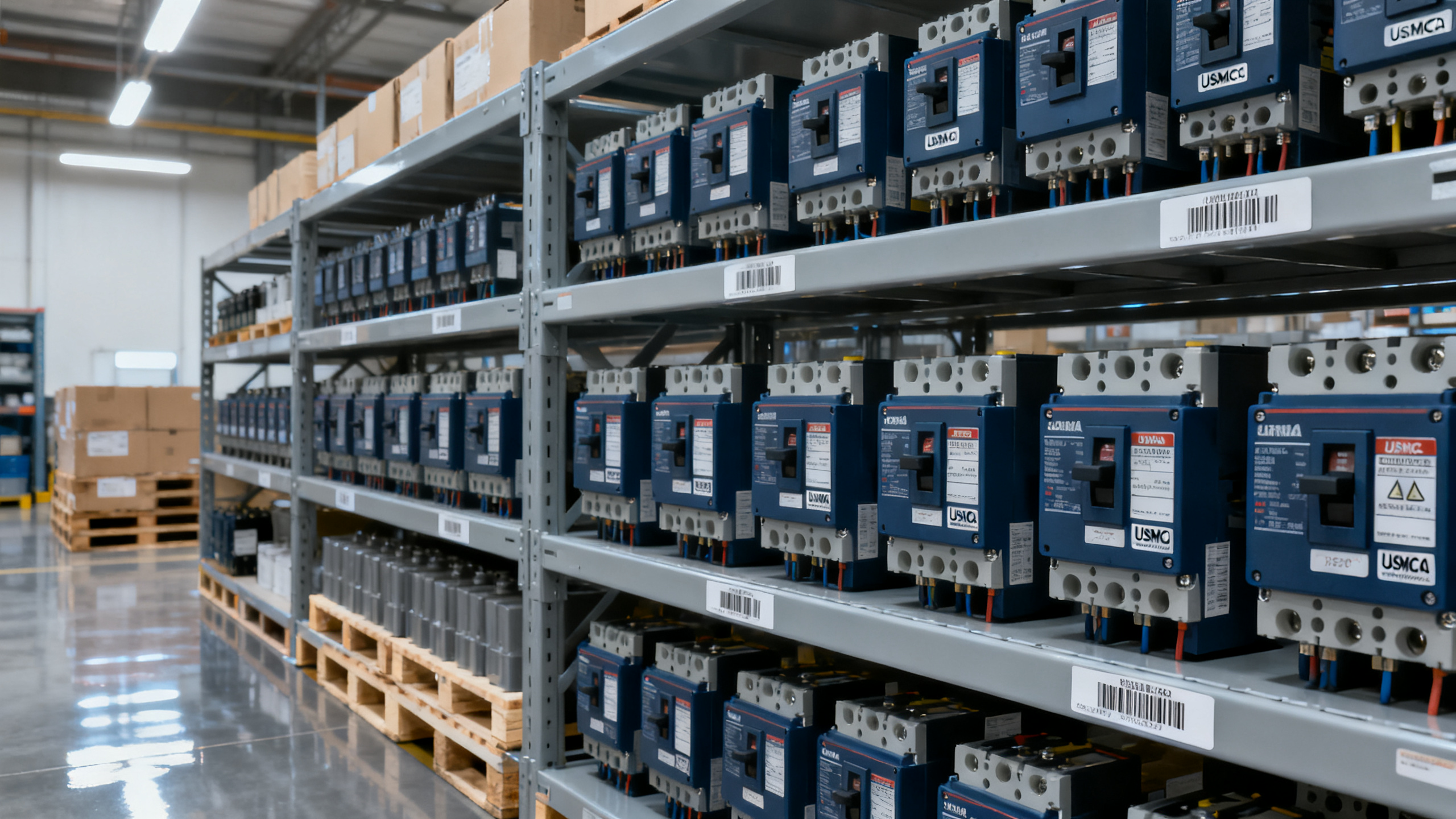
On May 28, 2026, U.S. authorities signaled intent to revise the United States–Mexico–Canada Agreement (USMCA), specifically expanding the scope of its national security exception clause. If implemented, the change could impose additional tariffs on industrial-grade circuit breakers and relays originating from third countries—including China—entering the U.S. market via Mexico or Canada. This development is especially relevant for electrical equipment distributors, power infrastructure suppliers, and North American supply chain managers handling critical control components.
Event Overview
On May 28, 2026, U.S. officials indicated plans to amend the USMCA by broadening the application of its national security exception. The proposed revision targets industrial circuit breakers and relays imported into the U.S. from Mexico or Canada when those products originate in third countries—explicitly citing China as a key source. No formal rulemaking or tariff schedule has been published; the announcement remains a policy signal at this stage.
Industries Affected by Segment
Direct Trade Enterprises (U.S.–Mexico/Canada Importers)
These firms may face higher landed costs if the revised exception triggers duties on goods transshipped through USMCA partners. Since many industrial circuit breakers and relays enter the U.S. via Mexican or Canadian distribution hubs—even when manufactured elsewhere—the change could directly impact customs classification, duty assessments, and import compliance workflows.
Channel Distribution & Wholesale Firms (North American Distributors)
Distributors managing inventory across U.S., Mexico, and Canada may need to reassess stock allocation strategies. The proposal raises uncertainty around origin tracing requirements and potential retroactive duty exposure, affecting inventory valuation, lead time planning, and customer pricing models—particularly for products with long procurement cycles or limited alternative sourcing.
Supply Chain & Logistics Service Providers
Third-party logistics (3PL) and customs brokerage firms supporting electrical equipment imports will likely see increased demand for origin verification, tariff engineering analysis, and documentation audits. The revision introduces new complexity in determining whether a product qualifies as ‘originating’ under USMCA rules—a determination now subject to expanded national security scrutiny.
What Relevant Businesses Should Monitor and Do Now
Track official updates from USTR and CBP
The proposal has not advanced to notice-and-comment rulemaking. Companies should monitor publications from the Office of the U.S. Trade Representative (USTR) and U.S. Customs and Border Protection (CBP) for formal language, scope definitions, and implementation timelines—not just press statements or policy signals.
Map origin and routing for high-risk SKUs
Identify specific circuit breaker and relay SKUs sourced from third countries but entering the U.S. via Mexico or Canada. Document manufacturing location, assembly steps, and regional value content to assess vulnerability under potential revised origin rules.
Distinguish between policy signal and operational impact
This remains a proposal—not an enacted measure. Until regulatory text is published and effective dates confirmed, no tariff increase is in force. Avoid premature changes to procurement contracts or inventory policies based solely on current statements.
Review and update internal compliance protocols
Ensure origin documentation practices align with current USMCA certification standards—and prepare for possible enhancements in traceability requirements. Consider engaging qualified customs counsel to evaluate existing supply routes against plausible interpretations of an expanded national security exception.
Editorial Perspective / Industry Observation
Observably, this move functions primarily as a policy signal—not an immediate trade barrier. It reflects growing U.S. emphasis on controlling sensitive electrical control components within broader supply chain resilience efforts. Analysis shows the proposal is less about imminent tariff collection and more about establishing legal flexibility to act unilaterally on national security grounds. From an industry perspective, it underscores how non-tariff clauses in trade agreements are increasingly leveraged to influence sourcing behavior—especially for dual-use industrial hardware. Current attention should focus less on near-term cost impacts and more on long-term origin transparency and routing resilience.
Conclusion: This proposal does not yet alter tariff obligations, but it introduces material uncertainty for firms relying on cross-border electrical component flows under USMCA. It is best understood not as a finalized trade action, but as an early indicator of tightening scrutiny over the provenance and transit paths of critical power control devices. Stakeholders should prioritize clarity over reaction—monitoring formal developments while strengthening documentation discipline and origin visibility.
Source: U.S. government policy signal released May 28, 2026. No Federal Register notice or implementing regulation has been issued as of publication. Ongoing monitoring of USTR and CBP communications is recommended.
Technical Specifications
- How to Select Electronic Hotel Key Card Locks for Guest Rooms and Staff AreasAuthor :Safety Compliance Lead
- How to Select Lab Instruments for Reliable Chemical Analysis WorkflowsAuthor :Precision Metrology Expert
- How to Size a UPS for Server Rooms: Load, Runtime, and Redundancy FactorsAuthor :Grid Infrastructure Analyst
Expert Insights

Chief Security Architect
Dr. Thorne specializes in the intersection of structural engineering and digital resilience. He has advised three G7 governments on industrial infrastructure security.
Related Analysis
- Sep 17, 2026How to Select Electronic Hotel Key Card Locks for Guest Rooms and Staff AreasAuthor :Safety Compliance Lead
- Sep 16, 2026How to Select Lab Instruments for Reliable Chemical Analysis WorkflowsAuthor :Precision Metrology Expert
- Sep 15, 2026How to Size a UPS for Server Rooms: Load, Runtime, and Redundancy FactorsAuthor :Grid Infrastructure Analyst
Core Sector // 01
Security & Safety
- How to Select Electronic Hotel Key Card Locks for Guest Rooms and Staff AreasAuthor :Safety Compliance Lead

- How to Select Lab Instruments for Reliable Chemical Analysis WorkflowsAuthor :Precision Metrology Expert

- How to Size a UPS for Server Rooms: Load, Runtime, and Redundancy FactorsAuthor :Grid Infrastructure Analyst

- Stainless Steel Welded Tube Applications: Matching Tube Supply to Fabrication NeedsAuthor :Heavy Industry Strategist

- Selecting Low-Friction Pneumatic Seals for High-Cycle, Low-Pressure CylindersAuthor :Heavy Industry Strategist

- Selecting Spherical Roller Bearings for Mining: Load, Contamination, and Service LifeAuthor :Heavy Industry Strategist

- What to Check When Sourcing Vibration Meters Wholesale for Industrial MaintenanceAuthor :Precision Metrology Expert

- How to Size a Wafer Butterfly Valve for HVAC Chilled-Water and Heating LoopsAuthor :Environmental Engineering Director