Hormuz Strait Traffic Plummets 94%; Water & Air Treatment Equipment Shipments Delayed 10–14 Days
Author
Date Published
Reading Time

Amid escalating Middle East conflict, maritime traffic through the Strait of Hormuz has dropped by 94% compared to normal levels — though the exact event date was not specified. This disruption is directly impacting global shipments of industrial water treatment systems and air purifiers & dust collection equipment, triggering extended lead times and surging logistics costs.
Confirmed Operational Disruption
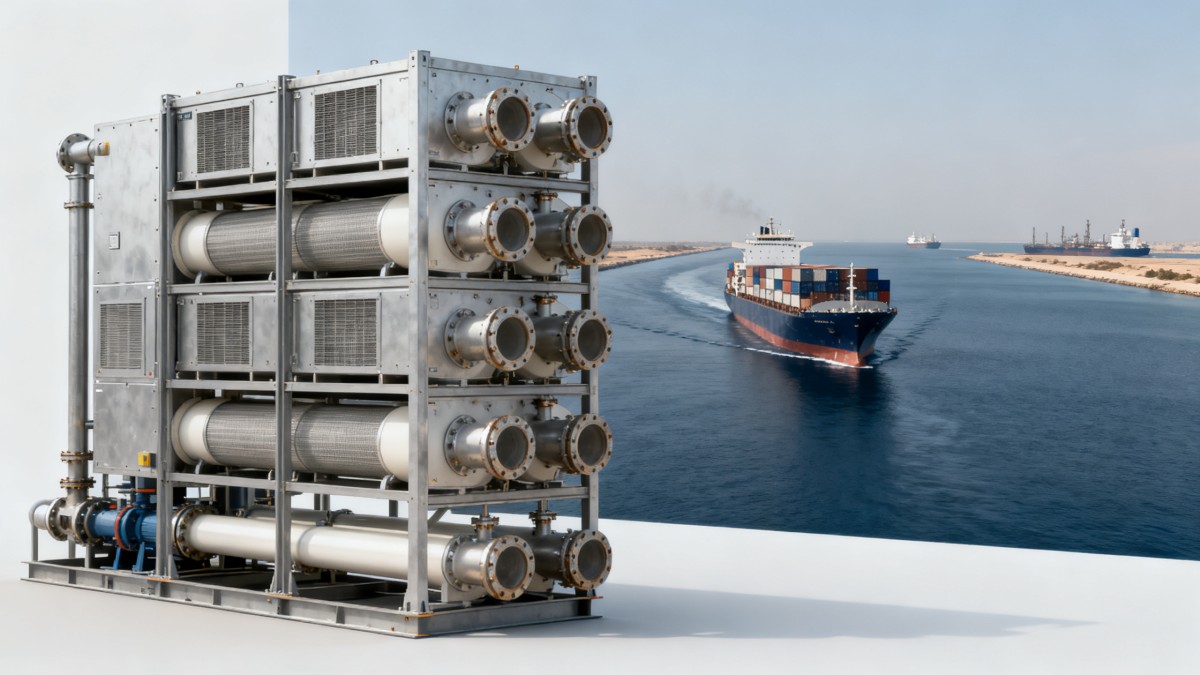
The Strait of Hormuz — a critical maritime chokepoint for global energy and industrial cargo — is experiencing a 94% reduction in actual vessel transit volume. In response, major container carriers including Maersk and MSC have implemented full rerouting via the Cape of Good Hope. As a result, ocean freight transit for Industrial Water Treatment and Air Purifiers & Dust equipment — characterized by large physical dimensions, mid-range unit value, and delivery sensitivity — now faces both extended shipping cycles (10–14 days longer) and war risk surcharges ranging from USD 2,000 to USD 4,000 per TEU. Overseas buyers are advised to secure Q3 2024 container space well in advance and revise equipment acceptance timelines accordingly.
Impact Across Supply Chain Roles
Export-oriented manufacturing enterprises
These firms face compressed production planning windows due to unpredictable port call schedules and extended transits. Delivery-sensitive contracts — especially those tied to project milestones or commissioning deadlines — require proactive re-negotiation of delivery terms and revised technical documentation submission timelines.
Raw material and component procurement entities
Procurement teams must reassess lead time buffers for imported subsystems (e.g., high-efficiency filters, corrosion-resistant pumps, control panels), as inbound shipments via the same affected routes may also experience delays or surcharges — potentially triggering secondary bottlenecks in final assembly.
Contract manufacturers and OEMs
OEMs supplying integrated systems face heightened pressure to validate alternative logistics paths and update technical bid documents with revised delivery commitments. War risk clauses and insurance coverage scope now require explicit review during contract finalization.
Logistics and supply chain service providers
Freight forwarders and customs brokers must adjust quotation models to reflect real-time war risk surcharges, document additional marine insurance endorsements, and provide updated ETAs aligned with Cape-of-Good-Hope routing — all while managing increased documentation scrutiny from destination ports and end customers.
Key Actions for Exporters and Project Teams
Secure Q3 2024 container capacity immediately
Given carrier capacity constraints on the extended route and rising demand for early booking, firms exporting water treatment skids or modular air purification units should confirm bookings no later than mid-June to avoid slot shortages and further schedule slippage.
Revise delivery timelines and acceptance protocols
Project managers must formally adjust customer-facing delivery dates and re-align FAT (Factory Acceptance Test) scheduling, commissioning checklists, and spare parts provisioning plans to accommodate the 10–14 day transit extension.
Evaluate war risk insurance and contractual liability clauses
Review existing export contracts for force majeure applicability, war risk coverage limits, and demurrage/detention liability triggers — particularly where delay stems from mandatory rerouting rather than carrier operational failure.
Pre-verify documentation compliance for alternative routing
Confirm that certificates of origin, CE marking documentation, and ISO 9001/14001 audit reports remain valid under revised shipment routes; some destination markets may require updated transport declarations reflecting Cape-of-Good-Hope passage.
Industry Perspective: Beyond Transit Delays
Analysis shows this event is accelerating structural shifts in global industrial equipment procurement. From an industry perspective, what deserves closer attention is not only the immediate logistics shock, but how it exposes latent vulnerabilities in just-in-time delivery models for capital equipment — especially where modular design, site-specific integration, and regulatory validation (e.g., EPA, EN 1822, ISO 14644) constrain substitution options. Observably, manufacturers with dual-sourcing logistics partners (e.g., combining Asia–Europe rail with diversified sea lanes) are reporting greater resilience. It is more appropriate to understand this as a catalyst for revising minimum viable lead time assumptions — moving from calendar-based to risk-adjusted planning horizons.
Strategic Implications for Industrial Equipment Markets
This disruption underscores that geopolitical risk is no longer a peripheral consideration but a core parameter in equipment lifecycle planning — from initial tender specification through after-sales support. For exporters, it reinforces the need to embed flexibility into technical proposals, delivery commitments, and compliance documentation. For buyers, it highlights the growing importance of supplier logistics maturity as a qualification requirement — alongside traditional criteria like performance certification and after-sales service capability. The event does not signal a permanent shift in trade flows, but it does reset short-to-mid-term expectations for delivery certainty in globally distributed infrastructure projects.
Source Attribution and Monitoring Guidance
This article synthesizes the provided title, event summary, and timing note. Specific official source links were not provided in the input and should be verified continuously. Stakeholders are advised to monitor updates from IMO, BIMCO, and major carrier advisories (Maersk, MSC) for evolving war risk surcharge structures, as well as national customs authorities for any new documentation requirements related to rerouted shipments. Continued observation is recommended for adjustments in tender evaluation criteria, technical bid alignment practices, and industry feedback on revised lead time benchmarks.
Technical Specifications
- How to Select Electronic Hotel Key Card Locks for Guest Rooms and Staff AreasAuthor :Safety Compliance Lead
- How to Select Lab Instruments for Reliable Chemical Analysis WorkflowsAuthor :Precision Metrology Expert
- How to Size a UPS for Server Rooms: Load, Runtime, and Redundancy FactorsAuthor :Grid Infrastructure Analyst
Expert Insights

Chief Security Architect
Dr. Thorne specializes in the intersection of structural engineering and digital resilience. He has advised three G7 governments on industrial infrastructure security.
Related Analysis
- Sep 17, 2026How to Select Electronic Hotel Key Card Locks for Guest Rooms and Staff AreasAuthor :Safety Compliance Lead
- Sep 16, 2026How to Select Lab Instruments for Reliable Chemical Analysis WorkflowsAuthor :Precision Metrology Expert
- Sep 15, 2026How to Size a UPS for Server Rooms: Load, Runtime, and Redundancy FactorsAuthor :Grid Infrastructure Analyst
Core Sector // 01
Security & Safety
- How to Select Electronic Hotel Key Card Locks for Guest Rooms and Staff AreasAuthor :Safety Compliance Lead

- How to Select Lab Instruments for Reliable Chemical Analysis WorkflowsAuthor :Precision Metrology Expert

- How to Size a UPS for Server Rooms: Load, Runtime, and Redundancy FactorsAuthor :Grid Infrastructure Analyst

- Stainless Steel Welded Tube Applications: Matching Tube Supply to Fabrication NeedsAuthor :Heavy Industry Strategist

- Selecting Low-Friction Pneumatic Seals for High-Cycle, Low-Pressure CylindersAuthor :Heavy Industry Strategist

- Selecting Spherical Roller Bearings for Mining: Load, Contamination, and Service LifeAuthor :Heavy Industry Strategist

- What to Check When Sourcing Vibration Meters Wholesale for Industrial MaintenanceAuthor :Precision Metrology Expert

- How to Size a Wafer Butterfly Valve for HVAC Chilled-Water and Heating LoopsAuthor :Environmental Engineering Director