AGC 2026 Highlights AI-Driven Industrial Safety & Environmental Monitoring as Key Export Frontier
Author
Date Published
Reading Time
The Sixth Global AI Growth Conference (AGC) was held in Guangzhou on May 27–28, 2026, spotlighting the convergence of artificial intelligence with industrial safety and environmental monitoring—emerging as a high-potential export pathway amid tightening international functional safety and real-time operational compliance requirements.
Key Event Facts Confirmed
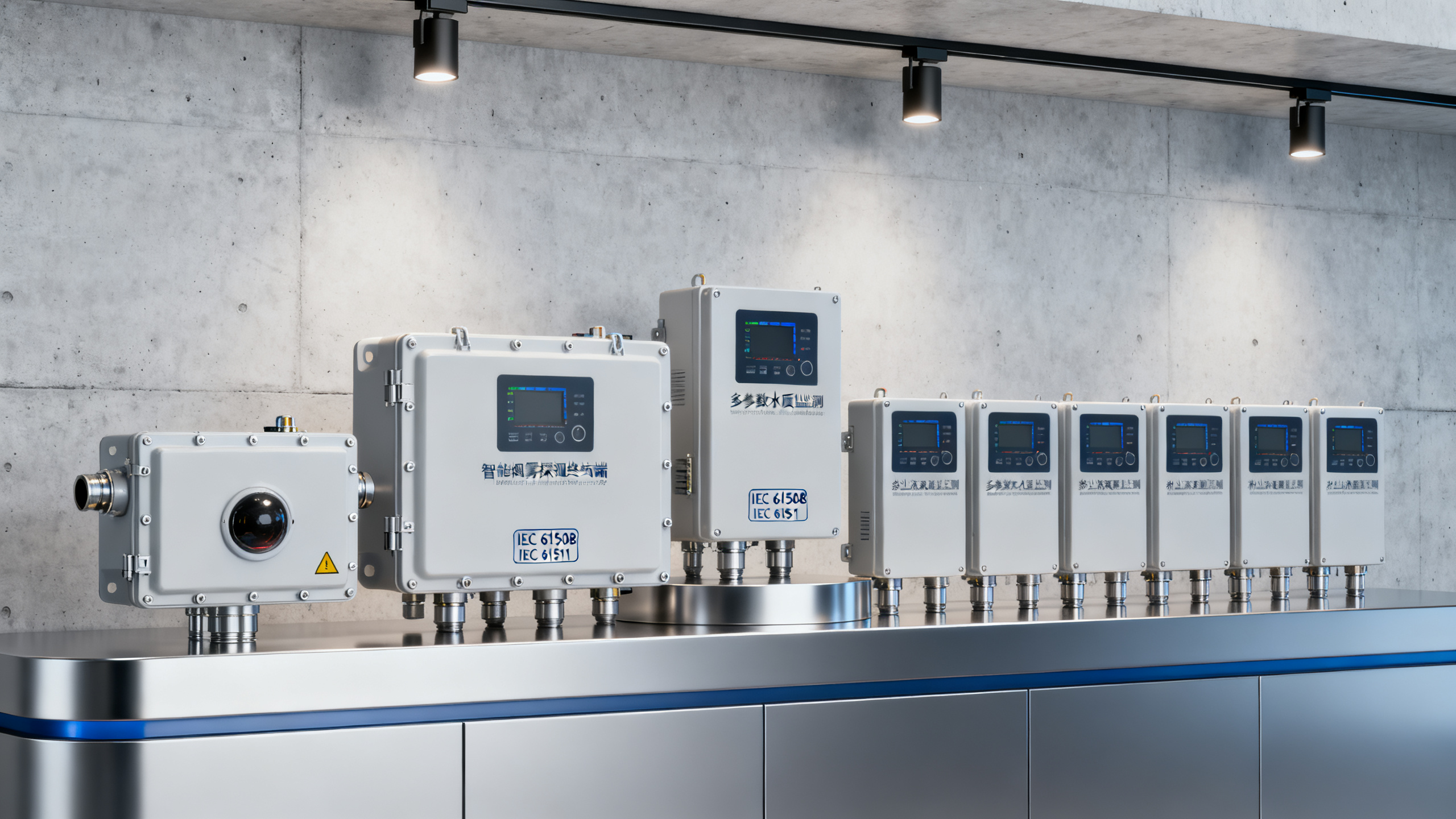
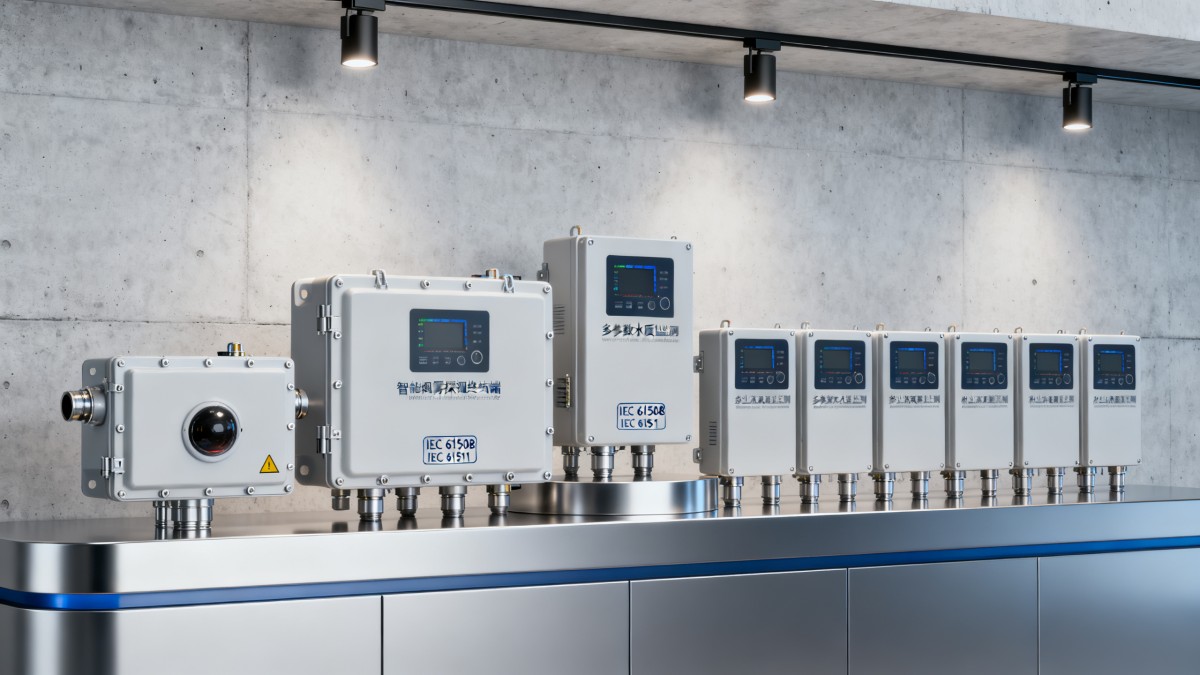
The Sixth Global AI Growth Conference (AGC) took place in Guangzhou from May 27 to 28, 2026. For the first time, AGC featured a dedicated forum titled 'AI+Industrial Safety & Environmental Monitoring'. The forum showcased application-specific solutions including AI-powered smart fire detection terminals, real-time dust concentration prediction models, and multi-parameter edge analytics devices for industrial water quality monitoring. Twenty procurement delegations—including EPC contractors and municipal water authorities from the Middle East and Southeast Asia—attended onsite and expressed firm bulk procurement interest in AI-enabled edge devices certified to IEC 61508 and IEC 61511.
Impact Across Supply Chain Roles
Export-oriented equipment manufacturers
These firms face immediate demand pressure to align product portfolios with functional safety certification requirements—notably IEC 61508/61511—rather than relying solely on general AI performance metrics. Impact is most acute in technical documentation preparation, third-party certification scheduling, and firmware traceability design.
Raw material and component suppliers
Suppliers of certified sensors, safety-rated microcontrollers, and hardened edge compute modules may see accelerated order cycles. However, they must now verify that their components support full lifecycle traceability and safety integrity level (SIL) claims required under IEC 61508/61511-compliant system integration.
Contract manufacturers and system integrators
Manufacturers engaged in AI hardware assembly or turnkey solution delivery must adapt production workflows to accommodate safety lifecycle documentation (e.g., HAZOP studies, FMEDA reports) and version-controlled firmware validation—shifting from agile development toward safety-certified V-model processes.
Logistics and compliance support providers
Supply chain service providers need to expand capabilities in managing certification dossiers, export documentation for dual-use AI hardware, and post-delivery audit readiness—particularly for jurisdictions where functional safety compliance is now treated as a mandatory bidding precondition.
Strategic Priorities for Export-Ready Firms
Verify and accelerate IEC 61508/61511 certification readiness
Procurement delegations explicitly cited compliance with these standards as non-negotiable. Firms should prioritize gap assessments, engage accredited Notified Bodies early, and ensure all software/firmware updates are covered under certified safety plans.
Prepare scenario-specific technical bid documentation
International EPC and municipal buyers emphasized use-case alignment—e.g., dust modeling accuracy under varying humidity, or edge device response latency in wastewater pH anomaly detection. Technical proposals must now include field-deployed validation data, not just lab benchmarks.
Strengthen supply chain traceability for safety-critical components
End-to-end component pedigree—including supplier declarations of conformity, calibration history, and failure mode data—is increasingly requested during pre-qualification. Manufacturers should implement digital traceability systems compatible with IEC 61511’s requirements for safety-related systems.
Align delivery timelines with regional infrastructure rollout schedules
Several Southeast Asian municipal water delegations indicated phased deployment plans tied to national digitalization roadmaps. Exporters should coordinate lead times with local commissioning windows—not just shipping dates—to avoid contract penalties or delayed payments.
Industry Observation: From Capability Demonstration to Compliance Discipline
Analysis shows this AGC forum signals a structural shift: AI adoption in industrial safety is no longer evaluated primarily on algorithmic novelty, but on verifiable functional safety governance. What deserves closer attention is how rapidly procurement criteria are evolving—from ‘AI-enabled’ as a feature descriptor to ‘IEC 61508/61511-certified’ as a hard entry requirement. Observably, the 20+ delegations did not request price concessions; instead, they prioritized audit-ready documentation, SIL-verified test reports, and post-installation maintenance protocols. It is more appropriate to understand this as a maturation point where AI industrial applications transition from pilot-stage innovation to regulated infrastructure-grade deployment.
Conclusion: A Defining Threshold for Global Market Access
This event marks more than a trend—it establishes a new threshold for competitiveness in global industrial AI markets. Success hinges less on model sophistication and more on disciplined adherence to internationally recognized functional safety frameworks. Exporters who treat IEC 61508/61511 not as a compliance checkbox but as an integrated engineering discipline will gain decisive advantage in high-intent markets across the Middle East and Southeast Asia.
Source Attribution
This article was generated based solely on the provided title, event date (2026-05-27), and event summary. Specific official source links were not provided in the input and should be verified continuously. Stakeholders are advised to monitor upcoming updates on IEC 61508/61511 interpretation guidance, regional tender specifications, and certification body announcements—particularly regarding AI-specific annexes under revision.
Technical Specifications
- How to Select Electronic Hotel Key Card Locks for Guest Rooms and Staff AreasAuthor :Safety Compliance Lead
- How to Select Lab Instruments for Reliable Chemical Analysis WorkflowsAuthor :Precision Metrology Expert
- How to Size a UPS for Server Rooms: Load, Runtime, and Redundancy FactorsAuthor :Grid Infrastructure Analyst
Expert Insights

Chief Security Architect
Dr. Thorne specializes in the intersection of structural engineering and digital resilience. He has advised three G7 governments on industrial infrastructure security.
Related Analysis
- Sep 17, 2026How to Select Electronic Hotel Key Card Locks for Guest Rooms and Staff AreasAuthor :Safety Compliance Lead
- Sep 16, 2026How to Select Lab Instruments for Reliable Chemical Analysis WorkflowsAuthor :Precision Metrology Expert
- Sep 15, 2026How to Size a UPS for Server Rooms: Load, Runtime, and Redundancy FactorsAuthor :Grid Infrastructure Analyst
Core Sector // 01
Security & Safety
- How to Select Electronic Hotel Key Card Locks for Guest Rooms and Staff AreasAuthor :Safety Compliance Lead

- How to Select Lab Instruments for Reliable Chemical Analysis WorkflowsAuthor :Precision Metrology Expert

- How to Size a UPS for Server Rooms: Load, Runtime, and Redundancy FactorsAuthor :Grid Infrastructure Analyst

- Stainless Steel Welded Tube Applications: Matching Tube Supply to Fabrication NeedsAuthor :Heavy Industry Strategist

- Selecting Low-Friction Pneumatic Seals for High-Cycle, Low-Pressure CylindersAuthor :Heavy Industry Strategist

- Selecting Spherical Roller Bearings for Mining: Load, Contamination, and Service LifeAuthor :Heavy Industry Strategist

- What to Check When Sourcing Vibration Meters Wholesale for Industrial MaintenanceAuthor :Precision Metrology Expert

- How to Size a Wafer Butterfly Valve for HVAC Chilled-Water and Heating LoopsAuthor :Environmental Engineering Director