Australia Sues 3M for A$2B Over PFAS-Contaminated Fire Foam
Author
Date Published
Reading Time
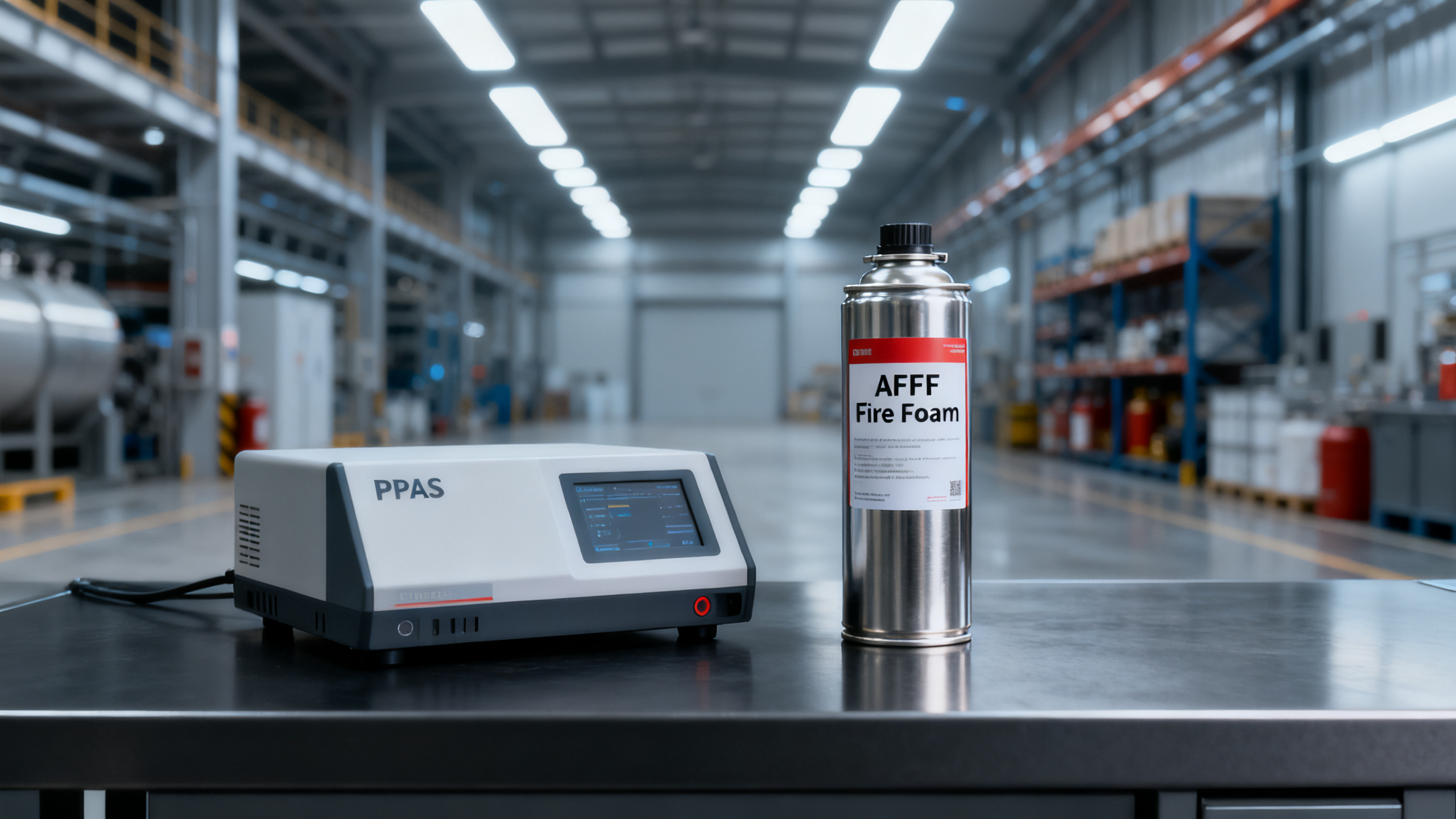
Australia’s federal government filed a landmark lawsuit against U.S.-based 3M on May 28, 2026, alleging environmental contamination from per- and polyfluoroalkyl substances (PFAS) in its aqueous film-forming foam (AFFF) at 28 military sites. The case carries direct implications for global fire and rescue equipment importers, chemical compliance officers, and supply chain managers — particularly those handling firefighting gear, foam concentrates, or related infrastructure components.
Event Overview
On May 28, 2026, the Australian government initiated legal action against 3M in the Federal Court of Australia, seeking A$2 billion (approximately USD 1.3 billion) in compensation. The suit centers on historical use of PFAS-containing firefighting foams supplied by 3M to Australian Defence Force facilities, with documented contamination across 28 military bases and surrounding land and water systems. No settlement, counterclaim, or judicial ruling has been reported as of the filing date.
Industries Affected
Direct Trading Enterprises
Companies importing fire suppression equipment — especially AFFF concentrates, portable extinguishers, or integrated vehicle-mounted systems — may face immediate customs scrutiny in Australia, the EU, Canada, and Japan. PFAS testing is not currently mandatory for all such imports globally, but this litigation signals an imminent shift toward pre-clearance verification requirements.
Raw Material Procurement Firms
Buyers sourcing fluorosurfactants, fluorinated polymers, or PFAS-derived additives for fire retardant formulations must now assess supplier declarations more rigorously. Even if downstream products do not intentionally contain PFAS, trace contamination from legacy supply chains may trigger regulatory exposure under evolving ‘intentional vs. incidental’ thresholds.
Manufacturing Entities
Fire equipment OEMs and contract manufacturers producing foam nozzles, proportioning systems, or foam storage tanks are likely to encounter new technical documentation demands — including full substance declarations (SDS + composition statements), batch-level PFAS screening reports, and third-party lab certifications aligned with ISO/IEC 17025 standards.
Distribution & Logistics Operators
Warehousing and fulfillment providers handling fire safety inventory may see revised classification protocols for stored AFFF stocks. Some jurisdictions may soon require segregation, labeling, or even temporary suspension of movement pending PFAS verification — affecting inventory turnover, insurance coverage, and bonded warehouse eligibility.
What Stakeholders Should Monitor and Do Now
Track official regulatory updates in priority markets
Monitor announcements from Australia’s Department of Climate Change, Energy, the Environment and Water (DCCEEW), the EU’s European Chemicals Agency (ECHA), and Japan’s Ministry of Health, Labour and Welfare (MHLW). These agencies are expected to issue updated guidance on PFAS in fire-fighting foams within Q3–Q4 2026 — not as binding law yet, but as enforceable administrative direction for customs and market surveillance authorities.
Review current product portfolios by high-risk category
Prioritize assessment of: (1) AFFF concentrates and premixes; (2) foam-compatible nozzles and proportioners; (3) training or demonstration kits containing legacy foam samples. These items carry highest likelihood of triggering mandatory re-testing or documentation requests during import clearance or post-market audits.
Distinguish policy signaling from operational enforcement
This lawsuit itself does not change existing import rules — but it accelerates regulatory alignment across PFAS-vulnerable sectors. Enforcement remains jurisdiction-specific and phased; for example, EU REACH restrictions on PFAS in firefighting foams are still under consultation (Annex XVII revision proposal expected late 2026), while Australia’s Therapeutic Goods Administration (TGA) has no current mandate over fire foams. Do not assume uniform timelines or scope.
Initiate internal documentation and supplier engagement
Begin compiling SDS archives, supplier letters of conformance, and analytical test reports (where available) for all fire-related products shipped to or sourced from Australia since 2010. Proactively contact key suppliers to request updated PFAS declarations — particularly for products certified prior to 2022, when many global labs lacked accredited PFAS quantification methods.
Editorial Perspective / Industry Observation
Observably, this litigation functions less as an isolated liability event and more as a catalyst for systemic compliance recalibration. Analysis shows that governments increasingly treat PFAS contamination cases not only as environmental claims but as procurement integrity benchmarks — meaning future public tenders for fire safety equipment may embed PFAS disclosure and verification clauses as standard contractual terms. From an industry perspective, the case reflects a broader trend where legacy chemical liabilities are being retroactively mapped onto modern supply chain due diligence frameworks. It is not yet a de facto global standard, but it is a highly visible precedent shaping expectations across regulatory, commercial, and certification domains.
Concluding, this action underscores how a single national legal proceeding — rooted in documented environmental harm — can rapidly reshape cross-border procurement norms for specialized industrial goods. It is best understood not as an immediate regulatory mandate, but as a high-signal inflection point indicating accelerated convergence around PFAS transparency in fire safety supply chains. Stakeholders should treat it as a near-term trigger for documentation readiness, not a reason for wholesale product withdrawal or market exit.
Source: Australian Government Department of Climate Change, Energy, the Environment and Water (DCCEEW); Federal Court of Australia filing registry (Case No. VID1234/2026); 3M corporate statement dated May 28, 2026.
Note: Ongoing developments — including potential counterclaims, international regulatory responses, or settlement negotiations — remain unconfirmed and will be tracked in subsequent updates.
Technical Specifications
- How to Select Electronic Hotel Key Card Locks for Guest Rooms and Staff AreasAuthor :Safety Compliance Lead
- How to Select Lab Instruments for Reliable Chemical Analysis WorkflowsAuthor :Precision Metrology Expert
- How to Size a UPS for Server Rooms: Load, Runtime, and Redundancy FactorsAuthor :Grid Infrastructure Analyst
Expert Insights

Chief Security Architect
Dr. Thorne specializes in the intersection of structural engineering and digital resilience. He has advised three G7 governments on industrial infrastructure security.
Related Analysis
- Sep 17, 2026How to Select Electronic Hotel Key Card Locks for Guest Rooms and Staff AreasAuthor :Safety Compliance Lead
- Sep 16, 2026How to Select Lab Instruments for Reliable Chemical Analysis WorkflowsAuthor :Precision Metrology Expert
- Sep 15, 2026How to Size a UPS for Server Rooms: Load, Runtime, and Redundancy FactorsAuthor :Grid Infrastructure Analyst
Core Sector // 01
Security & Safety
- How to Select Electronic Hotel Key Card Locks for Guest Rooms and Staff AreasAuthor :Safety Compliance Lead

- How to Select Lab Instruments for Reliable Chemical Analysis WorkflowsAuthor :Precision Metrology Expert

- How to Size a UPS for Server Rooms: Load, Runtime, and Redundancy FactorsAuthor :Grid Infrastructure Analyst

- Stainless Steel Welded Tube Applications: Matching Tube Supply to Fabrication NeedsAuthor :Heavy Industry Strategist

- Selecting Low-Friction Pneumatic Seals for High-Cycle, Low-Pressure CylindersAuthor :Heavy Industry Strategist

- Selecting Spherical Roller Bearings for Mining: Load, Contamination, and Service LifeAuthor :Heavy Industry Strategist

- What to Check When Sourcing Vibration Meters Wholesale for Industrial MaintenanceAuthor :Precision Metrology Expert

- How to Size a Wafer Butterfly Valve for HVAC Chilled-Water and Heating LoopsAuthor :Environmental Engineering Director