Custom warning labels that stay readable after chemical exposure
Author
Date Published
Reading Time
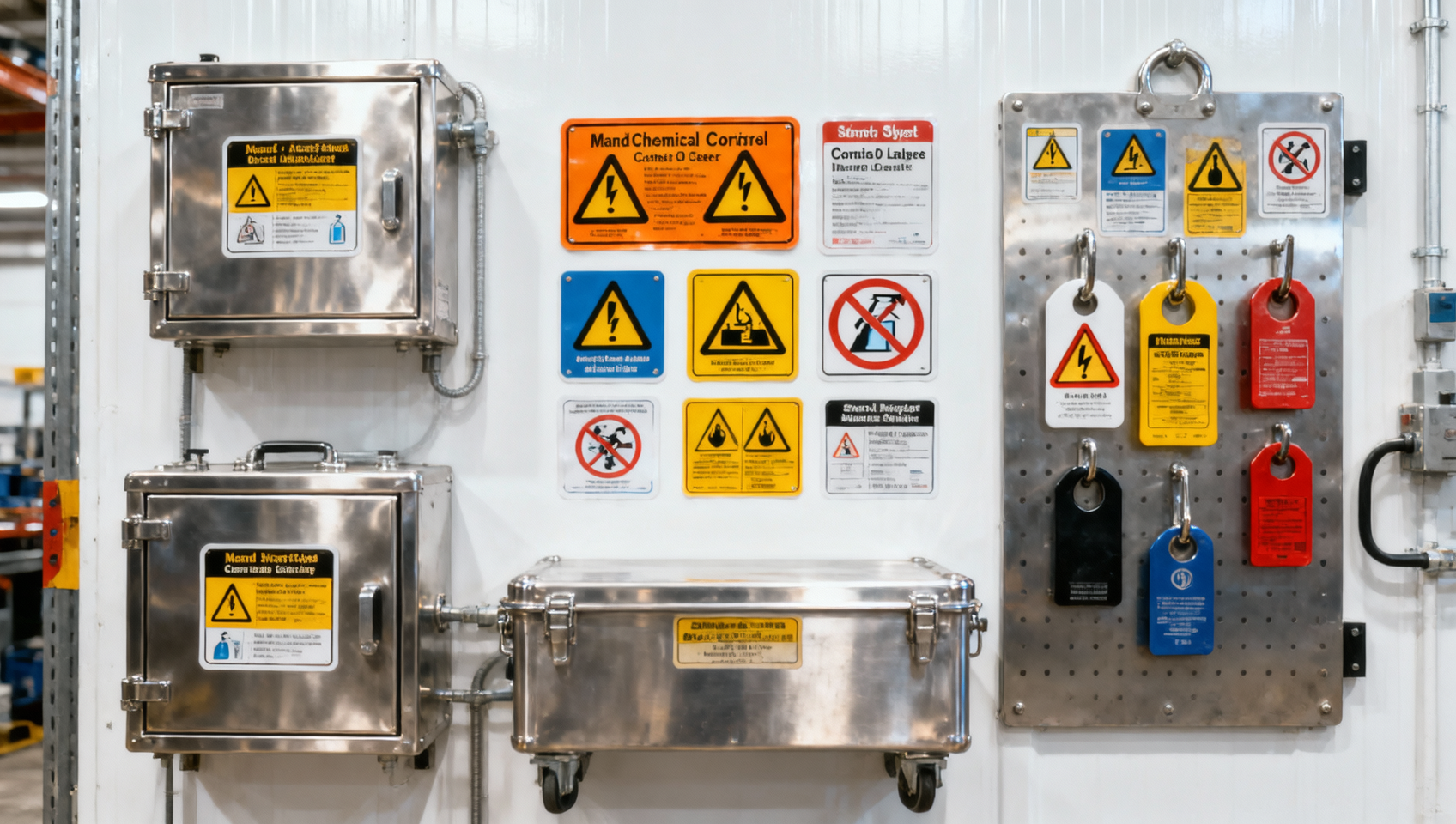
In harsh industrial settings, custom warning labels must remain legible after exposure to solvents, oils, cleaners, and extreme conditions. For procurement teams, operators, and safety managers comparing custom warning labels, safety signs wholesale options, and lockout tagout stations, durability is not a detail—it is a compliance and risk-control requirement. This guide explains how to choose labels that protect visibility, meet safety expectations, and support long-term operational reliability.
Why chemical-resistant custom warning labels matter in real industrial environments
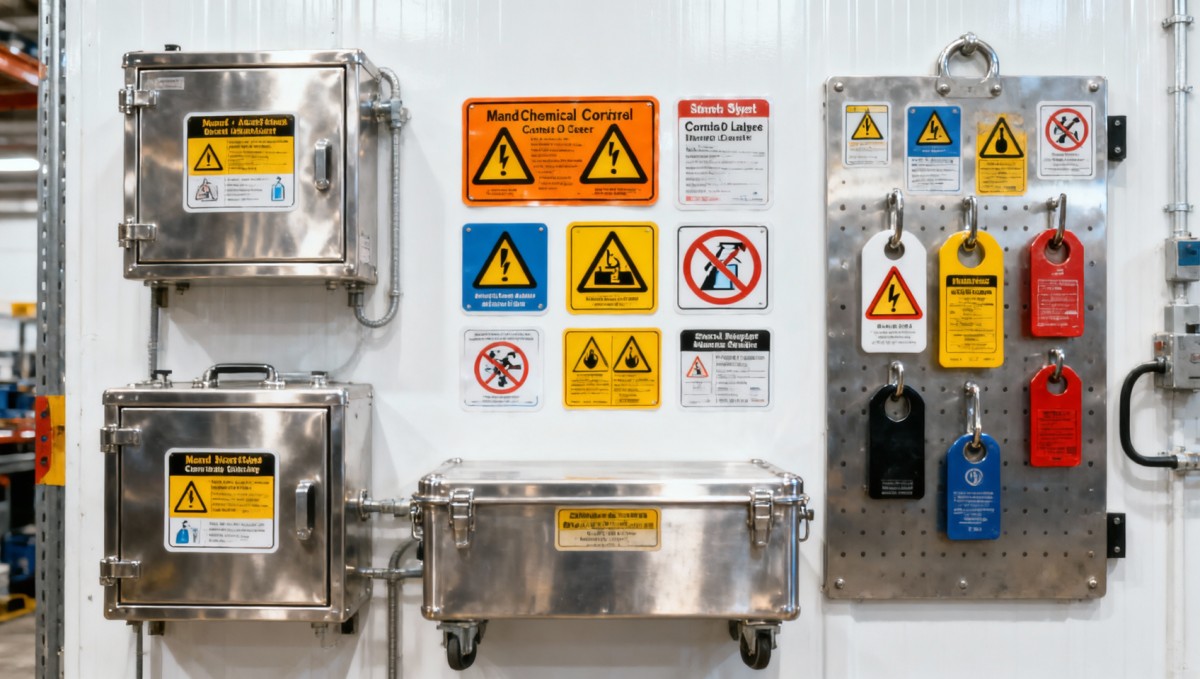
A warning label is only useful if people can still read it after weeks or months of exposure. In production plants, utility rooms, treatment facilities, workshops, and logistics zones, labels often face oils, degreasers, hydraulic fluids, diluted acids, alkaline cleaners, and repeated wipe-down cycles. Once text fades, smears, or lifts, the label stops functioning as a safety control and becomes a hidden liability.
For operators, this is a usability issue. They need fast recognition at a glance during a shift change, maintenance task, or shutdown procedure. For procurement teams, it is a lifecycle issue. A lower unit price may look attractive at first, but if labels require replacement every 3–6 months instead of lasting 12–24 months in the same environment, the real cost rises through rework, downtime, and stock management.
For decision-makers, readable custom warning labels support broader plant resilience. They reduce confusion during inspections, lockout tagout procedures, chemical handling, and equipment servicing. In sectors where CE, UL, or ISO-aligned practices influence supplier approval, label durability also affects how seriously a site appears to manage operational risk.
Global Industrial Core focuses on these practical sourcing questions because industrial buyers rarely fail on obvious issues. Problems usually come from small components that were under-specified: an adhesive chosen without solvent testing, a print method that cannot resist abrasion, or a substrate that curls at 10°C–60°C cleaning cycles. Labels may be small, but their failure can trigger larger compliance and maintenance consequences.
What typically destroys label readability first?
In many facilities, the first failure point is not complete detachment. It is partial loss of legibility. Barcodes blur, hazard icons fade, corners lift, and surface films haze after repeated chemical contact. These effects often appear during the first 30–90 days if the wrong construction is used for the environment.
- Aggressive cleaners can attack the print surface, especially if the ink or topcoat is not matched to solvent exposure.
- Heat and moisture cycling can weaken adhesive performance, leading to lifting on coated metal, textured plastics, or powder-coated enclosures.
- Mechanical abrasion from gloves, tools, hoses, or wipe-down cloths can erase critical text long before the label fully fails.
- UV and outdoor exposure can accelerate fading when custom warning labels are used on external cabinets, tanks, or loading areas.
This is why durable labeling should be treated as a system decision, not just a print purchase. Material, adhesive, print technology, surface preparation, and application method all affect performance.
How to compare label materials, print methods, and construction options
When buyers compare custom warning labels, they often focus on size, color, and unit cost. That is understandable, but industrial performance depends more on the construction stack. A durable label usually combines four elements: substrate, adhesive, print method, and protective layer. If one element is mismatched, the whole label can fail even when the others are strong.
As a practical rule, buyers should assess at least 5 core factors before approving a label specification: chemical contact type, exposure frequency, application surface, indoor or outdoor use, and required service life. A label exposed to daily degreasing on stainless steel needs a different build than one placed on an indoor control panel with light cleaning twice per month.
The table below helps procurement teams and facility managers compare common warning label constructions used in industrial safety, equipment marking, and lockout tagout support programs.
The right choice depends on exposure profile, not on generic “industrial grade” claims. For many mixed-use sites, polyester or laminated constructions offer a balanced middle ground between cost and durability. Where harsh chemicals, outdoor conditions, or extended service intervals are expected, a more robust specification usually pays back over the first replacement cycle.
Which print technologies are more reliable?
Not all printing methods perform the same under chemical exposure. Thermal transfer, screen printing, digital industrial printing, and subsurface printing each have strengths. The decision should depend on quantity, customization frequency, and resistance requirements. For example, low-volume custom warning labels may favor digital flexibility, while higher-volume standardized warnings may justify more durable production methods.
A practical selection rule
If your site changes messages frequently, prioritize flexible production with tested laminates and compatible ribbons or inks. If your content stays stable for 12–36 months, invest more in permanent constructions that reduce replacement labor and inspection failures.
What procurement teams should verify before ordering custom warning labels
Industrial purchasing teams are often under pressure to source fast, standardize across sites, and avoid excess inventory. That creates a common risk: buying labels based on artwork approval alone. A readable design is not enough. Buyers should request a specification review that covers the actual installation environment, expected cleaning methods, and typical contact substances.
A useful procurement process usually follows 4 steps: define the use environment, shortlist materials, validate a sample, and confirm rollout quantities. In many B2B projects, sample validation within 7–15 days is more valuable than debating theoretical performance claims. Even a small pilot can reveal edge lifting, text loss, or application issues before a multi-site order is placed.
For safety signs wholesale orders or bundled purchases with lockout tagout stations, standardization is equally important. Procurement teams should align message format, symbol use, color coding, and adhesive type across similar assets. This reduces operator confusion and helps maintenance teams manage replenishment without carrying too many variants.
Global Industrial Core supports buyers by translating technical requirements into sourcing criteria that are easier to compare across suppliers. That includes identifying when a lower-cost label is acceptable, when a harsh-environment specification is necessary, and where a standardized signage program can reduce hidden operating cost.
5 key checks before issuing a purchase order
- Confirm the chemical profile: oils, alcohol-based cleaners, solvents, acidic wash agents, or alkaline detergents can affect labels differently.
- Check substrate compatibility: smooth steel, powder-coated cabinets, polyethylene bins, and textured housings do not bond the same way.
- Review service temperature range: indoor sites may stay stable, but exposed equipment can face swings from near-freezing conditions to elevated enclosure temperatures.
- Specify readability distance and label size: a compact equipment tag and a 2–5 meter hazard label require different layouts.
- Ask for sample or pilot validation: one tested batch can prevent larger nonconformance and replacement costs.
The next table provides a procurement-focused checklist that helps compare suppliers offering custom warning labels, safety signs wholesale packages, and integrated site safety marking solutions.
This checklist is especially useful when multiple stakeholders are involved. Operators care about readability, EHS teams care about clarity and consistency, procurement cares about repeatability and cost control, and management cares about risk reduction across the full asset lifecycle.
How long is a normal delivery cycle?
Lead times vary by customization level and batch size. Simple standard-format labels may move faster, while fully customized industrial labels with sample approval often require 1–3 weeks for artwork confirmation and pilot preparation, followed by production scheduling. Large multi-site programs can extend beyond that because standardization and approval loops take longer than printing itself.
Application scenarios: where durability requirements change the most
Chemical exposure does not look the same across all industrial settings. A food processing line may involve frequent washdowns and sanitizers. A maintenance workshop may expose labels to oils, hand cleaners, and abrasion. An electrical room may have lower chemical contact but higher importance for warning clarity and equipment identification. This is why “one label for everything” often fails in practice.
Buyers should segment usage into at least 3 categories: light-duty indoor, medium-duty industrial, and harsh-duty chemical or washdown zones. Once labels are grouped this way, it becomes easier to assign different constructions without losing site-wide consistency in design language and hazard communication.
This matters even more when warning labels are purchased alongside safety signs wholesale programs and lockout tagout stations. The station may be fixed and durable, but the attached procedural labels, equipment warnings, and refill tags still need to survive daily handling. A weak label can undermine an otherwise well-designed safety point.
Typical use scenarios to assess
- Process equipment and piping areas where labels face splash contact, periodic cleaning, and close-range operator reading.
- Control cabinets and electrical panels where readability must remain stable over 12–24 months and adhesive failure can interfere with maintenance clarity.
- Outdoor tanks, pump skids, and utility assets exposed to UV, rain, dust, and temperature swings over seasonal cycles.
- Lockout tagout points and maintenance stations where repeated handling, glove contact, and procedure updates affect label wear.
A useful decision approach
If the label supports a critical safety action, specify for the harshest expected condition, not the average condition. That usually means considering the worst cleaner, the most frequent wipe-down cycle, and the longest intended replacement interval rather than assuming moderate use.
In practical sourcing terms, this approach reduces the risk of buying one low-cost label that performs acceptably in office-adjacent areas but fails in the first week on the plant floor.
Standards, common mistakes, and questions buyers often ask
Custom warning labels do not replace broader safety management, but they should align with it. In industrial procurement, buyers often reference CE, UL, ISO-related practices, internal plant standards, and accepted hazard communication conventions. The exact requirement depends on geography, equipment type, and site rules, but the principle is consistent: labels must be clear, durable, and appropriate for the task and environment.
A common mistake is assuming that compliance depends only on the wording or symbol. In reality, legibility over time matters. Another mistake is using indoor-grade labels in washdown zones because the artwork looks correct at delivery. A third is separating label purchase from equipment surface review, which often leads to adhesive mismatch on textured or coated substrates.
The FAQ below addresses common search and buying questions from researchers, operators, purchasing teams, and business decision-makers planning a safety labeling update.
How do I know if a custom warning label is suitable for chemical exposure?
Start with the chemicals actually used on site. List cleaners, lubricants, solvents, and process residues that may contact the label. Then review exposure frequency: occasional splash, daily wipe-down, or repeated immersion-like contact. A supplier should be able to recommend a construction based on those conditions and ideally support sample validation over a short test cycle such as 7–15 days.
Are safety signs wholesale products enough, or do I need custom warning labels?
Wholesale safety signs are useful for standard hazards and common site messaging. Custom warning labels are better when the message is asset-specific, procedure-linked, multilingual, or tied to exact equipment conditions. Many facilities use both: standard signs for area control and custom labels for machine-level or procedure-level communication.
What should I check when labels are used near lockout tagout stations?
Look at handling frequency, glove contact, cleaning chemicals, and message update needs. Labels near lockout tagout stations should remain readable through repeated use and should not peel at the edges where hands frequently touch them. If procedures change often, choose a format that balances replacement ease with adequate durability.
Is the lowest-cost label ever the right choice?
Yes, in low-risk and low-exposure areas. But for harsh environments, the lowest initial price often creates higher total cost through reordering, relabeling labor, inconsistent appearance, and failed inspections. It is better to compare total use cost over 12–24 months than unit price alone.
Why work with Global Industrial Core when evaluating warning label solutions
Global Industrial Core helps industrial buyers move beyond generic product listings. We focus on the operational context behind the purchase: what chemicals are present, how often surfaces are cleaned, what compliance expectations apply, and how labels fit into broader safety systems that may also include safety signs wholesale sourcing and lockout tagout stations.
For information researchers, we help narrow confusing options into clear evaluation criteria. For operators and facility users, we emphasize readability and practical durability. For procurement teams, we support structured comparison across material, service life, lead time, and standardization needs. For business decision-makers, we connect labeling choices to risk control, maintenance efficiency, and supplier qualification.
If you are planning a new specification or replacing underperforming labels, you can contact GIC to discuss 6 practical topics: environmental parameters, label material selection, sample validation, delivery cycle planning, compliance alignment, and quote comparison. This is especially valuable when one site contains mixed exposure levels and needs a tiered label strategy rather than a one-size-fits-all purchase.
Reach out if you need support with custom warning labels that must stay readable after chemical exposure, bundled sourcing with safety signs wholesale programs, or selection guidance for labels used around lockout tagout stations. A focused specification review at the start can prevent repeat purchasing mistakes later.
Technical Specifications
- SCFI Surges 27% Weekly; Shanghai–Rotterdam Freight Hits $4,200/TEUAuthor :Environmental Engineering Director
- INMETRO New Rule: Industrial Circuit Breakers Must Pass IEC 60947-2 Annex Q Test from Sep 2026Author :Grid Infrastructure Analyst
- FDA Expands Regulation of Industrial Air Filters: ULPA Filter MVR Verification RequiredAuthor :Environmental Engineering Director
Expert Insights

Chief Security Architect
Dr. Thorne specializes in the intersection of structural engineering and digital resilience. He has advised three G7 governments on industrial infrastructure security.
Related Analysis
- Apr 26, 2026SCFI Surges 27% Weekly; Shanghai–Rotterdam Freight Hits $4,200/TEUAuthor :Environmental Engineering Director
- Apr 26, 2026INMETRO New Rule: Industrial Circuit Breakers Must Pass IEC 60947-2 Annex Q Test from Sep 2026Author :Grid Infrastructure Analyst
- Apr 26, 2026FDA Expands Regulation of Industrial Air Filters: ULPA Filter MVR Verification RequiredAuthor :Environmental Engineering Director
Core Sector // 01
Security & Safety
- CPSC Mandates ASTM F3502-23 Respiratory Resistance Re-testing for Industrial Dust MasksAuthor :Safety Compliance Lead
![]()
- Breathability vs protection in safety equipmentAuthor :Safety Compliance Lead

- EU PPE Regulation (EU) 2026/789 Enforces Dual CE+UKCA for Chinese ExportsAuthor :Safety Compliance Lead
![]()
- Automatic hand sanitizers with sensors or pedals?Author :Safety Compliance Lead

- Does a wholesale shoe cover dispenser really reduce contamination?Author :Safety Compliance Lead

- ESD anti static shoes that pass tests but feel unsafe on siteAuthor :Safety Compliance Lead

- Why wholesale cleanroom garments vary so much in durabilityAuthor :Safety Compliance Lead

- Scaffolding tags are simple until weather starts erasing themAuthor :Safety Compliance Lead