Emergency exit lights LED: battery backup mistakes to avoid
Author
Date Published
Reading Time
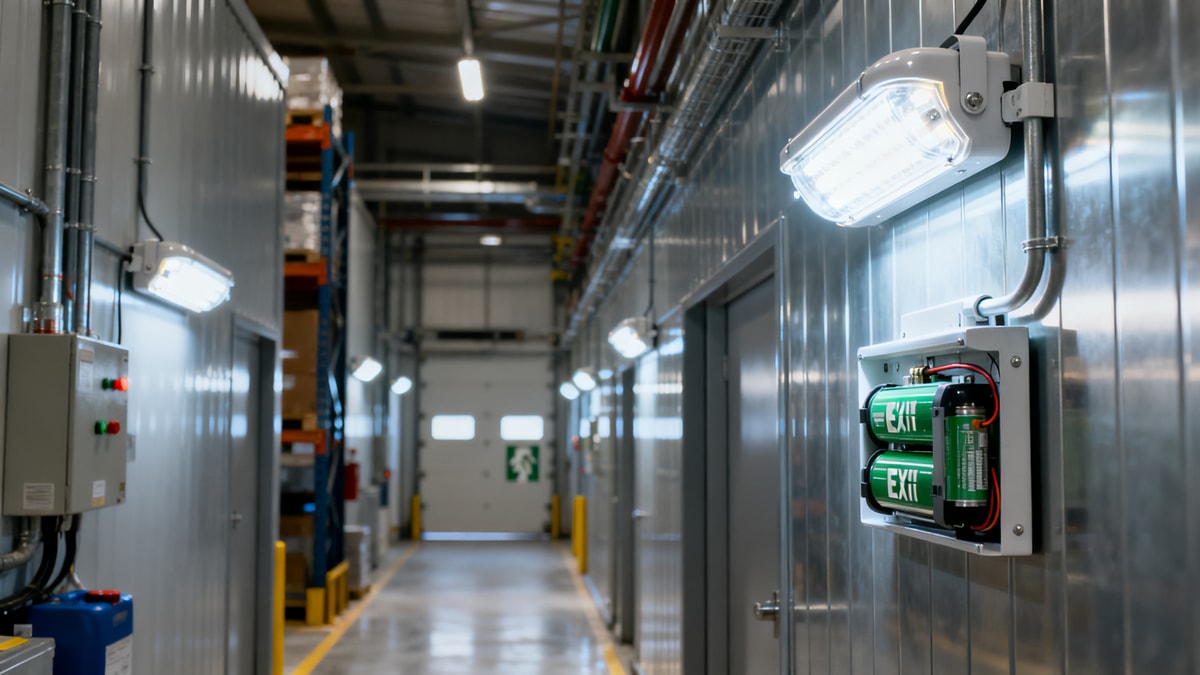
Battery backup failure is one of the most overlooked risks in emergency exit lights LED systems, yet it can undermine compliance, evacuation safety, and facility resilience when it matters most. For quality control and safety managers, avoiding common specification, testing, and maintenance mistakes is essential to ensuring reliable illumination, meeting code requirements, and protecting people during real emergency conditions.
Why do battery backup mistakes in emergency exit lights LED systems matter so much?
Emergency lighting is often treated as a low-drama category until a power outage, fire event, equipment fault, or local grid interruption exposes weak points. In industrial buildings, warehouses, plants, logistics hubs, and mixed-use facilities, emergency exit lights LED products are not just accessories. They are life-safety devices expected to perform instantly under stress, often after long periods of inactivity.
The most dangerous assumption is that LED efficiency automatically guarantees reliable emergency runtime. LEDs reduce power demand, but the battery backup system still determines whether the fitting can sustain illumination for the full code-required duration. If the battery chemistry is mismatched, charging logic is poor, ambient temperature is ignored, or testing is inconsistent, the fixture may look compliant on installation day but fail during a real evacuation.
For quality control personnel and safety managers, the issue is broader than product selection. It also includes documentation, commissioning, environmental suitability, inspection intervals, replacement planning, and proof of compliance with standards such as UL, CE, IEC, and relevant local fire and building codes. In short, battery backup reliability is where design intent meets operational reality.
What are the most common battery backup mistakes to avoid?
Several recurring errors appear across procurement projects and facility audits. They usually begin with an incomplete understanding of how emergency exit lights LED units behave over time rather than in ideal lab conditions.
A frequent hidden problem is overconfidence in charging indicators. A green status light can confirm power presence, but it does not always prove the battery can deliver rated emergency duration. Safety teams should therefore treat indicator lamps as one data point, not the full validation method.
How should safety managers evaluate battery type, runtime, and charging performance?
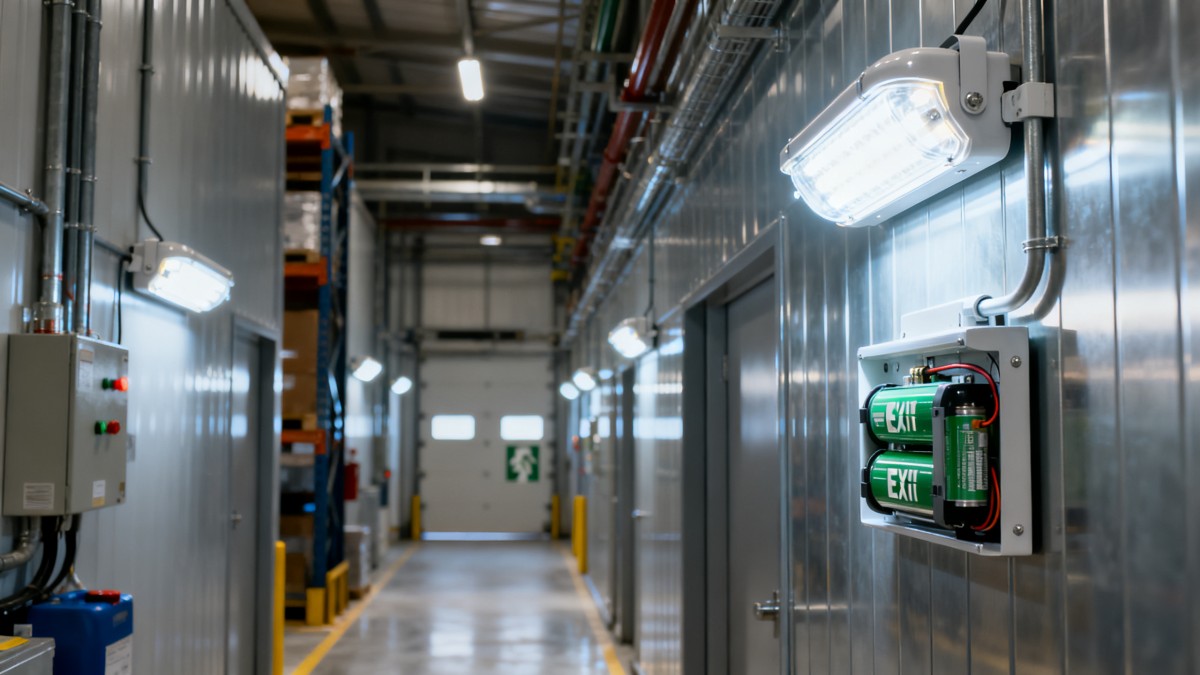
The right evaluation starts with the application, not the catalog headline. Emergency exit lights LED systems in offices may face moderate temperatures and predictable maintenance access. Industrial corridors, substations, process plants, tunnels, or outdoor transfer points may face vibration, dust, heat, cold, or unstable supply conditions. The battery backup choice should reflect those realities.
First, confirm the required emergency duration. Many jurisdictions require 90 minutes, but some projects specify different runtimes based on occupancy, hazard level, or local regulation. A fixture rated for the minimum legal requirement may still be unsuitable if the site has long evacuation routes or delayed emergency response conditions.
Second, examine battery chemistry carefully. Nickel-cadmium, nickel-metal hydride, lithium iron phosphate, and sealed lead-acid options each have tradeoffs in temperature stability, charging profile, footprint, cycle life, disposal considerations, and replacement cost. There is no universal best answer. The best choice is the one matched to the site environment, maintenance capability, and compliance expectations.
Third, ask how charging control is designed. Good emergency exit lights LED products include protection against overcharge, deep discharge, and thermal stress. They should also recover predictably after an outage. In facilities with frequent short interruptions, poor recharge behavior can gradually weaken emergency readiness without obvious visual signs.
Finally, verify derating behavior. Battery capacity falls over time, and performance changes with temperature and age. A product that barely meets runtime when new may fail before the next inspection cycle if the design margin is too narrow. Procurement documents should therefore ask suppliers for runtime data beyond nominal conditions.
Which testing and maintenance mistakes cause the most compliance risk?
From a compliance perspective, the biggest mistake is treating emergency lighting checks as a box-ticking exercise. For emergency exit lights LED units, visual presence, lens cleanliness, and indicator status are important, but they do not replace actual operational testing.
One major risk is skipping full-duration discharge tests because they are disruptive. Facilities may perform only brief functional tests and assume the batteries are healthy. In reality, weak batteries often pass short activation checks and fail only during extended discharge. For safety managers, this creates a false sense of readiness and potential liability if an evacuation incident occurs.
Another common issue is poor recordkeeping. During audits, many sites cannot clearly show installation dates, battery replacement dates, test results, failure rates, corrective actions, or certification references. This weakens both compliance defense and root-cause analysis. A mature program links every emergency exit lights LED fitting to a documented maintenance history.
There is also the problem of inconsistent replacement policy. Some teams replace batteries only after visible failure, while others change the complete luminaire on a fixed schedule. Neither approach is automatically correct. The smarter method is condition-informed maintenance supported by runtime data, site criticality, and manufacturer guidance. High-risk facilities should lean toward shorter preventive replacement intervals rather than waiting for decline to become obvious.
How can procurement teams tell whether a product is truly fit for industrial use?
Not every emergency exit lights LED model marketed as “commercial grade” is suitable for industrial duty. Quality and safety managers should go beyond lumen output and appearance. The more useful questions relate to enclosure protection, battery accessibility, thermal design, certification traceability, and long-term spare support.
Start by reviewing the installation environment. Will the fitting be exposed to dust, washdown, chemical vapor, vibration, or elevated temperatures near process equipment? If so, ingress protection, housing material, and battery compartment sealing become essential. A well-designed LED source cannot compensate for a battery compartment that degrades quickly in harsh conditions.
Next, assess maintainability. Can the battery be replaced without damaging the housing or voiding certification? Are replacement parts standardized and available globally? For multinational industrial operators, product continuity matters almost as much as initial performance. A discontinued battery format can create expensive retrofit waves across facilities.
Then review supplier evidence. Trustworthy vendors should provide test reports, compliance declarations, rated charging time, emergency duration, operating temperature limits, and service recommendations. If technical answers are vague, the sourcing risk is high. In life-safety procurement, incomplete data is itself a warning signal.
What early warning signs suggest battery backup failure is developing?
Battery failure rarely appears without clues. The problem is that many clues are subtle and easy to dismiss during routine rounds. For emergency exit lights LED systems, early warning signs include reduced test duration, delayed switchover during simulated outage, overheating near the battery compartment, irregular charging indicators, case deformation, corrosion at terminals, and repeated faults after brief power interruptions.
Another sign is pattern failure. If several luminaires from the same batch begin underperforming within a short period, the issue may point to a charger design problem, unsuitable battery chemistry, or poor environmental matching rather than isolated wear. Quality control teams should trend failures by model, batch, location, and age. This turns maintenance data into a procurement intelligence tool.
Sites with extreme ambient conditions should pay particular attention after seasonal changes. Cold weather can expose latent weakness by reducing available capacity, while high summer temperatures can accelerate aging and shorten battery service life. The lesson is simple: emergency exit lights LED reliability should be monitored as a system condition, not just a fixture condition.
What should be checked before specifying, buying, or upgrading emergency exit lights LED units?
Before finalizing a specification, safety and procurement teams should align on a practical checklist. This reduces the chance of buying a code-compliant product that performs poorly in the field.
- Required emergency runtime under local code and site risk profile
- Battery chemistry suitability for real temperature range and duty cycle
- Recharge time after discharge and behavior under repeated outages
- Certification validity, traceable documentation, and market-specific approvals
- Maintenance access, replacement parts availability, and expected service life
- Test method compatibility with the facility’s inspection program
- Total lifecycle cost, including battery replacement and downtime risk
This is where many organizations improve outcomes quickly: they stop asking only “Does this emergency exit lights LED product meet the standard?” and start asking “Will it still meet the standard on our site after years of heat, dust, cycling, and imperfect maintenance?” That question leads to better sourcing decisions.
What is the practical takeaway for QC and safety teams?
Battery backup mistakes are rarely dramatic at the purchasing stage, but they become critical during the exact moment emergency lighting is needed. For quality control personnel, the priority is verifying technical fit, test evidence, and replacement compatibility. For safety managers, the priority is ensuring routine inspection, documented discharge testing, and clear accountability for corrective action.
The most resilient emergency exit lights LED strategy combines compliant design, realistic battery selection, environmental matching, disciplined maintenance, and supplier transparency. That approach reduces failure risk, supports audits, and protects occupants during real incidents rather than theoretical ones.
If you need to confirm a specific solution, parameter set, project direction, implementation timeline, quotation path, or supply partnership, the first questions to raise are straightforward: What runtime is actually required on site? Which battery chemistry is best for the environment? How is compliance documented? What is the tested replacement cycle? And how will ongoing inspection prove that the emergency exit lights LED system is still ready when normal power disappears?
Technical Specifications
Expert Insights

Chief Security Architect
Dr. Thorne specializes in the intersection of structural engineering and digital resilience. He has advised three G7 governments on industrial infrastructure security.
Related Analysis
- May 01, 2026PTZ dome camera placement mistakes that waste zoom performanceAuthor :Safety Compliance Lead
- May 01, 2026Biometric access control systems: where integration gets expensiveAuthor :Safety Compliance Lead
- May 01, 2026Facial recognition door lock accuracy drops in these common settingsAuthor :Safety Compliance Lead
Core Sector // 01
Security & Safety
- Dry chemical fire extinguishers and clean-up costs after dischargeAuthor :Safety Compliance Lead

- CO2 fire extinguishers wholesale: refill logistics often overlookedAuthor :Safety Compliance Lead

- Fire hydrant valves: signs the material grade is not enoughAuthor :Safety Compliance Lead

- Why fire hose reel cabinets fail early in humid locationsAuthor :Safety Compliance Lead

- Wholesale fire alarm panels: compatibility issues to check firstAuthor :Safety Compliance Lead

- Smoke detectors bulk orders: where false alarm costs add upAuthor :Safety Compliance Lead

- When heat detectors OEM support matters more than unit costAuthor :Safety Compliance Lead

- Emergency exit lights LED: battery backup mistakes to avoidAuthor :Safety Compliance Lead