Wholesale Security Safes: How to Compare Ratings
Author
Date Published
Reading Time
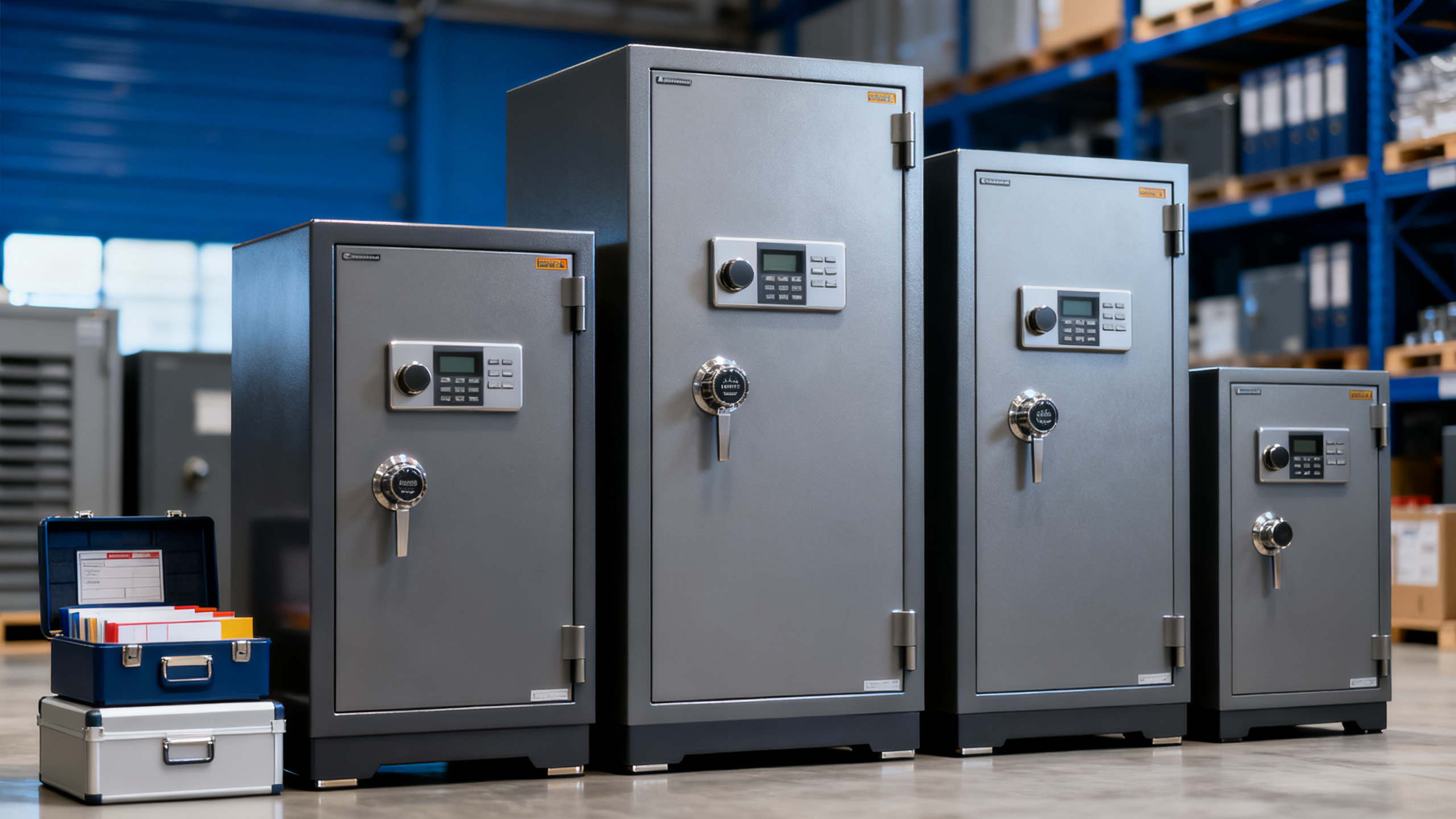
Choosing wholesale security safes is not just about price—it is about verified protection, compliance, and fit for real operating risks. This guide explains how to compare safe ratings, certification standards, fire resistance, and construction quality so procurement teams, facility operators, and decision-makers can source with greater confidence and avoid costly specification mistakes.
In industrial, commercial, and institutional environments, a security safe may protect cash, documents, backup media, controlled assets, keys, or regulated materials. The difference between an entry-level cabinet and a properly rated safe can determine whether a site loss remains minor or becomes operationally disruptive. For wholesale buyers, the challenge is not simply selecting a larger unit at a lower unit cost, but matching risk level, certification, installation conditions, and service life.
A sound comparison process should look at burglary resistance, fire endurance, lock type, body construction, anchoring, internal configuration, and after-sales support. It should also separate tested performance from unverified marketing claims. For research teams, operators, procurement professionals, and business leaders, the goal is clear: compare ratings in a way that supports compliance, protects assets, and reduces the likelihood of replacement, claim disputes, or failed audits within the first 3–5 years of use.
Understand What Safe Ratings Actually Measure
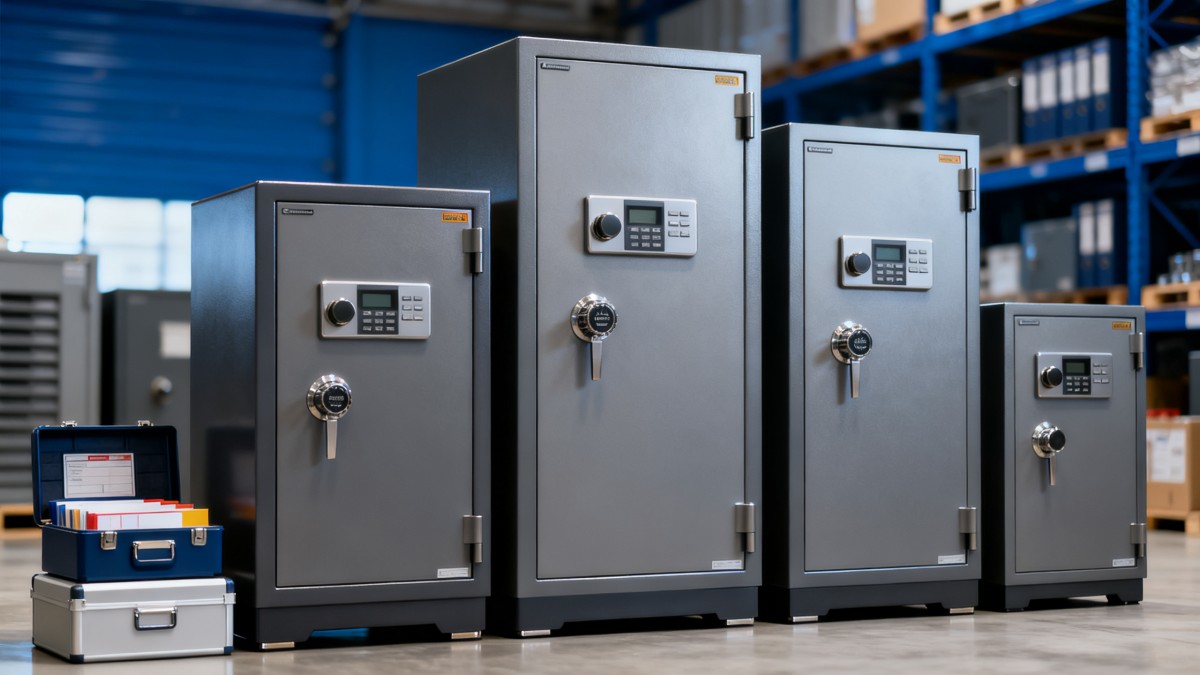
The first step in comparing wholesale security safes is understanding that “rating” does not mean one universal score. In practice, safes are evaluated through different test frameworks for different threats. A burglary rating addresses resistance to forced entry tools and attack time. A fire rating addresses internal temperature control for a defined period such as 30, 60, 90, or 120 minutes. A media rating is even stricter because data media can be damaged at lower temperatures than paper.
For buyers in industrial and commercial settings, confusion often starts when a supplier uses broad terms like “heavy-duty” or “fireproof” without citing a recognized testing basis. A safe with 2 mm steel and a digital lock may look substantial, yet that alone does not confirm tested resistance. Procurement teams should ask whether the product has been evaluated to a recognized standard, what threat model was used, and whether the rating applies to burglary, fire, or both.
This distinction matters because each operating environment has a different risk profile. A retail cash office may need stronger burglary resistance than fire endurance. A records room may prioritize 60–120 minutes of fire protection. A laboratory or utility control room storing backup media may require a separate data-rated compartment. Comparing safes without clarifying these use cases leads to overspending on the wrong feature or under-specifying a critical one.
Common rating categories buyers should separate
A practical shortlist should separate at least 4 categories: basic security cabinets, burglary-rated safes, fire-resistant document safes, and media safes. Some products combine burglary and fire testing, but many do not. In wholesale sourcing, this is especially important when a project includes 10, 50, or 200 units across different facility zones. Standardizing all locations around one model can increase cost and still leave high-risk rooms underprotected.
- Basic security cabinet: suitable for low-risk internal storage, but often not equivalent to a tested safe.
- Burglary-rated safe: intended to resist attack tools, pry attempts, drilling, and lock compromise.
- Fire-resistant safe: designed to keep internal temperature below damage thresholds for a time period.
- Media safe: protects tapes, drives, and digital media with tighter temperature and humidity limits.
The table below provides a practical comparison framework for rating types that frequently appear in B2B purchasing discussions.
The key takeaway is that rating categories are not interchangeable. A procurement specification should state the threat type, the protection duration if fire is relevant, and the contents being stored. That single clarification can eliminate a large share of sourcing errors before vendor comparison begins.
How to Compare Certification Standards and Test Claims
When sourcing wholesale security safes, the safest purchasing discipline is to compare test evidence, not brochure language. Certifications and standards vary by region, product category, and application, but the buying logic stays consistent: identify the standard used, confirm who tested the product, verify the rated level, and check whether the certified configuration matches the exact model offered. A lock upgrade, wall thickness change, or internal design revision can affect validity.
In many B2B projects, especially for multi-site procurement, a compliance mismatch does not appear until installation, internal audit, or insurer review. That delay can create 2 major costs: replacement of non-compliant units and disruption to site commissioning. For that reason, buyers should request test reports, certification references, and product drawings during evaluation rather than after purchase order release.
International buyers also need to distinguish between product safety marks, electrical component conformity, and actual safe performance testing. A lock or electronic module may carry one certification, while the cabinet body or full safe assembly is tested under another framework. Treating these as equivalent is a common sourcing mistake.
A 5-point document check before approval
- Confirm the issuing test body or certification organization.
- Match the certificate to the specific model series and door size.
- Check the rating level and test scope, such as burglary only or burglary plus fire.
- Review lock certification separately if an electronic or dual-lock system is specified.
- Verify production consistency if the order volume is above 20 units or spans several months.
The table below helps procurement teams compare claims in a structured way during supplier screening.
A supplier that can answer these questions clearly is easier to evaluate, easier to audit, and generally safer to deploy across multiple facilities. This is especially relevant when the buying team includes both technical reviewers and commercial decision-makers who need a shared basis for approval.
Evaluate Construction Quality Beyond Steel Thickness Alone
Many wholesale security safe comparisons stall at one visible metric: steel thickness. While thickness matters, it is only one element of overall performance. A well-designed safe also depends on door fit, bolt work, hinge protection, relocking features, barrier materials, lock mounting, weld quality, and anchoring provisions. In some designs, the door and frame assembly contribute more to attack resistance than a simple increase from 3 mm to 6 mm outer plate.
For industrial users, construction quality should also be judged by operating environment. A safe placed in a controlled office has different demands from one installed in a dusty workshop, logistics terminal, or utility building exposed to humidity swings. Procurement specifications should therefore include not only protective performance, but also operational durability over a 5–10 year service horizon.
Operators often care about details that decision-makers may overlook during tender review. Examples include door opening angle, shelf load stability, keypad visibility under low light, battery replacement access, and the time required to perform dual-user opening procedures. Small usability issues can reduce compliance in daily use, especially where 2-shift or 3-shift operations are involved.
Key physical features to inspect during supplier comparison
- Door and frame gap consistency, which affects pry resistance and long-term alignment.
- Number and engagement depth of locking bolts on at least 3 sides where applicable.
- Presence of anti-drill plates, relockers, or hardplate protection around the lock area.
- Base anchoring holes and anchor hardware suitability for concrete floors or plinths.
- Internal layout options such as lockable compartments, shelves, trays, and document racks.
Why lock selection changes total ownership cost
Mechanical key locks may simplify use in low-frequency access environments, but key control can become difficult across 5, 10, or 30 sites. Electronic locks improve audit control and user management, yet they introduce battery maintenance, code administration, and potential training requirements. Dual-control locking is often appropriate when asset custody needs segregation between operator and supervisor roles.
As a general purchasing rule, lock choice should align with access frequency. A safe opened fewer than 3 times per week may not need advanced digital management. A safe opened 20–50 times per day in a cash office or pharmacy back room may justify faster user control, timed delay, and multi-user code management. The best wholesale specification balances security, workflow, and service complexity.
Match Fire Resistance, Capacity, and Site Conditions to the Real Use Case
Not every buyer needs the same fire resistance. If the contents are mainly paper records, a 60-minute or 120-minute fire-rated safe may be appropriate depending on evacuation time, suppression systems, and recovery objectives. If the contents include drives or backup media, the internal temperature threshold becomes more demanding. Buying a standard document safe for digital media is a known error in administrative, industrial, and utility environments.
Capacity planning is equally important. Wholesale security safes are often purchased based on external dimensions because floor space is easy to measure. However, internal capacity can vary significantly due to insulation thickness, door construction, and internal compartments. Two safes with similar footprints may differ materially in usable volume. Buyers should compare net internal dimensions, shelf count, and clear opening size before final selection.
Site conditions can affect both installation and performance. A 600 kg to 1,200 kg safe may require lift path review, floor loading assessment, and preplanned anchoring. In upper-floor offices or retrofits, access routes, elevator limits, and door widths can delay delivery by 1–2 weeks if not checked in advance. For critical projects, this should be part of the pre-award survey, not a post-order surprise.
Typical specification ranges by application
The table below shows how different operating scenarios may call for different combinations of rating, fire endurance, and capacity planning.
This comparison shows why a single safe specification rarely fits every site. Buyers managing multiple locations should segment requirements into at least 3 tiers: low-risk, medium-risk, and high-risk. That approach often improves budget efficiency without weakening protection where it matters most.
A practical pre-installation checklist
- Measure the full access route, including doors, corridors, lifts, and turning radius.
- Confirm floor loading capacity if the safe exceeds several hundred kilograms.
- Review anchoring substrate, especially if the floor finish is raised, tiled, or resin coated.
- Check power or battery service access for electronic lock management.
- Define who holds user codes, override procedures, and opening authority from day 1.
Build a Better Wholesale Procurement and Risk Review Process
A strong wholesale buying decision should combine technical screening, commercial comparison, and site implementation planning. This is particularly important when orders cover 15, 50, or more units. The lowest unit price can become the highest lifecycle cost if delivery damage, certification gaps, installation issues, or lock failures generate rework. A structured bid review reduces that risk and helps internal stakeholders align faster.
For procurement teams, a useful method is to score suppliers across 4 dimensions: verified protection, operational fit, commercial terms, and support capability. Commercial terms include lead time, packaging, spare parts, and warranty response. Support capability includes installation guidance, opening protocol setup, and service access. This matters because a safe is not just purchased; it is deployed, controlled, and audited over time.
Lead time should also be reviewed with care. Standard wholesale security safes may ship in 2–6 weeks depending on stock and finish, but custom interiors, dual-lock configurations, or project batching can extend schedules. If the safe is part of a new facility commissioning sequence, even a 7-day delay can affect operational readiness. Integrating safe delivery into the wider project schedule is therefore a practical risk-control step.
Recommended procurement scorecard
The scorecard below can be adapted for tender review, EPC sourcing, branch rollout, or institutional procurement.
Using a scorecard helps teams make better cross-functional decisions. It prevents the discussion from narrowing to thickness and price alone, and it creates a consistent basis for comparing 3 or more suppliers over multiple project phases.
Common mistakes that raise procurement risk
- Accepting “fireproof” claims without a defined time rating or test basis.
- Approving a certified brochure but ordering a different lock or size variant.
- Ignoring installation path and discovering delivery access problems on site.
- Choosing advanced electronic locks without planning code ownership and battery service.
- Buying one specification for all sites even though risk levels differ by location.
For organizations that operate across warehouses, branch offices, utilities, campuses, or industrial compounds, the best results usually come from standardizing the evaluation method rather than forcing one product onto all sites. That keeps sourcing disciplined while preserving site-specific suitability.
Frequently Asked Questions About Comparing Wholesale Security Safes
How do I know whether a safe is suitable for business rather than home use?
Look at tested rating, lock durability, anchoring design, and duty cycle. Business use often involves more frequent access, more users, and higher audit expectations. A safe used 20 times per day in a branch operation needs a different lock and service profile than a unit opened once per week in a home office. Commercial suitability should also include delivery support and maintenance access.
Is a heavier safe always a better safe?
Not always. Weight can indicate thicker steel, denser barrier material, or better fire insulation, but it does not automatically confirm performance. A 700 kg safe with poor lock protection or weak anchoring detail may be less suitable than a lighter, properly tested model. Weight should be reviewed together with rating, construction, and installation constraints.
What warranty and service points should wholesale buyers check?
Check warranty period, response scope, spare part availability, and who handles lockouts or code resets. For project orders, ask whether service support is available across all deployment regions. A 1-year product warranty may be acceptable in some projects, but high-use environments often benefit from clearer parts support over 3–5 years, especially for electronic locks and replacement components.
When should a buyer request a custom internal layout?
Custom interiors are useful when the safe stores mixed items such as documents, keys, controlled devices, sealed packets, or backup media. They are also helpful when access control must be separated by department. However, custom interiors can extend lead time by 1–3 weeks, so they should be defined early in the procurement cycle and matched to the certified configuration where relevant.
Comparing wholesale security safes effectively means moving beyond simple appearance and quoted price. Buyers should separate burglary ratings from fire ratings, verify test claims against actual model configurations, inspect construction details that affect long-term reliability, and align capacity and installation planning with the real site environment. Those steps help reduce replacement risk, support compliance, and improve total ownership value across single-site and multi-site projects.
For research teams, operators, procurement professionals, and decision-makers seeking a more disciplined sourcing framework, a specification-driven review process delivers better results than a catalog-only comparison. If you need support evaluating safe ratings, comparing supplier documentation, or building a fit-for-purpose procurement shortlist, contact us to discuss your application, request a tailored recommendation, or learn more about practical security and safety solutions for industrial and commercial environments.
Expert Insights

Chief Security Architect
Dr. Thorne specializes in the intersection of structural engineering and digital resilience. He has advised three G7 governments on industrial infrastructure security.
Related Analysis
Core Sector // 01
Security & Safety
- Electric Fence Energizers: How Much PowerAuthor :Safety Compliance Lead

- Do Anti Theft Display Stands Really Reduce LossAuthor :Safety Compliance Lead

- Wholesale Security Safes: How to Compare RatingsAuthor :Safety Compliance Lead

- Hotel Key Card Locks: What Buyers MissAuthor :Safety Compliance Lead

- Wholesale Smart Door Locks: Best Fit by UseAuthor :Safety Compliance Lead

- Sliding Gate Motors Wholesale: What to CheckAuthor :Safety Compliance Lead

- Reducing false alarms in Security & SafetyAuthor :Safety Compliance Lead

- IEC 62061:2026 Effective April 21, 2026 — Safety Controller Recertification RequiredAuthor :Safety Compliance Lead
![]()