Sliding Gate Motors Wholesale: What to Check
Author
Date Published
Reading Time
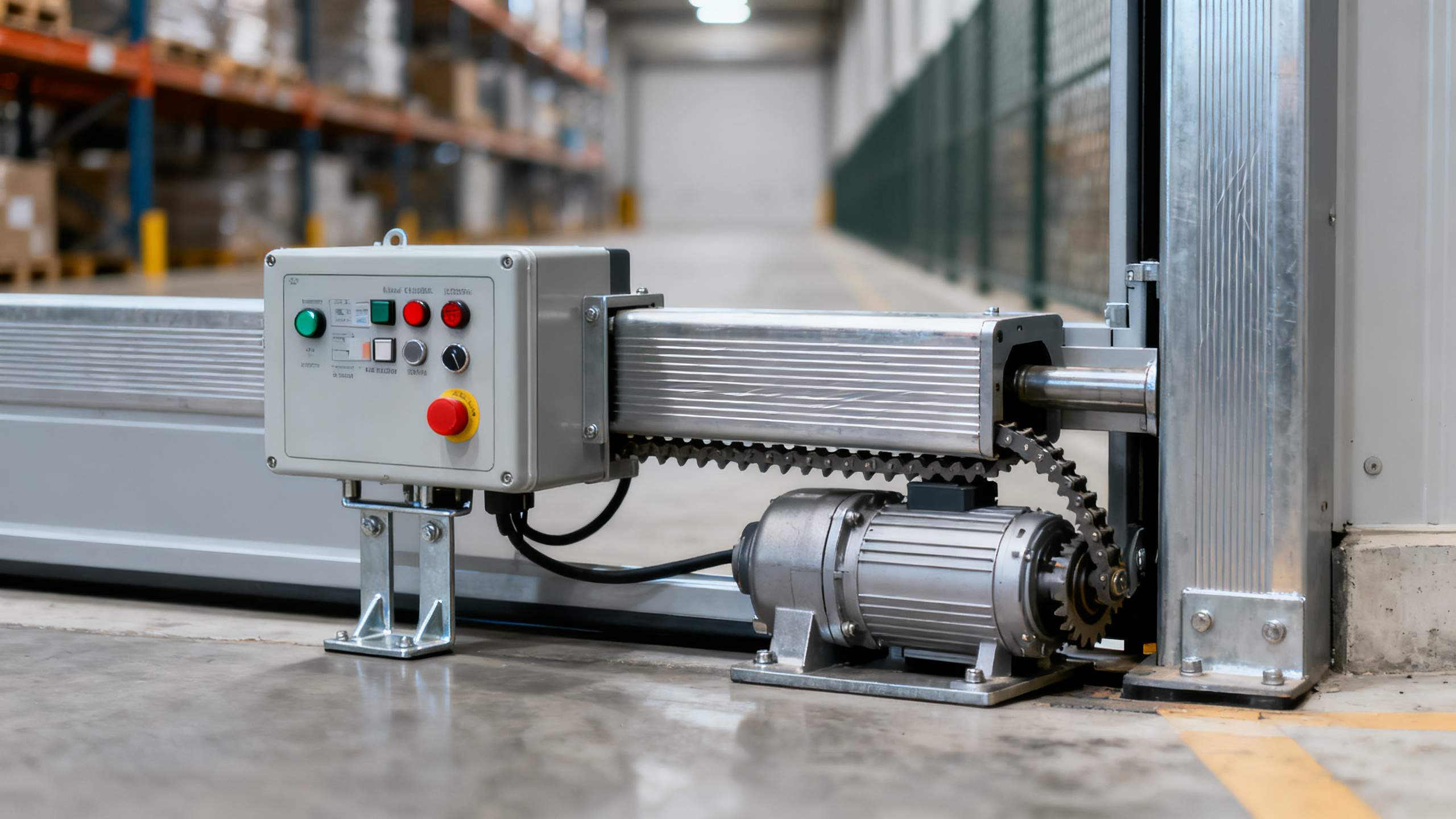
When evaluating sliding gate motors wholesale, price alone is never enough. Buyers, installers, and project decision-makers must verify motor power, duty cycle, control compatibility, weather resistance, and long-term safety performance. In industrial and commercial applications, choosing the right system helps reduce maintenance risk, improve access control reliability, and support smarter procurement decisions.
For EPC contractors, facility operators, distributors, and procurement teams, a sliding gate motor is not just an access product. It is a critical electromechanical system linked to perimeter security, traffic flow, safety compliance, and maintenance cost over a service life that often spans 5 to 10 years. A weak specification at the sourcing stage can create recurring downtime, spare-parts shortages, and avoidable safety exposure.
Wholesale purchasing adds another layer of complexity. Batch consistency, packaging, lead time, technical documentation, and after-sales support can matter as much as torque and voltage. This guide outlines what to check before placing a bulk order, with a practical focus on industrial and commercial gate automation projects.
Define the Application Before Comparing Wholesale Offers
The first mistake in sliding gate motors wholesale is comparing quotations before defining the operating environment. A motor suitable for a light residential gate used 20 cycles per day may fail quickly on a logistics park entrance operating 150 to 300 cycles daily. Application context should come before price negotiation.
Installers and procurement managers should begin with 4 baseline variables: gate weight, gate length, daily cycle frequency, and site exposure. A 400 kg cantilever gate on level ground has different requirements from a 1,200 kg steel gate in a coastal, dusty, or high-wind environment. The wrong starting assumptions usually lead to overloading, overheating, or slow opening performance.
Commercial buyers also need to distinguish between intermittent and intensive duty. In many industrial sites, opening speed of 9 to 16 meters per minute can be more valuable than a lower upfront unit cost, because traffic bottlenecks may affect truck dispatching, labor utilization, and queue safety during peak hours.
Key site questions to answer first
- What is the actual gate weight, including reinforcement, cladding, or wind-loading accessories?
- How many opening and closing cycles will occur in a 24-hour period: under 30, 30 to 100, or above 100?
- Will the system operate in rain, dust, salt air, or temperatures below -10°C or above 50°C?
- Is backup power required for security gates, warehouses, factories, or critical utility infrastructure?
- Will the motor integrate with RFID, ANPR, access control panels, fire systems, or smart building platforms?
These questions help narrow the specification from dozens of generic wholesale listings to a realistic procurement shortlist. They also reduce the risk of buying a motor that technically works in testing but performs poorly in continuous field use.
Typical matching logic by application intensity
As a practical rule, lower-cycle installations can often tolerate standard-duty motors and simpler control boards. Sites with medium to high vehicle throughput usually need better thermal protection, heavier gears, more stable limit switching, and a stronger service network for parts replacement within 48 to 72 hours.
The table below shows how application profile affects the initial wholesale screening process.
The main takeaway is simple: wholesale value depends on fit. A lower-cost motor becomes expensive if it is undersized for the workload, while an oversized package can tie up budget without adding measurable site benefit.
Check the Motor, Drive Train, and Electrical Ratings in Detail
Once the application is clear, the next step is technical verification. In sliding gate motors wholesale, catalog claims such as “heavy duty” or “industrial grade” are not enough. Buyers should request a technical datasheet and confirm the rated gate weight, motor voltage, current draw, duty cycle, speed, operating temperature, and gear material.
Motor voltage matters because it affects both site compatibility and performance strategy. Common options include 24V DC and 220V or 230V AC systems. DC motors are often preferred where soft start, obstacle detection, battery backup, and frequent cycling are important. AC motors may suit simpler fixed installations, but they should still be evaluated for heat management and control flexibility.
The gear train is another checkpoint that wholesale buyers often underestimate. A motor with metal gearing, durable oil-bath or grease-lubricated transmission, and stable rack engagement generally offers better long-run reliability than low-cost assemblies with lighter internal components. This becomes especially relevant when gates exceed 600 kg or operate on uneven tracks.
Specifications that should appear in the datasheet
- Rated gate weight range, such as 400 kg, 800 kg, 1,200 kg, or higher.
- Opening speed, often between 9 m/min and 16 m/min for standard commercial applications.
- Duty cycle or allowable usage intensity, expressed by cycles per hour or percentage use.
- Protection level such as IP44, IP54, or above for outdoor exposure.
- Operating temperature range, for example -20°C to 55°C in more demanding environments.
- Available accessories, including photocells, flashing lamps, key release, and backup battery kits.
If the supplier cannot provide these details consistently across the product range, the procurement risk increases. In wholesale orders of 50, 100, or 500 units, small specification gaps can become a major field-service problem after installation.
A practical screening table for technical comparison
The following table can be used by sourcing teams to compare offers from multiple sliding gate motor suppliers without relying only on unit price.
In many projects, the best wholesale choice is not the strongest motor on paper but the most balanced package: correct load margin, stable electronics, clear documentation, and parts consistency across multiple shipments.
Review Safety, Controls, and Compliance for Real-World Operation
A sliding gate motor should never be evaluated as a standalone drive unit. The complete operating system includes control logic, safety accessories, manual release, obstacle detection, and emergency behavior during power loss. For commercial and industrial users, these elements directly affect operational safety and liability exposure.
At a minimum, buyers should check whether the motor system supports photocells, edge safety devices where applicable, auto-close settings, slowdown before limit points, and manual override. In a mixed-use site where pedestrians and vehicles share entry zones, these features are not optional conveniences. They are risk-control requirements.
Compliance should also be reviewed at the documentation level. For international projects, procurement teams commonly ask for evidence related to CE, UL, or ISO-aligned manufacturing systems depending on target market and installation jurisdiction. Even when the motor itself is compliant, missing installation instructions or incomplete wiring diagrams can delay approvals and increase commissioning time by several days.
Control and safety features that deserve priority
- Obstacle detection sensitivity that can be adjusted during commissioning.
- Battery backup or UPS compatibility for gates protecting 24/7 operations.
- Manual key release accessible in emergency shutdown or power outage conditions.
- Support for photocells, loop detectors, card readers, and intercom systems.
- Configurable soft start and soft stop to reduce mechanical shock on the rack and gate frame.
For wholesalers serving installers, control board standardization is especially valuable. If 3 projects use the same logic board and spare remote platform, technician training becomes simpler and replacement inventory can be reduced by 20% to 30% compared with a mixed-brand portfolio.
Why documentation quality affects procurement outcomes
Bulk buyers should request wiring diagrams, installation manuals, exploded spare-parts views, and troubleshooting codes before order confirmation. A supplier that delivers 100 motors but weak technical files creates hidden cost for every installer and maintenance contractor downstream. Good documentation shortens installation time, reduces field errors, and supports faster handover.
This is also where enterprise decision-makers should look beyond sticker price. A lower quotation may carry higher lifecycle cost if every site requires custom control adaptation, unclear fault diagnosis, or frequent remote support from the factory.
Assess Supplier Reliability, Batch Consistency, and Delivery Readiness
In sliding gate motors wholesale, product quality and supplier quality are inseparable. A capable motor delivered without batch consistency, packaging protection, or stable lead times can still disrupt a project. This is why B2B buyers should evaluate manufacturing discipline, export readiness, and service responsiveness before approving a vendor.
Start by confirming what remains consistent from one batch to the next: control board version, gear configuration, enclosure materials, mounting hardware, remote frequency, and accessory compatibility. Even minor changes can complicate installation planning if a site team expects interchangeable units across 20 to 50 gates.
Lead time should also be broken into components. A supplier may quote 15 days, but buyers should confirm whether that includes assembly, quality inspection, export packing, and document preparation. For project procurement, the difference between a real 15-day ready date and a nominal 15-day production slot can affect crane booking, installation labor, and site security schedules.
Supplier screening checklist for wholesale orders
Before issuing a purchase order, sourcing teams should assess the commercial and operational side of the offer. The table below highlights common checkpoints used in industrial procurement reviews.
A disciplined supplier should be able to explain inspection steps, such as functional testing, limit switch verification, and accessory matching before shipment. For overseas buyers, photo records or pre-shipment video verification can provide an additional control layer without slowing the order process.
Commercial terms to review closely
Besides product and lead time, check warranty scope, excluded wear items, spare-parts pricing, and response time for technical claims. A 12-month warranty may sound standard, but what matters is whether the supplier can diagnose faults quickly and dispatch replacements within a workable timeframe, such as 3 to 7 business days for stocked components.
Plan for Installation, Maintenance, and Lifecycle Cost
The most successful sliding gate motors wholesale decisions are made with installation and maintenance in mind, not only purchase price. A motor that saves 8% on unit cost but adds two extra technician visits per year may become the more expensive option over a 3-year operating window.
Installers should verify base plate alignment tolerance, rack compatibility, power input requirements, and cable routing before order finalization. On many sites, the motor performs poorly not because the product is defective, but because the gate track is misaligned, the rack mesh is inconsistent, or drainage allows standing water near the foundation.
Maintenance planning should also be realistic. In moderate-use sites, a quarterly inspection may be sufficient. In dusty, high-cycle, or coastal environments, monthly visual checks and scheduled cleaning of photocells, racks, and enclosure seals can prevent small issues from becoming system failures.
Lifecycle cost areas buyers often miss
- Replacement frequency of remote controls, photocells, and limit accessories.
- Labor time required for board setup, fault reset, and manual release testing.
- Downtime cost when a gate protects a warehouse, utility site, or production entrance.
- Inventory burden if each project uses different boards, racks, or remote platforms.
- Corrosion-related wear in sites with fertilizer dust, marine air, or heavy rainfall.
A simple 5-step implementation approach
- Confirm gate weight, track condition, and power supply before procurement.
- Select a motor with at least a reasonable operating margin above actual gate demand.
- Standardize control accessories across projects where possible.
- Test safety functions during commissioning, including obstruction response and manual release.
- Set a maintenance schedule with spare parts reserved for the first 12 to 24 months.
For enterprise buyers managing multiple facilities, standardization is often the hidden cost saver. Fewer motor platforms usually mean faster technician training, simpler spare holdings, and more predictable service performance across all sites.
Frequently asked wholesale questions
How much safety margin should a buyer allow on rated gate weight?
A practical approach is to avoid matching the motor exactly to the nominal gate weight. Real gates accumulate drag from track wear, wind exposure, and alignment changes. Many buyers prefer a reasonable capacity margin so the motor is not working near its limit during normal use.
Are DC gate motors better for high-cycle commercial use?
In many cases, yes, especially when soft start, obstacle sensing, and battery backup are required. However, the answer depends on the actual duty cycle, control needs, and supplier quality. The right choice is the system that fits the site profile and service model, not a universal voltage preference.
What lead time is typical for wholesale sliding gate motor orders?
Common ranges may run from 2 to 6 weeks depending on order volume, accessory bundling, packaging requirements, and export documentation. Buyers should confirm whether quoted lead time includes final testing and dispatch readiness, not just factory assembly.
Sliding gate motors wholesale decisions deliver the best results when technical fit, safety controls, supplier reliability, and maintenance planning are evaluated together. For industrial and commercial projects, the right sourcing process reduces downtime, protects perimeter operations, and creates more stable long-term cost performance. If you are comparing motors for EPC work, facility upgrades, or distribution supply, contact us to discuss your application profile, review technical options, and obtain a more tailored procurement plan.
Expert Insights

Chief Security Architect
Dr. Thorne specializes in the intersection of structural engineering and digital resilience. He has advised three G7 governments on industrial infrastructure security.
Related Analysis
Core Sector // 01
Security & Safety
- Electric Fence Energizers: How Much PowerAuthor :Safety Compliance Lead

- Do Anti Theft Display Stands Really Reduce LossAuthor :Safety Compliance Lead

- Wholesale Security Safes: How to Compare RatingsAuthor :Safety Compliance Lead

- Hotel Key Card Locks: What Buyers MissAuthor :Safety Compliance Lead

- Wholesale Smart Door Locks: Best Fit by UseAuthor :Safety Compliance Lead

- Sliding Gate Motors Wholesale: What to CheckAuthor :Safety Compliance Lead

- Reducing false alarms in Security & SafetyAuthor :Safety Compliance Lead

- IEC 62061:2026 Effective April 21, 2026 — Safety Controller Recertification RequiredAuthor :Safety Compliance Lead
![]()