What makes a Security & Safety supplier reliable after delivery?
Author
Date Published
Reading Time
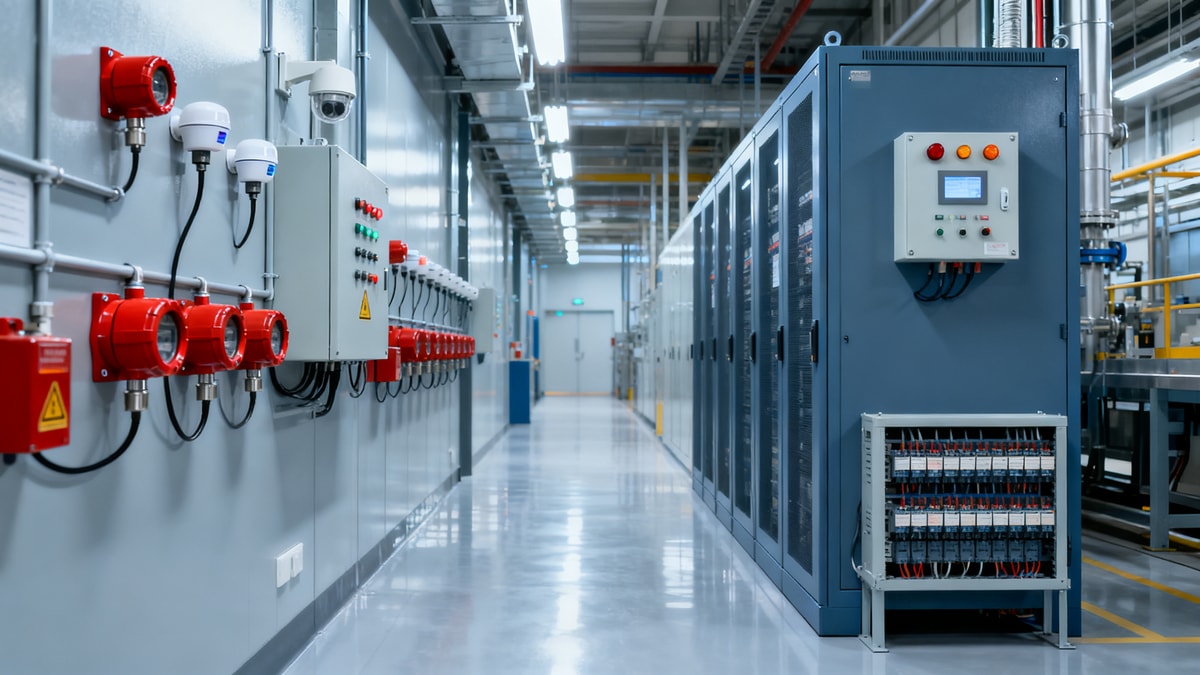
A reliable Security & Safety supplier proves its value long after equipment is delivered. For after-sales maintenance teams, true reliability means fast technical support, clear documentation, spare parts availability, compliance updates, and consistent performance under real operating conditions. Understanding these post-delivery factors helps industrial buyers reduce downtime, maintain safety standards, and build more resilient facilities.
Why does post-delivery reliability matter more than the initial purchase?
For maintenance personnel, the real test of a Security & Safety supplier begins after commissioning. At the purchasing stage, many suppliers appear similar on paper: they can present certifications, datasheets, and competitive pricing. However, once alarms, detectors, fire suppression devices, access control systems, PPE programs, or emergency shutdown components enter daily industrial service, support quality becomes the deciding factor.
In industrial settings, a delayed response is not simply an inconvenience. It can mean production interruption, non-compliance exposure, failed audits, higher incident risk, and pressure on maintenance teams to improvise. A dependable Security & Safety supplier reduces these risks by staying engaged throughout the asset lifecycle. That includes troubleshooting under real operating conditions, helping teams interpret fault signals, and ensuring replacements match approved specifications.
This is especially important in complex facilities where safety devices connect with control systems, environmental monitoring, and power infrastructure. A supplier that understands integration challenges can help maintenance staff solve root causes faster instead of just shipping parts. In practice, reliable post-delivery support protects uptime, people, and compliance at the same time.
What are the clearest signs that a Security & Safety supplier is reliable after delivery?
Maintenance teams usually see reliability through a few practical signals rather than marketing claims. The first is response speed. When a site reports a system fault, calibration concern, firmware issue, or compatibility question, a reliable Security & Safety supplier answers with a defined service process, not vague promises. That means ticket tracking, technical escalation routes, and realistic resolution timelines.
The second signal is documentation quality. Good suppliers provide installation manuals, maintenance intervals, wiring diagrams, spare parts lists, test records, and revision history in a usable format. Clear documentation helps after-sales maintenance teams avoid guesswork and maintain consistency across shifts, plants, and contractors.
A third sign is spare parts continuity. Many failures become expensive because a sensor head, relay module, seal kit, battery pack, or communication card is unavailable. A reliable Security & Safety supplier plans for lifecycle support and tells customers which parts are standard stock, which are special order, and which products are approaching end-of-life.
The fourth sign is compliance discipline. Industrial safety requirements evolve, and maintenance teams need to know when software patches, labeling changes, inspection routines, or replacement recommendations are necessary to remain aligned with standards such as CE, UL, ISO, or site-specific rules. Suppliers that provide proactive compliance updates are far easier to work with over time.
How can maintenance teams evaluate support quality before problems happen?
The best time to assess a Security & Safety supplier is before a breakdown. Maintenance staff should ask for more than product brochures. They should request sample service reports, spare parts policies, warranty terms, training scope, and regional support coverage. These materials reveal whether the supplier has a mature after-sales system.
One useful step is to evaluate how the supplier handles technical questions during pre-sales discussions. If the team receives precise answers about compatibility, environmental limits, maintenance intervals, and diagnostic methods, that often reflects strong internal technical capability. If responses are slow, generic, or repeatedly redirected, post-delivery support may be weak as well.
Another practical method is to verify local and global service alignment. Some suppliers have excellent headquarters expertise but weak regional execution. For industrial buyers, what matters is whether field engineers, distributors, and support centers can provide consistent guidance. A reliable Security & Safety supplier should be able to explain who will support the site, how quickly they can respond, and what parts are stocked near the operating region.
Quick evaluation table for after-delivery reliability
The following checklist helps after-sales maintenance personnel compare suppliers using operational criteria instead of price alone.
Which post-delivery services are most valuable for after-sales maintenance teams?
Not every service delivers equal value. For maintenance personnel, the most useful support often includes five elements. First is fault diagnosis support, especially for intermittent failures that are hard to reproduce. A strong Security & Safety supplier can interpret trend data, event logs, and environmental conditions to identify whether the issue comes from the device, installation, network, or surrounding process.
Second is preventive maintenance guidance. Reliable suppliers do not wait for failures. They provide inspection intervals, replacement thresholds, calibration schedules, cleaning instructions, and test protocols that help sites move from reactive repairs to planned upkeep.
Third is training refresh support. Staff turnover, contractor rotation, and shift changes can weaken system knowledge. Refresher sessions, quick-reference guides, and troubleshooting flowcharts are valuable because they shorten diagnosis time and reduce human error.
Fourth is end-of-life planning. Every maintenance team eventually faces obsolete devices. A reliable Security & Safety supplier provides migration paths, retrofit advice, compatibility notes, and staged replacement planning so the facility can budget and upgrade without exposing itself to safety gaps.
Fifth is incident follow-up. If a safety event, false alarm, or critical equipment trip occurs, the supplier should help produce a technical review, not simply close a service ticket. This type of support helps organizations learn from events and improve system resilience.
What mistakes do buyers make when judging a Security & Safety supplier?
A common mistake is focusing too much on upfront price. Lower acquisition cost can look attractive, but if spare parts take weeks to arrive or technical support is outsourced without deep product knowledge, total cost rises quickly through downtime, emergency labor, and compliance risk. For maintenance teams, the cheapest option often becomes the most expensive one to sustain.
Another mistake is assuming certifications alone guarantee reliability. CE, UL, ISO, and other approvals are essential, but they prove that a product met defined requirements at a point in time. They do not automatically prove that the supplier will provide timely updates, responsive field support, or long-term parts availability.
Buyers also sometimes ignore documentation usability. Even technically sound equipment can become difficult to maintain if the manuals are generic, translated poorly, or disconnected from the delivered configuration. Maintenance staff need documents that reflect the installed system, not just a standard catalog version.
One more mistake is not checking service boundaries. Some companies believe on-site support, remote diagnostics, software updates, or training are included, only to find that these items require separate contracts. A reliable Security & Safety supplier makes these boundaries visible before the order is placed.
How should maintenance teams compare suppliers when systems are mission-critical?
When systems protect people, assets, or regulatory compliance, comparison should be based on operational readiness rather than brochure features. Start with service depth. Ask how many trained technicians support your region, what the standard response times are, and whether remote support is available around the clock. For sites with hazardous processes or continuous operation, response capability is often more important than small price differences.
Next, examine product lifecycle governance. A dependable Security & Safety supplier should be able to explain version control, firmware support periods, replacement part availability, and upgrade pathways. This is crucial in plants where systems remain in service for many years and cannot be replaced casually.
Then look at real-world consistency. References from similar industries, environmental conditions, and regulatory environments can be more meaningful than broad brand recognition. A supplier that performs well in office buildings may not be equally strong in heavy industry, corrosive atmospheres, high vibration areas, or remote sites.
Finally, compare communication quality. During an outage or safety issue, maintenance teams need concise, accountable, technically correct guidance. The supplier that communicates clearly under pressure is usually the one that reduces recovery time.
What questions should you ask before signing or renewing a supply agreement?
This is where many industrial buyers can strengthen outcomes. Before confirming a supplier relationship, maintenance teams should ask several direct questions. What are the guaranteed response times for critical failures? Which spare parts are locally stocked, and what are their lead times? How are firmware, software, or compliance updates communicated? Who owns technical escalation, and is support delivered by the manufacturer or a distributor?
It is also worth asking how the Security & Safety supplier handles product discontinuation. Can they provide backward compatibility guidance or approved substitutes? What training is available for new technicians? Are service records and revision histories accessible for audits? If the facility operates under strict permit-to-work or shutdown planning rules, can the supplier coordinate around those operational constraints?
For larger organizations, contract language should reflect these answers. Verbal reassurance is not enough. Service scope, documentation obligations, update responsibilities, and inventory commitments should be written into the agreement wherever practical. This turns reliability from a promise into a manageable performance expectation.
What should a practical partnership with a reliable Security & Safety supplier look like?
The most effective relationships are structured, not reactive. A reliable Security & Safety supplier should support periodic reviews of installed assets, common failure modes, spare consumption, training needs, and upcoming compliance changes. This creates a shared maintenance roadmap instead of a series of emergency interventions.
For after-sales maintenance personnel, the best partnership also includes a clean information flow. That means named contacts, current manuals, part number discipline, service history visibility, and a process for reporting recurring issues. When the supplier and site team exchange accurate information, troubleshooting becomes faster and safer.
In the end, reliability after delivery is not a soft concept. It is visible in response time, technical competence, lifecycle planning, and accountability. If you need to confirm a concrete solution, technical parameters, support cycle, quotation structure, or cooperation model, start by discussing service response levels, spare parts strategy, documentation control, compliance update responsibilities, and end-of-life planning. Those questions will quickly reveal whether a Security & Safety supplier is prepared to support your facility long after the equipment arrives.
Technical Specifications
- Hidden Environment & Ecology cost after project approvalAuthor :Environmental Engineering Director
- When does an Environment & Ecology impact assessment need updating?Author :Environmental Engineering Director
- Security & Safety standards that affect product approval speedAuthor :Safety Compliance Lead
Expert Insights

Chief Security Architect
Dr. Thorne specializes in the intersection of structural engineering and digital resilience. He has advised three G7 governments on industrial infrastructure security.
Related Analysis
- May 07, 2026Hidden Environment & Ecology cost after project approvalAuthor :Environmental Engineering Director
- May 07, 2026When does an Environment & Ecology impact assessment need updating?Author :Environmental Engineering Director
- May 07, 2026Security & Safety standards that affect product approval speedAuthor :Safety Compliance Lead
Core Sector // 01
Security & Safety
- Security & Safety standards that affect product approval speedAuthor :Safety Compliance Lead

- How to assess a Security & Safety manufacturer beyond certificationsAuthor :Safety Compliance Lead

- Security & Safety solutions that fix weak points in older facilitiesAuthor :Safety Compliance Lead

- What makes a Security & Safety supplier reliable after delivery?Author :Safety Compliance Lead

- DIN SPEC 91492:2026 Enforces Dynamic PL for Collaborative Safety Light CurtainsAuthor :Safety Compliance Lead

- DIN SPEC 91492:2026 Enforces Dynamic PL for Collaborative Safety Light CurtainsAuthor :Safety Compliance Lead

- DIN SPEC 91492:2026 Released: Safety Light Curtains Must Support Dynamic PL Adjustment in Human-Robot CollaborationAuthor :Safety Compliance Lead

- DIN SPEC 91492:2026 Mandates PL Dynamic Verification for Safety Light Curtains in GermanyAuthor :Safety Compliance Lead