How to assess a Security & Safety manufacturer beyond certifications
Author
Date Published
Reading Time
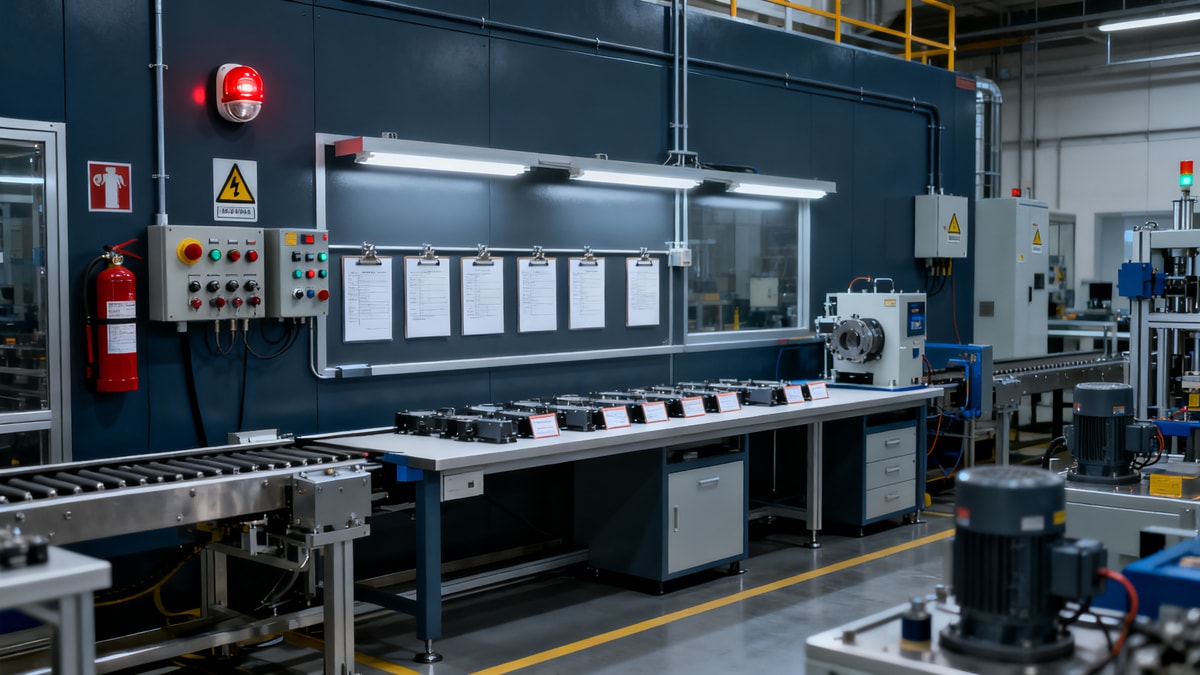
Choosing a Security & Safety manufacturer for industrial operations requires more than checking certifications. For quality control and safety managers, the real evaluation lies in production consistency, traceability, testing rigor, response capability, and long-term reliability under demanding conditions. This guide explores how to assess suppliers beyond labels, helping you reduce operational risk and make procurement decisions with greater confidence.
What evaluating a Security & Safety manufacturer really means
In industrial environments, a certification is a starting point, not a final proof of field performance. A CE mark, UL listing, or ISO-based management certificate indicates that certain standards or systems are in place, but it does not automatically confirm how consistently a supplier performs across raw material control, batch variation, custom engineering, after-sales response, and product behavior under real operating stress.
For quality control personnel and safety managers, assessing a Security & Safety manufacturer means verifying whether the company can repeatedly deliver products that protect people, assets, and operations in demanding conditions. That includes alarm systems, fire protection components, emergency shutdown devices, PPE-related hardware, safety enclosures, access control equipment, and other critical systems used in factories, utilities, process plants, logistics hubs, and infrastructure projects.
The core question is simple: if a failure happens at the worst possible moment, can the manufacturer’s design, process control, and support structure still hold up? This is why advanced supplier evaluation goes beyond documents and focuses on operational evidence.
Why the industry looks beyond certifications
Industrial buyers today operate in a high-stakes environment. EPC contractors need dependable delivery for project schedules. Facility managers need stable replacement parts and predictable maintenance cycles. Procurement leaders need suppliers that can maintain compliance across regions. At the same time, quality and safety teams must reduce hidden risk, especially when equipment is expected to perform in heat, dust, vibration, humidity, corrosive atmospheres, or power instability.
A Security & Safety manufacturer may hold recognized certifications and still create operational problems if process capability is weak, documentation is incomplete, or field support is slow. In practice, many safety failures are not caused by the absence of certificates, but by inconsistency between certified samples and mass production, poor lot traceability, inadequate packaging for transport, weak component sourcing, or delayed response when an incident occurs.
That is why mature industrial organizations increasingly combine compliance review with manufacturing intelligence. They want to know how the supplier performs over time, not only how it presents itself during qualification.
A practical framework for supplier assessment
A reliable evaluation model should connect technical compliance with real production behavior. The table below summarizes the main dimensions that quality control and safety professionals should review when assessing a Security & Safety manufacturer.
Production consistency is the real test of manufacturing quality
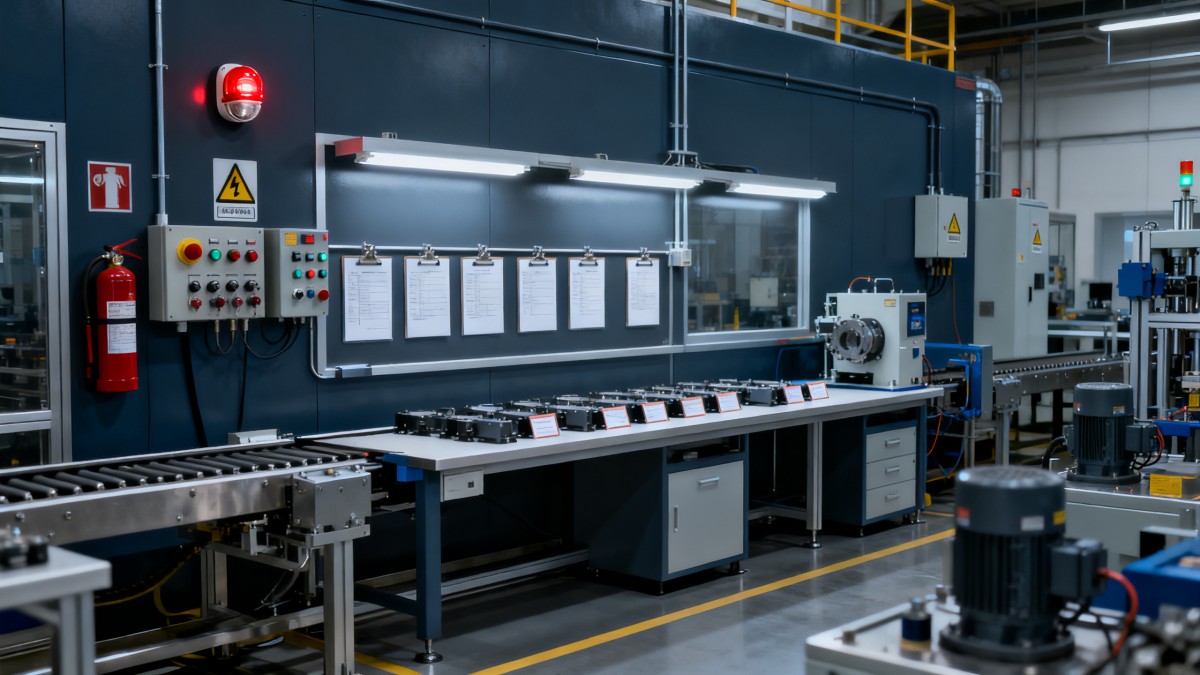
One of the most important indicators of a trustworthy Security & Safety manufacturer is process repeatability. A supplier may produce excellent pilot samples, but if it cannot maintain dimensional stability, electrical tolerance, coating quality, sensor sensitivity, or mechanical reliability at scale, the risk to the end user rises sharply.
For QC teams, this means asking practical questions. Are critical processes validated? Are test benches calibrated and recorded? How are nonconforming parts quarantined? Is there statistical process monitoring for key safety features? Are subcontracted parts controlled with the same rigor as in-house components? These details reveal whether the manufacturer treats quality as a system or as a final inspection step.
Consistency is especially critical for projects that involve multiple installation phases or future expansion. If replacement units behave differently from original units, maintenance complexity increases and system integrity may be compromised.
Traceability and documentation reduce hidden operational risk
In heavy industry, documentation quality is often as important as hardware quality. A dependable Security & Safety manufacturer should provide clear traceability from incoming materials to finished goods, with records that support audits, investigations, warranty claims, and compliance reviews.
Strong traceability includes identifiable batch numbers, revision-controlled drawings, test reports linked to serial numbers, and documented control over approved component sources. This is particularly valuable when plants need to isolate a failure, confirm whether affected units belong to a specific production lot, or demonstrate compliance to regulators, insurers, or internal governance teams.
Weak documentation often signals deeper management problems. If records are fragmented, manually altered, or difficult to retrieve, response times during incidents will slow down. For safety systems, that delay can increase downtime, liability, and exposure to repeated failure.
Testing capability should reflect real industrial conditions
Certifications usually rely on defined test conditions, but field conditions are rarely ideal. This is why buyers should examine whether a Security & Safety manufacturer performs robust internal validation beyond minimum compliance tests. The strongest suppliers test for actual use cases: thermal cycling, ingress resistance, vibration stress, corrosion exposure, EMC behavior, power fluctuation tolerance, mechanical fatigue, and endurance over time.
Safety managers should also review failure criteria. Does the manufacturer merely confirm pass or fail, or does it study degradation patterns and service-life thresholds? A mature testing culture does not hide edge-case weaknesses. Instead, it defines safe operating windows and helps customers match products to the right environment.
For critical projects, witness testing, factory acceptance testing, or sample destructive testing may be appropriate. These methods provide stronger evidence than brochures or generic claims.
Different industrial settings require different evaluation priorities
Not all buyers assess a Security & Safety manufacturer in the same way. Evaluation should reflect the operational context, because risk profiles differ across industries and facilities.
Response capability matters when things go wrong
Even top-quality products can face unexpected field events. What separates a dependable Security & Safety manufacturer from a risky one is how it reacts under pressure. Quality and safety teams should assess whether the supplier has a structured complaint process, clear escalation paths, defined containment actions, and technical personnel who can support troubleshooting quickly.
Corrective and preventive action, often documented as CAPA, should not be treated as paperwork only. Review whether the manufacturer identifies root causes, verifies corrective effectiveness, and feeds lessons back into design or process control. Fast replacement without understanding failure is not enough. Sustainable improvement is the real indicator of maturity.
This is especially important for global operations. A manufacturer with poor regional support, weak spare-parts planning, or delayed engineering communication may create serious operational gaps even if its product line appears technically acceptable on paper.
What quality and safety managers should ask during evaluation
To move beyond superficial qualification, evaluation teams should structure supplier reviews around evidence-based questions:
- Can the manufacturer show process controls for characteristics that directly affect safety performance?
- How are changes in materials, sub-suppliers, firmware, or design revisions communicated and approved?
- What level of traceability exists for each delivered unit or batch?
- Which tests are routine, which are type tests, and which simulate the buyer’s real operating environment?
- How quickly can the supplier respond to incidents, quarantine stock, and provide technical analysis?
- Is there a stable long-term service model for parts, maintenance guidance, and product lifecycle support?
These questions help turn supplier selection into a risk-management exercise rather than a document-collection exercise.
The business value of deeper supplier assessment
A stronger assessment process delivers value far beyond compliance. When organizations choose the right Security & Safety manufacturer, they improve operational continuity, reduce failure investigation costs, simplify audit preparation, and build confidence across internal stakeholders. Procurement gets better predictability. QC gains stronger control over incoming quality. Safety teams reduce exposure to preventable incidents. Operations benefit from more stable performance across the asset lifecycle.
This approach also aligns well with the needs of modern industrial infrastructure. As systems become more integrated and uptime expectations rise, the cost of hidden supplier weakness becomes much higher than the cost of deeper evaluation upfront.
Final guidance for making better decisions
For any quality control or safety management team, the best way to assess a Security & Safety manufacturer is to combine compliance review with operational evidence. Certifications still matter, but they should be treated as baseline indicators rather than proof of long-term reliability. The more important signals are consistency, traceability, testing realism, technical transparency, and response quality when problems occur.
If your organization is building or maintaining critical industrial environments, create a supplier evaluation model that reflects real site conditions and lifecycle risk. Use factory audits, document reviews, sample validation, and response testing where needed. A disciplined assessment process will help you identify manufacturers that do more than meet standards on paper—they help protect the resilience of the entire operation.
Technical Specifications
- Hidden Environment & Ecology cost after project approvalAuthor :Environmental Engineering Director
- When does an Environment & Ecology impact assessment need updating?Author :Environmental Engineering Director
- Security & Safety standards that affect product approval speedAuthor :Safety Compliance Lead
Expert Insights

Chief Security Architect
Dr. Thorne specializes in the intersection of structural engineering and digital resilience. He has advised three G7 governments on industrial infrastructure security.
Related Analysis
- May 07, 2026Hidden Environment & Ecology cost after project approvalAuthor :Environmental Engineering Director
- May 07, 2026When does an Environment & Ecology impact assessment need updating?Author :Environmental Engineering Director
- May 07, 2026Security & Safety standards that affect product approval speedAuthor :Safety Compliance Lead
Core Sector // 01
Security & Safety
- Security & Safety standards that affect product approval speedAuthor :Safety Compliance Lead

- How to assess a Security & Safety manufacturer beyond certificationsAuthor :Safety Compliance Lead

- Security & Safety solutions that fix weak points in older facilitiesAuthor :Safety Compliance Lead

- What makes a Security & Safety supplier reliable after delivery?Author :Safety Compliance Lead

- DIN SPEC 91492:2026 Enforces Dynamic PL for Collaborative Safety Light CurtainsAuthor :Safety Compliance Lead

- DIN SPEC 91492:2026 Enforces Dynamic PL for Collaborative Safety Light CurtainsAuthor :Safety Compliance Lead

- DIN SPEC 91492:2026 Released: Safety Light Curtains Must Support Dynamic PL Adjustment in Human-Robot CollaborationAuthor :Safety Compliance Lead

- DIN SPEC 91492:2026 Mandates PL Dynamic Verification for Safety Light Curtains in GermanyAuthor :Safety Compliance Lead