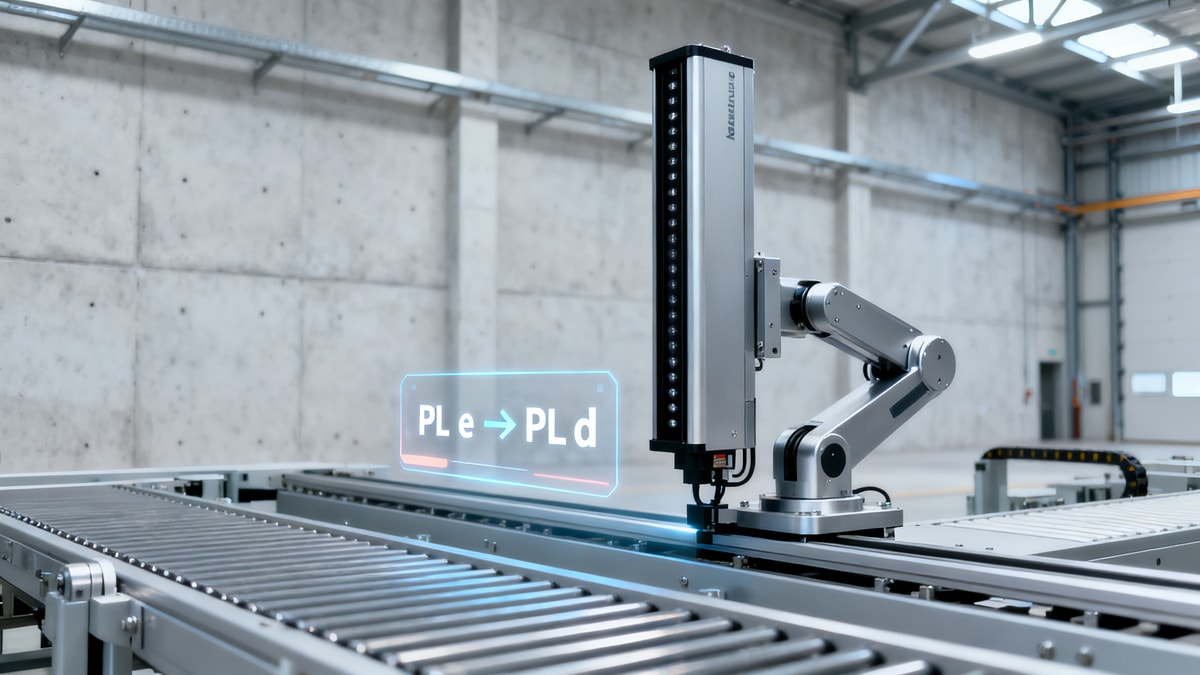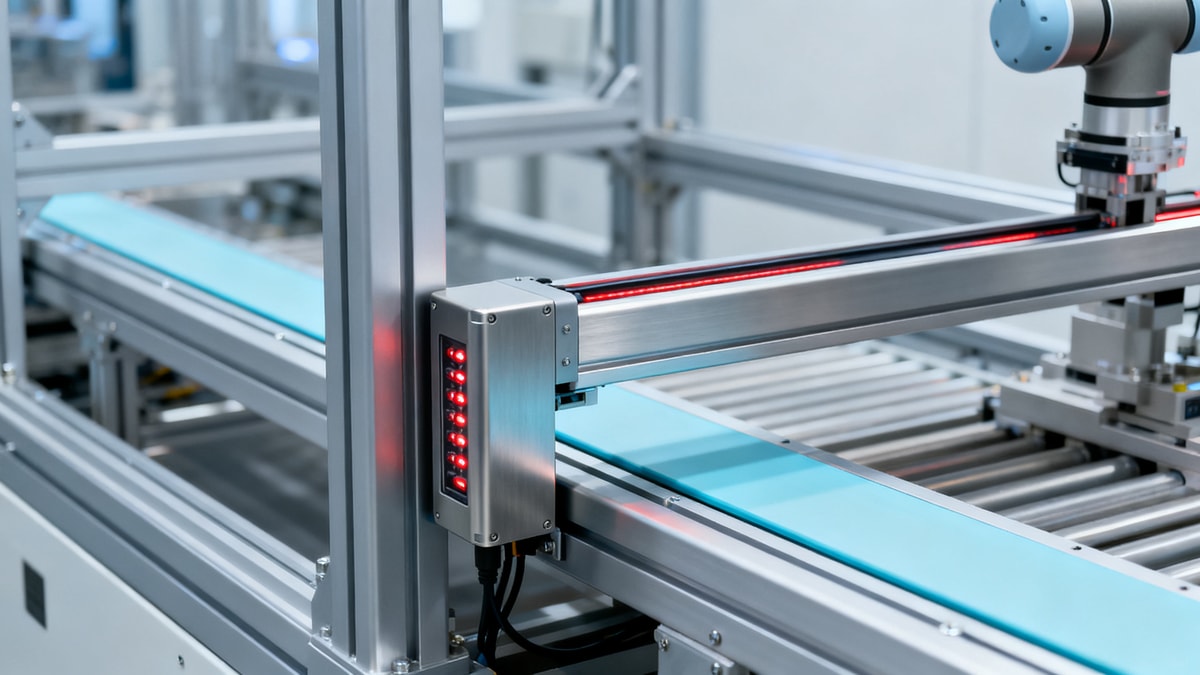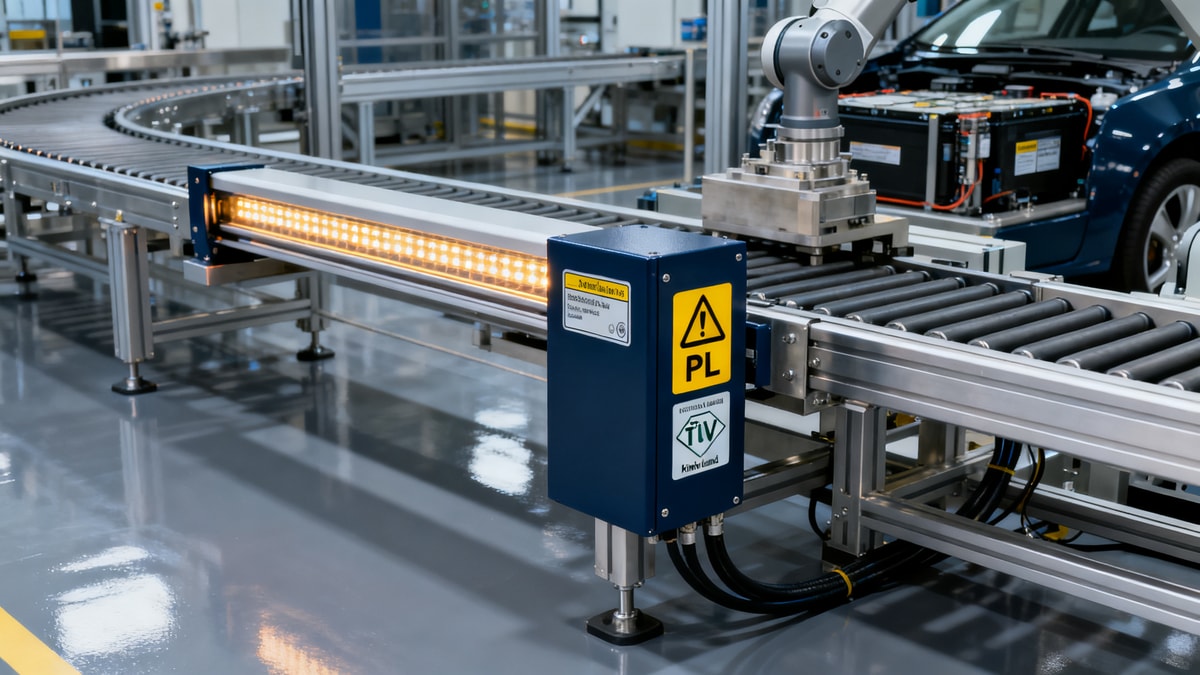
DIN SPEC 91492:2026 Enforces Dynamic PL for Collaborative Safety Light Curtains
Author
Date Published
Reading Time
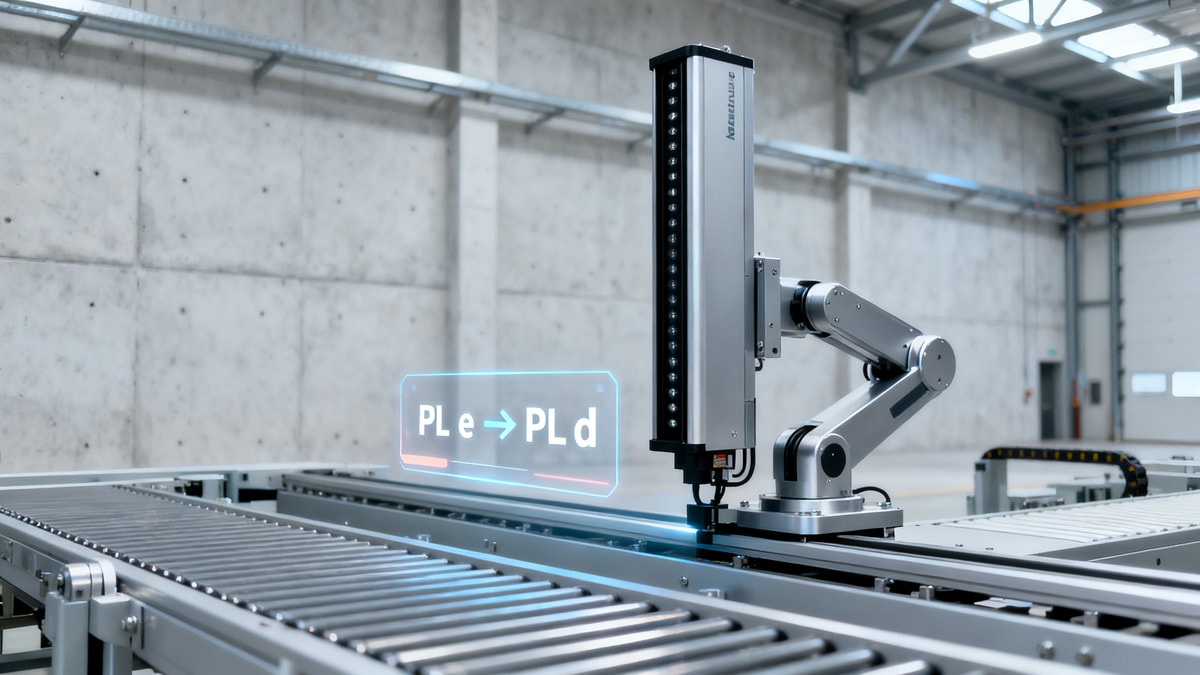
On May 4, 2026, the German Institute for Standardization (DIN) officially published DIN SPEC 91492:2026 — ‘Specification for Dynamic Performance Level Verification of Collaborative Safety Light Curtains’. This update mandates dynamic Performance Level (PL) adjustment capabilities for newly certified industrial safety light curtains, directly impacting manufacturers and integrators in automation, robotics, and human–machine collaborative production environments.
Event Overview
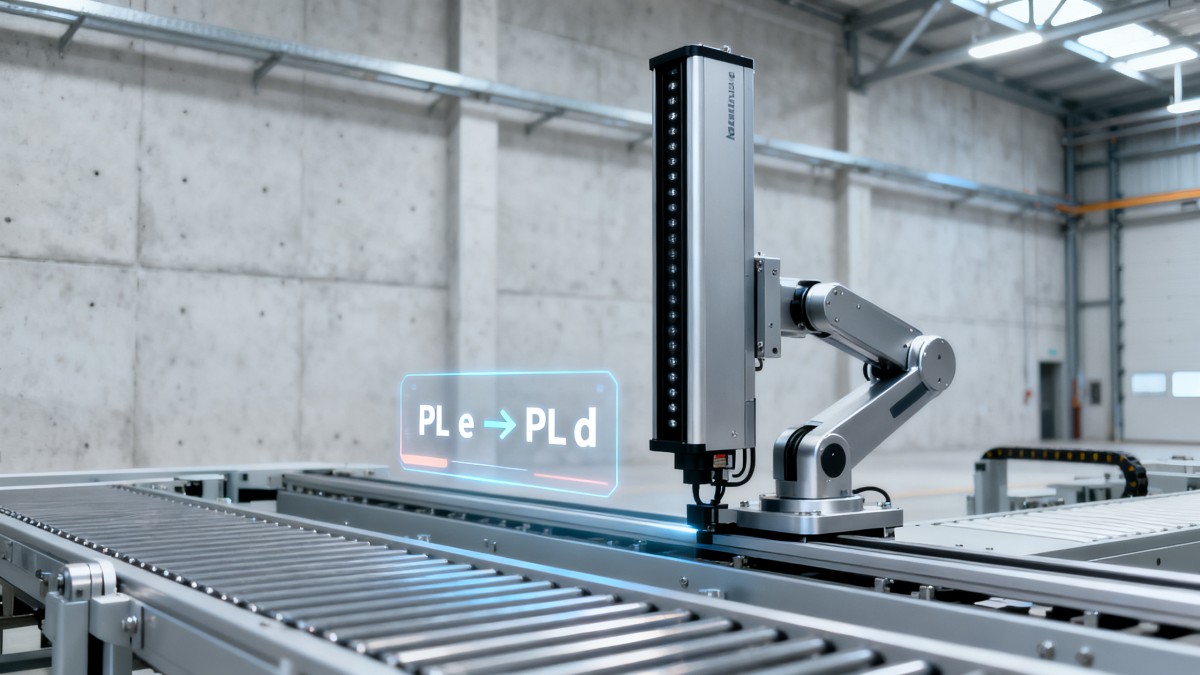
DIN SPEC 91492:2026 was issued by the German Institute for Standardization (DIN) on May 4, 2026. The specification introduces mandatory requirements for safety light curtains used in collaborative applications: they must support real-time PL elevation — from PL e to PL d — triggered by measured operational parameters including load, speed, and approach distance, with a maximum response time of ≤200 ms. TÜV SÜD has suspended acceptance of static PL certification applications under previous criteria.
Impact on Specific Industry Segments
Industrial Automation Equipment Manufacturers
Manufacturers producing or integrating safety light curtains into automated machinery face immediate design and validation implications. Since new certifications require hardware- and firmware-level support for dynamic PL logic, legacy product lines may no longer qualify for CE marking under updated functional safety claims. Impact manifests in R&D timelines, type-testing cycles, and documentation updates for IEC 61496-1/-2 compliance.
Robotics System Integrators
Integrators deploying collaborative robot (cobot) workcells must now verify that installed safety light curtains meet the dynamic PL verification protocol. This affects system validation workflows, as static risk assessments are insufficient; runtime parameter mapping and closed-loop response testing become mandatory. Integration projects may experience delays if components lack compliant firmware or interface protocols for real-time data exchange with motion controllers.
Safety Component Distributors & Channel Partners
Distributors handling safety light curtains will see shifts in inventory planning and technical support scope. Products certified pre–May 2026 may remain installable in existing systems but cannot be newly certified for collaborative use cases requiring PL d under dynamic conditions. Channel partners must update technical datasheets, application guides, and training materials to reflect the distinction between static and dynamic PL validation pathways.
End-User Production Facilities (Automotive, Electronics, Pharma)
Facilities operating near-line human–robot collaboration stations — especially in high-mix, low-volume production — may encounter extended lead times during safety upgrades or retrofits. Procurement teams must now specify dynamic PL capability explicitly in tender documents; maintenance logs and safety validation records must include evidence of real-time PL monitoring and response verification, not just static test reports.
What Relevant Enterprises or Practitioners Should Focus On Now
Monitor official interpretations from DIN and notified bodies
While DIN SPEC 91492:2026 is published, its implementation guidance — including test methods for dynamic PL verification, acceptable sensor fusion architectures, and interface requirements (e.g., EtherCAT Safety, CIP Safety) — remains pending. Enterprises should track updates from DIN, TÜV SÜD, and other EU notified bodies before finalizing product roadmaps.
Review current safety component specifications in active procurement pipelines
Any ongoing tender or framework agreement involving safety light curtains — particularly for collaborative applications — should be audited for PL verification scope. Contracts signed before May 2026 may reference static PL only; post–May 2026 deliveries may require revalidation or substitution unless explicitly exempted.
Distinguish between regulatory signal and enforceable requirement
DIN SPEC documents are not harmonized standards under the EU Machinery Regulation (2023/1230), meaning compliance is not yet legally mandatory for CE marking. However, TÜV SÜD’s suspension of static PL certification signals strong de facto enforcement pressure. Market access — especially for export to Germany and other DIN-aligned markets — will increasingly depend on dynamic PL readiness.
Prepare internal validation and documentation protocols
Engineering and safety departments should begin drafting internal procedures for verifying dynamic PL behavior: logging approach distance vs. velocity inputs, measuring actual PL transition latency, and archiving traceable test sequences. This supports both future third-party audits and internal change control for safety-related software updates.
Editorial Perspective / Industry Observation
Observably, DIN SPEC 91492:2026 reflects a broader industry shift from static hazard assumptions toward runtime-adaptive safety logic — a trend already visible in ISO/TS 15066 and upcoming revisions to ISO 13849-1. Analysis shows this is less a finalized regulation than an early-stage technical benchmark: it sets expectations for how safety systems must evolve alongside increasingly flexible, sensor-rich collaborative machinery. From an industry perspective, it functions primarily as a signal — indicating where notified bodies and leading OEMs are aligning, rather than imposing immediate legal obligations. Continued attention is warranted because subsequent harmonization into EN ISO 13849-1 or EN 61496-2 remains plausible within the next 2–3 years.
In summary, DIN SPEC 91492:2026 marks a technical inflection point for safety light curtain functionality in collaborative settings — not a sweeping regulatory mandate, but a concrete indicator of evolving safety engineering expectations. It is best understood as a forward-looking specification that clarifies emerging verification requirements, rather than a retroactive compliance trigger. Enterprises should treat it as a strategic signal for product development, integration planning, and safety documentation modernization — not as an immediate deadline-driven overhaul.
Source: German Institute for Standardization (DIN), official publication of DIN SPEC 91492:2026 (May 4, 2026); public statement from TÜV SÜD confirming suspension of static PL certification受理 (as of May 2026). Note: Harmonization status with EU Machinery Regulation and adoption timeline by other notified bodies remain under observation.
Technical Specifications
- Hidden Environment & Ecology cost after project approvalAuthor :Environmental Engineering Director
- When does an Environment & Ecology impact assessment need updating?Author :Environmental Engineering Director
- Security & Safety standards that affect product approval speedAuthor :Safety Compliance Lead
Expert Insights

Chief Security Architect
Dr. Thorne specializes in the intersection of structural engineering and digital resilience. He has advised three G7 governments on industrial infrastructure security.
Related Analysis
- May 07, 2026Hidden Environment & Ecology cost after project approvalAuthor :Environmental Engineering Director
- May 07, 2026When does an Environment & Ecology impact assessment need updating?Author :Environmental Engineering Director
- May 07, 2026Security & Safety standards that affect product approval speedAuthor :Safety Compliance Lead
Core Sector // 01
Security & Safety
- Security & Safety standards that affect product approval speedAuthor :Safety Compliance Lead

- How to assess a Security & Safety manufacturer beyond certificationsAuthor :Safety Compliance Lead

- Security & Safety solutions that fix weak points in older facilitiesAuthor :Safety Compliance Lead

- What makes a Security & Safety supplier reliable after delivery?Author :Safety Compliance Lead

- DIN SPEC 91492:2026 Enforces Dynamic PL for Collaborative Safety Light CurtainsAuthor :Safety Compliance Lead

- DIN SPEC 91492:2026 Enforces Dynamic PL for Collaborative Safety Light CurtainsAuthor :Safety Compliance Lead

- DIN SPEC 91492:2026 Released: Safety Light Curtains Must Support Dynamic PL Adjustment in Human-Robot CollaborationAuthor :Safety Compliance Lead

- DIN SPEC 91492:2026 Mandates PL Dynamic Verification for Safety Light Curtains in GermanyAuthor :Safety Compliance Lead