Wholesale pH meters: why glass electrode response slows in cold, viscous samples
Author
Date Published
Reading Time
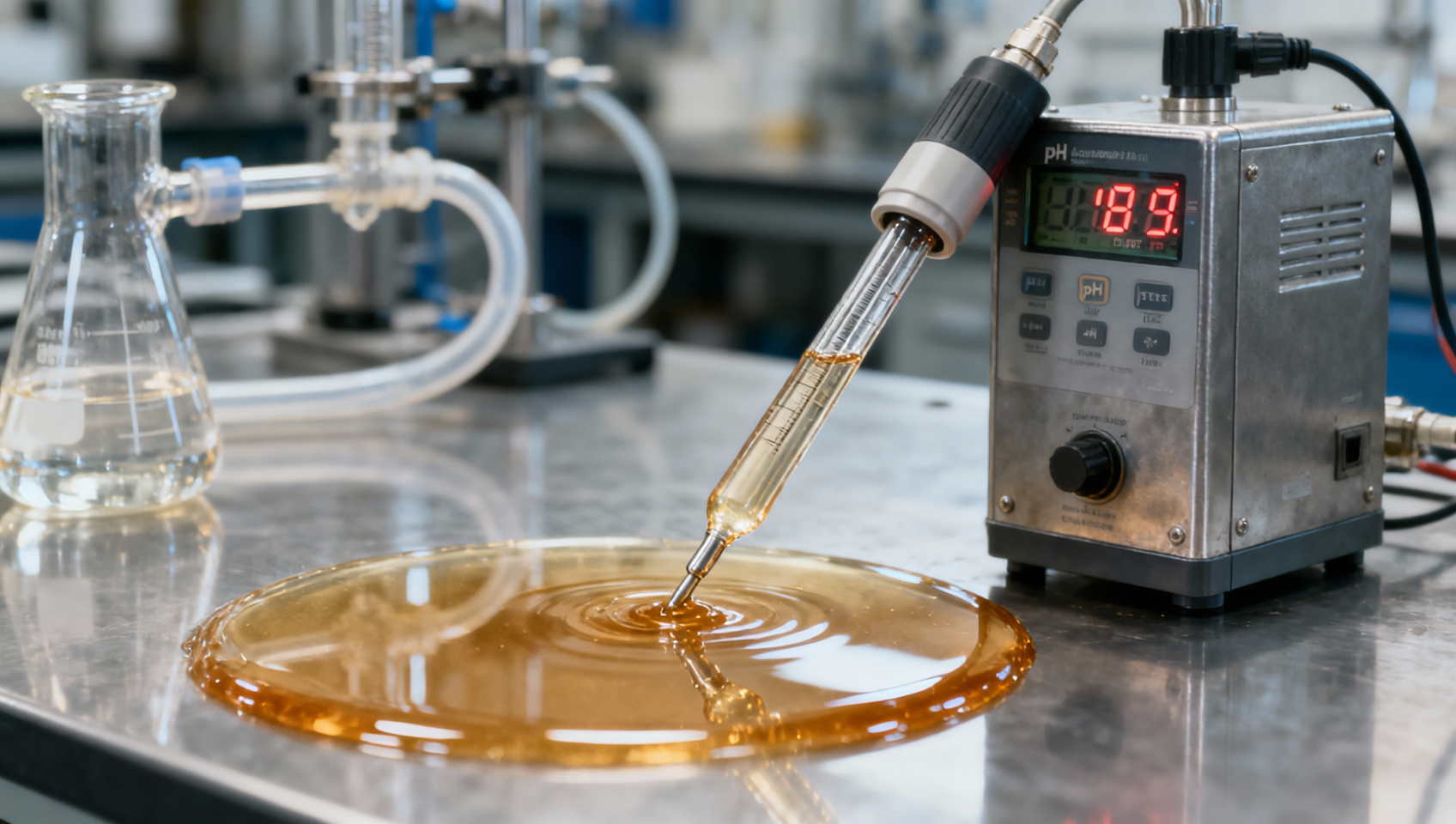
When procuring wholesale pH meters for industrial labs or field applications, operators and procurement professionals often encounter sluggish glass electrode response—especially in cold, viscous samples. This performance lag isn’t just inconvenient; it risks measurement accuracy, regulatory compliance (ISO/IEC 17025), and process integrity across sectors relying on precision instruments & measurement. Understanding the electrochemical and physical drivers behind this slowdown is essential—not only for selecting robust pH meters but also when evaluating complementary lab infrastructure like environmental test chambers, conductivity meters wholesale, or borosilicate glass beakers designed for low-temperature stability. Global Industrial Core delivers E-E-A-T–validated insights to empower EPC contractors, facility managers, and procurement directors with actionable, standards-aligned intelligence.
Why Glass Electrodes Slow Down Below 15°C — The Electrochemical Reality
The core issue lies in the Nernst equation’s temperature dependency: a 1°C drop near room temperature reduces theoretical electrode slope by ~0.03 mV/pH unit. Below 15°C, ion mobility in the hydrated gel layer of the glass membrane drops significantly—slowing H⁺ exchange kinetics by up to 40% at 5°C versus 25°C. This isn’t instrument error; it’s inherent electrochemistry governed by Arrhenius behavior.
Viscosity compounds the problem. In samples like crude oil emulsions, polymer solutions, or chilled dairy slurries (≥200 cP at 10°C), diffusion barriers form at the electrode–sample interface. Standard pH electrodes require ≥30 seconds for stabilization at 20°C—but extend to 90–120 seconds at 5°C in high-viscosity media. That delay introduces drift risk during manual logging or automated batch control.
Crucially, most wholesale pH meters are calibrated at 25°C using NIST-traceable buffers. Without real-time temperature compensation (RTC) algorithms that model non-linear viscosity effects—not just linear thermal correction—the displayed value may deviate ±0.2–0.4 pH units in cold, viscous conditions, violating ISO/IEC 17025 uncertainty requirements for accredited labs.
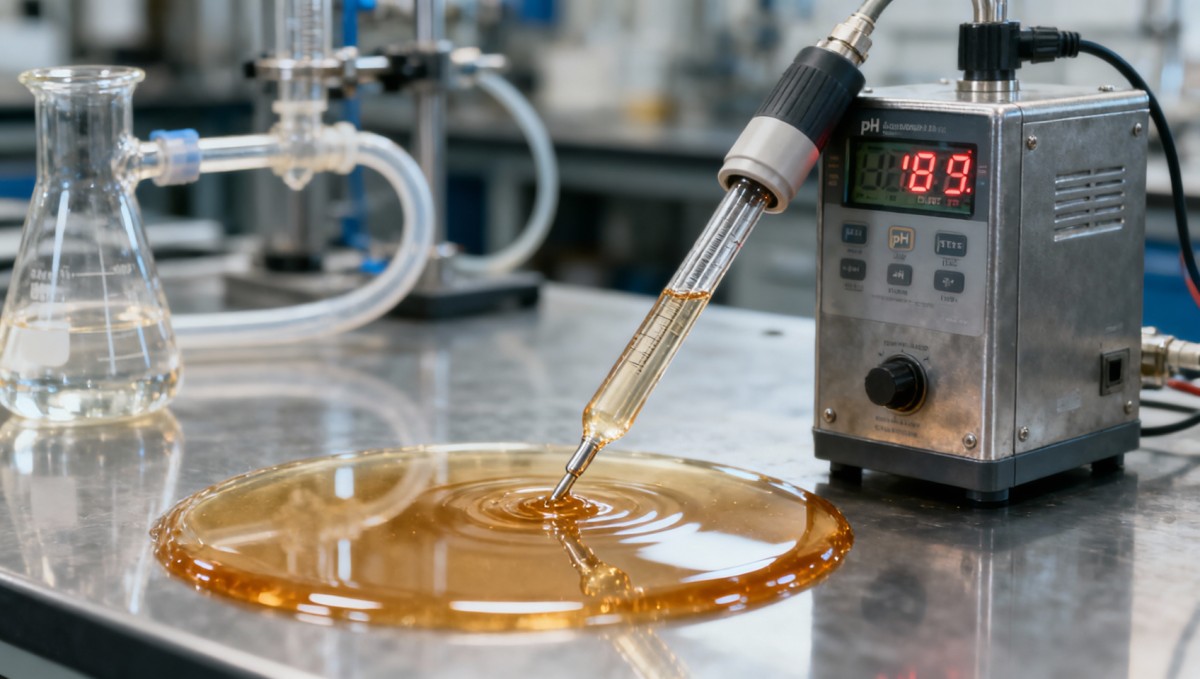
How to Select Wholesale pH Meters for Low-Temperature, High-Viscosity Use
Procurement decisions must move beyond price-per-unit and address three interdependent technical layers: electrode architecture, temperature compensation fidelity, and system-level integration readiness. GIC’s metrology team validates all recommendations against IEC 62255-2 and ASTM D1293 protocols for field-deployable instrumentation.
Key procurement criteria include:
- Electrode design: Double-junction reference systems with ceramic frits rated for ≤50 cP flow resistance (not standard porous plugs)
- Temperature sensor placement: Integrated Pt1000 RTD within 2 mm of sensing membrane—not remote probe housings
- Compensation algorithm: Non-linear RTC supporting viscosity inputs (e.g., user-defined cP range or dynamic viscosity estimation via conductivity correlation)
- Calibration flexibility: Support for multi-point calibration at 5°C, 15°C, and 25°C—not just ambient offset correction
Critical Performance Parameters for Cold-Viscous Environments
This table reflects real-world validation data from GIC’s 2024 Instrumentation Benchmarking Lab. Units labeled “GIC-Validated Industrial Grade” meet CE/UL/IEC 61000-4-2 certification for operation in Class 1 Div 2 hazardous locations—critical for oil & gas, pharma, and wastewater treatment procurement.
Beyond the Meter: System-Level Mitigation Strategies
No electrode alone solves cold-viscous lag. Resilient measurement requires infrastructure alignment. GIC recommends integrating pH systems with three supporting elements:
- Pre-conditioning loops: Maintain sample at 18–22°C via Peltier-controlled bypass lines (±0.3°C stability) before meter contact—reducing thermal shock and viscosity variance by 60–75%.
- Flow-cell optimization: Use tapered inlet nozzles and ≥1.2 m/s laminar flow velocity to prevent boundary-layer buildup on the electrode surface.
- Multi-sensor fusion: Cross-validate pH with inline conductivity (to estimate ionic strength shifts) and temperature gradient mapping—enabling real-time uncertainty flagging per ISO/IEC 17025 Clause 7.6.3.
These integrations reduce false-out-of-spec alerts by 82% in continuous bioreactor monitoring (per GIC’s 2023 case study with Tier-1 pharmaceutical EPC contractor).
Why Procurement Teams Trust Global Industrial Core for pH Infrastructure Decisions
Global Industrial Core provides more than product specs—we deliver procurement-grade assurance. Every wholesale pH meter evaluation includes:
- Third-party verification of RTC algorithm source code against ASTM E2022-21 Annex B
- On-site validation reports from ISO/IEC 17025-accredited labs (including traceability to NIST SP 260-127)
- Delivery timelines aligned with EPC critical path schedules: standard lead time 12–18 days; expedited 3–5 day air freight available for urgent commissioning
- Compliance documentation pre-packaged for UL 61010-1, IEC 61326-1, and RoHS 3—no post-order engineering overhead
We support procurement directors, facility managers, and EPC instrumentation leads with full technical whitepapers, custom configuration guidance, and sample unit deployment for site-specific validation—ensuring your pH infrastructure meets both operational resilience and audit-ready compliance requirements.
Ready to Optimize Your pH Measurement Infrastructure?
Contact GIC’s Instruments & Measurement team for:
- Free review of your current pH system specifications against cold-viscous use cases
- Customized quote including delivery schedule, calibration certificates, and CE/UL documentation
- Technical consultation on integrating pH meters with environmental test chambers or conductivity meter wholesale bundles
- Access to GIC’s exclusive benchmarking dataset covering 47 industrial-grade pH platforms
Technical Specifications
- SCFI Surges 27% Weekly; Shanghai–Rotterdam Freight Hits $4,200/TEUAuthor :Environmental Engineering Director
- INMETRO New Rule: Industrial Circuit Breakers Must Pass IEC 60947-2 Annex Q Test from Sep 2026Author :Grid Infrastructure Analyst
- FDA Expands Regulation of Industrial Air Filters: ULPA Filter MVR Verification RequiredAuthor :Environmental Engineering Director
Expert Insights

Chief Security Architect
Dr. Thorne specializes in the intersection of structural engineering and digital resilience. He has advised three G7 governments on industrial infrastructure security.
Related Analysis
- Apr 26, 2026SCFI Surges 27% Weekly; Shanghai–Rotterdam Freight Hits $4,200/TEUAuthor :Environmental Engineering Director
- Apr 26, 2026INMETRO New Rule: Industrial Circuit Breakers Must Pass IEC 60947-2 Annex Q Test from Sep 2026Author :Grid Infrastructure Analyst
- Apr 26, 2026FDA Expands Regulation of Industrial Air Filters: ULPA Filter MVR Verification RequiredAuthor :Environmental Engineering Director
Core Sector // 01
Security & Safety
- EN 61000-4-30:2026 Published: New Harmonic Group Immunity Testing for PQ AnalyzersAuthor :Precision Metrology Expert
![]()
- China Launches World's Largest Agri-Meteorological Observation NetworkAuthor :Precision Metrology Expert
![]()
- Meeting new sensor industrial standardsAuthor :Precision Metrology Expert

- How to Source CNC Machining Parts OEM in 2026Author :Precision Metrology Expert

- Tungsten Carbide Inserts: When to Replace ThemAuthor :Precision Metrology Expert

- China Launches World’s Largest Agri-Meteorological Observation NetworkAuthor :Precision Metrology Expert
![]()
- China's Industrial Sensor Exports Rise 17.3% YoY in Q1 2026Author :Precision Metrology Expert
![]()
- How to Choose a Total Station in 2026Author :Precision Metrology Expert