China Launches World’s Largest Agri-Meteorological Observation Network
Author
Date Published
Reading Time

On April 21, 2026, China completed the world’s largest integrated air-ground-space agricultural meteorological observation network. Its high-frequency, high-precision environmental data—including temperature, humidity, atmospheric pressure, particulate matter, and radiation—are now accessible via public API interfaces. This development is particularly relevant for enterprises in Testing & Measurement (T&M), Laboratory & Analytics (Lab & Analytics), and industrial sensor manufacturing—especially those involved in calibration systems, field-deployable monitoring devices, and climate-resilient equipment validation.
Event Overview
On April 21, 2026, the China Meteorological Administration announced the operational launch of a nationwide ‘air-ground-space’ agricultural meteorological observation network—the largest of its kind globally. The network delivers real-time, high-resolution environmental measurements and has opened standardized API access. Multiple Chinese Testing & Measurement and Laboratory & Analytics companies have already integrated this data into their industrial sensor calibration systems and cloud-based field monitoring platforms. The service also supports issuing climate-based environmental adaptability verification reports for overseas clients, aiming to strengthen competitiveness in cross-border project tenders.
Industries Affected
Testing & Measurement (T&M) Equipment Manufacturers
These firms rely on traceable, field-representative environmental data for sensor calibration and performance certification. With official meteorological data now API-accessible and geographically dense, calibration workflows can shift from lab-simulated conditions toward real-world reference environments—potentially reducing validation cycle time and increasing report credibility for international compliance submissions.
Laboratory & Analytics Service Providers
Providers offering environmental testing, device certification, or climate resilience assessment may integrate this observational data as a reference baseline. For example, when validating outdoor IoT sensors or environmental monitors for deployment in Southeast Asia or Africa, users can now anchor test protocols to actual historical and near-real-time climate profiles from comparable Chinese agro-climatic zones—enhancing technical defensibility in tender documentation.
Industrial Sensor System Integrators
Companies embedding environmental sensing modules into smart agriculture hardware, infrastructure monitoring systems, or energy management platforms can leverage the API to auto-adjust device behavior or trigger alerts based on authoritative local weather thresholds—without maintaining proprietary weather station networks. This lowers hardware dependency and improves scalability across diverse regional deployments.
Export-Oriented Hardware Vendors
Vendors bidding on overseas infrastructure or smart farming projects—particularly in climate-vulnerable regions—can commission third-party verification reports grounded in China’s observational dataset. These reports serve as evidence of device robustness under specific climatic stressors (e.g., high-humidity monsoon conditions or dust-laden arid regimes), directly addressing evaluator requirements in procurement RFPs.
What Relevant Enterprises or Practitioners Should Focus On
Monitor API documentation and usage terms from the China Meteorological Administration
The current announcement confirms API availability but does not specify data licensing models (e.g., commercial reuse rights, attribution requirements, or rate limits). Enterprises planning integration should track official updates to avoid compliance gaps during pilot or production deployment.
Evaluate alignment between China’s agro-climatic zones and target export markets
Analysis来看, China’s network covers diverse microclimates—from Northeast cold-humid plains to Northwest arid basins. However, direct climatic equivalence with overseas project sites (e.g., Sahelian West Africa or Central American highlands) requires careful zone-matching. Practitioners should prioritize use cases where Chinese analogues exist (e.g., North China Plain ↔ Northern India Indo-Gangetic Plain) before generalizing applicability.
Distinguish between validation support and formal certification
From industry perspective, the issued environmental adaptability reports are currently positioned as technical support tools—not substitutes for ISO/IEC 17025-accredited testing or IEC 60529 ingress protection certifications. Companies should treat them as supplementary evidence, not standalone compliance documentation, especially where regulatory frameworks mandate accredited lab results.
Assess internal capacity for API-driven data ingestion and metadata mapping
Integrating observational streams requires engineering bandwidth for authentication, time-series synchronization, unit normalization (e.g., converting Chinese-standard radiation units), and spatial interpolation logic. Firms lacking cloud-native data pipelines may need to prioritize lightweight pilots—such as overlaying real-time humidity thresholds onto existing dashboard alerts—before full system integration.
Editorial Perspective / Industry Observation
This milestone is better understood as an enabling infrastructure signal—not yet a fully mature commercial service. Observation来看, the API launch marks the first publicly confirmed step toward institutionalizing meteorological data as a reusable industrial input, rather than solely a public safety or agricultural advisory resource. From industry angle, its significance lies less in immediate revenue impact and more in shifting expectations: climate data is increasingly treated as infrastructure-grade utility, akin to time synchronization (NTP) or geolocation (GNSS) services. Continued attention is warranted—not because the network itself replaces lab testing, but because it signals a broader trend: national observational assets are being repositioned to serve cross-sectoral engineering validation needs. That repositioning may accelerate similar initiatives elsewhere, raising the bar for global hardware vendors’ environmental evidence portfolios.
Conclusion: This development reflects a structural expansion in how authoritative environmental data is sourced, accessed, and applied—not just for agriculture, but for industrial measurement integrity. It does not replace accredited testing, but introduces a new layer of contextual, location-specific reference data that can strengthen technical proposals and reduce uncertainty in field-deployment planning. Currently, it is best interpreted as an early-stage capability with growing relevance for T&M, Lab & Analytics, and export-oriented hardware developers—particularly those operating in climate-sensitive application domains.
Information Source: China Meteorological Administration (announcement dated April 21, 2026). Note: Commercial API terms, international accreditation recognition status, and long-term data continuity remain subjects for ongoing observation.
Technical Specifications
- 2026 Shanghai Fastener Show Launches Zero-Carbon Process ZoneAuthor :Heavy Industry Strategist
- China Launches World’s Largest Agri-Meteorological Observation NetworkAuthor :Precision Metrology Expert
- TÜV Rheinland Updates EMC Guide: RF Immunity for Industrial OpticsAuthor :Precision Metrology Expert
Expert Insights

Chief Security Architect
Dr. Thorne specializes in the intersection of structural engineering and digital resilience. He has advised three G7 governments on industrial infrastructure security.
Related Analysis
- Apr 24, 20262026 Shanghai Fastener Show Launches Zero-Carbon Process ZoneAuthor :Heavy Industry Strategist
- Apr 24, 2026China Launches World’s Largest Agri-Meteorological Observation NetworkAuthor :Precision Metrology Expert
- Apr 24, 2026TÜV Rheinland Updates EMC Guide: RF Immunity for Industrial OpticsAuthor :Precision Metrology Expert
Core Sector // 01
Security & Safety
- China Launches World’s Largest Agri-Meteorological Observation NetworkAuthor :Precision Metrology Expert
![]()
- China's Industrial Sensor Exports Rise 17.3% YoY in Q1 2026Author :Precision Metrology Expert
![]()
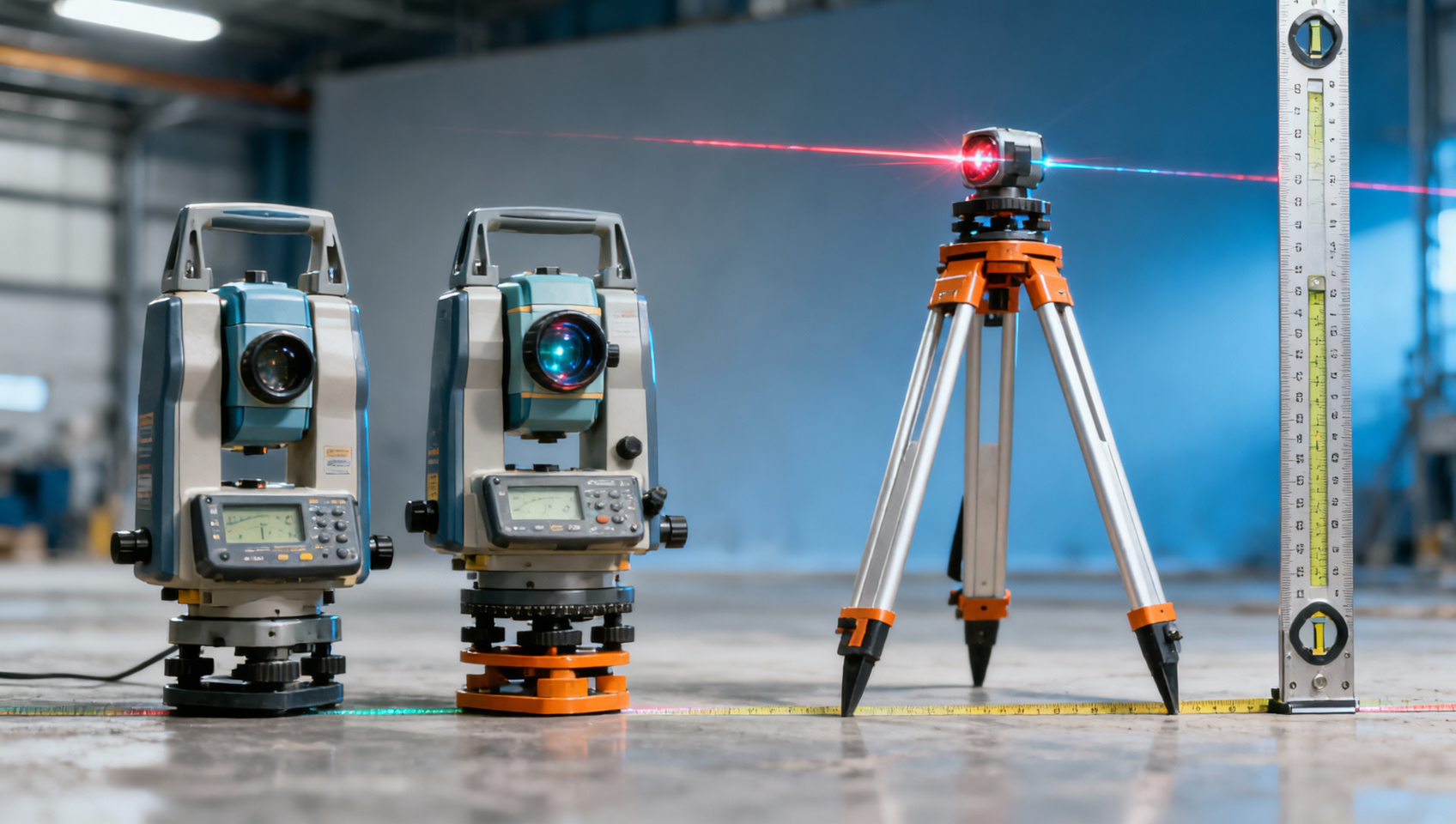
- How to Choose a Total Station in 2026Author :Precision Metrology Expert

- Auto Level Instruments vs Rotary LasersAuthor :Precision Metrology Expert

- GNSS RTK Receiver: Who Needs ItAuthor :Precision Metrology Expert

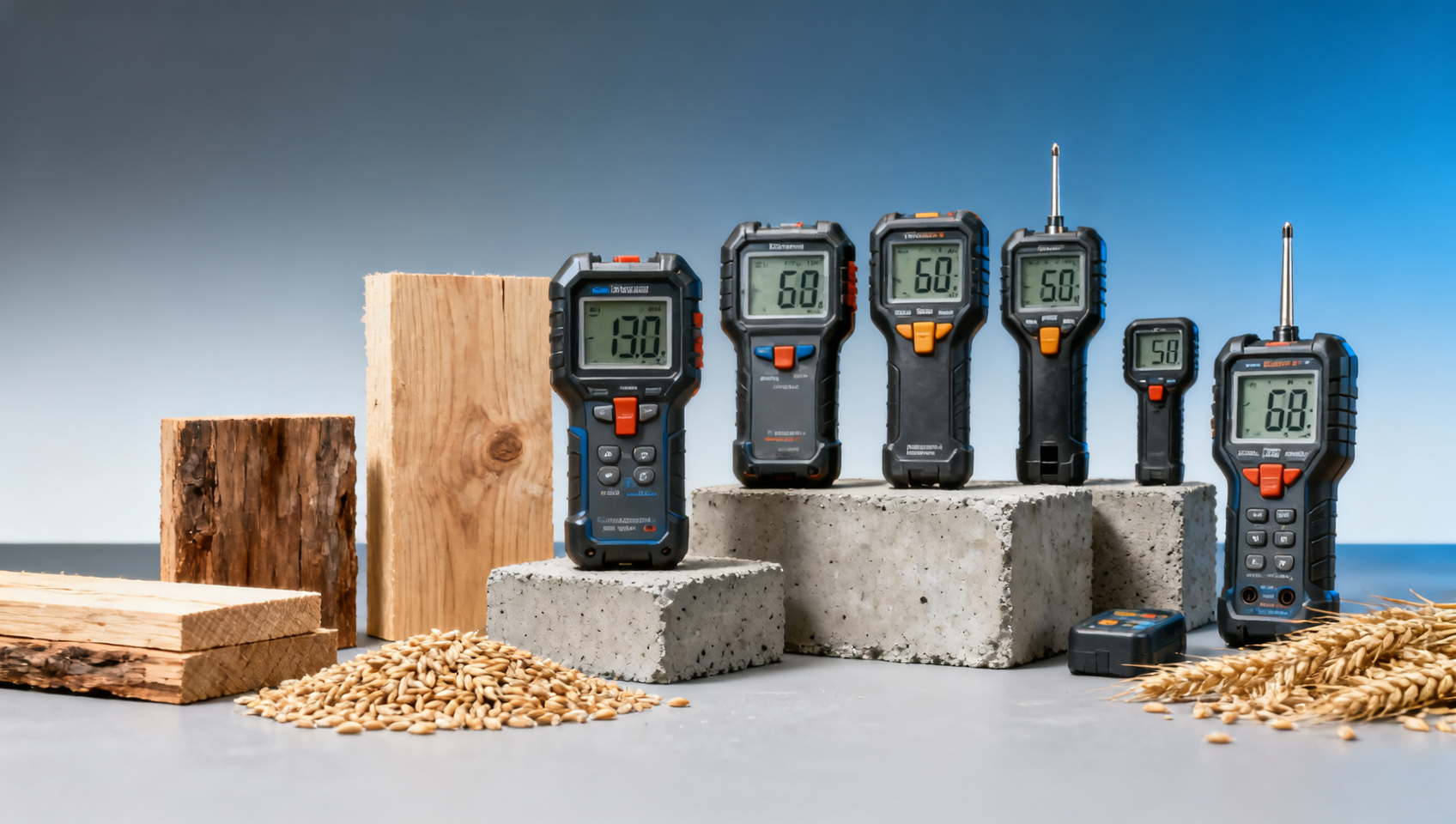
- Wholesale Moisture Meters Buying GuideAuthor :Precision Metrology Expert

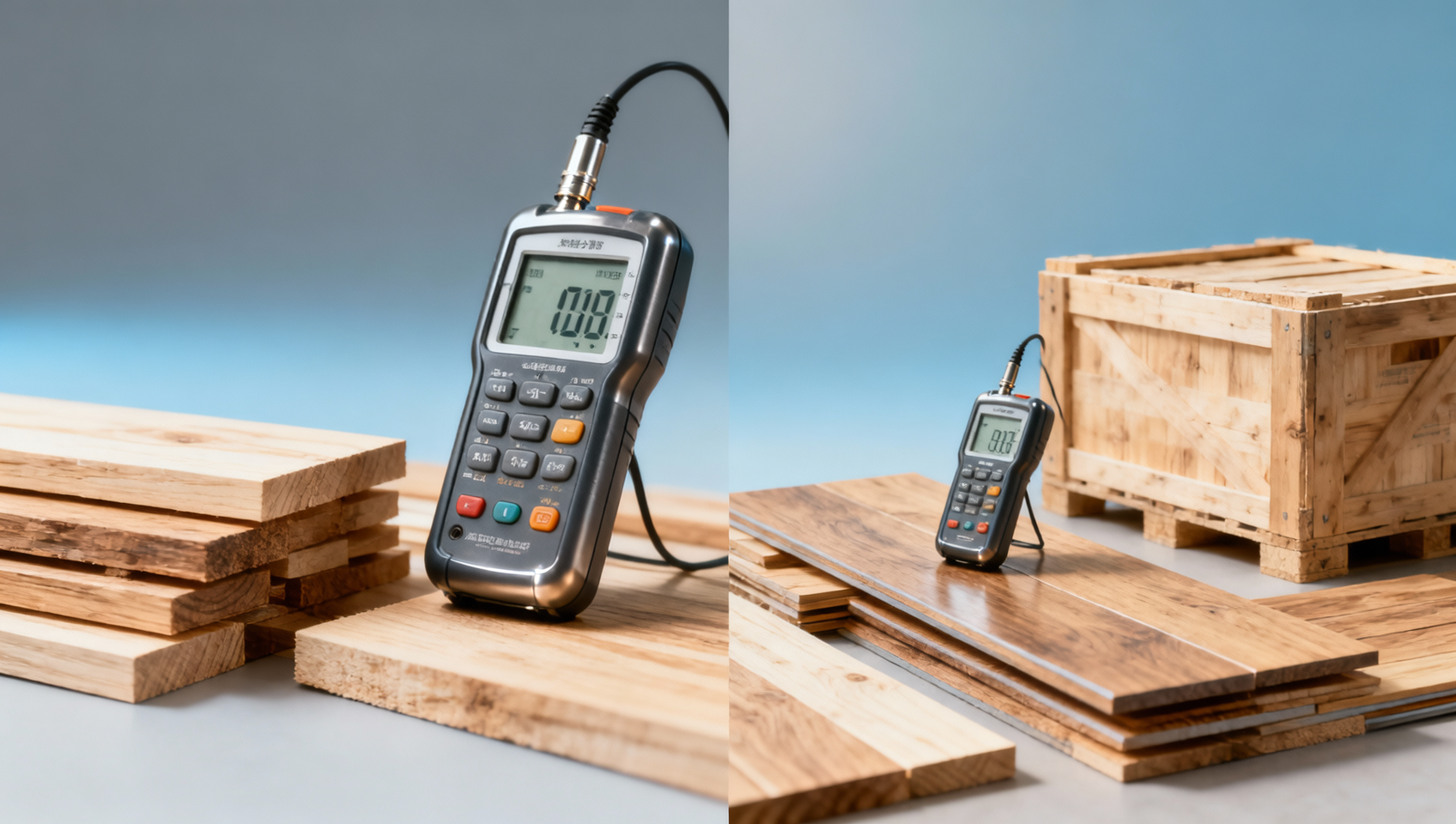
- Wood Moisture Tester for Daily ChecksAuthor :Precision Metrology Expert

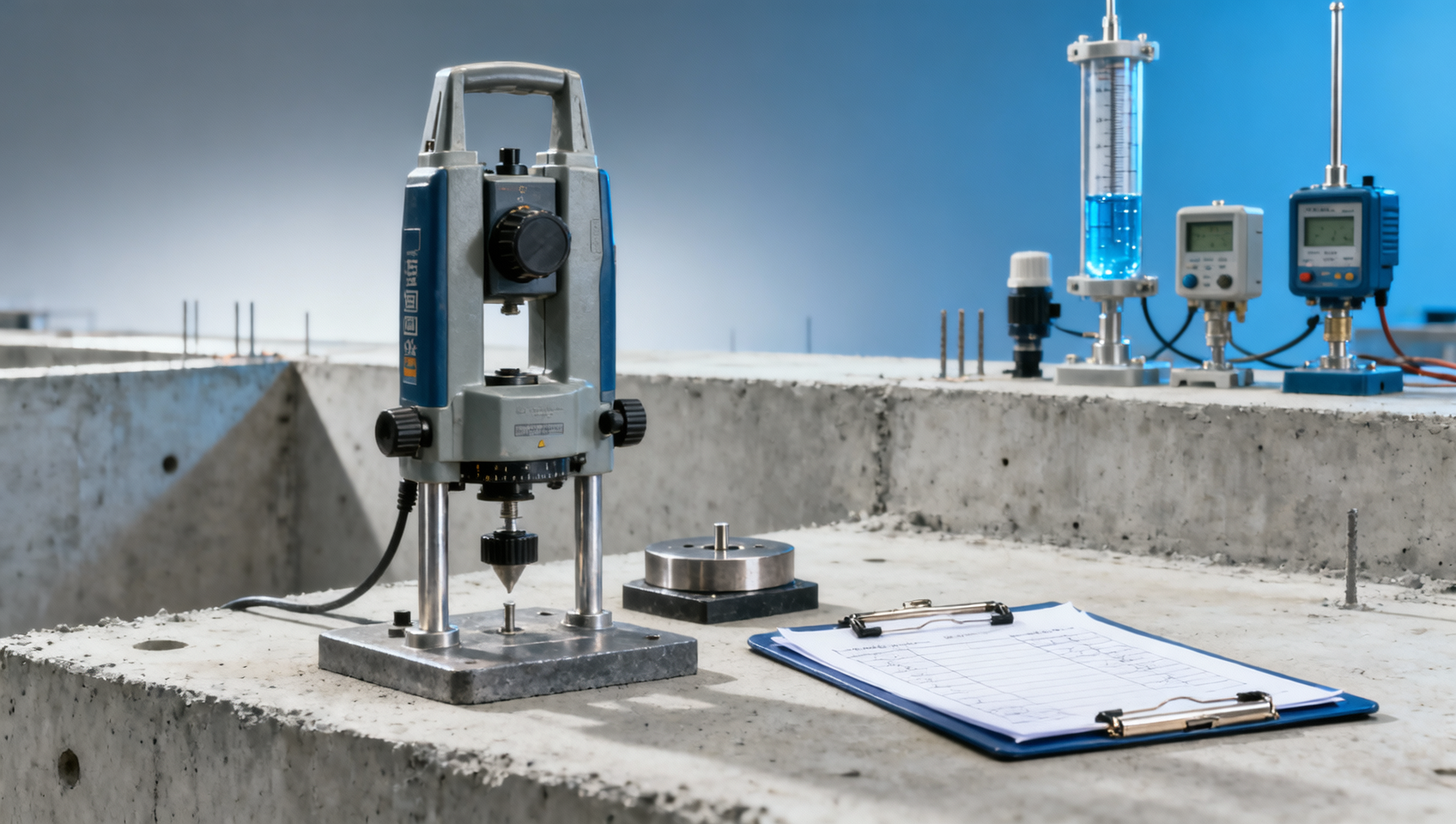
- Concrete Test Hammer Accuracy TipsAuthor :Precision Metrology Expert