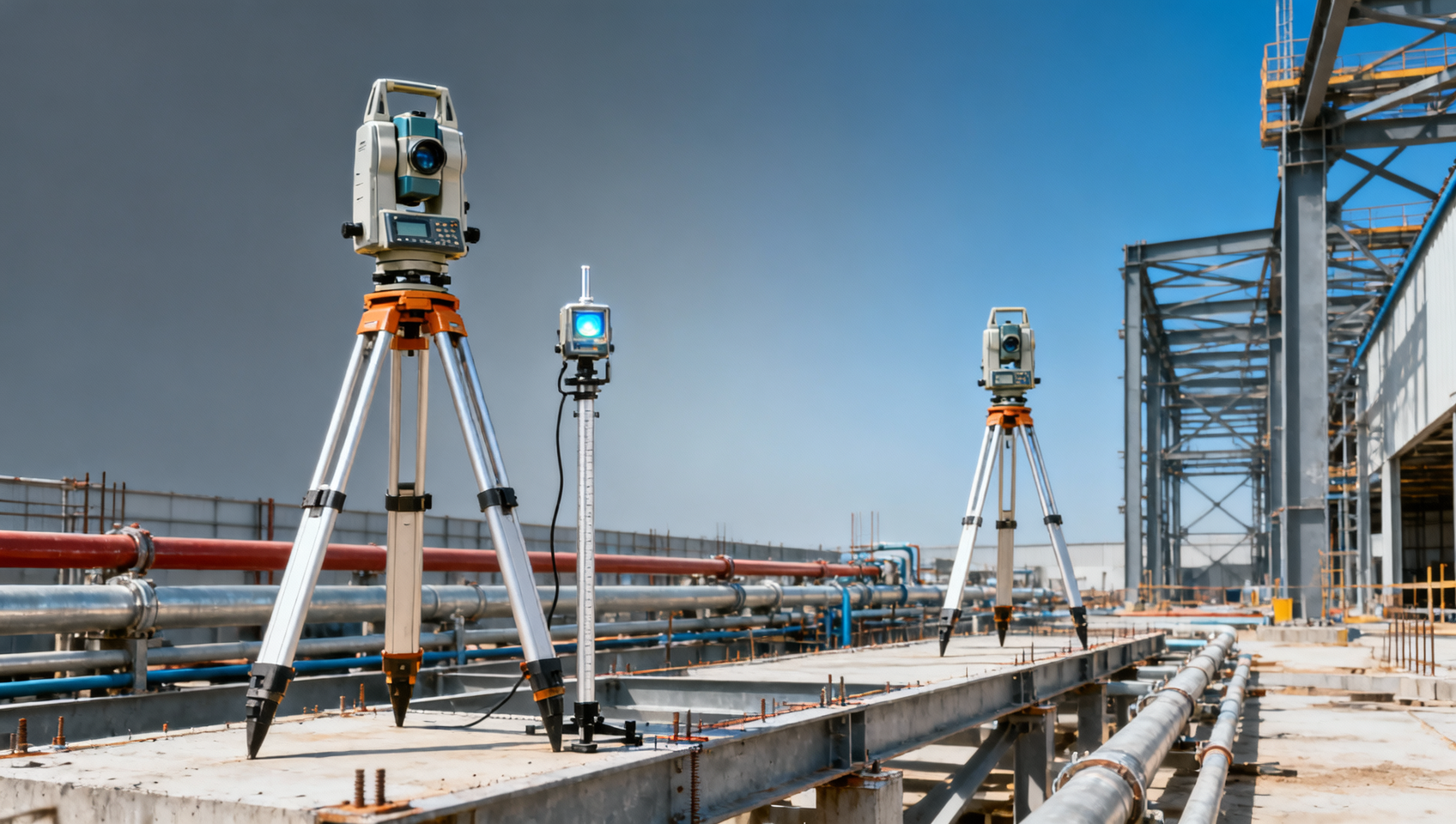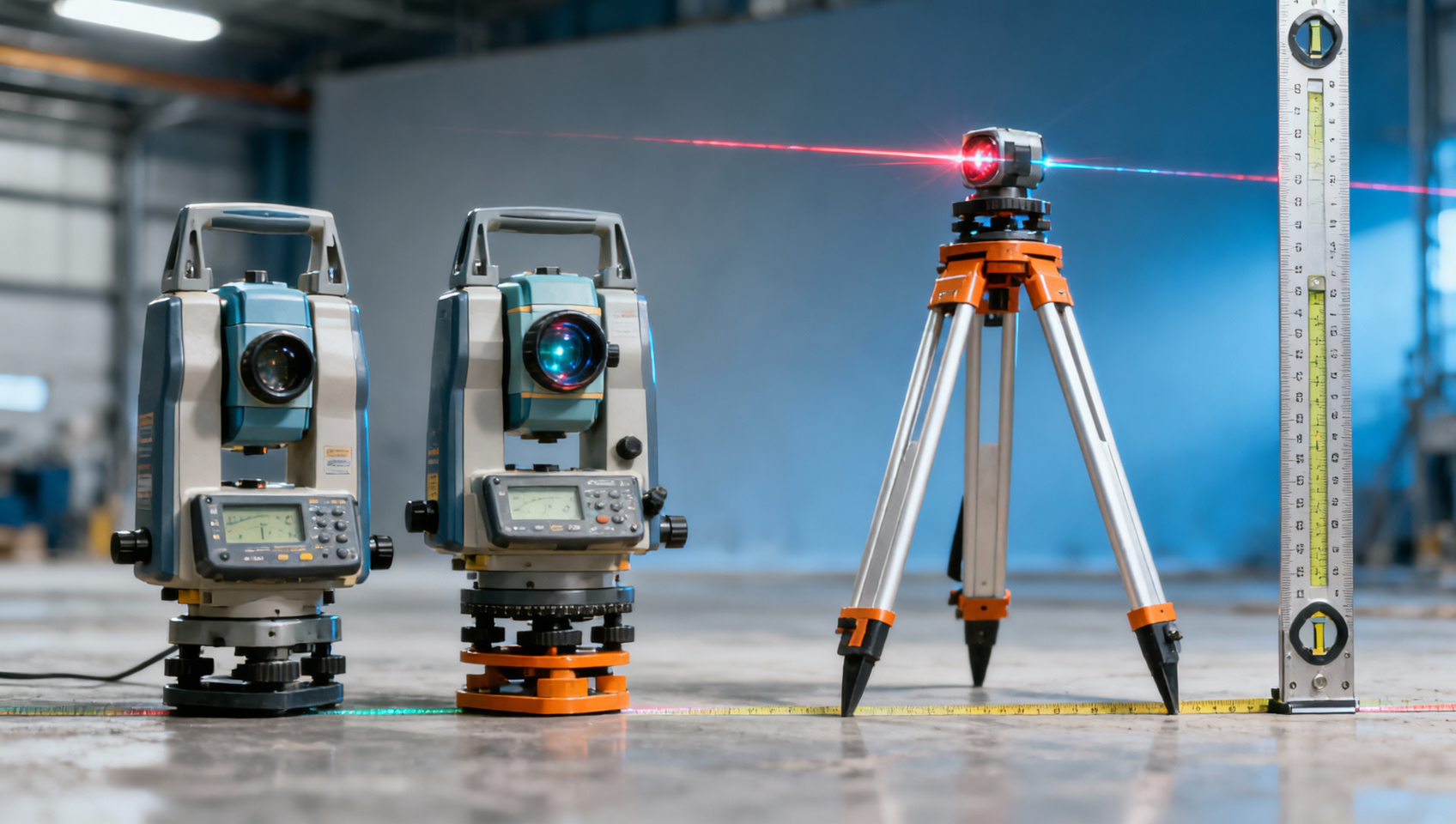
China Launches World's Largest Agri-Meteorological Observation Network
Author
Date Published
Reading Time

On April 21, 2026, China completed the world’s largest agricultural meteorological observation network — a three-dimensional ‘air-space-ground’ monitoring system. Its high-precision meteorological data streams (temperature, humidity, pressure, radiation) are now integrated into domestic industrial sensor and testing & measurement (T&M) equipment calibration cloud platforms. This development is particularly relevant for manufacturers of precision instrumentation, calibration service providers, export-oriented T&M device makers, and industrial automation integrators operating in climate-vulnerable markets.
Event Overview
On April 21, 2026, China officially established the world’s largest agricultural meteorological observation network, featuring an integrated ‘air-space-ground’ monitoring architecture. Verified public information confirms that high-resolution temperature, humidity, atmospheric pressure, and solar radiation data from this network are being fed into domestically developed cloud-based calibration platforms for industrial sensors and testing & measurement devices. Several Chinese manufacturers have launched portable metrological instruments equipped with ‘meteorological environment adaptive compensation algorithms’, targeting field deployment in extreme conditions — including arid desert environments in the Middle East and high-humidity tropical zones in Southeast Asia.
Industries Affected by This Development
Export-Oriented Testing & Measurement Equipment Manufacturers
These companies face growing technical expectations from international buyers regarding environmental resilience. The integration of agri-meteorological data into calibration infrastructure signals a shift toward standardized environmental compensation protocols — potentially influencing product certification requirements, especially in regions where climatic stress tests are becoming de facto benchmarks for reliability claims.
Industrial Sensor OEMs and Module Suppliers
As meteorological-grade environmental parameters enter calibration workflows, sensor manufacturers may need to align their output stability specifications with newly available reference datasets. This affects design validation cycles, especially for humidity- and temperature-sensitive transducers used in field-deployable instrumentation.
Calibration Service Providers and Metrology Labs
Cloud-based calibration platforms incorporating real-time agri-meteorological data imply evolving traceability frameworks. Labs supporting export compliance (e.g., ISO/IEC 17025) may need to assess whether such environmental-adaptive calibration methods meet current accreditation criteria — particularly when applied outside controlled laboratory settings.
Industrial Automation System Integrators
Integrators deploying measurement systems in outdoor or semi-outdoor infrastructure (e.g., smart agriculture hubs, remote energy sites, environmental monitoring stations) may encounter increasing client demand for instruments validated under regionally representative meteorological conditions — not just standard lab conditions.
What Relevant Enterprises or Practitioners Should Monitor and Do Now
Track official technical documentation from calibration platform operators
Current integration into cloud calibration platforms is confirmed, but publicly available specifications — such as data latency, uncertainty budgets per parameter, and algorithm validation reports — remain limited. Enterprises should monitor updates from platform providers and national metrology institutes for formal guidance on usage scope and limitations.
Assess applicability of ‘meteorological adaptive compensation’ for target export markets
While the algorithm is marketed for Middle Eastern deserts and Southeast Asian tropics, its implementation varies across instrument types and measurement ranges. Companies should verify whether vendor-provided compensation applies to their specific use case — e.g., low-range humidity sensing vs. high-intensity solar radiation logging — before committing to design or procurement changes.
Distinguish between platform availability and regulatory acceptance
The existence of a calibration cloud platform does not equate to formal recognition by international standards bodies (e.g., BIPM, ILAC) or regional regulators. Exporters should avoid assuming that meteorological-adaptive calibration automatically satisfies conformity assessment requirements unless explicitly endorsed in applicable standards or notified body guidance.
Review field validation protocols for portable metrological instruments
Manufacturers and users deploying portable instruments in climatically diverse locations should evaluate whether existing field verification procedures account for real-world environmental dynamics captured by the new observation network. Updating checklists or adding environmental correlation logs may improve long-term reliability tracking without requiring full redesign.
Editorial Perspective / Industry Observation
From an industry perspective, this milestone is best understood not as an immediate technical mandate, but as an early-stage infrastructure signal: it reflects China’s strategic alignment of environmental monitoring capability with industrial metrology infrastructure. Analysis来看, the move supports domestic T&M device competitiveness by enabling more credible environmental robustness claims — particularly where competitors rely on generic thermal drift models rather than regionally observed meteorological baselines. Observation来看, the timing coincides with tightening EU and ASEAN technical barriers for field-deployable instrumentation, suggesting potential downstream harmonization pressure. It is currently more of a capability foundation than a compliance requirement — but one that may shape future calibration norms for outdoor and distributed measurement systems.
Conclusion
This development marks a step toward tighter coupling between environmental observation infrastructure and industrial metrology practice — primarily serving as an enabler for enhanced environmental adaptability in field-deployable measurement devices. It does not replace existing calibration standards, nor does it constitute a new regulatory obligation. Instead, it introduces a new data resource with emerging relevance for product design, field validation, and export market positioning — particularly where environmental resilience is a differentiating factor. Current interpretation should focus on infrastructure readiness and application-specific feasibility, rather than broad compliance implications.
Information Sources
Main source: Official announcement dated April 21, 2026, regarding completion of China’s agricultural meteorological observation network and its integration with domestic industrial sensor and testing & measurement calibration platforms. No third-party verification or independent technical audit reports have been publicly released to date. Ongoing observation is warranted regarding formal documentation of algorithm validation, platform uncertainty statements, and international metrology community response.
Technical Specifications
Expert Insights

Chief Security Architect
Dr. Thorne specializes in the intersection of structural engineering and digital resilience. He has advised three G7 governments on industrial infrastructure security.
Related Analysis
- Apr 25, 2026China Launches World's Largest Agri-Meteorological Observation NetworkAuthor :Precision Metrology Expert
- Apr 25, 2026Binggang Group & AHUT Advance Steel Slag Valorization TechAuthor :Heavy Industry Strategist
- Apr 25, 2026China Leads First ISO Standard for Zero-Carbon CitiesAuthor :Environmental Engineering Director
Core Sector // 01
Security & Safety
- China Launches World's Largest Agri-Meteorological Observation NetworkAuthor :Precision Metrology Expert
![]()
- How to Source CNC Machining Parts OEM in 2026Author :Precision Metrology Expert

- Tungsten Carbide Inserts: When to Replace ThemAuthor :Precision Metrology Expert

- China Launches World’s Largest Agri-Meteorological Observation NetworkAuthor :Precision Metrology Expert
![]()
- China's Industrial Sensor Exports Rise 17.3% YoY in Q1 2026Author :Precision Metrology Expert
![]()
- How to Choose a Total Station in 2026Author :Precision Metrology Expert

- Auto Level Instruments vs Rotary LasersAuthor :Precision Metrology Expert

- GNSS RTK Receiver: Who Needs ItAuthor :Precision Metrology Expert