Thermocouples Wholesale: Avoid Bad Batches
Author
Date Published
Reading Time
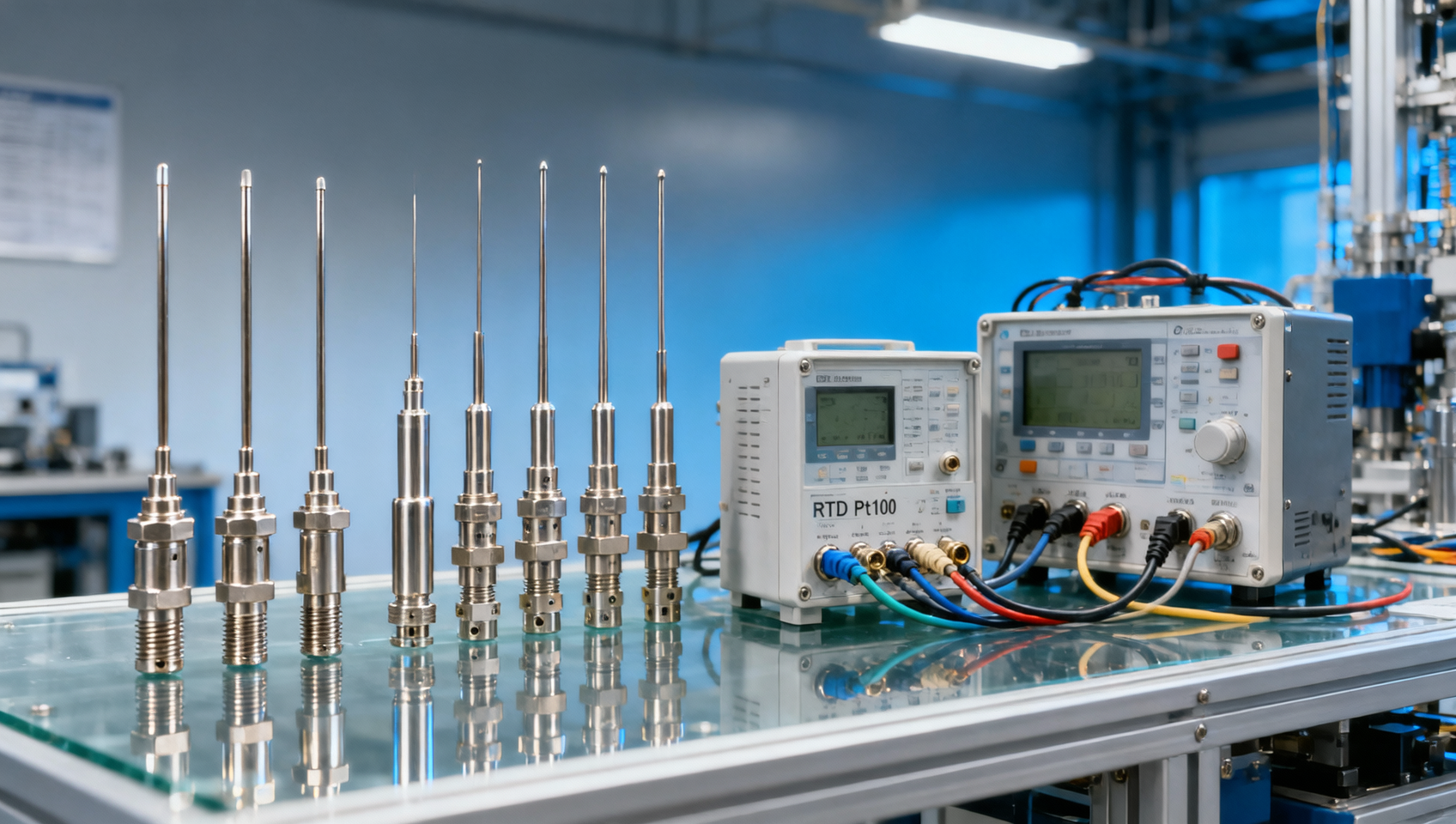
Buying thermocouples wholesale can reduce costs, but one bad batch can disrupt calibration, downtime planning, and product quality. For procurement teams, operators, and industrial decision-makers, choosing reliable temperature sensing components alongside RTD Pt100 sensors, temperature transmitters, and bimetal thermometers is critical. This guide explains how to spot risks early and secure dependable supply.
If you are sourcing thermocouples in volume, the main question is not simply “How do I get a lower unit price?” It is “How do I avoid a batch that creates hidden losses after delivery?” In industrial environments, a low-cost shipment with inconsistent alloy composition, poor junction quality, weak insulation, or incomplete traceability can lead to unstable readings, frequent replacement, process drift, and avoidable shutdowns. The safest wholesale strategy is to evaluate supplier consistency, testing discipline, material traceability, and application fit before issuing large orders.
What Buyers Really Mean When They Search “Thermocouples Wholesale: Avoid Bad Batches”
Most readers searching this topic are not looking for a generic explanation of how thermocouples work. They are trying to reduce purchasing risk. Their real concerns usually include:
- How to identify unreliable thermocouple suppliers before placing a bulk order
- How to detect batch inconsistency that may affect temperature accuracy
- Which specifications matter most for industrial use
- How to compare thermocouples with RTD Pt100 sensors, temperature transmitters, and bimetal thermometers in mixed systems
- How to protect operations from rework, downtime, and warranty disputes
That means the most useful article is one that helps buyers, operators, and decision-makers make a better sourcing decision, not one that stays at the theory level.
Why One Bad Thermocouple Batch Becomes a Much Bigger Cost Than the Purchase Order
In wholesale procurement, defects rarely stay isolated at component level. A bad batch can spread cost across production, maintenance, quality assurance, and customer delivery.
Typical downstream consequences include:
- Measurement drift: Process temperatures appear normal on paper but are actually outside tolerance.
- Calibration failure: Incoming quality checks reveal inconsistency, delaying line startup or project commissioning.
- Premature field failure: Sensors degrade early under heat, vibration, oxidation, pressure, or corrosive media.
- Maintenance inefficiency: Teams spend time tracing whether the issue comes from the probe, transmitter, wiring, or control logic.
- Batch-to-batch instability: Even if one shipment performs well, later lots may not match previous behavior.
- Compliance and audit exposure: Missing certificates or weak traceability can become a problem in regulated plants and EPC projects.
For plant operators, this means unreliable readings. For procurement teams, it means supplier disputes and emergency replacement orders. For management, it means a lower total return on procurement savings than expected.
How to Recognize a High-Risk Thermocouple Supplier Before You Buy
When buying thermocouples wholesale, supplier evaluation matters as much as product specification. A supplier may quote the correct type and sheath size while still delivering inconsistent quality.
Look for these practical signs:
- Clear material traceability: The supplier should be able to identify alloy source, sheath material, insulation type, and production lot.
- Defined manufacturing controls: Ask how hot junctions are formed, how insulation is handled, and how dimensional consistency is verified.
- Documented testing process: Reliable suppliers can explain incoming inspection, in-process testing, and final inspection.
- Application knowledge: A credible partner asks about temperature range, atmosphere, vibration, insertion length, response time, and mounting conditions.
- Stable certification support: Depending on your project, this may include ISO systems, calibration records, CE-related documentation, RoHS declarations, or material certificates.
- Consistent technical communication: If a sales team cannot explain tolerance class, grounding options, or sheath compatibility, risk is higher.
A supplier who only competes on price and lead time, without discussing process conditions, usually increases long-term risk.
Which Thermocouple Batch Problems Cause the Most Trouble in Real Operations
Not all defects are equally serious. Some create immediate failure, while others quietly degrade process quality. The most common bad-batch problems include:
- Incorrect alloy composition: This affects the thermoelectric response and can shift measurement accuracy.
- Poor junction integrity: Weak or inconsistent junction formation leads to unstable output or short service life.
- Insulation contamination or damage: This can produce signal leakage, noise, or intermittent failure.
- Dimension mismatch: Insertion length, diameter, thread, or fitting errors complicate installation and response performance.
- Inconsistent sheath material: Poor sheath selection reduces chemical resistance and heat durability.
- Improper termination quality: Loose connections, weak cable transitions, or poor head assembly create troubleshooting headaches later.
- Labeling and traceability errors: Mixed lot coding makes quality control and root-cause analysis much harder.
For wholesale buyers, the key point is this: many bad batches are not obviously defective during unpacking. Problems often show up only after installation, thermal cycling, or comparison against known reference points.
What to Check in Incoming Inspection for Wholesale Thermocouples
An incoming inspection process can catch many issues before they enter production or field service. Even a basic structured check is better than relying only on supplier paperwork.
For bulk thermocouple orders, your incoming inspection checklist should include:
- Part number and type verification: Confirm type J, K, T, N, S, R, or other required model matches the order.
- Dimensional inspection: Verify probe diameter, insertion length, sheath length, thread size, cable length, and termination style.
- Visual workmanship check: Look for sheath defects, weld quality issues, cracked heads, poor sealing, or damaged insulation.
- Continuity and insulation testing: Basic electrical checks can identify obvious manufacturing faults.
- Sample temperature verification: Use a controlled test point or compare with calibrated references where practical.
- Certificate review: Match calibration, material, and batch records to the delivered lot.
- Lot segregation: Keep shipment lots separate until approval is complete.
For critical applications, especially in furnaces, reactors, heat treatment, power systems, and process lines, a sampling plan should be agreed internally before the shipment arrives.
How to Write Better Purchase Specifications So Suppliers Cannot Hide Behind Ambiguity
Many bad thermocouple purchases start with incomplete specifications. If the purchase order only lists a general type and length, suppliers may fill in the rest with the cheapest acceptable configuration.
A stronger specification should define:
- Thermocouple type and applicable accuracy or tolerance requirement
- Operating temperature range and expected peak conditions
- Sheath material and corrosion environment
- Grounded, ungrounded, or exposed junction requirement
- Probe dimensions and installation constraints
- Lead wire or connection head details
- Required standards, certificates, and traceability documents
- Calibration needs and acceptance criteria
- Packaging, labeling, and lot identification requirements
- Inspection and rejection terms for nonconforming goods
This is especially important for international procurement, where terms may be interpreted differently across suppliers and regions.
When Thermocouples Are the Right Choice—and When RTD Pt100 Sensors or Other Instruments May Be Better
Not every temperature measurement problem should be solved with a thermocouple. In many industrial systems, the most reliable solution may involve a mix of thermocouples, RTD Pt100 sensors, temperature transmitters, and bimetal thermometers.
Thermocouples are often preferred when:
- Temperature is very high
- Fast response is required
- Mechanical simplicity matters
- Cost per point must remain practical in large systems
RTD Pt100 sensors are often better when:
- Higher accuracy and stability are needed in moderate temperature ranges
- Process repeatability is critical
- Long-term drift must be minimized
Temperature transmitters add value when:
- Signal conditioning is needed over long cable runs
- You want stronger noise resistance and standard industrial outputs
- Diagnostics and smarter integration are important
Bimetal thermometers still make sense when:
- A simple local visual indication is enough
- No powered signal is required
- The application is non-critical and cost-sensitive
For procurement teams, this comparison matters because some recurring thermocouple quality complaints are actually application mismatch problems.
Questions Procurement Teams Should Ask Before Approving a Wholesale Thermocouple Vendor
To avoid bad batches, buyers should move beyond catalog review and ask direct operational questions:
- What process controls ensure consistency across batches?
- Can you provide lot-specific test and traceability records?
- What are your rejection and corrective action procedures?
- Have you supplied similar thermocouples for comparable industrial conditions?
- What is your standard tolerance, and what optional calibration support is available?
- How do you handle material substitutions?
- What failure patterns have your customers seen, and how were they resolved?
- Can you support sample validation before full-volume production?
- What lead time variability should we expect for repeat orders?
- How do you maintain consistency between pilot samples and production lots?
Good suppliers answer these questions clearly. Weak suppliers often reply with broad claims but limited evidence.
How Decision-Makers Should Evaluate Total Cost Instead of Piece Price
Senior buyers and business leaders should assess thermocouple wholesale sourcing through total cost of ownership, not just initial price. The cheapest quote may become the most expensive option once replacement labor, downtime, quality loss, and expediting are included.
Key cost factors to compare include:
- Expected service life in the target environment
- Failure rate consistency across batches
- Incoming inspection burden
- Calibration and verification workload
- Field replacement frequency
- Production loss from inaccurate readings
- Supplier responsiveness during claims or urgent replenishment
If a supplier reduces price by 8% but raises replacement frequency by 20%, the financial outcome may be negative. This is why mature industrial procurement teams qualify thermocouple suppliers as risk partners, not just commodity vendors.
A Practical Low-Risk Sourcing Process for Thermocouples Wholesale
If you want to reduce bad-batch exposure, use a structured process:
- Define the application clearly: temperature range, media, vibration, mounting, accuracy needs, and safety requirements.
- Shortlist technically capable suppliers: not only the cheapest bidders.
- Request sample units: validate before full-volume commitment.
- Compare documentation quality: drawings, certificates, lot records, and response accuracy.
- Run incoming inspection on the pilot lot: use measurable acceptance criteria.
- Approve a repeat-order control plan: define what must remain unchanged from qualified samples.
- Track field performance by lot: build internal supplier scorecards.
- Review alternatives when needed: some points may perform better with RTD Pt100 sensors or transmitter-based assemblies.
This process is not complicated, but it creates a barrier against the most common wholesale quality failures.
Final Takeaway: The Best Way to Avoid Bad Thermocouple Batches
The safest approach to thermocouples wholesale is simple: buy for consistency, traceability, and application fit before you buy for unit price. Bad batches usually come from vague specifications, weak supplier controls, poor incoming inspection, or mismatch between sensor design and real operating conditions.
For information researchers, the key insight is that wholesale thermocouple quality is a supply-chain and engineering issue, not just a catalog issue. For operators, stable performance depends on installation-ready, batch-consistent products. For procurement teams, strong documentation and lot control matter as much as price. For business decision-makers, the real goal is protecting uptime, quality, and long-term cost efficiency.
If you are sourcing at scale, treat thermocouples the same way you would any other critical industrial measurement component: qualify the supplier, verify the batch, and align the product with the process. That is how you avoid bad batches and build a dependable temperature measurement supply strategy.
Expert Insights

Chief Security Architect
Dr. Thorne specializes in the intersection of structural engineering and digital resilience. He has advised three G7 governments on industrial infrastructure security.
Related Analysis
Core Sector // 01
Security & Safety
- How to Choose a Total Station in 2026Author :Precision Metrology Expert

- Auto Level Instruments vs Rotary LasersAuthor :Precision Metrology Expert

- GNSS RTK Receiver: Who Needs ItAuthor :Precision Metrology Expert

- Wholesale Moisture Meters Buying GuideAuthor :Precision Metrology Expert

- Wood Moisture Tester for Daily ChecksAuthor :Precision Metrology Expert

- Concrete Test Hammer Accuracy TipsAuthor :Precision Metrology Expert

- Anemometers Wholesale for Field WorkAuthor :Precision Metrology Expert

- Lux Meters Bulk Buying MistakesAuthor :Precision Metrology Expert