Are Bimetal Thermometers Still Practical
Author
Date Published
Reading Time
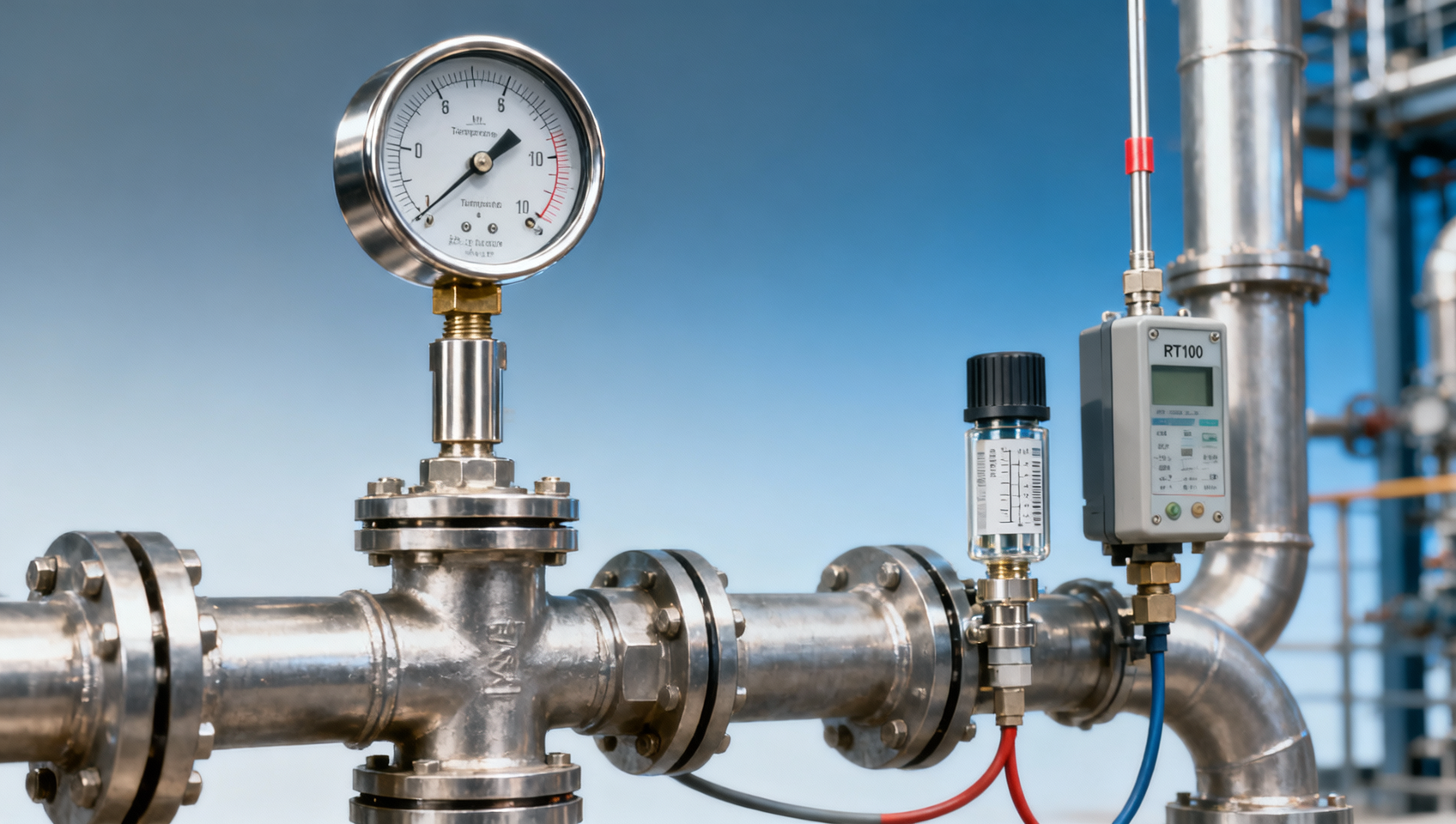
In an era of smart sensors and digital controls, many engineers and buyers still ask whether bimetal thermometers remain a practical choice for industrial temperature monitoring. For operators, procurement teams, and decision-makers comparing bimetal thermometers with thermocouples wholesale, RTD PT100 sensors, and temperature transmitters, the answer depends on accuracy, durability, maintenance, and total lifecycle cost.
Why are bimetal thermometers still used in modern industrial systems?
Bimetal thermometers remain practical because they solve a specific set of industrial problems better than many electronic alternatives. They offer local temperature indication without external power, without signal wiring, and without dependence on control system uptime. In facilities where operators need a quick field reading at the equipment point, this simplicity still matters.
For many general industrial duties, a bimetal thermometer covers the needed operating window. Common ranges include 0°C to 120°C, 0°C to 160°C, and up to 400°C in selected designs. That makes them relevant in HVAC, boilers, tanks, piping, heat exchangers, food processing auxiliaries, water treatment skids, and utility lines where ultra-fine laboratory precision is not the main requirement.
Their mechanical design is also attractive in harsh service. When vibration, dust, intermittent washdown, or remote outdoor installation complicate electronics, a properly selected bimetal thermometer can deliver stable service with limited upkeep. Operators often prefer an instrument they can read immediately, especially during startup, shutdown, or maintenance rounds performed every shift or every 24 hours.
From a procurement perspective, practicality is not only about price. It is about matching instrument capability to process risk. If a process loop does not require signal transmission, digital logging, or ±0.1°C class measurement, specifying a more complex device may increase cost, spare part burden, and commissioning time without improving operational decisions.
What value do they provide to different industrial stakeholders?
Information researchers usually want to know whether the product is outdated. In practice, it is not outdated; it is specialized. It works best as a local, standalone, visual temperature indicator. Users and operators value direct readability. Buyers value lower acquisition complexity. Decision-makers value durability in non-critical measuring points where budget control and maintenance reduction are key.
- Operators benefit from at-a-glance readings during route inspections, especially when no powered panel is nearby.
- Procurement teams benefit from shorter sourcing cycles for standard dial sizes such as 63 mm, 100 mm, and 150 mm.
- Plant managers benefit when simple indication points reduce wiring, transmitter count, and installation scope.
- EPC teams benefit from flexible specification options including stem length, connection type, and angle configuration.
For organizations managing hundreds of field instruments across utilities and auxiliary systems, this practical value scales. A mechanical temperature indication point may not replace an automated sensor, but it can reduce unnecessary instrument complexity across 20, 50, or even 200 monitoring locations.
Where do bimetal thermometers make sense, and where do they fall short?
The most practical applications are those that need local indication rather than continuous data transmission. Examples include hot water circulation loops, steam condensate return monitoring, tank outlet temperature checks, compressor support systems, and environmental utility packages. In these use cases, an operator often needs to confirm that the process is “within range,” not capture second-by-second digital data.
They are also useful in locations where power availability is limited or where wiring costs are disproportionate to the process value. On a large industrial site, cable routing, junction boxes, conduit work, and signal commissioning can add meaningful cost. For a basic reading point 15 to 50 meters away from a control panel, a mechanical instrument may be the more practical solution.
However, there are clear limits. Bimetal thermometers are not the right choice when you need high-precision measurement, remote transmission to SCADA or DCS, automated alarms, trending, or integration with control loops. In those cases, RTD PT100 sensors, thermocouples, or temperature transmitters are more appropriate. They are also less suitable when rapid response is critical, because their response time can be slower depending on thermowell mass and installation depth.
Another weak point is readability under poor visibility or access constraints. A dial gauge mounted too high, too low, or behind insulation and pipe racks becomes less practical, even if the instrument itself is technically adequate. This is why application fit matters more than broad claims about one technology being better than another.
Typical application scenarios
The table below helps distinguish where bimetal thermometers remain practical and where an electronic temperature instrument is usually the better decision.
This comparison shows why the “still practical” question should be answered by function, not by trend. If the job is local visual monitoring in a moderate process range, bimetal thermometers remain highly relevant. If the job includes control logic, documentation, or remote access, they should be paired with or replaced by an electronic solution.
How do bimetal thermometers compare with thermocouples, RTD PT100 sensors, and transmitters?
Industrial buyers often compare four options: bimetal thermometers, thermocouples, RTD PT100 sensors, and temperature transmitters. The right choice depends on four core factors: required accuracy, installation environment, signal needs, and lifecycle service model. A lower purchase price alone does not guarantee the best procurement outcome.
Bimetal thermometers are strongest in simplicity and local readability. Thermocouples are preferred for wider temperature ranges and faster response in many industrial processes. RTD PT100 sensors are widely selected when accuracy and stability matter across moderate temperature ranges. Temperature transmitters add signal conditioning and communication value for distributed systems and centralized monitoring.
A common mistake is comparing these products as if they were direct substitutes in every case. They are not. In many plants, the best architecture uses more than one technology. For example, a transmitter may serve the control room while a local bimetal thermometer gives technicians an immediate field reference at the same nozzle or adjacent point.
This layered approach is especially useful in EPC and facility operations where redundancy, commissioning visibility, and maintenance convenience must be balanced over 3 to 10 years of service life.
Side-by-side comparison for procurement teams
The table below summarizes the practical differences procurement teams usually assess before issuing RFQs or approving a temperature measurement package.
For many industrial sites, the most cost-effective strategy is not “mechanical versus digital,” but “mechanical where sufficient, digital where necessary.” That decision framework helps avoid overengineering low-risk points and under-specifying critical loops.
Three decision questions before final selection
- Do you only need local indication, or do you need a 4–20 mA or digital output for control and records?
- Is the required accuracy moderate, or does the process demand tighter tolerance over repeated cycles?
- Will the measuring point operate in vibration, corrosive atmosphere, outdoor exposure, or frequent washdown conditions?
Answering these three questions usually narrows the shortlist quickly and prevents unnecessary redesign during procurement or site commissioning.
What technical and procurement factors matter most when choosing a bimetal thermometer?
A practical bimetal thermometer is not just a dial with a stem. Performance depends on range selection, dial size, stem length, process connection, material compatibility, mounting orientation, and whether a thermowell is used. These details directly affect readability, response, durability, and replacement convenience.
Range selection is one of the most common specification errors. Buyers often choose an excessively broad range “for safety,” but that can reduce readability over the actual operating band. If the expected process temperature is usually 60°C to 90°C, a 0°C to 120°C scale is often more useful than a 0°C to 300°C scale because the pointer movement is easier to interpret during operating rounds.
Materials also matter. Stainless steel housings and stems are common for industrial environments, but the process medium, ambient conditions, and cleaning routines still need review. In corrosive or outdoor installations, procurement teams should confirm enclosure integrity, wetted material suitability, and whether the connection design supports safe replacement after 6, 12, or 24 months of service exposure.
Another issue is installation geometry. Back connection, bottom connection, and adjustable angle designs are chosen for different visibility and piping layouts. A technically correct instrument becomes impractical if the dial cannot be read from a normal operator position at 1 to 2 meters distance.
Procurement checklist for industrial buyers
Before approving a supplier or finalizing a specification sheet, buyers should verify the following five points to reduce mismatch risk and field rework.
- Confirm the operating range and expected normal band, not just the maximum possible temperature.
- Check stem length and insertion depth to ensure useful exposure to the process stream.
- Verify process connection size and thread or fitting compatibility with existing nozzles or thermowells.
- Review ambient conditions such as vibration, weather exposure, corrosion, and cleaning chemicals.
- Decide whether the point needs local-only indication or should be paired with an electronic sensor.
These five checks are especially important in multi-site sourcing programs where the same instrument may be installed across utilities, process skids, storage systems, and mechanical packages. Standardizing the wrong configuration can create repeated maintenance issues over multiple plants.
Typical specification fields to define early
The following table organizes the specification items that usually affect performance, lead time, and replacement compatibility.
Defining these items early can shorten sourcing cycles and reduce back-and-forth during technical clarification. In industrial projects with 2 to 4 weeks allocated for instrument confirmation, early specification discipline often makes the difference between a smooth release and repeated RFQ revisions.
How should buyers assess lifecycle cost, maintenance, and compliance?
A bimetal thermometer can look inexpensive at purchase stage, but buyers should still evaluate lifecycle fit. The relevant cost is not just unit price. It includes installation labor, thermowell requirement, calibration policy, spare strategy, replacement access, and the business cost of inaccurate local readings. In low-risk utility points, the total installed cost can favor a bimetal instrument. In critical control points, the hidden cost of insufficient data can be much higher.
Maintenance is often lighter than with powered devices, but not zero. Facilities should inspect for pointer drift, dial fogging, mechanical damage, vibration effect, and corrosion at routine intervals such as monthly visual rounds or quarterly maintenance checks. When installed with a thermowell, replacement is generally safer and faster because the process does not need full isolation at the instrument body in the same way as direct immersion replacement.
Compliance is another practical consideration. Procurement teams serving international projects should verify whether the instrument and its material declarations align with project specifications and market requirements. Depending on destination and application, buyers may need to review general conformity expectations related to CE-marked systems, material traceability requirements, pressure boundary compatibility, or plant documentation practices. Not every local indicator needs the same documentation set, but every project should define its minimum requirement clearly.
In heavy industry, the real risk is inconsistency. One site buys low-cost gauges with poor sealing, another site buys oversized ranges, and a third site mixes incompatible stem dimensions. Over 12 to 36 months, those decisions create spare part confusion and unreliable field feedback. Standardization around actual operating conditions is usually more valuable than chasing the lowest initial quote.
Common misconceptions that lead to poor buying decisions
“Digital is always better.”
Digital is better when the process needs data transmission, logging, or control integration. It is not automatically better for every field indication point. If the reading is only checked during routine rounds and no control signal is needed, a properly selected bimetal thermometer may be the more practical and lower-maintenance choice.
“Any dial range will work.”
An overly broad range reduces usable readability. Operators need to see meaningful pointer movement across the normal operating zone, not just know the instrument survives the extreme limit. Matching the scale to the process band improves practical use.
“Local indication means no specification discipline.”
Even simple instruments require disciplined selection. Stem length, mounting style, thermowell fit, ambient condition, and material compatibility all affect field performance. A basic product installed incorrectly still creates maintenance and procurement waste.
FAQ and next-step guidance for industrial sourcing teams
Are bimetal thermometers accurate enough for industrial use?
For many general industrial applications, yes. They are usually accurate enough for local indication, utility monitoring, and non-critical process checks. They are not the best choice when a process requires high-precision measurement, regulatory recording, or automated control response. The key is to define whether the point is operationally informative or control-critical.
When should I choose a thermocouple or RTD PT100 instead?
Choose a thermocouple when wide temperature range or fast industrial response is important. Choose an RTD PT100 when stable and reliable accuracy across a moderate range is more important. If you also need remote monitoring, pair the sensor with a transmitter. If you only need a local visual indication point, a bimetal thermometer may still be the practical option.
What should procurement ask suppliers before ordering?
At minimum, confirm 6 items: temperature range, dial size, stem length, mounting type, process connection, and material construction. For project work, also ask about thermowell compatibility, document package, expected lead time, and whether the selected model suits vibration or outdoor use. These questions reduce mismatch risk before PO release.
What is a reasonable delivery expectation?
Standard configurations are often easier to source than customized assemblies, especially for common sizes and ranges. In practice, lead time depends on configuration complexity, order volume, and document requirements. Buyers handling shutdown schedules or EPC milestones should define acceptable delivery windows early, such as immediate stock need, 7–15 day replenishment, or 2–4 week project supply.
Why work with a specialized industrial sourcing intelligence partner?
Because the real challenge is not finding a thermometer. It is confirming whether the selected solution fits the process, standards expectation, installation environment, and purchasing timeline. Global Industrial Core supports this decision process with a deeper view across instruments and measurement, compliance-sensitive sourcing, and industrial operating realities. That helps buyers avoid choosing a device that is cheap on paper but costly in service.
Why choose us for bimetal thermometer evaluation and industrial temperature sourcing support?
Global Industrial Core is built for industrial buyers who need more than catalog browsing. We support EPC contractors, facility managers, procurement directors, and technical researchers who must compare bimetal thermometers, thermocouples wholesale options, RTD PT100 assemblies, and transmitter-based solutions in a realistic operating context. The goal is to reduce sourcing ambiguity before it becomes installation delay or maintenance cost.
If you are evaluating whether bimetal thermometers are still practical for your project, we can help you review application fit, range selection, connection compatibility, material concerns, and the tradeoff between local indication and signal-based measurement. We can also help structure a comparison when your team is choosing across 3 or 4 temperature instrument categories for mixed-use facilities.
You can contact us for specific support on parameter confirmation, product selection, expected lead time, customized configurations, certification-related documentation needs, sample coordination, and quotation alignment for project or repeat-purchase demand. This is especially valuable when multiple departments need a unified specification before RFQ issuance.
For industrial temperature measurement decisions, practicality comes from fit, not fashion. If you need a clear sourcing path for local indication points, hybrid instrument strategies, or replacement planning across existing assets, contact Global Industrial Core with your operating range, installation method, medium type, and project timeline. That information is enough to begin a focused technical and procurement discussion.
Expert Insights

Chief Security Architect
Dr. Thorne specializes in the intersection of structural engineering and digital resilience. He has advised three G7 governments on industrial infrastructure security.
Related Analysis
Core Sector // 01
Security & Safety
- How to Choose a Total Station in 2026Author :Precision Metrology Expert

- Auto Level Instruments vs Rotary LasersAuthor :Precision Metrology Expert

- GNSS RTK Receiver: Who Needs ItAuthor :Precision Metrology Expert

- Wholesale Moisture Meters Buying GuideAuthor :Precision Metrology Expert

- Wood Moisture Tester for Daily ChecksAuthor :Precision Metrology Expert

- Concrete Test Hammer Accuracy TipsAuthor :Precision Metrology Expert

- Anemometers Wholesale for Field WorkAuthor :Precision Metrology Expert

- Lux Meters Bulk Buying MistakesAuthor :Precision Metrology Expert