6th National Auto Standards Committee Launched, Impacts Optical Test Equipment Export
Author
Date Published
Reading Time
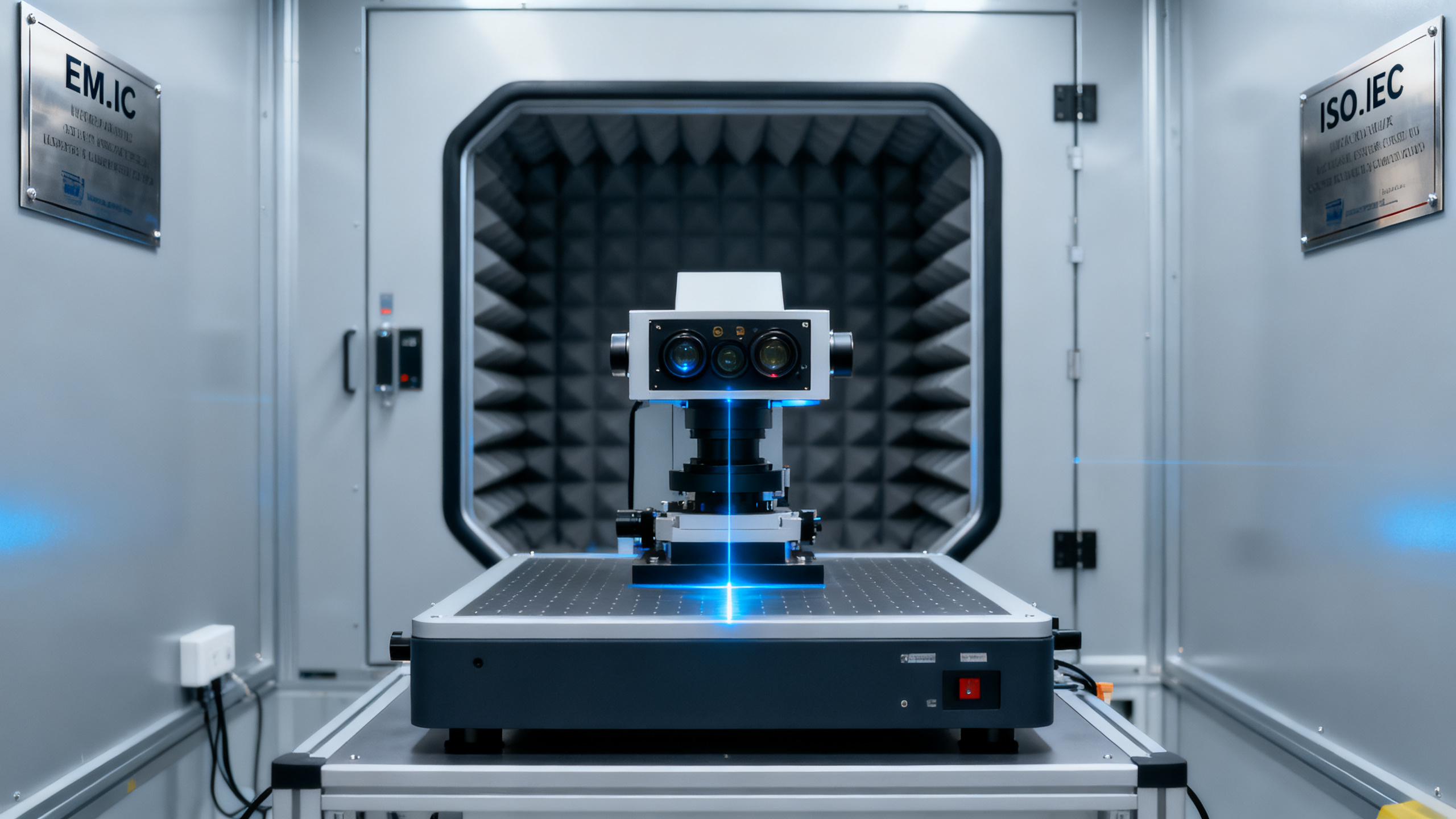
On April 28, 2026, the Standardization Administration of China (SAC) approved the establishment of the 6th National Technical Committee for Automobile Standardization (SAC/TC 114), with a newly formed Subcommittee on Intelligent Connected Vehicle Sensors and Testing Systems. This development directly affects manufacturers of industrial optical inspection equipment, automotive-grade test instruments, and suppliers serving global Tier 1 automotive OEMs — particularly those engaged in export-oriented production aligned with ISO/IEC vehicle functional safety and sensor validation requirements.
Event Overview
On April 28, 2026, the Standardization Administration of China formally approved the establishment of the 6th National Technical Committee for Automobile Standardization (SAC/TC 114). A dedicated Subcommittee on Intelligent Connected Vehicle Sensors and Testing Systems was set up under SAC/TC 114. Its mandate includes aligning domestic standards for in-vehicle lidar, millimeter-wave radar, and image sensors with international frameworks — specifically ISO/IEC 21448 (SOTIF) and IEC 62893.
Industries Affected
Export-Oriented Manufacturers of Industrial Optical Inspection Equipment
These enterprises produce optical measurement systems, high-precision imaging analyzers, and environmental simulation test rigs used to validate automotive sensor performance. The new subcommittee’s alignment with ISO/IEC 21448 and IEC 62893 signals an emerging requirement for domestic test equipment to meet internationally recognized functional safety and sensor reliability verification criteria — potentially affecting product certification pathways and customer qualification processes for overseas Tier 1 suppliers.
Export-Oriented Manufacturers of Automotive Test Instruments
Firms supplying hardware-in-the-loop (HIL) simulators, radar target simulators, or camera-in-the-loop (CIL) validation platforms face revised expectations for traceability to ISO/IEC 21448-based test scenarios. As SAC/TC 114 advances harmonized test protocols, equipment vendors may need to adapt calibration documentation, test case libraries, and reporting formats to support SOTIF-compliant validation workflows demanded by international clients.
Suppliers to Global Tier 1 Automotive Suppliers
Chinese component and subsystem suppliers that integrate third-party optical or RF test equipment into their own validation pipelines may encounter updated internal procurement specifications. With SAC/TC 114 prioritizing cross-standard coordination, Tier 1-tiered suppliers could begin requiring evidence of ISO/IEC-aligned test coverage — influencing equipment selection, integration timelines, and compliance documentation during joint development projects.
What Enterprises and Practitioners Should Monitor and Do Now
Track official standard drafting timelines and public consultation notices
The subcommittee’s first working group meetings and draft standard announcements — expected in Q3 2026 — will clarify scope, priority sensor types (e.g., 4D imaging radar vs. flash lidar), and phased implementation plans. Subscribing to SAC’s official notifications and TC 114’s public portal is essential to anticipate technical requirements before formal release.
Identify which sensor categories and test functions map to ISO/IEC 21448 Annexes and IEC 62893 clauses
Analysis shows that ISO/IEC 21448 Annex D (sensor fault detection strategies) and IEC 62893 Clause 7 (test methodology for electromagnetic resilience) are likely early focus areas. Firms should audit current test system capabilities against these specific clauses — not just general ‘ISO compliance’ — to assess readiness gaps.
Distinguish between policy intent and near-term commercial impact
Observably, SAC/TC 114’s mandate emphasizes ‘deep coordination’, not automatic adoption. Domestic standards referencing ISO/IEC documents may retain national deviations or phased transition periods. Companies should avoid assuming immediate equivalence; instead, treat initial SAC/TC 114 outputs as indicators of evolving expectation — not binding requirements — until formal approval and publication.
Prepare documentation alignment and supplier communication templates
Current more suitable preparation includes updating internal test reports to reference both GB/T and ISO/IEC clause numbers where applicable, and drafting bilingual (CN/EN) capability statements highlighting traceability to SOTIF-relevant test conditions. Early engagement with key Tier 1 customers on interpretation of upcoming SAC/TC 114 guidance can help shape realistic implementation timelines.
Editorial Perspective / Industry Observation
This initiative is best understood as a regulatory signal — not yet an operational mandate. Analysis shows it reflects China’s strategic effort to strengthen upstream testing infrastructure for intelligent connected vehicles while facilitating smoother acceptance of domestically produced validation tools in global supply chains. From an industry perspective, its significance lies less in immediate compliance pressure and more in shaping long-term R&D priorities, certification roadmaps, and technical dialogue channels between Chinese test equipment makers and international automotive safety stakeholders. Continued monitoring is warranted because SAC/TC 114’s output will likely influence not only export eligibility but also domestic OEM procurement preferences over the next 2–3 years.
In summary, the formation of the 6th SAC/TC 114 subcommittee marks a structured step toward integrating China’s automotive sensor validation ecosystem with globally accepted functional safety and test methodology frameworks. It does not impose new legal obligations at launch, but rather initiates a multi-year alignment process. For affected enterprises, this is more appropriately understood as an early-stage technical coordination milestone — one that rewards proactive mapping of existing capabilities to emerging international reference points, rather than urgent regulatory response.
Source: Standardization Administration of China (SAC) official announcement, April 28, 2026. Note: Draft standards, work plan details, and subcommittee membership remain pending public release and are subject to ongoing observation.
Technical Specifications
- 6th National Auto Standards Committee Launched, Impacts Optical Test Equipment ExportAuthor :Precision Metrology Expert
- Copper Price Surge Impacts Industrial Components BOM CostsAuthor :Grid Infrastructure Analyst
- EU CE Update: ULPA Filters Require MVR Testing from Jan 2027Author :Environmental Engineering Director
Expert Insights

Chief Security Architect
Dr. Thorne specializes in the intersection of structural engineering and digital resilience. He has advised three G7 governments on industrial infrastructure security.
Related Analysis
- Apr 29, 20266th National Auto Standards Committee Launched, Impacts Optical Test Equipment ExportAuthor :Precision Metrology Expert
- Apr 29, 2026Copper Price Surge Impacts Industrial Components BOM CostsAuthor :Grid Infrastructure Analyst
- Apr 29, 2026EU CE Update: ULPA Filters Require MVR Testing from Jan 2027Author :Environmental Engineering Director
Core Sector // 01
Security & Safety
- 6th National Auto Standards Committee Launched, Impacts Optical Test Equipment ExportAuthor :Precision Metrology Expert

- How Accurate Should a Video Measuring Machine BeAuthor :Precision Metrology Expert

- 6th National Auto Standardization TC EstablishedAuthor :Precision Metrology Expert
![]()
- EN 61000-4-30:2026 Published: New Harmonic Group Immunity Testing for PQ AnalyzersAuthor :Precision Metrology Expert
![]()
- China Launches World's Largest Agri-Meteorological Observation NetworkAuthor :Precision Metrology Expert
![]()
- Meeting new sensor industrial standardsAuthor :Precision Metrology Expert

- How to Source CNC Machining Parts OEM in 2026Author :Precision Metrology Expert

- Tungsten Carbide Inserts: When to Replace ThemAuthor :Precision Metrology Expert