How Accurate Should a Video Measuring Machine Be
Author
Date Published
Reading Time

When evaluating a video measuring machine, accuracy should match the tolerance, material, and inspection risk of your application—not just the highest spec on paper. For buyers comparing instruments & measurement solutions alongside broader industrial assets such as variable frequency drive vfd, programmable logic controller plc, and xlpe power cables, understanding real-world measurement accuracy is essential for reliable quality control, compliance, and cost-effective procurement.
In industrial procurement, the right metrology decision is rarely about chasing the smallest advertised micron value. It is about determining whether the machine can reliably verify dimensions, contours, hole positions, and surface features under actual shop-floor conditions. That matters to researchers building a shortlist, operators running inspections across shifts, purchasing teams balancing capital cost against throughput, and decision-makers managing compliance risk across multi-site operations.
A video measuring machine is often evaluated next to other critical production and infrastructure systems because measurement quality directly affects scrap rates, assembly fit, warranty exposure, and certification readiness. In sectors where part tolerances may range from ±2 µm to ±100 µm, the required accuracy changes substantially. The practical question is not “What is the highest accuracy available?” but “What level of accuracy is appropriate, sustainable, and economically justified for this process?”
What accuracy means in a video measuring machine
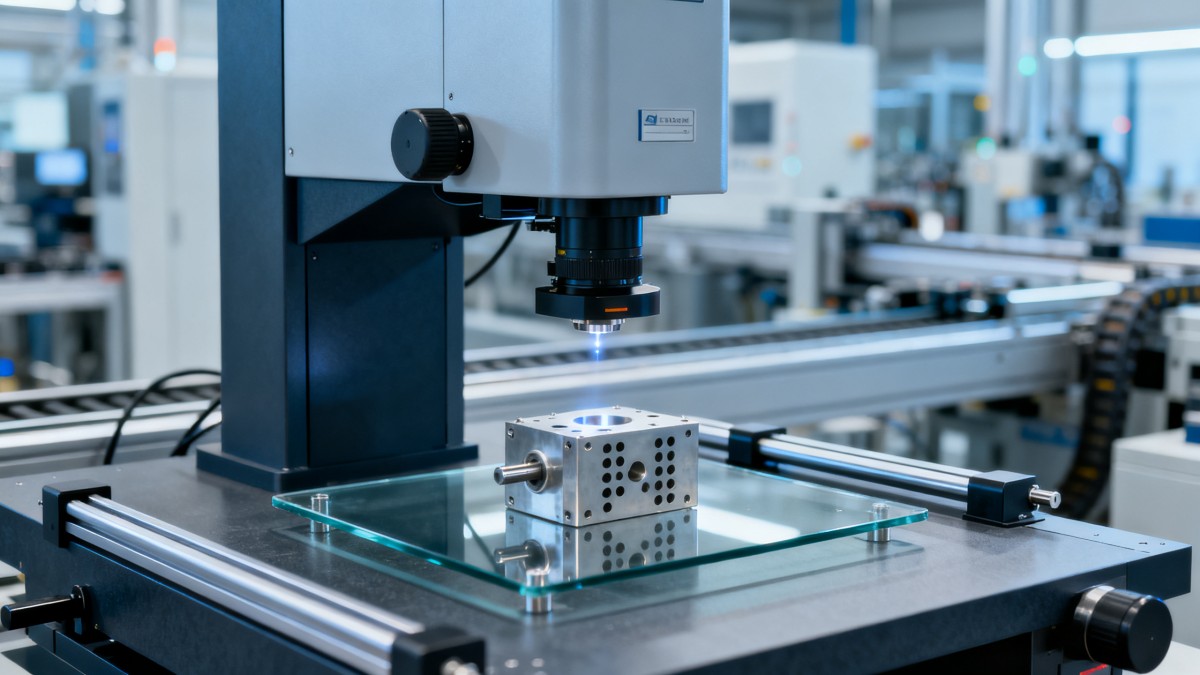
Accuracy in a video measuring machine refers to how closely the measured value matches the true dimension of a feature. In practice, suppliers may express this as X/Y axis accuracy, volumetric accuracy, repeatability, or an error formula such as 2.5 + L/200 µm, where L is the measured length in millimeters. Buyers should distinguish between repeatability and accuracy because a machine can produce stable repeated values and still be offset from the true value.
For most industrial users, the machine specification alone does not tell the full story. Accuracy depends on optics, stage stability, lighting control, software edge detection, calibration condition, and the environment. A system rated at 3 µm in a metrology room at 20°C may perform differently on a production floor where temperature varies by 5°C to 8°C across a shift.
The most useful way to assess accuracy is to connect it with part tolerance. A common engineering rule is that the measurement system should be at least 4:1 better than the tolerance under inspection, and many quality-critical programs prefer 10:1 where feasible. If your component tolerance is ±20 µm, a machine with real operating accuracy around ±2 µm to ±5 µm is typically more suitable than one operating near ±10 µm.
This relationship becomes more important when the same plant is also investing in control cabinets, plc systems, vfd-driven automation, and power distribution infrastructure. Precision inspection supports process capability, while stable electrical and mechanical infrastructure supports measurement consistency. The metrology decision should therefore be treated as part of a broader industrial quality architecture, not as an isolated laboratory purchase.
Core terms buyers should verify
- Accuracy: closeness to true value, often expressed in µm or a formula tied to measured length.
- Repeatability: ability to reproduce the same result over multiple measurements, such as 5 or 10 repeated runs.
- Resolution: smallest increment the system can display, which is not the same as usable accuracy.
- Field-of-view impact: larger parts or zoom changes can affect edge detection and uncertainty.
- Environmental requirement: many systems assume 20°C ±1°C or ±2°C for top performance.
The table below shows how these terms affect purchasing and operational judgment.
The main takeaway is that buyers should not compare video measuring machine brochures using a single number. A technically sound decision requires understanding how the declared accuracy is defined, tested, and maintained once the system is installed in a real production or incoming inspection environment.
How much accuracy is actually needed for different applications
The correct accuracy level depends on the tolerance band, feature geometry, material behavior, and the consequence of an incorrect measurement. A molded plastic enclosure, a stamped metal bracket, a machined connector plate, and a precision electronic housing do not need the same metrology strategy. In many factories, overbuying accuracy increases capital spend by 20% to 50% without creating measurable quality gains.
For general industrial parts with tolerances around ±50 µm to ±100 µm, a video measuring machine with practical working accuracy in the ±3 µm to ±7 µm range is often sufficient. For fine machined parts, connector components, micro-features, or high-density assemblies with tolerances of ±10 µm to ±25 µm, a more capable system may be needed, often with better optics, temperature control, and enhanced software compensation.
Inspection risk should also guide the decision. If the measurement confirms a non-safety cosmetic dimension, a wider uncertainty may be acceptable. If the result determines fit, sealing, electrical spacing, or compliance release, the tolerance-to-accuracy ratio should be more conservative. Procurement teams should ask whether the machine will be used for process monitoring, final release, supplier incoming checks, or customer dispute resolution, because each role justifies a different confidence threshold.
Another practical consideration is throughput. A highly accurate platform that requires slow settling time, strict vibration isolation, and specialized programming may not be the best option for a plant running 300 to 800 parts per shift. In those cases, the target should be adequate accuracy with stable cycle time, simple operation, and low retraining burden.
Typical matching of tolerance and machine capability
The following matrix helps information researchers and procurement teams align machine capability with practical inspection needs.
These ranges are planning references rather than universal rules. Edge quality, part reflectivity, fixture stability, and operator method can shift actual performance. That is why acceptance testing should include representative parts, not only calibration artifacts. A machine that performs well on a glass scale may still struggle on transparent polymers, dark anodized metal, or thin flexible components.
A practical selection checklist
- Identify the 10 to 20 most critical dimensions, not just the largest part size.
- Map part tolerances into three bands, such as above 50 µm, 20–50 µm, and below 20 µm.
- Define whether the machine supports first article, in-process, incoming, or final inspection.
- Confirm environmental conditions, including temperature drift, vibration, and lighting exposure.
- Request a sample measurement study with 5 to 10 repeated runs by more than one operator.
Factors that reduce real-world measurement accuracy
Many organizations buy a video measuring machine with adequate paper specifications, then discover that daily results are less stable than expected. The gap usually comes from environmental and process variables rather than from a defective machine. Temperature drift is one of the most common issues. Even a 2°C to 3°C deviation from the calibrated reference condition can influence dimensions, especially on larger workpieces or materials with higher thermal expansion.
Lighting and edge detection are another frequent source of variation. Transparent, reflective, dark, or low-contrast surfaces can produce unstable edge interpretation. A part measured with one backlight setting may yield a different result when top light intensity changes. This is especially relevant in mixed production environments where different operators inspect multiple part families across a 12-hour or 24-hour schedule.
Fixturing also matters more than many buyers expect. A part that is tilted, unsupported, or allowed to deform under clamping may introduce errors that exceed the machine’s nominal accuracy. For thin sheet parts, elastomer components, and soft plastics, fixture design often determines whether the measurement system can deliver useful repeatability. In some cases, spending on custom fixtures generates more value than buying a machine with an extra 1 µm of theoretical precision.
Maintenance and calibration discipline are equally important. A machine should not be evaluated only at installation. Verification intervals may range from monthly internal checks to annual accredited calibration, depending on usage intensity and quality requirements. Plants with heavy daily use, three shifts, or regulated customer documentation often benefit from scheduled verification every 1 to 3 months using certified standards and controlled procedures.
Common causes of measurement drift
- Ambient temperature fluctuation greater than ±2°C during inspection cycles.
- Machine installed near presses, conveyors, or other vibration sources.
- Inconsistent lighting recipes for reflective or low-contrast surfaces.
- Lens contamination, stage wear, or insufficient preventive maintenance.
- Untrained operators using different edge-selection or focus strategies.
- Fixture variation between shifts, suppliers, or part revisions.
For operators and quality engineers, this means that accuracy should be managed as a process capability, not just a purchased feature. For procurement and leadership teams, it means total cost of ownership includes setup discipline, calibration routines, training, and environmental control. An instrument that costs less at purchase can become more expensive over 24 to 36 months if it drives rework, inspection disputes, or excessive manual review.
How to specify and compare machines during procurement
A strong procurement process starts with a documented measurement requirement rather than a supplier catalog. Decision-makers should specify part envelope, tolerance bands, feature types, material conditions, throughput targets, reporting needs, and expected operating environment. This approach helps purchasing teams avoid under-scoped systems that fail during commissioning and over-scoped systems that inflate capital cost without solving a real quality problem.
When comparing quotes, ask suppliers to explain their accuracy formula, axis travel, camera configuration, illumination options, software functions, and verification method. A machine with a 300 mm travel range may behave differently from one with 500 mm travel, even if the headline accuracy numbers look close. Likewise, automated focus, programmable lighting, and batch measurement functions can improve consistency and reduce operator dependence, which is often more valuable than a small theoretical improvement in one-axis accuracy.
Acceptance criteria should be defined before the purchase order is issued. Useful criteria include repeatability across 5 to 10 runs, correlation against a reference artifact or verified part, cycle time per inspection program, and operator usability after initial training. This is especially important for global industrial buyers integrating the machine into broader EPC, facility, or multi-site manufacturing programs where standardization matters as much as local performance.
It is also wise to examine service access. Spare part lead time, software support, remote diagnostics, training availability, and calibration support affect long-term uptime. A lower-cost machine may appear attractive until a camera module, encoder component, or software issue delays operations for 2 to 6 weeks. Procurement teams should weigh not only acquisition price but also support responsiveness over the equipment life cycle.
Recommended procurement evaluation matrix
The matrix below can help cross-functional teams score options in a way that reflects both technical and commercial needs.
This framework helps buyers compare machines the same way they compare other industrial assets: by operational value, reliability, and supportability. That is particularly useful for organizations consolidating sourcing across metrology, automation, electrical systems, and facility infrastructure under one strategic procurement approach.
Questions worth asking suppliers
- What is the stated accuracy formula, and under what temperature condition was it validated?
- Can you test our representative parts, including reflective, transparent, or soft materials?
- What is the expected calibration and verification schedule for 1-shift versus 3-shift usage?
- How long does basic operator training take: 1 day, 3 days, or longer for program creation?
- What is the typical service response window and spare part availability for our region?
Implementation, operator practice, and ongoing accuracy control
Selecting the right video measuring machine is only the first half of the outcome. The second half is implementation discipline. Plants that achieve stable results usually formalize setup, programming, fixturing, lighting recipes, verification intervals, and operator qualification. A 4-step launch plan often works well: installation and calibration, part-program validation, operator training, and routine verification under production conditions.
Operator practice has a direct effect on usable accuracy. Even with automation, users need to understand focus logic, feature construction, edge confirmation, and part placement. In many facilities, 2 to 5 trained operators are enough to support most shifts if programming is standardized. When operator methods vary widely, gauge correlation problems increase, and the same part may be judged differently across departments or sites.
Routine control should include daily or weekly quick checks using known standards, along with trend review of repeatability and drift. If process results shift suddenly, teams should first check temperature, fixture condition, lens cleanliness, and software settings before assuming a hardware failure. This prevents unnecessary downtime and helps preserve measurement confidence in customer-facing quality discussions.
For enterprise decision-makers, standardizing measurement practices across plants can reduce dispute costs and improve supplier alignment. A shared template for acceptance criteria, calibration intervals, and data reporting allows a video measuring machine fleet to support broader quality governance. That is particularly valuable when metrology data feeds manufacturing execution systems, supplier quality portals, or customer approval workflows.
FAQ
Is higher accuracy always better?
Not always. If your parts hold tolerances around ±80 µm, paying a premium for sub-2 µm capability may deliver little operational return. The better choice is a system with sufficient accuracy, stable repeatability, easy programming, and dependable service support.
How often should a video measuring machine be calibrated?
Annual formal calibration is common, but internal verification can be much more frequent. High-usage sites often perform quick checks daily or weekly, with deeper verification every 1 to 3 months depending on quality criticality and customer requirements.
Can one machine cover all part types?
Sometimes, but not efficiently in every case. A single system may handle 70% to 90% of routine dimensional checks, yet highly reflective, transparent, very large, or extremely tight-tolerance parts may require different optics, fixtures, or complementary metrology methods.
What should purchasing teams prioritize if budget is limited?
Prioritize fit-to-application, repeatability, operator usability, and service access before chasing the smallest brochure number. In many industrial environments, those factors produce better long-term quality value than a marginal increase in nominal accuracy.
A video measuring machine should be as accurate as the job demands, the environment can support, and the quality risk justifies. For some plants, that means a stable ±5 µm class system with fast throughput. For others, it means tighter control near ±2 µm with stronger environmental management and validation discipline. The right answer is application-driven, not marketing-driven.
For industrial buyers evaluating measurement systems alongside automation, power, safety, and facility assets, the most effective approach is to define tolerances, verify real-world performance, and compare lifecycle support as carefully as purchase price. If you are building a sourcing plan, standardizing plant inspection capability, or reviewing metrology options for a new project, now is the right time to get a tailored solution, discuss product details, and explore broader industrial measurement strategies with confidence.
Expert Insights

Chief Security Architect
Dr. Thorne specializes in the intersection of structural engineering and digital resilience. He has advised three G7 governments on industrial infrastructure security.
Related Analysis
Core Sector // 01
Security & Safety
- How Accurate Should a Video Measuring Machine BeAuthor :Precision Metrology Expert

- 6th National Auto Standardization TC EstablishedAuthor :Precision Metrology Expert
![]()
- EN 61000-4-30:2026 Published: New Harmonic Group Immunity Testing for PQ AnalyzersAuthor :Precision Metrology Expert
![]()
- China Launches World's Largest Agri-Meteorological Observation NetworkAuthor :Precision Metrology Expert
![]()
- Meeting new sensor industrial standardsAuthor :Precision Metrology Expert

- How to Source CNC Machining Parts OEM in 2026Author :Precision Metrology Expert

- Tungsten Carbide Inserts: When to Replace ThemAuthor :Precision Metrology Expert

- China Launches World’s Largest Agri-Meteorological Observation NetworkAuthor :Precision Metrology Expert
![]()