Instruments & Measurement OEM choices that affect calibration accuracy
Author
Date Published
Reading Time
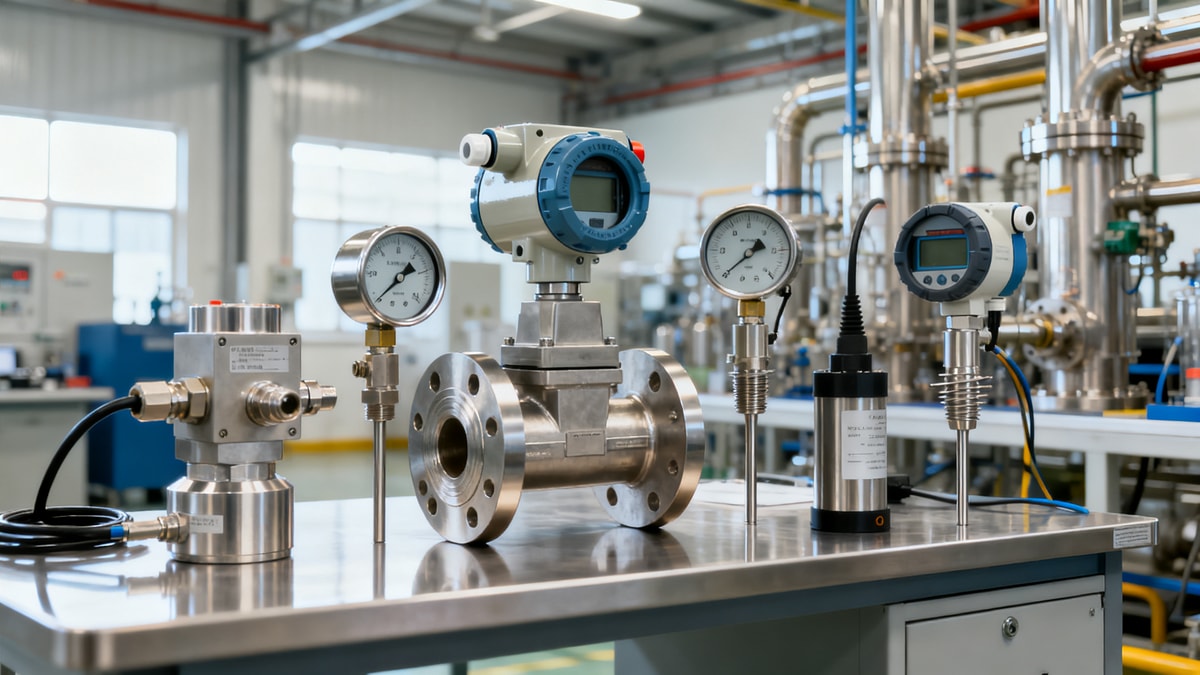
For technical evaluators, Instruments & Measurement OEM decisions can make or break calibration accuracy, long-term stability, and compliance performance. From sensor design and material selection to traceability protocols and environmental tolerance, each choice influences measurement confidence in demanding industrial settings. This article outlines the OEM factors that most directly affect calibration results and procurement risk.
Why scenario differences matter in Instruments & Measurement OEM selection
A common evaluation mistake is to treat calibration accuracy as a fixed product attribute rather than a result shaped by application context. In reality, the same Instruments & Measurement OEM may deliver excellent performance in a climate-controlled laboratory but inconsistent results in a refinery, a wastewater plant, or a mobile field unit. Technical evaluators therefore need to judge OEM capability through the lens of operating scenario, maintenance rhythm, compliance exposure, and failure consequence.
For B2B procurement teams in heavy industry, this distinction is critical. Calibration accuracy is not only about the instrument’s initial certificate. It also depends on sensor stability over time, housing integrity, electromagnetic resistance, firmware behavior, reference standards, and how well the OEM controls production variance. An Instruments & Measurement OEM that is suitable for OEM panel integration may not be the best fit for custody transfer, clean utilities, hazardous areas, or precision process control.
This is why technical evaluation should move beyond brochure specifications. The right question is not simply “What is the stated accuracy?” but “Under which conditions, over what interval, with what traceability chain, and with what recalibration burden?” That shift helps evaluators reduce lifecycle risk and select an Instruments & Measurement OEM aligned with the real use case.
Typical application scenarios where OEM choices change calibration outcomes
Most industrial calibration issues can be traced to a mismatch between OEM design assumptions and field conditions. The following scenarios illustrate where Instruments & Measurement OEM decisions have the greatest influence on measurement integrity.
1. Controlled production environments
In electronics assembly, pharmaceutical utility systems, and quality laboratories, measurement systems often operate in relatively stable temperature and humidity ranges. Here, evaluators typically focus on baseline accuracy, repeatability, traceability to national or international standards, digital resolution, and software-assisted calibration records. An Instruments & Measurement OEM serving this scenario should demonstrate tight manufacturing consistency, strong reference chain documentation, and low drift between recalibration cycles.
2. Harsh process industry environments
In oil and gas, metallurgy, cement, chemical processing, and thermal power generation, vibration, dust, corrosive media, and thermal cycling are often more damaging than the nominal process variable itself. In this scenario, calibration accuracy depends heavily on diaphragm materials, sealing methods, cable protection, ingress rating, mechanical robustness, and compensation algorithms. A technically acceptable sensor element can still produce unstable field readings if the OEM underestimates environmental stress.
3. Mobile, remote, or decentralized assets
Water networks, renewable energy sites, mining operations, and distributed utility assets require instruments to maintain trustworthiness with limited maintenance access. In these applications, evaluators should look beyond initial calibration data and examine battery stability, remote diagnostics, self-check functions, field recalibration simplicity, and low-power electronics behavior. The right Instruments & Measurement OEM for remote assets is one that reduces site visits while preserving traceable confidence in the measurement chain.
4. Safety-critical and compliance-driven systems
In combustion control, gas detection, pressure protection systems, and regulated emissions monitoring, the cost of measurement error is not only quality loss but safety exposure, legal noncompliance, and potential shutdown. In these scenarios, evaluators should prioritize documented uncertainty budgets, alarm integrity, fail-safe behavior, certification quality, and audit-ready calibration records. A credible Instruments & Measurement OEM must be able to support both technical performance and defensible compliance evidence.
Scenario comparison: what technical evaluators should emphasize
The table below helps match application conditions with the OEM factors most likely to influence calibration accuracy over the full operating lifecycle.
OEM design choices that directly affect calibration accuracy
Once the scenario is clear, technical evaluators should examine the specific OEM decisions that shape performance. These factors often determine whether the published calibration specification can be reproduced in actual service.
Sensor architecture and reference element quality
The sensing principle, reference element selection, and compensation method influence zero stability, span accuracy, and hysteresis. An Instruments & Measurement OEM that invests in stable sensor architecture generally provides better drift performance and tighter lot-to-lot consistency. Evaluators should ask for repeatability data, temperature influence curves, and evidence of performance across the full operating range rather than at a single nominal point.
Material selection and media compatibility
A calibration certificate is of limited value if process exposure gradually alters the sensing surface or protective housing. Diaphragm alloys, elastomers, sealants, and wetted materials should be checked against actual media chemistry, cleaning routines, and temperature cycles. In corrosive or hygienic scenarios, the wrong material choice can shift calibration long before visible failure occurs.
Production control and factory calibration discipline
Two instruments with identical part numbers can behave differently if the OEM’s production control is weak. Technical evaluators should review calibration station capability, master standard intervals, environmental controls during factory calibration, and serialized test records. A mature Instruments & Measurement OEM will be able to show how it limits production variation and maintains calibration reproducibility over time.
Firmware, digital correction, and data integrity
Modern instruments rely on firmware for linearization, filtering, temperature compensation, diagnostics, and communication. This creates a major selection point: digital correction can improve usable accuracy, but poor firmware governance can also introduce hidden instability or undocumented changes after updates. Evaluators should confirm revision control, validation practices, cybersecurity basics for connected devices, and whether calibration data remains traceable after firmware intervention.
How requirements differ by evaluator role and project type
Not every stakeholder looks at Instruments & Measurement OEM performance in the same way. Understanding these differences helps build better internal alignment during technical approval.
For EPC and project engineering teams
These teams usually prioritize specification compliance, installation compatibility, documentation completeness, and startup reliability. Their focus should include calibration certificates, standard conformity, hazardous area approvals where relevant, and integration behavior with PLC, DCS, or SCADA systems. A good OEM fit is one that reduces commissioning surprises.
For plant maintenance and reliability teams
Maintenance personnel care about drift rate, recalibration interval, spare strategy, serviceability, and diagnostic clarity. They may accept a slightly higher purchase price from an Instruments & Measurement OEM if the product cuts unplanned maintenance, false alarms, or troubleshooting time over several years.
For procurement and supplier qualification teams
Procurement must look beyond unit cost and compare total ownership risk. Questions should include: Does the OEM provide stable lead times? Are recalibration services available regionally? Is documentation audit-ready? How consistent is quality across production batches? These commercial factors directly affect usable calibration performance because service gaps often lead to overdue calibration or uncontrolled instrument substitution.
Common misjudgments in application-based OEM evaluation
Several recurring errors distort Instruments & Measurement OEM selection and increase downstream risk.
The first is overreliance on headline accuracy values. A statement such as “±0.1%” is incomplete unless the evaluator understands the reference conditions, temperature range, mounting orientation, and recalibration interval behind it. The second is ignoring drift behavior. For many industrial applications, long-term stability matters more than the best initial certificate.
Another frequent issue is treating all certificates as equal. Technical evaluators should distinguish between basic factory checks, traceable calibration, accredited laboratory calibration, and scenario-specific functional verification. The fourth mistake is failing to test communication and data handling under real control system conditions. An accurate sensor can still create poor outcomes if scaling, filtering, or digital transmission introduces errors.
Finally, some buyers approve an Instruments & Measurement OEM based only on successful use in a different site. Reference installations are useful, but they are not universal proof. Medium chemistry, ambient conditions, operator skill, and maintenance culture can all change the calibration risk profile.
Practical scenario-fit checklist before approving an OEM
Before final approval, technical evaluators should confirm a short list of scenario-based conditions:
- Define the real operating environment, not just the design basis condition.
- Request drift, repeatability, and temperature influence data relevant to the application.
- Verify material compatibility with process media, cleaning agents, and expected transients.
- Check the OEM traceability chain, calibration interval recommendations, and certificate detail.
- Review firmware governance, diagnostics, and integration with plant systems.
- Assess service support, spare availability, and regional recalibration capacity.
- Where risk is high, run a pilot or side-by-side validation in the actual use scenario.
Conclusion: match the Instruments & Measurement OEM to the measurement scenario
The best Instruments & Measurement OEM is rarely the one with the most impressive catalog claim in isolation. It is the one whose design choices, calibration discipline, environmental robustness, and support model fit the actual business scenario. For technical evaluators, that means comparing OEMs through application context: stable indoor process, harsh industrial service, remote asset monitoring, or safety-critical compliance duty.
When scenario fit is verified early, calibration accuracy becomes more dependable, maintenance planning becomes more realistic, and procurement risk falls sharply. If your team is screening suppliers for demanding industrial use, start by mapping the measurement environment, acceptable drift window, compliance burden, and service expectations. That process will make Instruments & Measurement OEM selection far more defensible and far more likely to succeed over the full lifecycle.
Technical Specifications
- SASO Mandates Dual Energy Label for Industrial Transformers in Saudi Arabia from May 2026Author :Grid Infrastructure Analyst
- EN 61000-4-30:2026 Enforced: Class A Harmonic Traceability Mandatory for EU PQ AnalyzersAuthor :Precision Metrology Expert
- US DOE Level 3 Transformer Efficiency Standard Effective July 1, 2026Author :Grid Infrastructure Analyst
Expert Insights

Chief Security Architect
Dr. Thorne specializes in the intersection of structural engineering and digital resilience. He has advised three G7 governments on industrial infrastructure security.
Related Analysis
- May 06, 2026SASO Mandates Dual Energy Label for Industrial Transformers in Saudi Arabia from May 2026Author :Grid Infrastructure Analyst
- May 06, 2026EN 61000-4-30:2026 Enforced: Class A Harmonic Traceability Mandatory for EU PQ AnalyzersAuthor :Precision Metrology Expert
- May 06, 2026US DOE Level 3 Transformer Efficiency Standard Effective July 1, 2026Author :Grid Infrastructure Analyst
Core Sector // 01
Security & Safety
- EN 61000-4-30:2026 Enforced: Class A Harmonic Traceability Mandatory for EU PQ AnalyzersAuthor :Precision Metrology Expert

- INMETRO Launches Review of EMP Requirements for Industrial Laser Distance Meters in BrazilAuthor :Precision Metrology Expert

- EN 61000-4-30:2026 Class A Certification Mandatory for PQ Analyzers in EUAuthor :Precision Metrology Expert

- INMETRO to Mandate EMP Immunity for Industrial Laser Distance Meters in BrazilAuthor :Precision Metrology Expert

- Instruments & Measurement OEM choices that affect calibration accuracyAuthor :Precision Metrology Expert

- Which industrial standards manufacturer signals real quality controlAuthor :Precision Metrology Expert

- INMETRO Proposes EMP Immunity Requirement for Industrial Laser Distance Meters in BrazilAuthor :Precision Metrology Expert

- EN 61000-4-30:2026 Mandatory for Industrial PQ Analyzers in EUAuthor :Precision Metrology Expert