INMETRO to Mandate EMP Immunity for Industrial Laser Distance Meters in Brazil
Author
Date Published
Reading Time

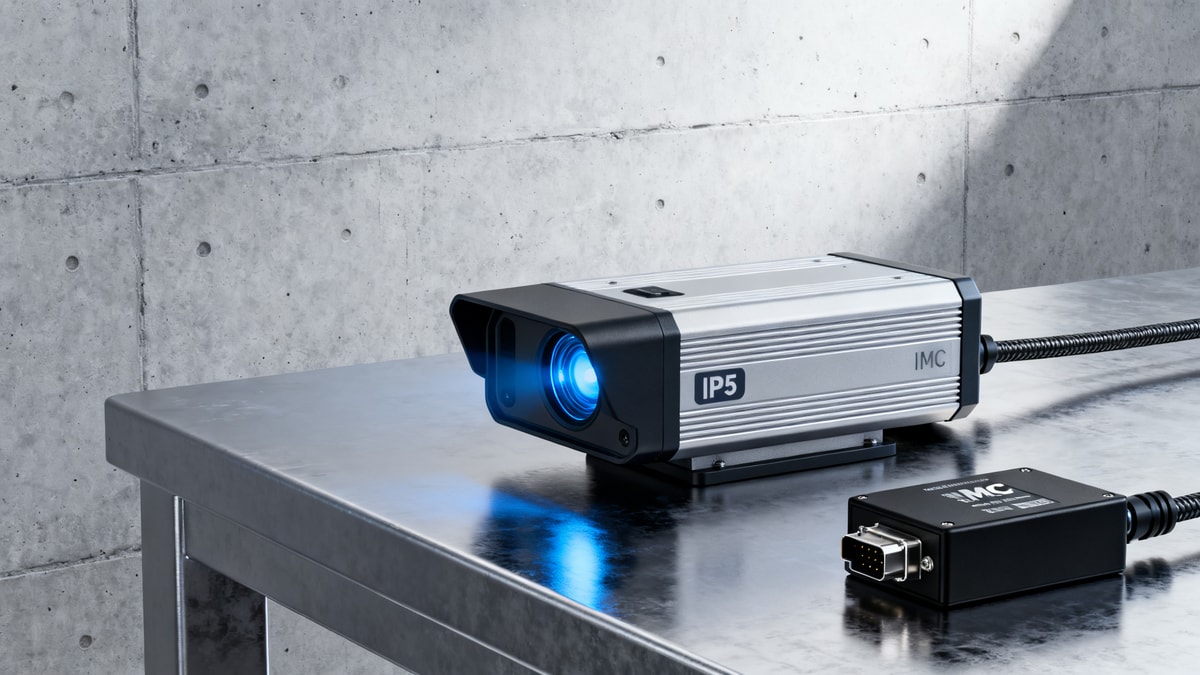
On May 5, 2026, Brazil’s National Institute of Metrology, Standardization and Industrial Quality (INMETRO) initiated the revision process for Portaria INMETRO 123/2026, proposing mandatory electromagnetic pulse (EMP) immunity certification for industrial laser distance meters used in infrastructure surveying, mining exploration, and port crane positioning. This development directly affects manufacturers, exporters, and distributors—particularly those based in China, which supplies 63% of global laser distance meters exported to Brazil.
Event Overview
On May 5, 2026, INMETRO launched the formal revision procedure for Portaria INMETRO 123/2026. The proposed amendment would add industrial laser distance meters—specifically those deployed in construction surveying, mining surveying, and port cargo handling—to INMETRO’s list of products subject to mandatory conformity assessment. A key new requirement is compliance with IEC 61000-4-32:2026 Class 3 for electromagnetic pulse (EMP) immunity. The regulatory update is expected to complete legislative approval in Q3 2026.
Industries Affected
Direct Exporters (especially China-based)
Exporters supplying laser distance meters to Brazil will face new conformity obligations before market entry. Since China accounts for 63% of global exports of such devices to Brazil, this change introduces immediate technical and procedural dependencies—including third-party testing, documentation alignment, and potential design modifications.
Manufacturers (OEM/ODM)
Manufacturers producing industrial-grade laser distance meters—even if not currently targeting Brazil—may need to reassess product architecture. The Class 3 EMP immunity requirement under IEC 61000-4-32:2026 involves hardware-level shielding, grounding, and transient suppression measures that affect PCB layout, enclosure design, and component selection.
Distributors & Channel Partners in Brazil
Brazilian importers and local distributors must verify incoming shipments against the updated conformity criteria prior to customs clearance. Non-compliant units risk rejection or mandatory retesting—potentially disrupting inventory planning, warranty coverage, and after-sales support timelines.
Testing & Certification Service Providers
Laboratories accredited to perform IEC 61000-4-32:2026 testing—particularly at Class 3 level—will see increased demand. However, only INMETRO-accredited bodies (or those operating under mutual recognition arrangements) will be accepted for final certification submission.
What Relevant Companies or Practitioners Should Monitor and Do Now
Track official updates to Portaria INMETRO 123/2026 during Q2 2026
The current phase is a public consultation and draft revision; final scope, transition timelines, and grandfathering provisions remain unconfirmed. Stakeholders should monitor INMETRO’s official notices and the Diário Oficial da União for published amendments.
Identify applicable product models and assess EMP immunity readiness
Companies should cross-reference their current product portfolios against the functional definitions in the draft regulation—e.g., devices used for “infrastructure surveying” or “port crane positioning”—and initiate internal gap analysis against IEC 61000-4-32:2026 Class 3 test parameters (e.g., field strength ≥ 50 kV/m, pulse rise time ≤ 5 ns).
Distinguish between regulatory signal and enforceable requirement
This is a proposed revision—not yet law. Enforcement will only begin after formal publication of the amended Portaria and any defined grace period. Until then, existing INMETRO certifications remain valid, and no retroactive application is indicated.
Prepare documentation and engage accredited labs early
Given lead times for EMP immunity testing (including scheduling, test setup, and report generation), companies intending to maintain market access should identify and contact INMETRO-recognized laboratories now—even before final regulation issuance—to secure capacity and align on test plans.
Editorial Perspective / Industry Observation
Observably, this initiative reflects INMETRO’s broader shift toward strengthening resilience requirements for critical measurement equipment in safety- and infrastructure-sensitive applications. Analysis shows the focus on EMP immunity—rather than general EMC—is highly specific: it signals growing concern over high-altitude electromagnetic pulse (HEMP) and intentional electromagnetic interference (IEMI) threats in operational environments like ports and mines. From an industry perspective, this is currently a regulatory signal—not yet an operational constraint—but one with clear technical escalation implications. It more closely resembles a targeted technical threshold adjustment than a broad market access barrier, and its significance lies less in novelty and more in its precision: Class 3 per IEC 61000-4-32:2026 sets a demanding benchmark rarely mandated outside defense or nuclear sectors.

Conclusion
This development marks a targeted tightening of technical access conditions for a high-value instrumentation segment in Brazil. While not yet enforceable, it introduces a concrete, measurable requirement—EMP immunity at Class 3—that reshapes design, testing, and supply chain coordination priorities. Current interpretation should treat it as an advance notice requiring technical due diligence—not urgent compliance action—and prioritize verification of applicability and readiness over reactive implementation.
Information Sources
Main source: Official announcement by INMETRO regarding the initiation of the revision process for Portaria INMETRO 123/2026 on May 5, 2026. Note: The final text of the revised Portaria, effective date, and transition provisions remain pending and require ongoing monitoring.
Technical Specifications
- SASO Mandates Dual Energy Label for Industrial Transformers in Saudi Arabia from May 2026Author :Grid Infrastructure Analyst
- EN 61000-4-30:2026 Enforced: Class A Harmonic Traceability Mandatory for EU PQ AnalyzersAuthor :Precision Metrology Expert
- US DOE Level 3 Transformer Efficiency Standard Effective July 1, 2026Author :Grid Infrastructure Analyst
Expert Insights

Chief Security Architect
Dr. Thorne specializes in the intersection of structural engineering and digital resilience. He has advised three G7 governments on industrial infrastructure security.
Related Analysis
- May 06, 2026SASO Mandates Dual Energy Label for Industrial Transformers in Saudi Arabia from May 2026Author :Grid Infrastructure Analyst
- May 06, 2026EN 61000-4-30:2026 Enforced: Class A Harmonic Traceability Mandatory for EU PQ AnalyzersAuthor :Precision Metrology Expert
- May 06, 2026US DOE Level 3 Transformer Efficiency Standard Effective July 1, 2026Author :Grid Infrastructure Analyst
Core Sector // 01
Security & Safety
- EN 61000-4-30:2026 Enforced: Class A Harmonic Traceability Mandatory for EU PQ AnalyzersAuthor :Precision Metrology Expert

- INMETRO Launches Review of EMP Requirements for Industrial Laser Distance Meters in BrazilAuthor :Precision Metrology Expert

- EN 61000-4-30:2026 Class A Certification Mandatory for PQ Analyzers in EUAuthor :Precision Metrology Expert

- INMETRO to Mandate EMP Immunity for Industrial Laser Distance Meters in BrazilAuthor :Precision Metrology Expert

- Instruments & Measurement OEM choices that affect calibration accuracyAuthor :Precision Metrology Expert

- Which industrial standards manufacturer signals real quality controlAuthor :Precision Metrology Expert

- INMETRO Proposes EMP Immunity Requirement for Industrial Laser Distance Meters in BrazilAuthor :Precision Metrology Expert

- EN 61000-4-30:2026 Mandatory for Industrial PQ Analyzers in EUAuthor :Precision Metrology Expert