INMETRO Launches Review of EMP Requirements for Industrial Laser Distance Meters in Brazil
Author
Date Published
Reading Time
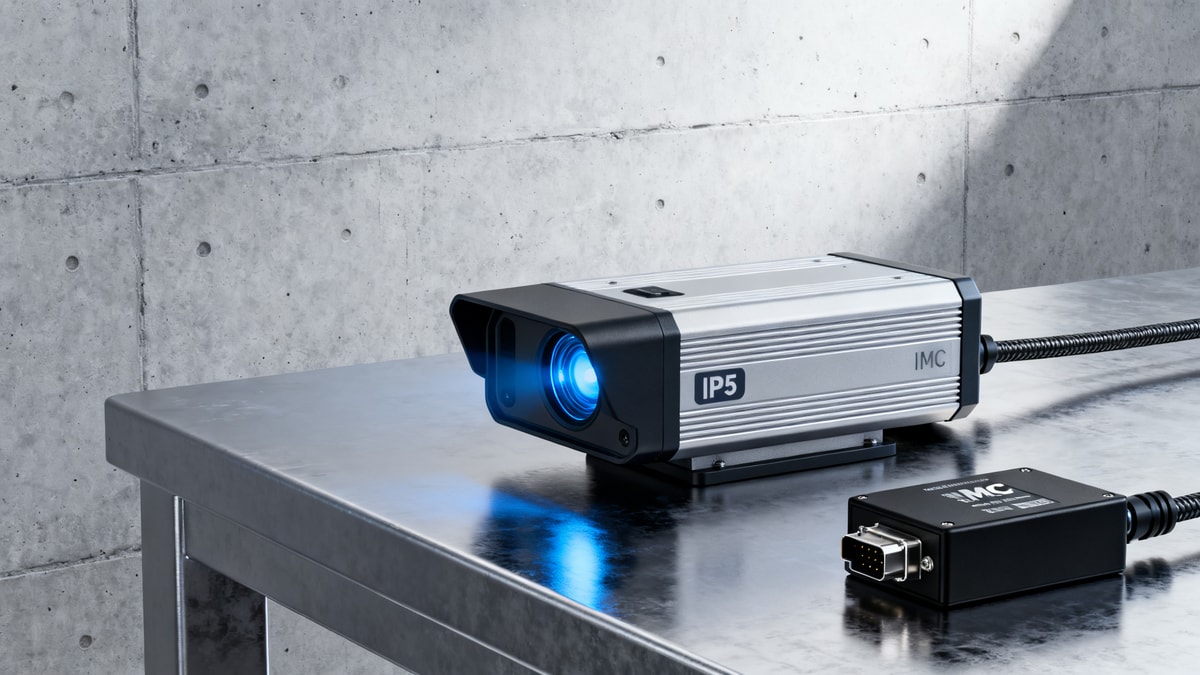
On May 1, 2026, the Brazilian National Institute of Metrology, Standardization and Industrial Quality (INMETRO) initiated the revision process for Portaria INMETRO 123/2026, proposing mandatory certification for industrial laser distance meters — with a new requirement for electromagnetic pulse (EMP) immunity ≥ IEC 61000-4-32:2026 Class 3. This development is especially relevant for manufacturers and exporters supplying equipment to Brazil’s infrastructure, mining, and port sectors, where strong electromagnetic interference environments are common.
Event Overview
INMETRO launched the formal review of Portaria INMETRO 123/2026 on May 1, 2026. The proposed amendment would add industrial laser distance meters to INMETRO’s mandatory conformity assessment scope. A key technical addition is the requirement for minimum EMP抗扰度 (immunity) performance at Class 3 level per IEC 61000-4-32:2026. No final effective date or transition period has been published as of the initiation date.
Which Subsectors Are Affected
Direct Exporters (especially China-based)
China accounts for 63% of global laser distance meter exports. As Brazil is a significant destination for such devices — particularly in construction, surveying, and heavy industry — exporters must now anticipate additional testing, documentation, and potential redesign costs. Impact includes delayed market access if compliance timelines are misaligned with product release cycles.
Manufacturers of Industrial Laser Distance Meters
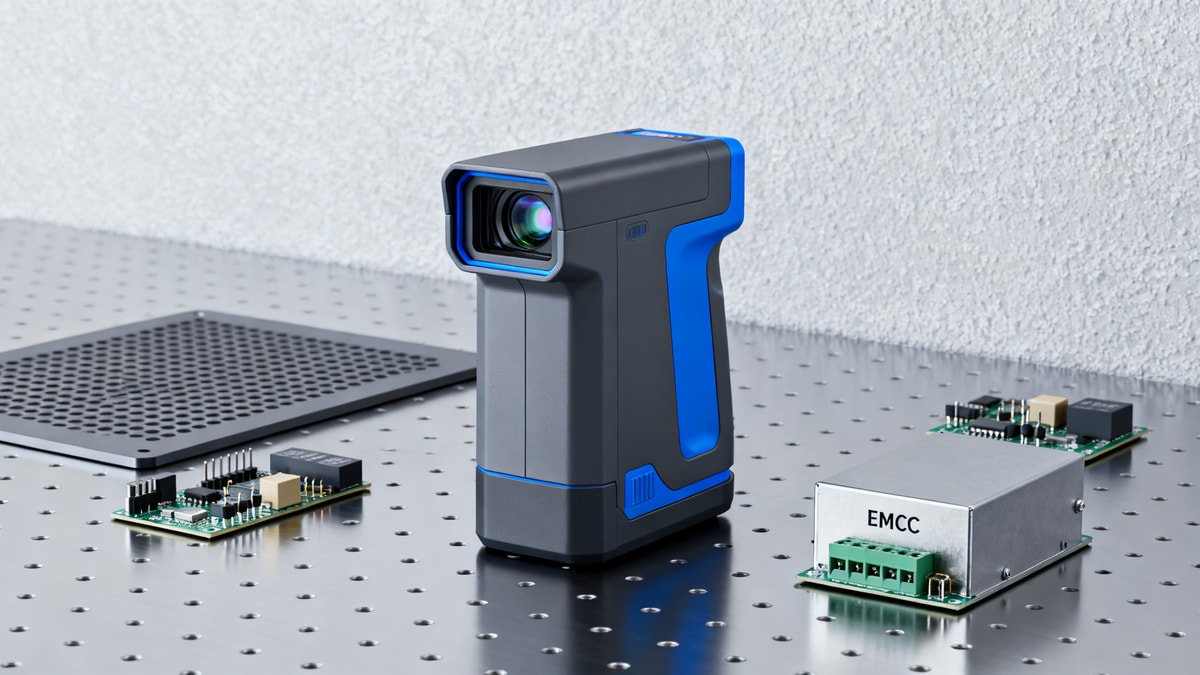
Manufacturers supplying into Brazilian infrastructure, mining, or port applications will face revised design and validation requirements. The Class 3 EMP immunity threshold under IEC 61000-4-32:2026 implies higher shielding, filtering, and grounding specifications — affecting bill-of-materials, PCB layout, and enclosure design. Testing against this standard is not yet widely adopted in current production lines.
Distributors and Channel Partners in Brazil
Local distributors may experience inventory turnover pressure ahead of implementation. Products already imported but not yet certified may require re-evaluation or face customs clearance delays. Channel partners will need updated technical documentation and test reports to support INMETRO submissions on behalf of foreign manufacturers.
What Relevant Enterprises or Practitioners Should Focus On — And How to Respond Now
Monitor official updates from INMETRO and accredited laboratories
The revision is still in progress; no draft text, timeline, or transitional provisions have been released publicly. Stakeholders should subscribe to INMETRO’s official notices and engage with INMETRO-accredited testing labs (e.g., INMETRO-recognized OANs) to track technical interpretation guidance as it emerges.
Identify high-risk product categories and deployment contexts
Not all laser distance meters will be equally affected. Devices intended for use in electromagnetically harsh environments — such as open-pit mines, steel mills, or near high-voltage substations — are most likely to fall within the scope. Companies should map their exported SKUs against typical end-use scenarios in Brazil to prioritize compliance efforts.
Distinguish between regulatory signal and enforceable requirement
This is a revision initiation, not an enforcement action. Analysis shows that INMETRO typically allows 12–24 months between proposal publication and mandatory application. Current status should be understood as an early warning — not an immediate compliance deadline.
Begin internal gap assessment and supplier coordination
Manufacturers should initiate internal reviews of existing EMP immunity test reports against IEC 61000-4-32:2026 Class 3. Where gaps exist, coordinate early with component suppliers (e.g., for shielded enclosures, transient voltage suppression diodes) and EMC test labs capable of performing the new test method — noting that lab capacity for this specific standard may be limited outside major metrology centers.
Editorial Perspective / Industry Observation
Observably, this revision reflects INMETRO’s broader trend toward aligning electromagnetic compatibility (EMC) requirements with evolving operational risks in critical infrastructure. While IEC 61000-4-32:2026 is newly published (2026), its inclusion signals growing recognition of EMP as a real-world threat — not just a theoretical or military concern. From an industry perspective, this move is better understood as a policy signal than a finalized regulation: it indicates directionality, not immediacy. Continued monitoring is warranted because EMP-related clauses may extend to other sensor-based industrial equipment in future revisions.
Conclusion
This initiative marks a targeted step in Brazil’s regulatory modernization for precision measurement tools operating in demanding industrial settings. It does not yet impose binding obligations, but it clearly identifies EMP resilience as a future gatekeeping criterion for market access. For stakeholders, the current phase is best suited for awareness, preliminary assessment, and stakeholder alignment — rather than urgent remediation or investment.
Information Sources
Main source: Official announcement by INMETRO dated May 1, 2026, initiating the revision of Portaria INMETRO 123/2026.
Note: Draft regulatory text, implementation schedule, and scope definitions remain pending and are subject to public consultation. These elements require ongoing observation.
Technical Specifications
- SASO Mandates Dual Energy Label for Industrial Transformers in Saudi Arabia from May 2026Author :Grid Infrastructure Analyst
- EN 61000-4-30:2026 Enforced: Class A Harmonic Traceability Mandatory for EU PQ AnalyzersAuthor :Precision Metrology Expert
- US DOE Level 3 Transformer Efficiency Standard Effective July 1, 2026Author :Grid Infrastructure Analyst
Expert Insights

Chief Security Architect
Dr. Thorne specializes in the intersection of structural engineering and digital resilience. He has advised three G7 governments on industrial infrastructure security.
Related Analysis
- May 06, 2026SASO Mandates Dual Energy Label for Industrial Transformers in Saudi Arabia from May 2026Author :Grid Infrastructure Analyst
- May 06, 2026EN 61000-4-30:2026 Enforced: Class A Harmonic Traceability Mandatory for EU PQ AnalyzersAuthor :Precision Metrology Expert
- May 06, 2026US DOE Level 3 Transformer Efficiency Standard Effective July 1, 2026Author :Grid Infrastructure Analyst
Core Sector // 01
Security & Safety
- EN 61000-4-30:2026 Enforced: Class A Harmonic Traceability Mandatory for EU PQ AnalyzersAuthor :Precision Metrology Expert

- INMETRO Launches Review of EMP Requirements for Industrial Laser Distance Meters in BrazilAuthor :Precision Metrology Expert

- EN 61000-4-30:2026 Class A Certification Mandatory for PQ Analyzers in EUAuthor :Precision Metrology Expert

- INMETRO to Mandate EMP Immunity for Industrial Laser Distance Meters in BrazilAuthor :Precision Metrology Expert

- Instruments & Measurement OEM choices that affect calibration accuracyAuthor :Precision Metrology Expert

- Which industrial standards manufacturer signals real quality controlAuthor :Precision Metrology Expert

- INMETRO Proposes EMP Immunity Requirement for Industrial Laser Distance Meters in BrazilAuthor :Precision Metrology Expert

- EN 61000-4-30:2026 Mandatory for Industrial PQ Analyzers in EUAuthor :Precision Metrology Expert