EN 61000-4-30:2026 Class A Certification Mandatory for PQ Analyzers in EU
Author
Date Published
Reading Time
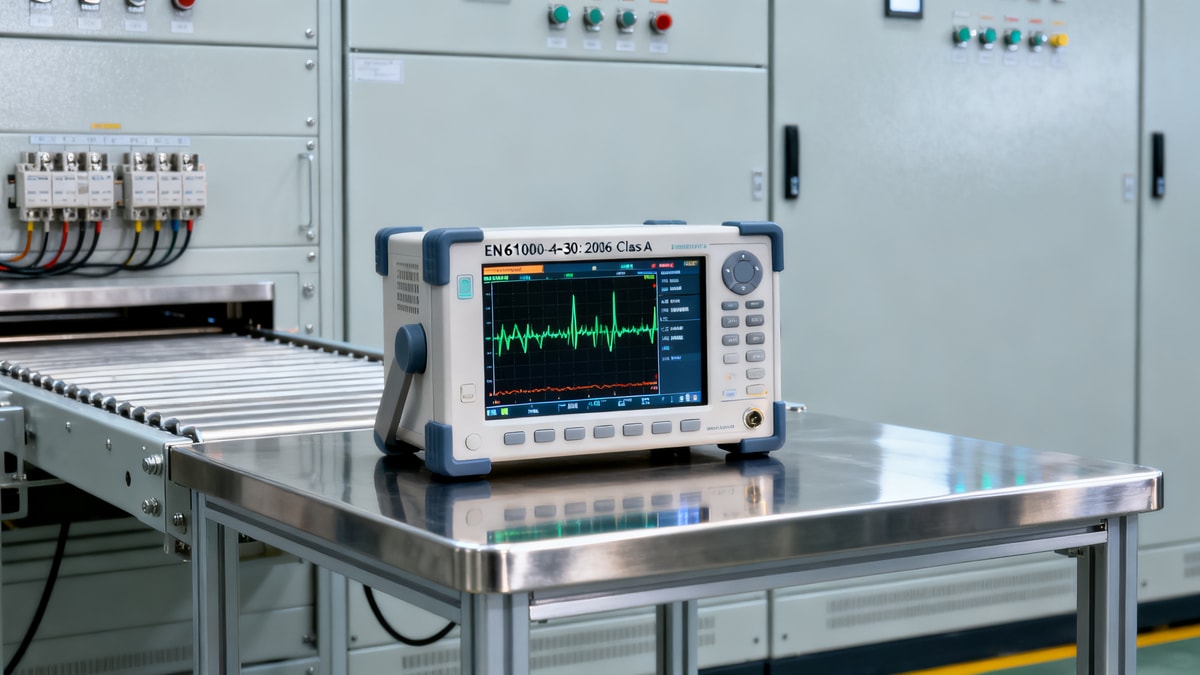
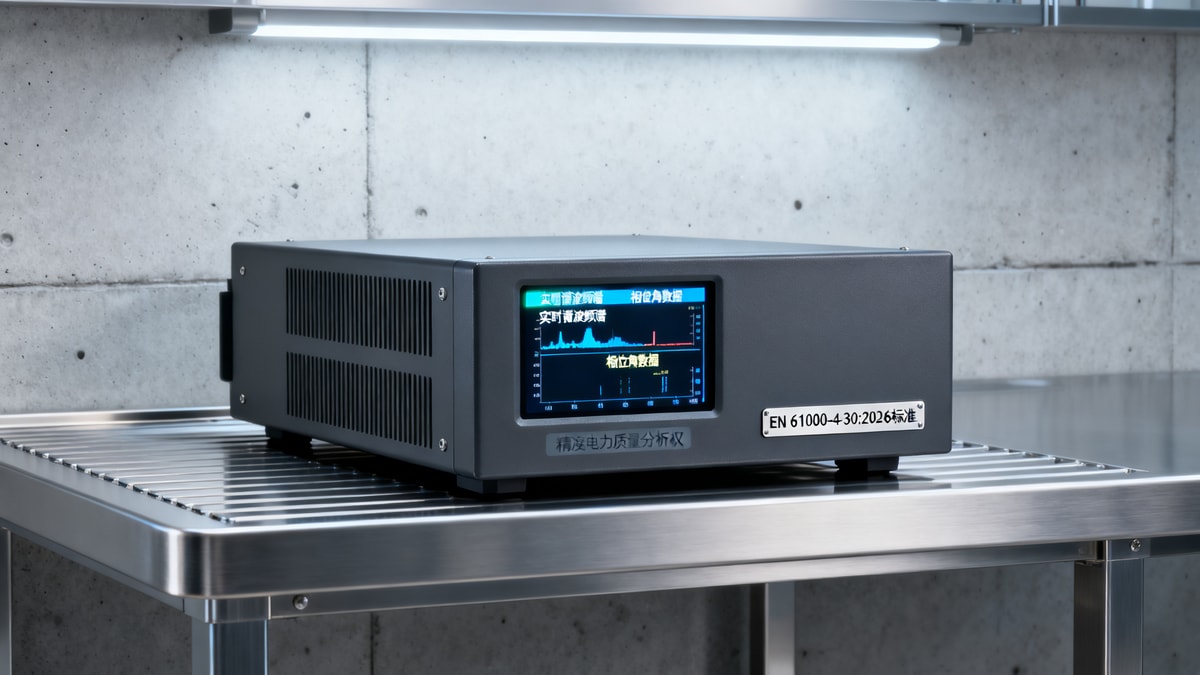
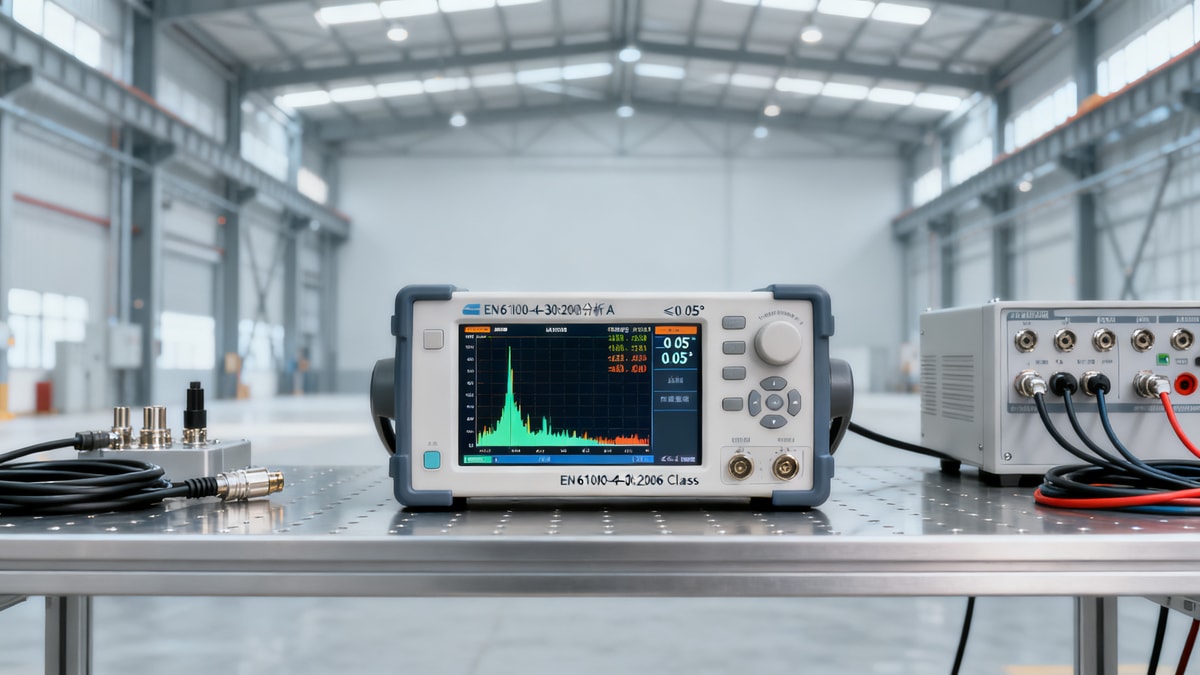
On 4 May 2026, the European Union’s Official Journal (OJEU) published EN 61000-4-30:2026 as a harmonised standard, establishing Class A real-time harmonic phase-angle traceability — verified within 1 ms across the full frequency range — as a mandatory prerequisite for CE marking of industrial power quality (PQ) analyzers. This development directly impacts manufacturers, exporters, and test service providers active in the EU electrical measurement equipment market.
Event Overview
The European Union Official Journal (OJEU) published EN 61000-4-30:2026 on 4 May 2026. The standard confirms Class A compliance — specifically requiring real-time harmonic phase-angle溯源 (traceability) with ≤1 ms timing resolution across the full frequency band — as a mandatory condition for CE marking of industrial power quality analyzers placed on the EU market.
Industries Affected by This Change
Power Quality Analyzer Manufacturers (especially those based in China)
China accounts for 57% of global production of PQ analyzers. Under the new requirement, these manufacturers must now ensure their devices meet EN 61000-4-30:2026 Class A performance criteria before affixing the CE mark. Impact manifests in product design validation, firmware calibration, and documentation requirements — particularly for harmonic measurement accuracy, time-synchronisation stability, and real-time data processing latency.
Third-Party Testing & Certification Service Providers
Accredited laboratories such as TÜV SÜD and SGS are experiencing increased demand for Class A verification testing. The 1 ms traceability requirement necessitates specialised test setups, including high-bandwidth reference sources and sub-millisecond timestamping infrastructure. As a result, lead times for Class A certification may extend, and capacity constraints are emerging.
EU-Based Distributors and System Integrators
These entities face heightened due diligence obligations under the EU’s Market Surveillance Regulation (EU) 2019/1020. They must verify that supplied PQ analyzers hold valid Class A test reports issued by notified bodies or accredited labs — not just generic CE declarations. Non-compliant devices risk removal from the market upon audit or complaint.
What Relevant Enterprises or Practitioners Should Monitor and Do Now
Track official updates to the OJEU listing and Notified Body designations
While EN 61000-4-30:2026 is now published, the list of Notified Bodies authorised to perform Class A conformity assessments remains dynamic. Enterprises should monitor the NANDO database and OJEU supplements for confirmed accreditation scopes — especially for labs offering full-spectrum harmonic phase-angle verification.
Verify whether existing product lines meet the 1 ms traceability requirement
Manufacturers should conduct internal gap analysis against Clause 8.3.2 (harmonic measurement performance) and Annex B (Class A verification methodology) of EN 61000-4-30:2026. Key parameters include time-stamp resolution, sampling jitter tolerance, and phase-angle uncertainty budgeting — not just amplitude accuracy.
Engage early with accredited labs for pre-assessment and joint lab setup
Given reported capacity pressure, initiating pre-submission technical reviews with TÜV SÜD, SGS, or other EU-accredited labs is advisable. Some manufacturers are co-establishing dedicated test benches (e.g., joint labs) to secure priority access and reduce turnaround time — a response already observable among leading Chinese OEMs.
Update technical documentation and EU Declaration of Conformity templates
CE technical files must now explicitly reference EN 61000-4-30:2026 and include test reports demonstrating Class A compliance. Generic references to ‘EN 61000-4-30’ without edition year or class designation are no longer sufficient for market surveillance purposes.
Editorial Perspective / Industry Observation
Observably, this change represents more than a technical update — it signals a tightening of metrological rigour for PQ instrumentation in the EU. The explicit 1 ms traceability mandate shifts emphasis from static accuracy to real-time dynamic fidelity, aligning with evolving grid-edge monitoring needs (e.g., DER integration, fast fault detection). Analysis shows that while the standard entered force on publication, full enforcement depends on national market surveillance authorities’ readiness — meaning transitional flexibility may exist in practice during late 2026 and early 2027. From an industry perspective, this is currently best understood as a binding regulatory signal rather than an immediately enforced operational cutoff; however, delays in preparation carry tangible commercial risk.
Concluding, EN 61000-4-30:2026 Class A certification is now a structural gatekeeper for PQ analyzer access to the EU — not merely a benchmark. Its significance lies less in novelty and more in enforceability: it transforms a long-standing recommendation into a legally actionable requirement under the EU’s Electromagnetic Compatibility Directive (2014/30/EU). For stakeholders, this is best interpreted not as a one-time compliance task, but as the formalisation of a new baseline for metrological credibility in power quality instrumentation.
Source: Official Journal of the European Union (OJEU), L 132/1, 4 May 2026 — EN 61000-4-30:2026 Harmonised Standard under Directive 2014/30/EU.
Note: Ongoing observation is required regarding implementation timelines by Member State authorities and updates to the NANDO database listing for Class A-capable Notified Bodies.
Technical Specifications
- SASO Mandates Dual Energy Label for Industrial Transformers in Saudi Arabia from May 2026Author :Grid Infrastructure Analyst
- EN 61000-4-30:2026 Enforced: Class A Harmonic Traceability Mandatory for EU PQ AnalyzersAuthor :Precision Metrology Expert
- US DOE Level 3 Transformer Efficiency Standard Effective July 1, 2026Author :Grid Infrastructure Analyst
Expert Insights

Chief Security Architect
Dr. Thorne specializes in the intersection of structural engineering and digital resilience. He has advised three G7 governments on industrial infrastructure security.
Related Analysis
- May 06, 2026SASO Mandates Dual Energy Label for Industrial Transformers in Saudi Arabia from May 2026Author :Grid Infrastructure Analyst
- May 06, 2026EN 61000-4-30:2026 Enforced: Class A Harmonic Traceability Mandatory for EU PQ AnalyzersAuthor :Precision Metrology Expert
- May 06, 2026US DOE Level 3 Transformer Efficiency Standard Effective July 1, 2026Author :Grid Infrastructure Analyst
Core Sector // 01
Security & Safety
- EN 61000-4-30:2026 Enforced: Class A Harmonic Traceability Mandatory for EU PQ AnalyzersAuthor :Precision Metrology Expert

- INMETRO Launches Review of EMP Requirements for Industrial Laser Distance Meters in BrazilAuthor :Precision Metrology Expert

- EN 61000-4-30:2026 Class A Certification Mandatory for PQ Analyzers in EUAuthor :Precision Metrology Expert

- INMETRO to Mandate EMP Immunity for Industrial Laser Distance Meters in BrazilAuthor :Precision Metrology Expert

- Instruments & Measurement OEM choices that affect calibration accuracyAuthor :Precision Metrology Expert

- Which industrial standards manufacturer signals real quality controlAuthor :Precision Metrology Expert

- INMETRO Proposes EMP Immunity Requirement for Industrial Laser Distance Meters in BrazilAuthor :Precision Metrology Expert

- EN 61000-4-30:2026 Mandatory for Industrial PQ Analyzers in EUAuthor :Precision Metrology Expert