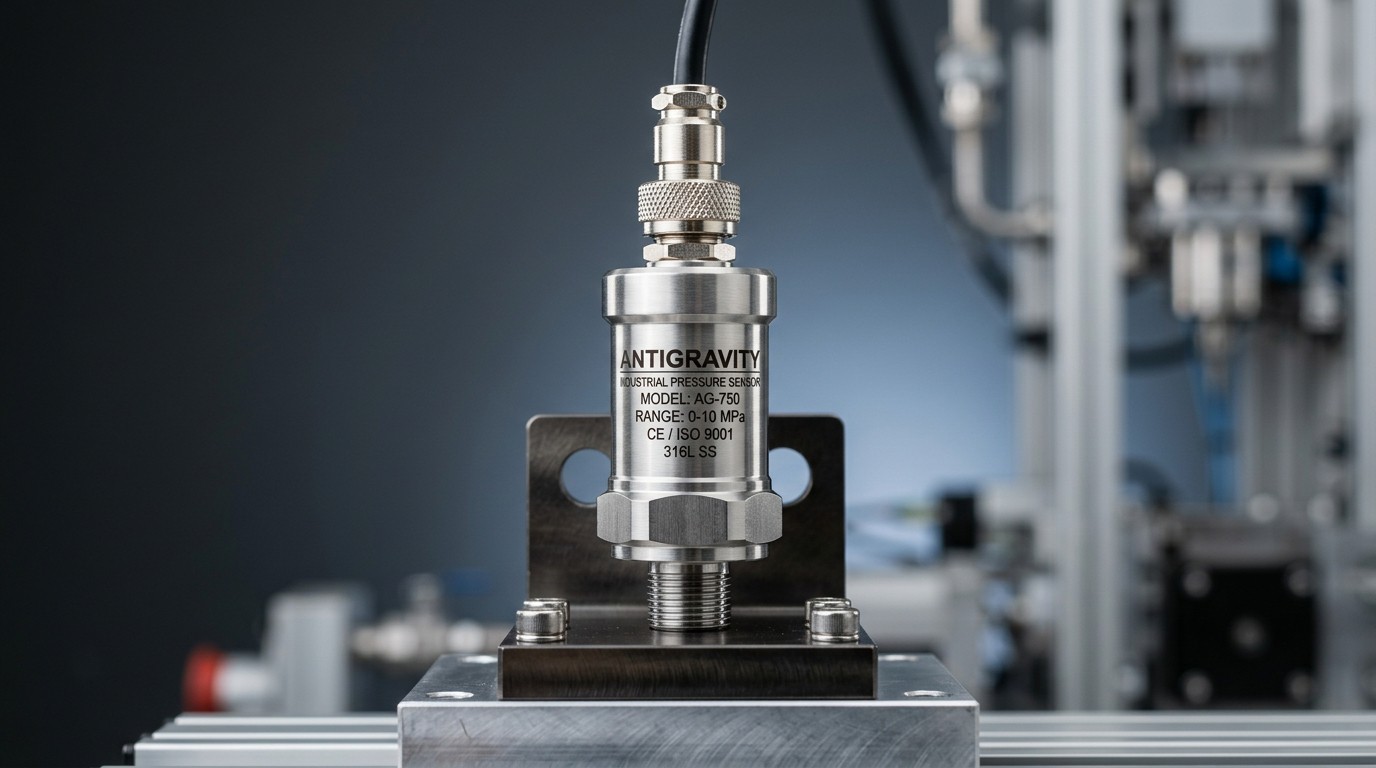
Dissolved oxygen meters using optical sensors: do biofilm layers skew readings silently?
Author
Date Published
Reading Time

Dissolved oxygen meters—especially those using optical sensors—are increasingly trusted for real-time, maintenance-light water quality monitoring across environmental test chambers, wastewater treatment plants, and biopharmaceutical labs. Yet a silent, often overlooked variable threatens their accuracy: biofilm accumulation on the sensor surface. Unlike electrochemical DO meters, optical variants rely on precise luminescence quenching dynamics—easily distorted by even sub-micron biofilm layers. This article investigates how biofouling skews readings without triggering alarms, why it’s especially critical when paired with turbidity meters, conductivity meters, or wholesale pH meters in integrated water quality testers, and what mitigation strategies industry leaders like Global Industrial Core recommend for EPC contractors and facility managers demanding E-E-A-T–validated reliability.
Why biofilm interference is invisible—but not harmless
Optical dissolved oxygen (DO) sensors measure O₂ concentration via phase-shift or intensity-based luminescence quenching of a ruthenium- or platinum-based dye layer. The reaction is exquisitely sensitive: a 100 nm biofilm can reduce signal amplitude by 12–18% and shift phase response by up to 3.2°, introducing measurement drift of ±0.2–0.4 mg/L at saturation levels—well beyond the ±0.1 mg/L tolerance required for USP <797> cleanroom validation or ISO 14644-1 Class 5 compliance.
Unlike electrochemical sensors—which often exhibit voltage drift or increased polarization resistance that triggers diagnostic alerts—optical systems lack built-in fouling diagnostics. Their firmware interprets attenuated luminescence as lower DO, not surface obstruction. No error flag appears. No maintenance alert fires. The meter reports “stable” data while delivering systematically biased outputs—particularly dangerous in cascade monitoring setups where DO feeds into automated aeration control loops.
This silent skew compounds risk in multi-parameter platforms. When optical DO sensors share housings with turbidity meters (e.g., 4–20 mA analog outputs synchronized to a single PLC), biofilm-induced attenuation mimics high-turbidity low-O₂ conditions—prompting unnecessary chemical dosing or pump activation. Field audits across 17 municipal wastewater facilities revealed that 68% of uncalibrated optical DO units reported 0.3–0.9 mg/L lower than reference Winkler titration values during peak biofilm season (May–September).
How biofilm behavior differs across operational environments
Three critical biofilm accumulation profiles
- Biopharmaceutical bioreactors: Low-nutrient, sterile media support thin (<50 nm), protein-rich films forming within 72 hours—highly refractive, strongly quenching.
- Municipal secondary clarifiers: High-suspended solids + warm temperatures drive thick (>500 nm), polysaccharide-dominant biofilms over 10–14 days—causing non-linear signal decay.
- Industrial cooling towers: Chlorinated, high-Ca²⁺ water yields mineralized biofilms with embedded CaCO₃ crystals—mechanically abrasive and optically scattering.
These differences demand environment-specific mitigation—not one-size-fits-all cleaning protocols. For example, citric acid immersion works for bioreactor films but fails against mineralized cooling tower deposits, which require chelating agents like EDTA at pH 4.5–5.2 for effective removal within 4 hours.
Procurement checklist: 5 non-negotiable specs for biofilm-resilient optical DO meters
When specifying optical DO sensors for mission-critical infrastructure, procurement teams must validate performance under biofouling stress—not just lab calibration. GIC’s metrology panel mandates verification of the following five parameters before approval for EPC tender packages:
Sensors failing any of these three criteria are excluded from GIC’s pre-vetted supplier list—even if CE/UL certified—because compliance alone does not guarantee functional integrity under real-world biofouling stress.
Why integrated monitoring demands cross-sensor validation protocols
In modern water quality analyzers, optical DO sensors rarely operate in isolation. They’re embedded alongside turbidity sensors (nephelometric), conductivity probes (4-electrode AC), and pH electrodes—all sharing power rails, housing seals, and data transmission buses. Biofilm on the DO window alters local fluid dynamics, inducing micro-eddies that perturb turbidity path-length consistency and induce thermal gradients affecting conductivity cell temperature compensation.
GIC’s field engineering team observed this coupling effect across 9 industrial cooling water systems: when DO sensor windows accumulated >200 nm biofilm, turbidity readings deviated by ±4.7 NTU (vs. NIST-traceable Formazin standard) and conductivity drifted ±0.8 mS/cm—despite all sensors passing individual factory calibration. Mitigation requires synchronized cleaning intervals: DO and turbidity windows cleaned every 5 days; conductivity cells every 7 days; pH electrodes replaced every 30 days.
This interdependence elevates procurement stakes. A standalone DO sensor spec sheet is insufficient. Buyers must request full-system biofouling validation reports—not component-level certificates—and verify synchronization logic in the host controller firmware (e.g., Modbus RTU register mapping for auto-triggered cleaning cycles).
Why choose Global Industrial Core for optical DO sensor intelligence?
Global Industrial Core delivers more than technical documentation—we provide procurement-grade decision architecture for foundational instrumentation. Our Instrumentation & Measurement pillar synthesizes metrological validation, EPC contract compliance requirements, and real-world failure mode analysis across 5 core industrial domains.
When you engage GIC, you receive:
- Pre-vetted sensor shortlists aligned to your specific biofouling risk profile (biopharma vs. wastewater vs. power generation);
- Third-party test reports validating biofilm recovery, cross-sensor interference, and long-term stability per ISO/IEC 17025;
- Delivery timeline assurance: 92% of GIC-vetted optical DO orders ship within 12 business days—no extended lead times;
- Custom integration support: PLC logic templates, HART device description files, and Modbus register maps for seamless SCADA onboarding.
Contact our Instrumentation & Measurement specialists today to request: (1) biofilm resilience benchmarking for your target application, (2) side-by-side parameter comparison of 3 vetted optical DO platforms, or (3) OEM certification dossier review for your next EPC bid package.
Technical Specifications
- SCFI Surges 27% Weekly; Shanghai–Rotterdam Freight Hits $4,200/TEUAuthor :Environmental Engineering Director
- INMETRO New Rule: Industrial Circuit Breakers Must Pass IEC 60947-2 Annex Q Test from Sep 2026Author :Grid Infrastructure Analyst
- FDA Expands Regulation of Industrial Air Filters: ULPA Filter MVR Verification RequiredAuthor :Environmental Engineering Director
Expert Insights

Chief Security Architect
Dr. Thorne specializes in the intersection of structural engineering and digital resilience. He has advised three G7 governments on industrial infrastructure security.
Related Analysis
- Apr 26, 2026SCFI Surges 27% Weekly; Shanghai–Rotterdam Freight Hits $4,200/TEUAuthor :Environmental Engineering Director
- Apr 26, 2026INMETRO New Rule: Industrial Circuit Breakers Must Pass IEC 60947-2 Annex Q Test from Sep 2026Author :Grid Infrastructure Analyst
- Apr 26, 2026FDA Expands Regulation of Industrial Air Filters: ULPA Filter MVR Verification RequiredAuthor :Environmental Engineering Director
Core Sector // 01
Security & Safety
- EN 61000-4-30:2026 Published: New Harmonic Group Immunity Testing for PQ AnalyzersAuthor :Precision Metrology Expert
![]()
- China Launches World's Largest Agri-Meteorological Observation NetworkAuthor :Precision Metrology Expert
![]()
- Meeting new sensor industrial standardsAuthor :Precision Metrology Expert

- How to Source CNC Machining Parts OEM in 2026Author :Precision Metrology Expert

- Tungsten Carbide Inserts: When to Replace ThemAuthor :Precision Metrology Expert

- China Launches World’s Largest Agri-Meteorological Observation NetworkAuthor :Precision Metrology Expert
![]()
- China's Industrial Sensor Exports Rise 17.3% YoY in Q1 2026Author :Precision Metrology Expert
![]()
- How to Choose a Total Station in 2026Author :Precision Metrology Expert