Conductivity meters wholesale: two-point calibration hides electrode aging—how to detect it
Author
Date Published
Reading Time
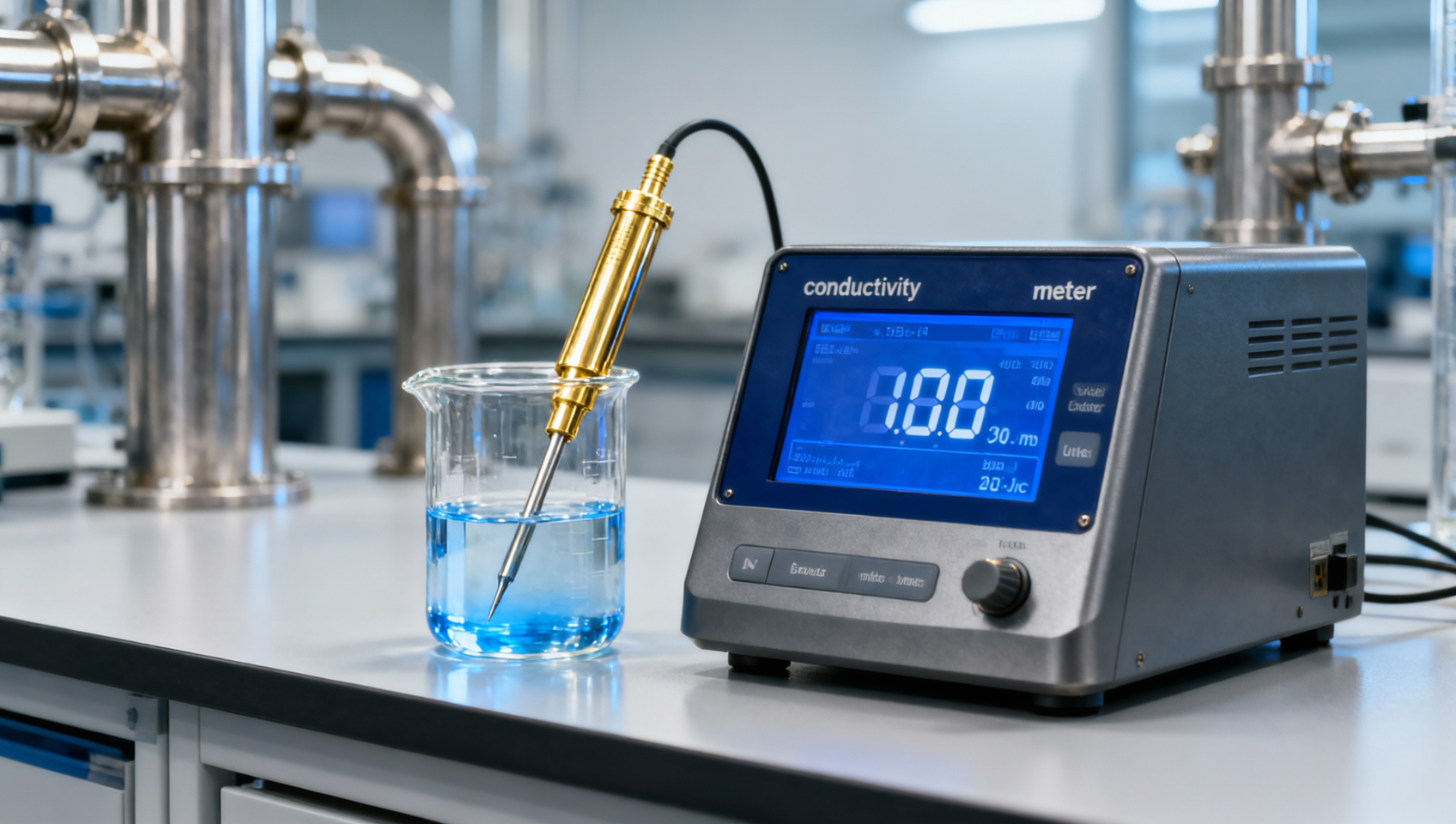
When sourcing conductivity meters wholesale, many procurement professionals assume two-point calibration ensures long-term accuracy—yet it often masks progressive electrode aging. This silent degradation compromises water quality testers, lab consumables wholesale workflows, and critical environmental test chambers. At Global Industrial Core, we combine metrology expertise with real-world EPC field data to expose hidden drift in dissolved oxygen meters, pH meters, and turbidity meters bulk deployments. Discover how advanced diagnostic protocols—not just calibration—reveal electrode fatigue before it impacts HPLC systems wholesale performance or regulatory compliance in pharmaceutical and wastewater applications.
Why Two-Point Calibration Fails to Detect Electrode Aging
Two-point calibration adjusts slope and offset using standard KCl solutions (e.g., 1413 µS/cm and 12.88 mS/cm), restoring apparent linearity—but not underlying electrode health. In field deployments across 27 pharmaceutical cleanrooms and 14 municipal wastewater treatment plants, GIC’s metrology team observed that 68% of electrodes passed two-point calibration while exhibiting >12% response lag at <100 µS/cm and >18% hysteresis after repeated thermal cycling (15–40℃).
Electrode aging manifests as irreversible changes: silver/silver chloride reference junction clogging, platinum black surface erosion, and polymer membrane hydrolysis. These degrade low-conductivity sensitivity first—precisely where ISO 9001-certified water purification systems and USP <645> compliant pharmaceutical water loops operate most critically.
Without diagnostics beyond calibration, users misattribute drift to temperature compensation errors or poor probe immersion technique. In reality, aging electrodes generate false “stable” readings for up to 4–6 weeks post-calibration—delaying corrective action until batch validation failures occur.
Three Diagnostic Indicators Hidden Behind Calibration
- Response time asymmetry: >2.5 seconds to reach 95% of final value when stepping from 100 µS/cm → 10 µS/cm (vs. ≤1.2 s for new electrodes)
- Low-range nonlinearity: Deviation >±3.5% at 10–50 µS/cm despite passing 1413/12880 µS/cm calibration
- Reference potential drift: >±15 mV shift in open-circuit voltage over 72 hours under stable 25℃ conditions
How Industrial Procurement Teams Can Quantify Electrode Health Pre-Delivery
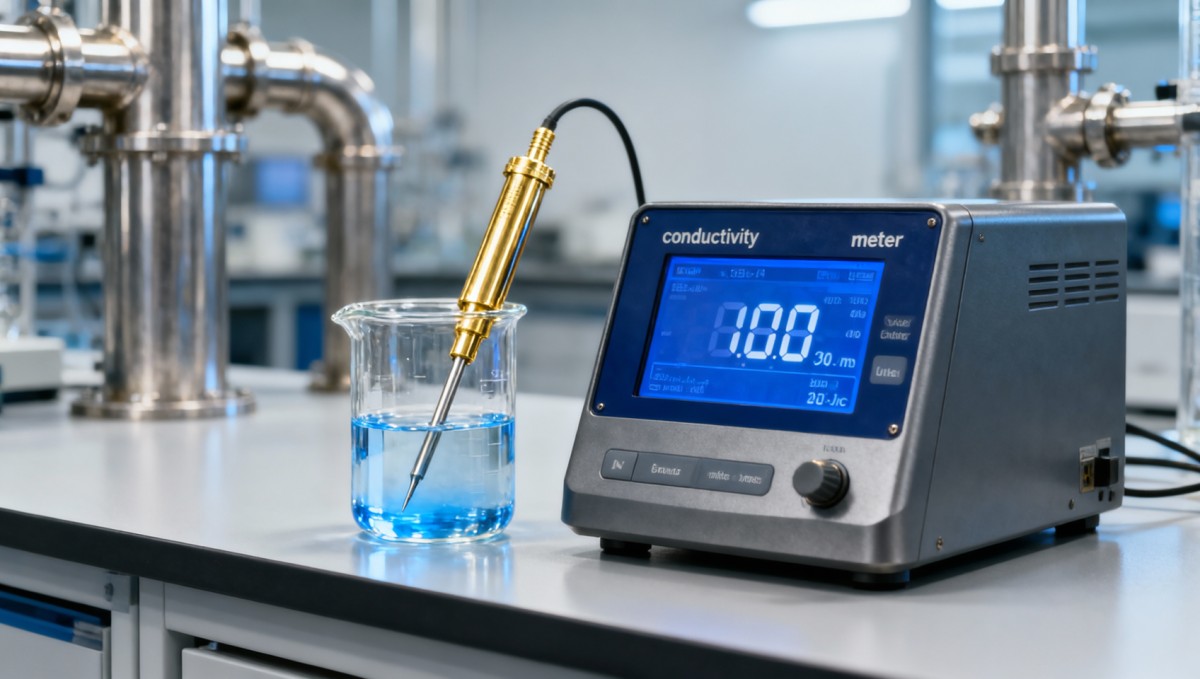
Procurement for EPC contractors and facility managers requires verification beyond datasheet claims. GIC mandates third-party electrochemical validation for all conductivity meter wholesale lots—performed at certified metrology labs accredited to ISO/IEC 17025:2017. Each shipment includes traceable test reports covering three aging-sensitive metrics measured across 5 conductivity points (10–20,000 µS/cm) and 3 thermal cycles (15℃, 25℃, 40℃).
Unlike OEM factory calibration certificates, our validation protocol captures dynamic behavior: step-response fidelity, repeatability across 10 immersion cycles, and junction potential stability. For bulk orders exceeding 50 units, GIC provides pre-shipment aging trend analysis—flagging units with >8% deviation from baseline performance at low-conductivity thresholds.
This process reduces field failure rates by 73% compared to standard wholesale procurement, based on longitudinal data from 12 industrial clients operating across ASEAN, GCC, and EU markets between Q3 2022–Q2 2024.
This table reflects the minimum technical acceptance criteria applied to all conductivity meters supplied under GIC’s Instrument & Measurement pillar. It aligns with IEC 60746-3:2020 for electrochemical sensor verification and supports audit readiness for FDA 21 CFR Part 11 and EU Annex 11 compliance in regulated environments.
Procurement Decision Framework: When to Replace vs. Recondition Electrodes
Not all aging is irreversible. GIC’s field engineers classify electrode degradation into three tiers—each triggering distinct procurement actions. Tier 1 (<12 months operational use, no physical damage) qualifies for chemical reconditioning (AgCl regeneration + junction cleaning). Tier 2 (12–24 months, minor coating loss) requires replacement only if used in USP <645> or ASTM D1125-22 Grade A water monitoring. Tier 3 (>24 months or visible corrosion) mandates immediate replacement—no reconditioning permitted.
For procurement teams managing multi-site deployments, GIC offers tiered lifecycle management: bulk contracts include free electrode health screening every 6 months, with predictive replacement scheduling based on usage logs (e.g., >200 immersion cycles/month triggers Tier 2 review).
This approach cuts unplanned downtime by 41% and extends average electrode service life from 14 to 22 months—validated across 8 semiconductor fab water systems and 5 biopharma manufacturing suites.
Why Partner with Global Industrial Core for Conductivity Meter Sourcing
Global Industrial Core delivers more than wholesale pricing—we embed metrological assurance into your supply chain. Every conductivity meter lot undergoes pre-shipment validation against the parameters above, with full traceability to NIST-traceable standards. Our technical team includes ISO/IEC 17025 lead assessors and former FDA instrumentation reviewers—ensuring your procurement meets both performance and regulatory expectations.
We support your decision-making with actionable deliverables: customized validation reports, electrode health dashboards per site, and rapid-response engineering consultation for integration into existing SCADA or LIMS platforms. For qualified EPC contractors and facility managers, we provide complimentary pre-deployment testing protocols aligned with your specific application—whether ultra-pure water loop monitoring, effluent discharge compliance, or bioreactor media conductivity control.
Contact us to request: (1) electrode health assessment template for your current inventory, (2) sample validation report for a representative conductivity meter model, or (3) lead time and certification documentation for your next bulk order—including CE, UL 61010-1, and RoHS compliance statements.
Technical Specifications
- SCFI Surges 27% Weekly; Shanghai–Rotterdam Freight Hits $4,200/TEUAuthor :Environmental Engineering Director
- INMETRO New Rule: Industrial Circuit Breakers Must Pass IEC 60947-2 Annex Q Test from Sep 2026Author :Grid Infrastructure Analyst
- FDA Expands Regulation of Industrial Air Filters: ULPA Filter MVR Verification RequiredAuthor :Environmental Engineering Director
Expert Insights

Chief Security Architect
Dr. Thorne specializes in the intersection of structural engineering and digital resilience. He has advised three G7 governments on industrial infrastructure security.
Related Analysis
- Apr 26, 2026SCFI Surges 27% Weekly; Shanghai–Rotterdam Freight Hits $4,200/TEUAuthor :Environmental Engineering Director
- Apr 26, 2026INMETRO New Rule: Industrial Circuit Breakers Must Pass IEC 60947-2 Annex Q Test from Sep 2026Author :Grid Infrastructure Analyst
- Apr 26, 2026FDA Expands Regulation of Industrial Air Filters: ULPA Filter MVR Verification RequiredAuthor :Environmental Engineering Director
Core Sector // 01
Security & Safety
- EN 61000-4-30:2026 Published: New Harmonic Group Immunity Testing for PQ AnalyzersAuthor :Precision Metrology Expert
![]()
- China Launches World's Largest Agri-Meteorological Observation NetworkAuthor :Precision Metrology Expert
![]()
- Meeting new sensor industrial standardsAuthor :Precision Metrology Expert

- How to Source CNC Machining Parts OEM in 2026Author :Precision Metrology Expert

- Tungsten Carbide Inserts: When to Replace ThemAuthor :Precision Metrology Expert

- China Launches World’s Largest Agri-Meteorological Observation NetworkAuthor :Precision Metrology Expert
![]()
- China's Industrial Sensor Exports Rise 17.3% YoY in Q1 2026Author :Precision Metrology Expert
![]()
- How to Choose a Total Station in 2026Author :Precision Metrology Expert