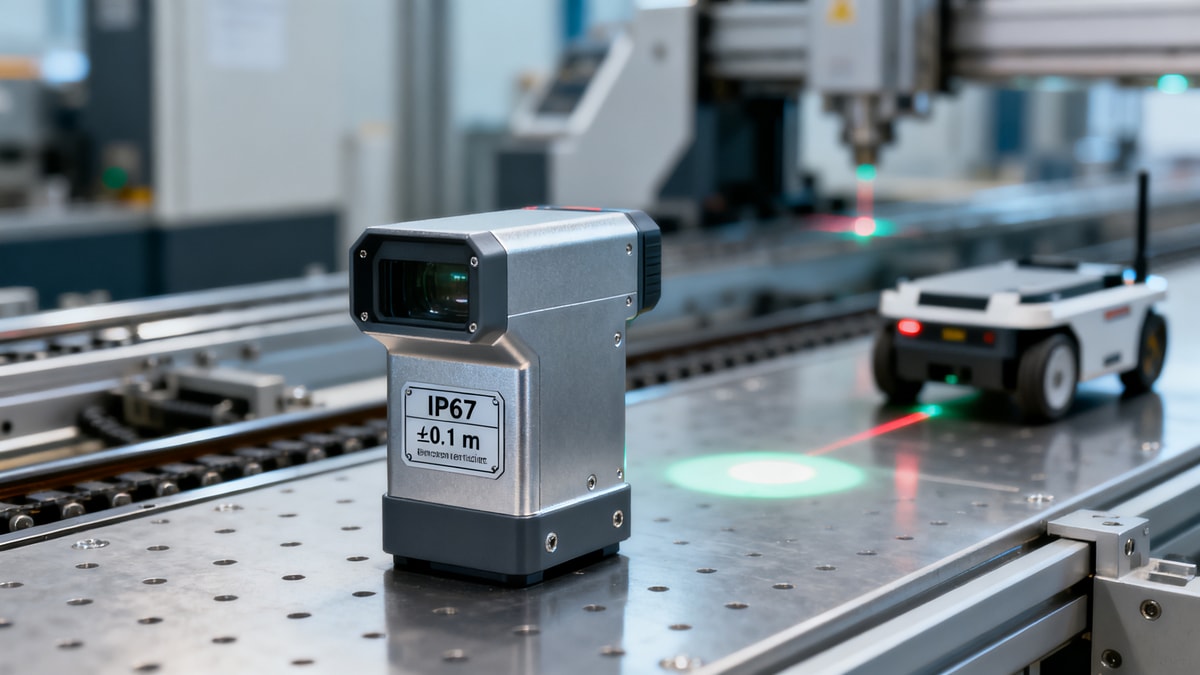
CPSC Recalls 32 Batches of Chinese Industrial Laser Distance Meters
Author
Date Published
Reading Time
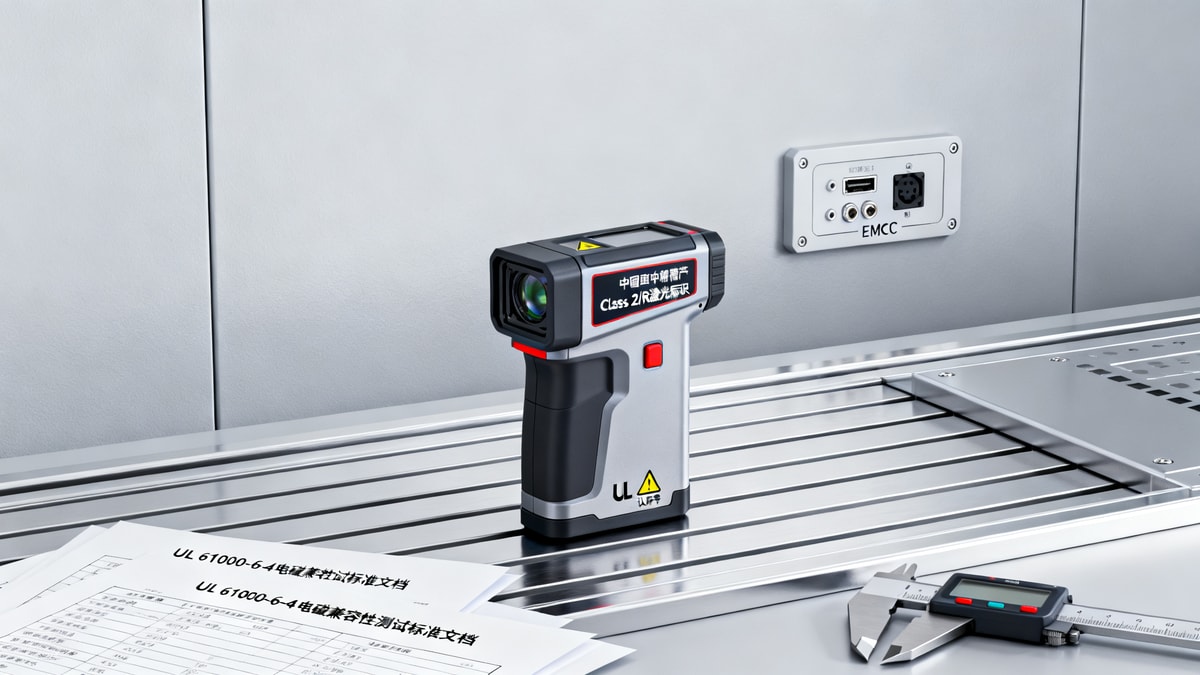
On May 3, 2026, the U.S. Consumer Product Safety Commission (CPSC) issued an urgent recall of 32 batches of industrial laser distance meters manufactured in China—Class 2/3R devices—due to electromagnetic compatibility (EMC) immunity failures. The recall affects manufacturers, importers, and distributors serving construction surveying, facility maintenance, and precision measurement sectors, signaling heightened regulatory scrutiny on EMC performance for handheld industrial electronics.
Event Overview
The U.S. CPSC announced the recall on May 3, 2026. It covers 32 models of industrial-grade laser distance meters produced in China and classified as Class 2 or 3R lasers. The stated safety concern is measurement drift exceeding ±5 mm under electromagnetic interference (EMI) conditions. Seven OEM manufacturers are implicated. In response, CPSC has launched a targeted inspection initiative for similar products and mandated that all imported batches from Q3 2026 onward must be accompanied by a full-frequency UL 61000-6-4 electromagnetic immunity test report.
Which Subsectors Are Affected
Direct Trading Enterprises (U.S. Importers & Distributors)
These entities face immediate compliance risk: unsold inventory may be subject to stop-sale orders, and future shipments without valid UL 61000-6-4 reports will likely be detained at U.S. ports. Customs clearance delays and retesting costs are now material operational concerns.
Contract Manufacturing & OEM Firms (China-based)
OEMs supplying these recalled models—or producing similar Class 2/3R laser distance meters—are directly exposed to product liability exposure, audit follow-ups, and potential loss of U.S. channel partnerships. Their design documentation and production process controls for EMC shielding and filtering are now under de facto review.
Supply Chain Service Providers (Testing Labs, Certification Agents)
Demand for UL 61000-6-4 full-band immunity testing is expected to rise sharply among Chinese exporters targeting the U.S. market. However, capacity constraints and lead times for accredited labs—especially those with CPSC-recognized scope—may create bottlenecks beginning Q3 2026.
What Relevant Enterprises or Practitioners Should Focus On — And How to Respond
Monitor official CPSC guidance and enforcement patterns
CPSC’s May 3 notice does not list specific model numbers or brand names publicly. Enterprises should track updates via the CPSC Recall Portal and subscribe to alerts for new entries under “laser distance meter” and “UL 61000-6-4”. Any expansion beyond the initial 32 batches would indicate broader category-level enforcement.
Verify UL 61000-6-4 reporting requirements against current product lines
Not all laser distance meters fall under CPSC jurisdiction—only those marketed for consumer or general industrial use (not exclusively for professional calibration labs or military applications). Companies should cross-check their product classification, labeling, and intended-use statements against CPSC’s definition of “consumer product” to determine applicability.
Distinguish policy signal from implementation timeline
The requirement for UL 61000-6-4 reports “starting Q3 2026” is a forward-looking mandate—not retroactive. However, analysis shows CPSC may apply stricter pre-clearance scrutiny to shipments arriving after July 1, 2026, even if produced earlier. Shippers should align documentation readiness with vessel ETAs, not just manufacturing dates.
Prepare technical documentation and lab coordination ahead of shipment cycles
Full-band UL 61000-6-4 testing typically requires 10–15 working days per model variant. Enterprises should identify accredited labs early, confirm test plan alignment (e.g., test levels, modulation methods), and retain signed reports with traceable serial-number linkage to shipped units—per CPSC’s emerging expectation for audit-ready evidence.
Editorial Perspective / Industry Observation
Observably, this recall functions less as an isolated enforcement action and more as a calibrated regulatory signal targeting systemic gaps in EMC design discipline across mid-tier industrial electronics exporters. While only 32 batches are named, CPSC’s decision to initiate a category-wide抽查 (spot check) and impose a standardized test-reporting threshold suggests intent to shift baseline expectations—not merely correct noncompliance. From an industry perspective, this marks a transition point: EMC immunity is no longer treated as a secondary design consideration but as a mandatory, documented, and verifiable safety attribute for Class 2/3R optical measurement tools entering the U.S. market.
Analysis shows the timing—just before Q3 2026—aligns with typical U.S. retail and infrastructure procurement cycles. That implies CPSC anticipates higher import volumes in summer/fall and aims to preempt nonconforming goods before peak entry windows. It is therefore better understood as a preventive regulatory pivot than a reactive penalty.
Current monitoring priority lies not in whether further recalls will occur, but in how CPSC interprets “similar products” and whether UL 61000-6-4 becomes a de facto gatekeeper for other portable electro-optical tools (e.g., laser levels, thermal imagers with integrated distance sensors).
Conclusion
This recall is a procedural milestone—not a one-off incident. It formalizes EMC immunity as a core compliance pillar for U.S.-bound industrial laser measurement devices and establishes UL 61000-6-4 as the minimum evidentiary standard for market access. For affected stakeholders, the appropriate stance is not alarm but structured adaptation: treat the requirement as operational, not exceptional; embed testing into product development gates; and treat documentation as integral to logistics—not an afterthought.
Information Sources
Main source: U.S. Consumer Product Safety Commission (CPSC) Official Recall Notice, published May 3, 2026. No additional third-party data, internal documents, or unconfirmed manufacturer statements have been referenced. Ongoing developments—including expanded model lists, lab accreditation updates, or enforcement clarifications—remain subject to observation.
Technical Specifications
- US DOE Industrial Transformer Efficiency Rule Effective Oct 2026Author :Grid Infrastructure Analyst
- Indonesia BPOM Launches AI Filter Life Algorithm ReviewAuthor :Environmental Engineering Director
- Global Industrial Waste Shredder Lead Times Extend to 22 WeeksAuthor :Environmental Engineering Director
Expert Insights

Chief Security Architect
Dr. Thorne specializes in the intersection of structural engineering and digital resilience. He has advised three G7 governments on industrial infrastructure security.
Related Analysis
- May 04, 2026US DOE Industrial Transformer Efficiency Rule Effective Oct 2026Author :Grid Infrastructure Analyst
- May 04, 2026Indonesia BPOM Launches AI Filter Life Algorithm ReviewAuthor :Environmental Engineering Director
- May 04, 2026Global Industrial Waste Shredder Lead Times Extend to 22 WeeksAuthor :Environmental Engineering Director
Core Sector // 01
Security & Safety
- CPSC Recalls 32 Batches of Chinese Industrial Laser Distance MetersAuthor :Precision Metrology Expert

- What makes an Instruments & Measurement supplier dependableAuthor :Precision Metrology Expert

- When rapid prototyping CNC saves money and when it does notAuthor :Precision Metrology Expert

- Rapid prototyping CNC custom parts and the tolerance tradeoffAuthor :Precision Metrology Expert

- When Instruments & Measurement OEM quality becomes the bottleneckAuthor :Precision Metrology Expert

- Rapid prototyping CNC services for low-risk product validationAuthor :Precision Metrology Expert

- Global Industrial Laser Distance Meter Price Index Up 9.3% WeeklyAuthor :Precision Metrology Expert

- Noise Monitoring Terminal Data Looks Normal, but Is It Trustworthy?Author :Precision Metrology Expert