Rapid prototyping CNC services for low-risk product validation
Author
Date Published
Reading Time
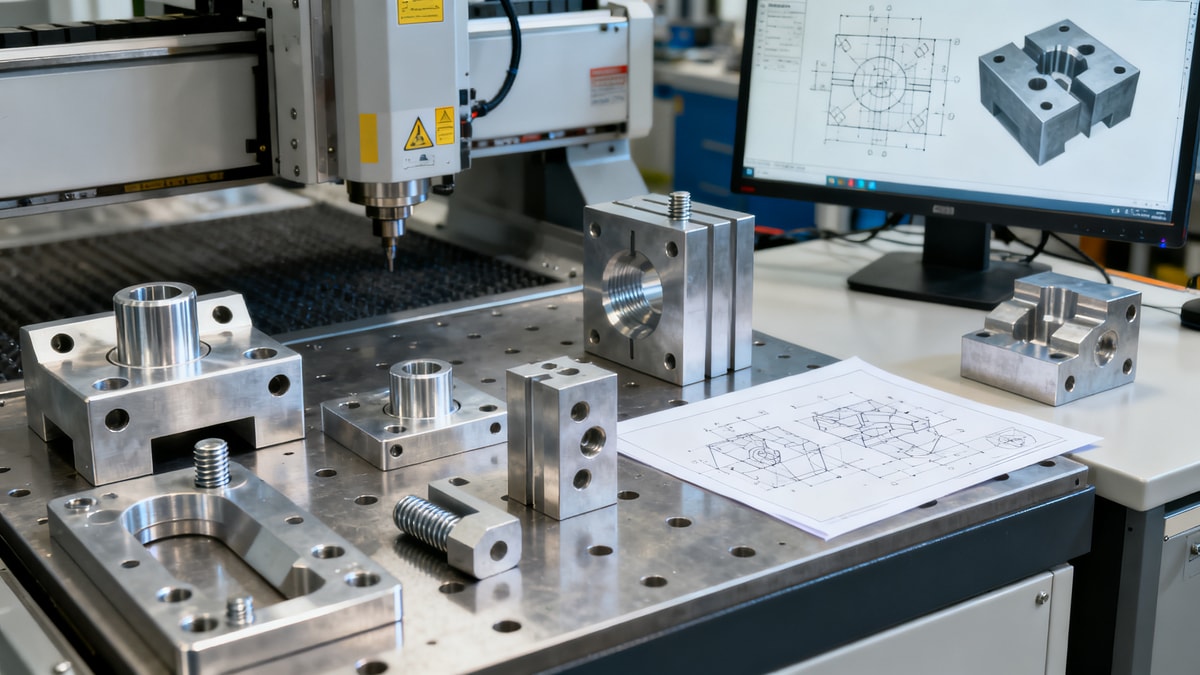
For teams validating new ideas under tight timelines, rapid prototyping CNC services offer a practical path to low-risk product development. By turning digital concepts into precise physical parts quickly, manufacturers and engineers can test fit, function, and manufacturability before full-scale production. This article explores how CNC prototyping helps reduce uncertainty, control costs, and support smarter product decisions.
For most information-stage buyers, the core question is simple: can rapid prototyping CNC services help prove a product idea without committing too early to expensive tooling, large minimum order quantities, or slow design cycles? In many cases, the answer is yes. CNC prototyping is especially valuable when teams need accurate, production-like parts to evaluate form, fit, strength, assembly behavior, and machining feasibility before release.
The biggest value is not just speed. It is risk reduction. A machined prototype can reveal tolerance issues, hidden assembly conflicts, material mismatches, and cost drivers while changes are still affordable. For procurement leaders, product engineers, and technical decision-makers, that makes CNC prototyping a practical validation tool rather than just a sample-making service.
Why do rapid prototyping CNC services matter for low-risk product validation?
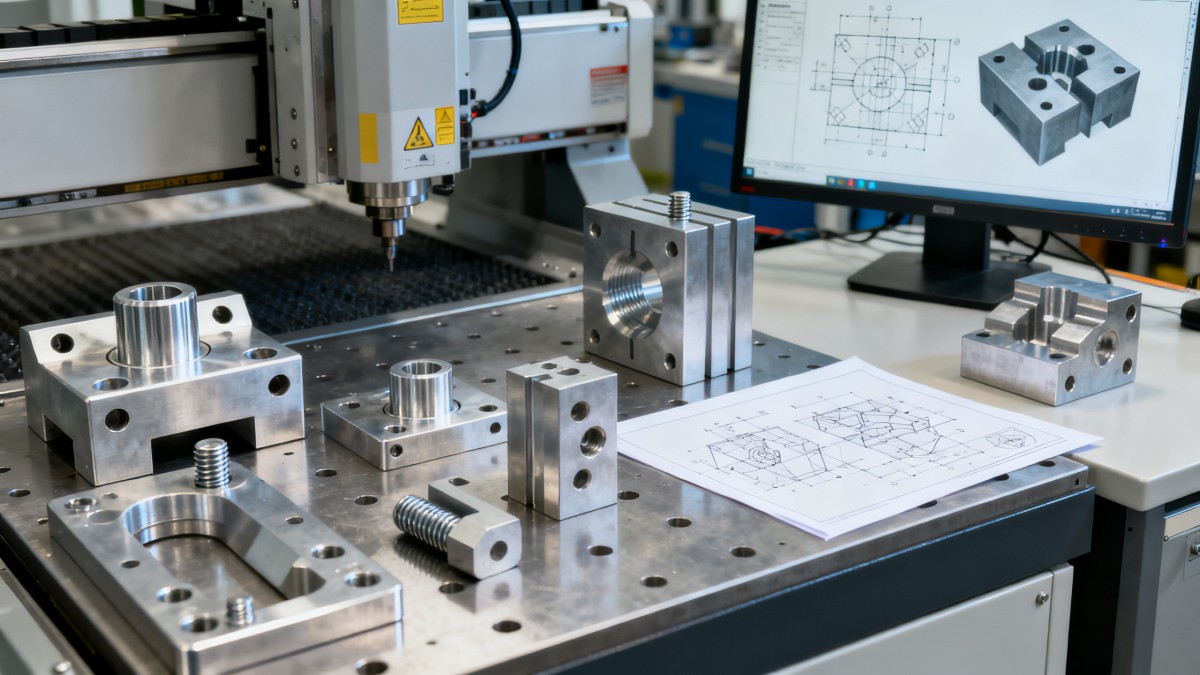
Low-risk product validation depends on finding problems early, when fixing them is still cheap and fast. Digital models are useful, but many product risks do not become obvious until a physical part exists. Features that seem straightforward in CAD may be difficult to machine, awkward to assemble, too fragile in use, or unnecessarily costly in production.
Rapid prototyping CNC services help bridge that gap by producing parts directly from CAD data using production-grade machining processes. Unlike concept models that only show appearance, CNC prototypes can closely reflect the dimensions, tolerances, and material behavior of final components. That makes them highly relevant for real-world decision-making.
This is particularly important in industrial and mechanical applications, where product failure can affect safety, reliability, and downstream project schedules. If a component must align with mating parts, hold pressure, survive vibration, or meet strict dimensional requirements, a CNC prototype often provides more trustworthy validation than a simplified mock-up.
For teams trying to reduce uncertainty, CNC prototyping supports three critical goals: verify technical feasibility, estimate manufacturing risk, and improve design confidence before scaling. Those outcomes directly support better business decisions, especially when new product introduction timelines are tight.
What are information-stage readers usually trying to evaluate?
Readers researching rapid prototyping CNC services are often not ready to buy immediately. They are trying to understand whether the method fits their project, how it compares with alternatives, and what kind of proof it can deliver. Their concerns are usually practical rather than theoretical.
First, they want to know whether CNC prototyping is appropriate for the part they are developing. This includes questions about geometry, tolerances, materials, size limits, surface finish, and intended testing purpose. A cosmetic housing, for example, may have different validation needs from a load-bearing bracket or a fluid-handling manifold.
Second, they want clarity on cost and trade-offs. CNC is often more expensive per part than additive methods for very simple concept models, but it may be far more useful when accurate tolerances, metal materials, or production-relevant mechanical behavior are required. Readers want help understanding when that premium creates real value.
Third, they are concerned about lead time and iteration speed. A prototype only reduces risk if it arrives early enough to influence decisions. Decision-makers want to know how quickly designs can move from CAD to part, how many iterations are realistic, and what information a supplier needs to start efficiently.
Finally, they want to avoid choosing the wrong supplier or validation path. That means understanding what questions to ask, which capabilities matter, and where hidden problems often appear, such as poor DFM feedback, inconsistent tolerances, or limited material traceability.
When is CNC prototyping a better choice than other prototyping methods?
Rapid prototyping CNC services are not the right answer for every early-stage need, but they become especially valuable when validation depends on precision, material realism, or functional performance. Compared with 3D printing, CNC machining usually offers tighter tolerances, better surface quality, stronger isotropic mechanical properties, and access to engineering metals and production plastics.
If a team only needs to review shape or ergonomic feel, additive prototyping may be faster or cheaper. But if the project requires threads that will actually be used, bores that must mate correctly, flatness that affects sealing, or material properties that influence testing, CNC often provides a more reliable signal.
This is why CNC prototyping is common in sectors such as industrial equipment, robotics, instrumentation, power systems, transportation components, and specialty machinery. In these contexts, validating a design with a production-like part can prevent expensive errors later in sourcing, qualification, and assembly.
CNC is also a strong option when the prototype may evolve directly into a bridge-production part. Because the process is close to conventional manufacturing, lessons learned during prototyping often translate more cleanly into low-volume or serial production planning. That continuity helps teams avoid the disconnect that sometimes occurs when a design works in a printed model but fails in machined reality.
How does CNC prototyping reduce cost if machining is not always the cheapest option?
One of the most common misunderstandings is that lower prototype piece price always means lower development cost. In reality, the cheapest sample is not the cheapest decision tool. If an inexpensive prototype fails to reveal critical design or manufacturing issues, teams may spend far more later on redesigns, delayed launches, scrap, tooling changes, or field corrections.
Rapid prototyping CNC services reduce total development risk by improving the quality of early decisions. A well-made machined prototype can identify whether tolerances are too tight, whether a feature requires excessive setup time, whether a material choice is over-specified, or whether a component should be split into multiple parts for easier manufacturing.
That insight can lower cost in several ways. It may reduce machining complexity before production release. It may simplify assembly and shorten installation time. It may prevent overengineering by showing that a lower-cost material or looser tolerance still performs adequately. It may also reduce supplier quoting variability because the design becomes more mature and manufacturable.
For procurement and management stakeholders, this matters because prototype spending should be judged against avoided downstream cost, not only against the invoice for the sample itself. In high-consequence industrial projects, one early prototype cycle can prevent much larger losses tied to schedule disruption or specification failure.
What should teams validate with a CNC prototype before moving forward?
The most useful CNC prototypes are built around clear validation objectives. Instead of ordering a part simply to “see how it looks,” teams should define what uncertainty they are trying to remove. That keeps prototype cycles focused and improves the value of each iteration.
A strong first objective is fit validation. Does the part mate correctly with surrounding components? Are hole patterns aligned? Is there enough clearance for tools, fasteners, wiring, or operator access? These questions are especially important in compact assemblies where small errors can create major integration problems.
The second objective is functional validation. Depending on the part, this may include motion, load transfer, sealing, heat behavior, vibration response, or wear at key interfaces. While a prototype may not replace full certification testing, it can reveal obvious design weaknesses before formal qualification begins.
The third objective is manufacturability. Teams should use the prototype process to understand whether features are difficult to machine, whether multiple setups create tolerance stack-up risk, and whether surface finish requirements are realistic. Good rapid prototyping CNC services often provide DFM feedback that helps refine the design before larger commitments are made.
A fourth objective is commercial realism. Even at prototype stage, a part can show whether the current design is likely to be cost-effective in production. Features such as deep pockets, thin walls, sharp internal corners, or unnecessarily tight tolerances can all drive price and lead time. Seeing those effects early supports better design-to-cost decisions.
What capabilities should buyers look for in a CNC prototyping supplier?
Not all providers of rapid prototyping CNC services deliver the same value. For low-risk product validation, speed alone is not enough. Buyers should look for suppliers that combine machining capability with engineering communication, process discipline, and quality transparency.
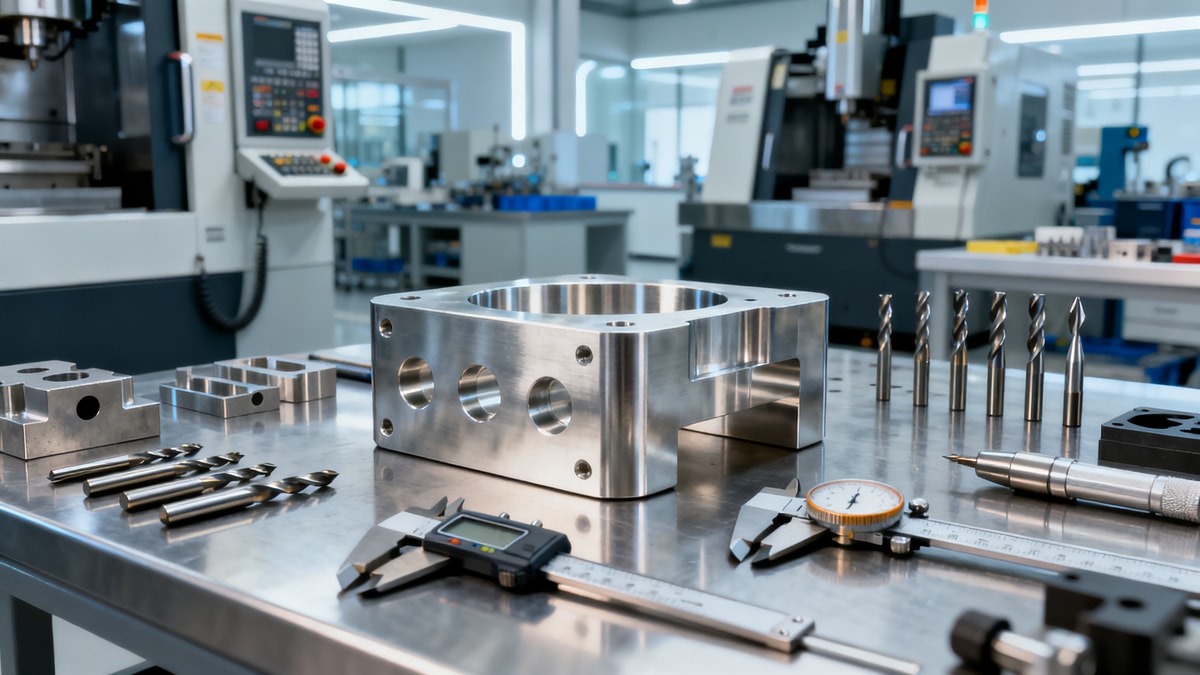
Material range is one of the first factors to check. A capable supplier should be able to machine common engineering plastics and metals relevant to the intended application, including aluminum alloys, stainless steel, brass, copper, POM, nylon, PEEK, and others where needed. If the prototype material differs from the final material, the supplier should be able to explain the impact on validation results.
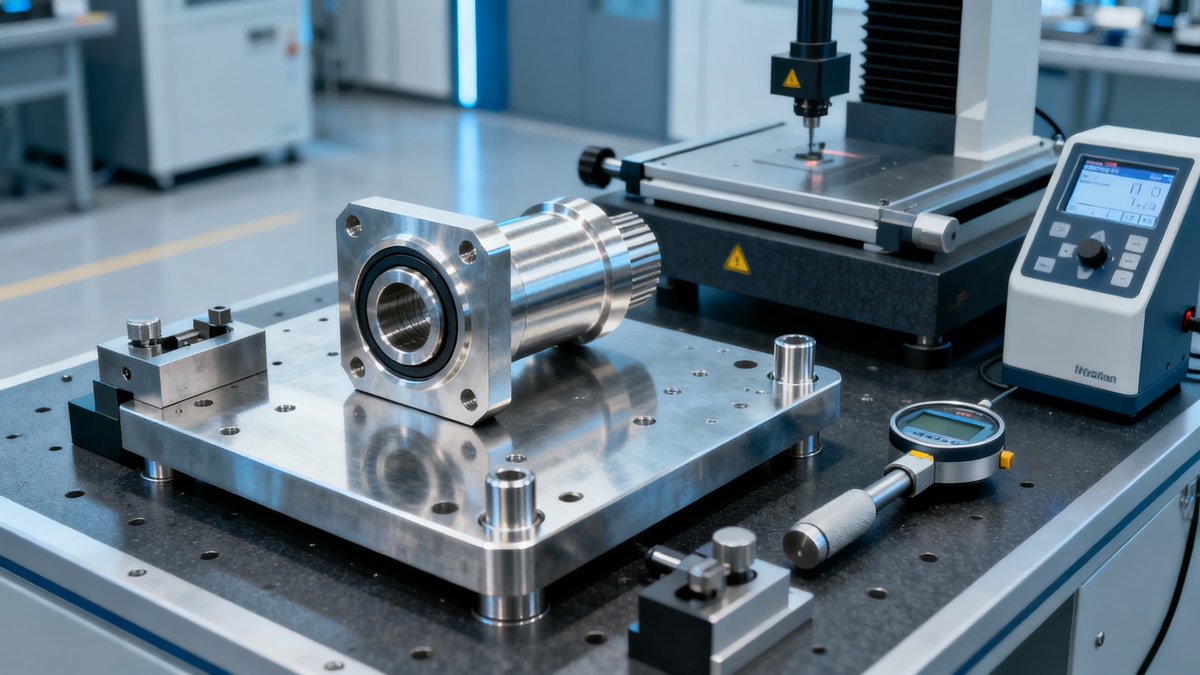
Tolerance capability and inspection practice are equally important. If the prototype is meant to validate fit or function, the supplier should specify achievable tolerances, identify critical dimensions, and provide measurement support when necessary. For industrial buyers, confidence in dimensional control is often more important than headline turnaround speed.
DFM support is another key differentiator. The best suppliers do not simply machine what is sent. They flag risky features, suggest simplifications, recommend practical radii and wall thicknesses, and point out where machining strategy may affect cost or consistency. That feedback is a major part of how CNC prototyping reduces risk.
Finally, buyers should assess responsiveness and documentation. Clear quoting, revision control, finish options, secondary operations, inspection reporting, and realistic lead-time communication all contribute to a smoother validation process. In complex B2B projects, execution reliability is part of the product value.
How can teams get better results from the prototyping process?
To make rapid prototyping CNC services truly effective, teams should approach them as part of a decision process rather than a one-time order. The best results usually come when engineering, sourcing, and project stakeholders align on what the prototype must prove before it is commissioned.
Start by ranking risks. Identify which unknowns could cause the most downstream cost or delay. Then choose prototype goals accordingly. If sealing performance is the biggest risk, prioritize surfaces, flatness, and interface dimensions. If assembly time is the concern, focus on access, fastener engagement, and stack-up behavior. A prototype that targets the biggest uncertainty creates the highest return.
It also helps to separate must-have production requirements from early learning needs. Not every cosmetic detail or full finishing process is necessary in the first prototype. In some cases, a staged approach works better: one cycle for geometry and fit, another for material and performance, and a final refinement before pre-production.
Provide complete technical information from the beginning. Clean CAD files, clear drawings, critical dimensions, material callouts, surface finish expectations, and intended application context all help the supplier recommend the right machining approach. Ambiguity at RFQ stage often leads to slower quoting, preventable assumptions, or prototypes that answer the wrong questions.
Most importantly, review prototype outcomes systematically. Document what passed, what failed, what changed, and what remains uncertain. That turns each prototype iteration into reusable product knowledge, which is one of the biggest long-term benefits of disciplined validation.
Common mistakes that weaken the value of CNC prototyping
One common mistake is using CNC prototyping too late. If teams wait until major commercial or design commitments are already locked, the prototype becomes a confirmation exercise instead of a risk-reduction tool. The greatest value comes when findings can still influence design choices.
Another mistake is treating all prototype dimensions as equally critical. This can increase cost without improving learning. A smarter approach is to identify critical-to-function features and allow flexibility where exact precision is not essential. That keeps prototype spending aligned with decision value.
Some teams also overlook supplier feedback because they assume the CAD model is already optimized. In practice, machinists often spot issues that design teams miss, especially around tool access, feature sequencing, burr risk, and practical tolerancing. Ignoring that input can carry unnecessary inefficiency into production.
Finally, teams sometimes expect one prototype to answer every question. Low-risk validation is usually iterative. The goal is not to prove perfection in a single cycle, but to reduce the most important uncertainties step by step until the remaining risk is acceptable for the next investment stage.
Conclusion: is CNC prototyping the right path for safer product decisions?
For companies developing parts where accuracy, material behavior, and manufacturability matter, rapid prototyping CNC services are often one of the most effective tools for low-risk product validation. They help transform assumptions into evidence, allowing teams to test fit, function, and production realism before making larger commitments.
The real advantage is not simply getting a part quickly. It is getting a decision-quality part quickly enough to influence design, sourcing, and launch planning. When used with clear objectives and a capable supplier, CNC prototyping can reduce uncertainty, reveal hidden cost drivers, and improve confidence across engineering and procurement teams.
For information-stage readers evaluating their options, the key takeaway is straightforward: if your product decision depends on precision, functional testing, or realistic manufacturing feedback, CNC prototyping is more than a fast service. It is a practical validation strategy that can protect budgets, timelines, and product outcomes.
Technical Specifications
Expert Insights

Chief Security Architect
Dr. Thorne specializes in the intersection of structural engineering and digital resilience. He has advised three G7 governments on industrial infrastructure security.
Related Analysis
- May 04, 2026When Components & Metals bulk order pricing stops being cheaperAuthor :Heavy Industry Strategist
- May 04, 2026What makes an Instruments & Measurement supplier dependableAuthor :Precision Metrology Expert
- May 04, 2026How to assess an Environment & Ecology exporter by documentationAuthor :Environmental Engineering Director
Core Sector // 01
Security & Safety
- What makes an Instruments & Measurement supplier dependableAuthor :Precision Metrology Expert

- When rapid prototyping CNC saves money and when it does notAuthor :Precision Metrology Expert

- Rapid prototyping CNC custom parts and the tolerance tradeoffAuthor :Precision Metrology Expert

- When Instruments & Measurement OEM quality becomes the bottleneckAuthor :Precision Metrology Expert

- Rapid prototyping CNC services for low-risk product validationAuthor :Precision Metrology Expert

- Global Industrial Laser Distance Meter Price Index Up 9.3% WeeklyAuthor :Precision Metrology Expert

- Noise Monitoring Terminal Data Looks Normal, but Is It Trustworthy?Author :Precision Metrology Expert

- Stack Gas Analyzer Calibration Issues That Lead to Bad DecisionsAuthor :Precision Metrology Expert