When Instruments & Measurement OEM quality becomes the bottleneck
Author
Date Published
Reading Time
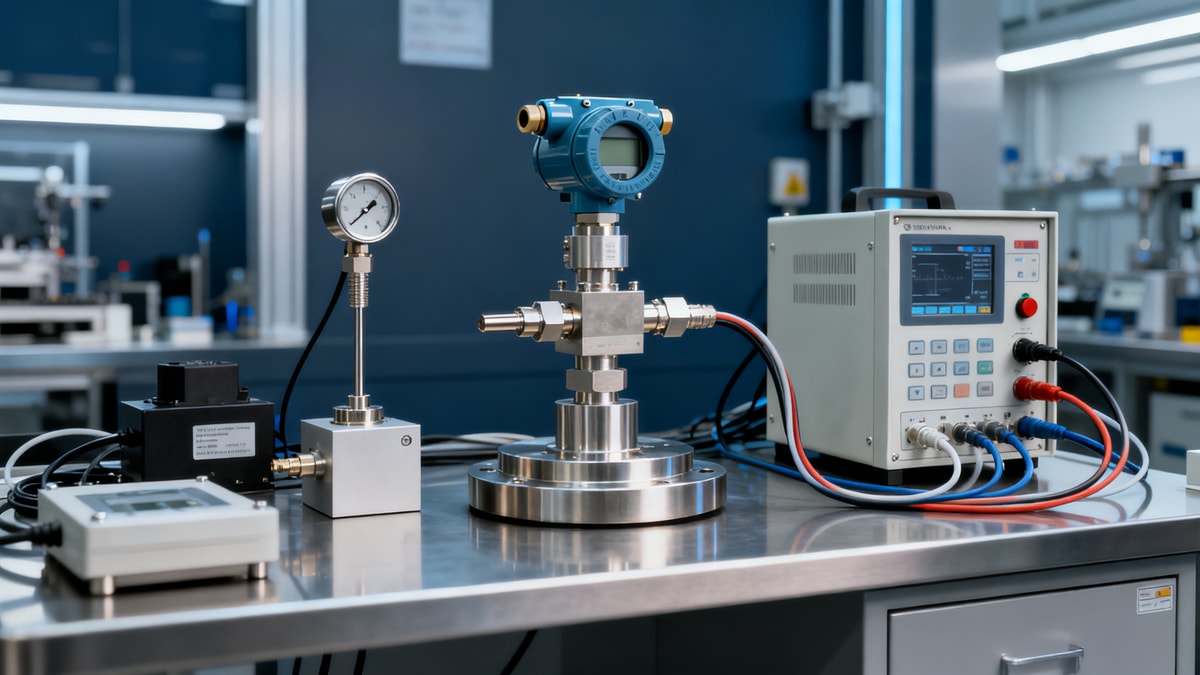
When Instruments & Measurement OEM quality becomes the bottleneck, technical evaluators face more than delayed approvals—they risk calibration drift, compliance gaps, and costly system instability. In high-stakes industrial environments, choosing the right Instruments & Measurement OEM is essential to ensuring precision, traceability, and long-term operational resilience. This article explores how to identify hidden quality risks before they disrupt performance.
Why a checklist-first approach works better for technical evaluation
For technical evaluators, the biggest mistake is treating an Instruments & Measurement OEM review as a simple vendor comparison. In reality, quality failures rarely appear as one obvious defect. They show up as small inconsistencies across drawings, material traceability, firmware stability, sensor repeatability, and after-sales calibration support. A checklist-first method helps evaluators screen these variables before they become approval delays or field failures.
This is especially important in the broader industrial sector, where measuring devices interact with control systems, safety interlocks, power equipment, environmental monitoring, and mechanical process lines. If one component from an Instruments & Measurement OEM underperforms, the issue can ripple across commissioning, validation, maintenance planning, and audit readiness. That is why technical assessment should focus on practical checkpoints rather than generic claims about quality.
Start with these non-negotiable screening points
Before comparing features or pricing, technical evaluators should confirm whether the Instruments & Measurement OEM meets the baseline conditions for reliable industrial supply. The following checklist helps separate capable manufacturers from those that only appear competitive on paper.
- Certification validity: Verify current CE, UL, ISO, and any sector-specific approvals relevant to the application. Do not accept expired certificates, draft declarations, or documents that do not match the supplied model number.
- Calibration traceability: Confirm whether calibration references are traceable to recognized national or international standards. A supplier that cannot clearly explain traceability is a high-risk choice.
- Manufacturing consistency: Ask for batch control procedures, incoming inspection standards, and final test records. Strong OEM quality means repeatability across production lots, not just one successful sample.
- Environmental robustness: Review operating temperature range, ingress protection, vibration tolerance, EMC performance, and resistance to corrosive or dusty conditions.
- Documentation quality: Check datasheets, wiring guides, installation manuals, calibration procedures, and revision control. Poor documentation usually signals weak engineering governance.
- Lifecycle support: Confirm spare parts policy, firmware update process, obsolescence notice period, and recalibration service capability.
These screening points are not administrative formalities. They directly affect whether an Instruments & Measurement OEM can support long-term plant reliability and compliance.
Core quality checklist: what to inspect before approval
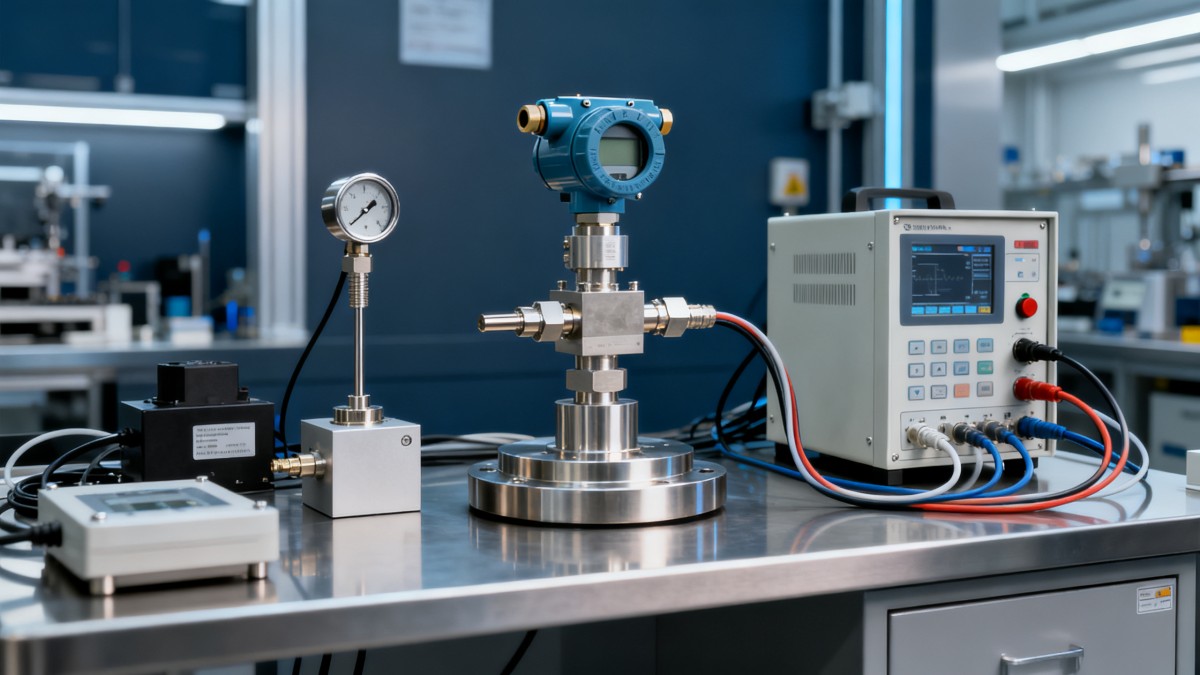
Once a supplier passes baseline screening, the next step is deeper technical evaluation. This is where hidden bottlenecks usually emerge. A strong Instruments & Measurement OEM should perform well across the full chain from design control to field stability.
1. Design and specification integrity
First, compare the datasheet with actual project requirements. Confirm accuracy class, repeatability, response time, signal output, process connection, wetted materials, and compatibility with the host control architecture. Technical evaluators should also check whether tolerances are stated under realistic operating conditions or only under laboratory benchmarks. Some OEMs advertise precision that degrades sharply in field heat, humidity, vibration, or power fluctuation.
2. Material and component traceability
Traceability is often underestimated until a failure analysis begins. Ask the Instruments & Measurement OEM whether critical components such as sensing elements, circuit boards, seals, housings, and connectors are lot-controlled. If a deviation occurs, can the supplier identify affected serial numbers quickly? Without this capability, even a minor issue can trigger large-scale replacement costs and extended downtime.
3. Test coverage and validation depth
Do not stop at factory acceptance statements. Review what tests are actually performed: zero and span verification, temperature compensation, pressure cycling, EMI resistance, burn-in, leak testing, and software validation where applicable. A mature Instruments & Measurement OEM should be able to show not only pass results but also defined acceptance criteria and failure handling procedures.
4. Calibration stability over time
Initial calibration is only the starting point. The stronger indicator is drift performance between calibration intervals. Ask for historical drift data, recommended recalibration cycles, and evidence from installed base experience. If an Instruments & Measurement OEM cannot quantify drift behavior, the evaluator should assume higher maintenance overhead and greater risk to process accuracy.
5. Firmware, software, and interface reliability
For smart instruments, quality includes digital reliability. Review protocol compatibility, firmware revision control, cybersecurity basics, event logging, and recovery behavior after power interruptions. A device that measures accurately but communicates inconsistently can still become the bottleneck in an automated facility.
How evaluation priorities change by application scenario
Not every technical team should assess an Instruments & Measurement OEM in the same way. The most important checkpoints depend on where and how the product will be used.
For safety-critical systems
Prioritize fail-safe behavior, alarm integrity, diagnostics, and certification alignment with the safety architecture. Evaluators should also verify response consistency under fault conditions, not just during normal operation.
For regulated compliance environments
Focus on traceable calibration, documented quality procedures, serial number control, change notification, and audit-ready records. In these settings, a technically acceptable instrument can still fail procurement if the OEM cannot support documentation scrutiny.
For harsh industrial sites
Temperature shock, moisture ingress, dust, corrosion, and vibration resistance become decisive. Here, an Instruments & Measurement OEM should provide field-proven sealing methods, enclosure data, and durability evidence beyond brochure statements.
For high-volume standardized procurement
Batch consistency, lead time stability, revision control, and packaging discipline are critical. A technically strong sample loses value if the OEM cannot reproduce the same quality at scale.
Commonly overlooked risks that create hidden bottlenecks
Many procurement and engineering teams check the obvious specifications but miss the issues that later cause project disruption. Technical evaluators should actively look for the following warning signs when reviewing an Instruments & Measurement OEM.
- Certificate mismatch: The certification exists, but it applies to a different configuration than the one quoted.
- Uncontrolled design revisions: Connectors, chips, or firmware versions change without clear notification, affecting interchangeability.
- Overstated accuracy claims: Published precision is valid only in narrow lab conditions and not in the actual process environment.
- Weak root-cause response: The OEM can replace failed units but cannot explain why failures occurred or how recurrence will be prevented.
- Incomplete support after delivery: Recalibration, field diagnostics, or spare assemblies are slow or unavailable in the target region.
- Data format incompatibility: Output signals or communication protocols create integration friction with SCADA, DCS, PLC, or historian systems.
These overlooked points explain why an apparently qualified Instruments & Measurement OEM can still become a bottleneck during commissioning or operation.
A practical evaluation table for faster decision-making
To keep the review process efficient, technical evaluators can score suppliers against a compact set of weighted criteria. The table below shows a practical framework.
Execution advice: what to request from an Instruments & Measurement OEM
If a project is moving toward supplier qualification, the most efficient next step is to request evidence in a structured way. Instead of asking broad questions about quality, technical evaluators should request specific records that reveal process maturity.
- Latest certification package tied to exact model numbers and configurations
- Sample calibration certificate with traceability references and uncertainty information
- Factory test procedure and sample final inspection report
- Revision history for hardware, software, and firmware
- Failure analysis example showing corrective and preventive action capability
- Lifecycle statement covering support duration, spare policy, and end-of-life notice period
This approach gives a much clearer picture of whether the Instruments & Measurement OEM is equipped for industrial-scale responsibility rather than short-term order fulfillment.
FAQ for technical evaluators
How can I tell if low price reflects hidden quality risk?
Compare the quoted scope against testing depth, documentation quality, calibration support, and revision control. A cheaper Instruments & Measurement OEM often reduces cost through weaker validation or limited lifecycle support.
Is sample approval enough to qualify an OEM?
No. Sample approval shows initial capability, not production consistency. Qualification should include process controls, batch traceability, and support performance under real delivery conditions.
What matters most for long-term reliability?
The best predictor is not a marketing claim but the combination of drift stability, controlled manufacturing, responsive corrective action, and dependable recalibration support.
Final decision guide and next-step questions
When evaluating an Instruments & Measurement OEM, the goal is not simply to approve a device that works today. The real objective is to secure measurement performance that remains precise, compliant, and serviceable across the full operating lifecycle. That requires a disciplined review of certification, traceability, production control, environmental durability, integration readiness, and support infrastructure.
If your organization is preparing to move forward, prioritize a technical discussion around six items: exact application parameters, required standards, calibration interval expectations, integration constraints, target delivery schedule, and long-term service model. Those answers will quickly reveal whether an Instruments & Measurement OEM can meet your operational risk threshold or whether quality will become the bottleneck before the system even reaches stable production.
Technical Specifications
Expert Insights

Chief Security Architect
Dr. Thorne specializes in the intersection of structural engineering and digital resilience. He has advised three G7 governments on industrial infrastructure security.
Related Analysis
- May 04, 2026When Components & Metals bulk order pricing stops being cheaperAuthor :Heavy Industry Strategist
- May 04, 2026What makes an Instruments & Measurement supplier dependableAuthor :Precision Metrology Expert
- May 04, 2026How to assess an Environment & Ecology exporter by documentationAuthor :Environmental Engineering Director
Core Sector // 01
Security & Safety
- What makes an Instruments & Measurement supplier dependableAuthor :Precision Metrology Expert

- When rapid prototyping CNC saves money and when it does notAuthor :Precision Metrology Expert

- Rapid prototyping CNC custom parts and the tolerance tradeoffAuthor :Precision Metrology Expert

- When Instruments & Measurement OEM quality becomes the bottleneckAuthor :Precision Metrology Expert

- Rapid prototyping CNC services for low-risk product validationAuthor :Precision Metrology Expert

- Global Industrial Laser Distance Meter Price Index Up 9.3% WeeklyAuthor :Precision Metrology Expert

- Noise Monitoring Terminal Data Looks Normal, but Is It Trustworthy?Author :Precision Metrology Expert

- Stack Gas Analyzer Calibration Issues That Lead to Bad DecisionsAuthor :Precision Metrology Expert