When rapid prototyping CNC saves money and when it does not
Author
Date Published
Reading Time
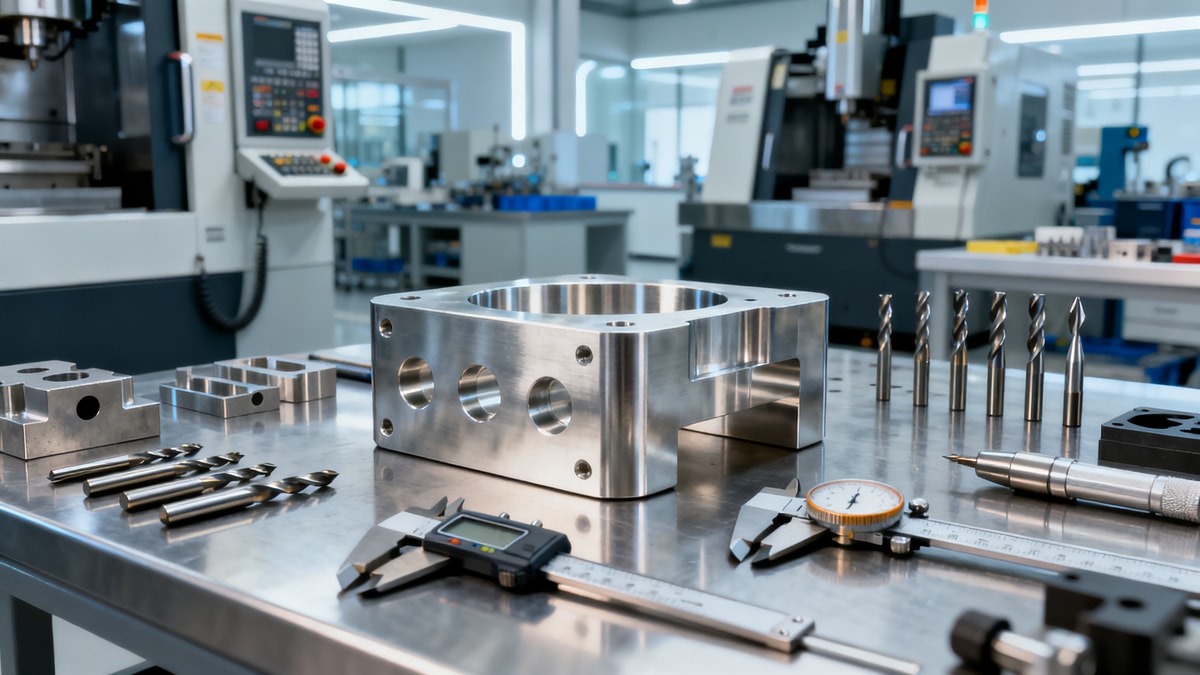
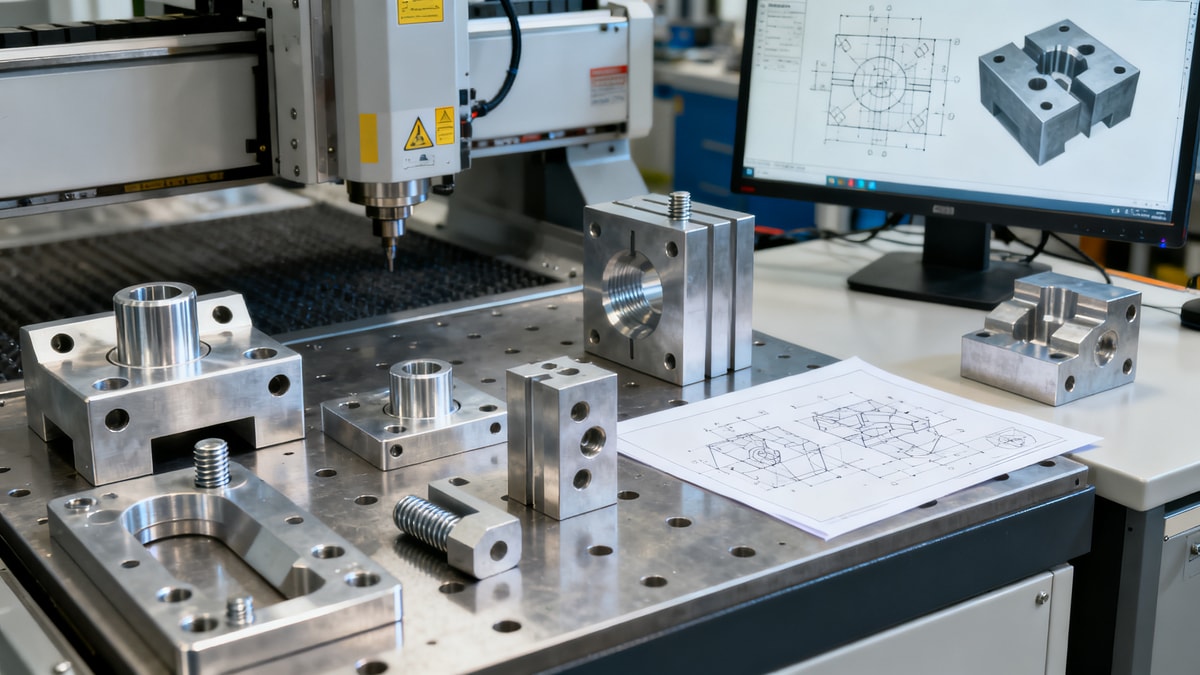
For finance approvers, the real question is not whether rapid prototyping CNC is fast, but whether it improves total project economics. In industrial sourcing, CNC prototypes can reduce redesign costs, shorten validation cycles, and lower risk before full production. Yet in some cases, setup fees, material waste, and design changes can outweigh the savings. Understanding where the numbers work is essential to making a defensible investment decision.
Why finance teams should use a checklist before approving rapid prototyping CNC
A checklist approach matters because the cost impact of rapid prototyping CNC is rarely visible in the quoted unit price alone. Procurement may see a prototype cost that looks high compared with additive methods or manual mockups, while engineering sees value in tolerance control, test realism, and material equivalence. Finance needs a way to connect both views.
In heavy industry, infrastructure projects, and precision component sourcing, the decision should be based on total cost of validation, not just prototype price. A single prototype made from production-grade metal can expose dimensional conflicts, assembly issues, sealing failures, or compliance risks before tooling, field deployment, or customer inspection. When that prevention value exceeds machining and iteration cost, rapid prototyping CNC saves money. When the project is still too fluid, or when the prototype does not answer a critical business question, it often does not.
Start with this decision checklist: where the savings usually come from
Before approving a budget line, finance approvers should verify whether the proposed rapid prototyping CNC effort creates measurable savings in one or more of the following areas:
- It reduces the risk of expensive tooling rework by validating geometry, fit, or function before production release.
- It shortens engineering decision cycles, allowing earlier freeze of drawings, BOMs, and supplier commitments.
- It allows realistic testing in the same or similar material planned for serial production, especially where heat, pressure, wear, vibration, or electrical interfaces matter.
- It lowers field failure exposure by identifying weakness before customer trials, pilot installation, or regulatory review.
- It prevents overbuying of inventory, tooling, or long-lead components tied to an unproven design.
- It improves supplier alignment because machinists, quality teams, and design engineers can work from a physically verified part instead of assumptions.
If none of these value levers is present, then rapid prototyping CNC may be more of a convenience expense than a cost-saving measure.
Use these five judgment standards before signing off
1. Confirm what decision the prototype must unlock
The first approval question is simple: what business decision becomes safer or faster once the part is machined? Good answers include design freeze, supplier qualification, tolerance confirmation, assembly validation, testing for compliance, or customer sample approval. Weak answers include “engineering wants to see it” without a defined next step.
A prototype with no clear gate decision often leads to repeated iterations without a measurable return. Finance should ask for a specific output such as pass/fail criteria, expected drawing revisions, or a production go/no-go checkpoint.
2. Check whether the geometry is stable enough for CNC learning to matter
Rapid prototyping CNC becomes cost-effective when the design is mature enough that machining feedback can improve the final production path. If hole patterns, wall thicknesses, thread locations, or assembly interfaces are still changing weekly, setup and reprogramming costs can accumulate faster than value.
As a practical rule, finance should be cautious if engineering expects major dimensional changes after the first prototype. In that situation, lower-cost concept models or digital simulation may be better before CNC is used for precision confirmation.
3. Verify whether material realism affects the economics
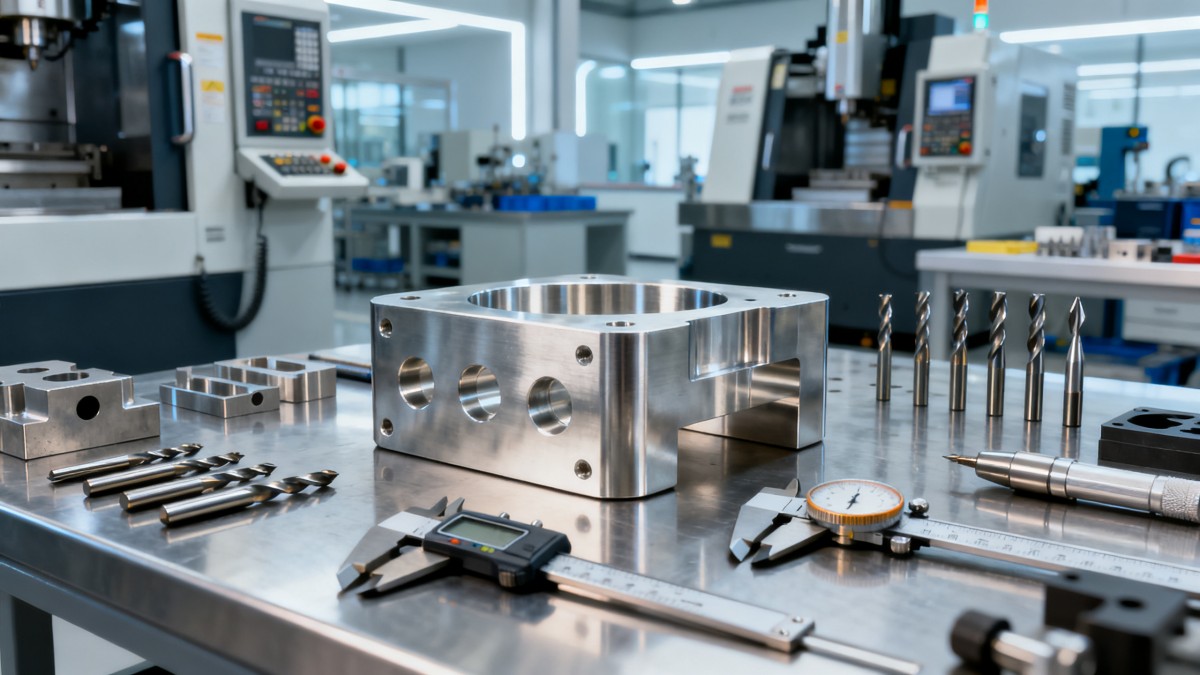
One of the strongest reasons to choose rapid prototyping CNC is the ability to test in aluminum, stainless steel, brass, engineering plastics, or other application-relevant materials. This matters in industrial environments where thermal expansion, surface finish, corrosion resistance, structural stiffness, or electrical conductivity influence real-world performance.
If the project only needs a visual model or ergonomic check, full CNC material realism may be unnecessary. But if a sealing face, bearing seat, contact surface, or enclosure mounting feature must behave as it will in service, the higher prototype cost can prevent much larger downstream losses.
4. Compare prototype cost against the cost of late discovery
Finance approvers should not assess rapid prototyping CNC in isolation. The relevant comparison is the cost of discovering the same issue later. Late discovery may trigger tooling changes, delayed commissioning, scrapped inventory, nonconformance reports, contractor downtime, retesting, or customer escalation.
In EPC and industrial procurement settings, even a minor dimensional issue can create cascading schedule costs across fabrication, site installation, and acceptance testing. A prototype that avoids one delay event may justify itself immediately.
5. Evaluate iteration discipline, not just first-piece price
Rapid prototyping CNC saves money when teams manage iterations deliberately. It loses money when every internal comment becomes another revision order. Finance should ask how many iterations are planned, what each round is supposed to validate, and what criteria will end the cycle.
A disciplined two-round prototype program can be highly efficient. An open-ended prototype stream with weak change control can quietly absorb budget without improving readiness.
When rapid prototyping CNC usually saves money
For finance decision-makers, the most favorable scenarios share a common pattern: the prototype answers a high-value question before expensive commitments are made.
- Low-to-medium volume industrial parts where tooling amortization is limited and machining may remain part of final production.
- Tight-tolerance components where fit, concentricity, flatness, or hole position directly affect equipment performance.
- Safety-relevant or compliance-sensitive assemblies where realistic test samples reduce regulatory or customer approval risk.
- Custom machinery, fixtures, brackets, housings, manifolds, and interface parts that must match actual installation conditions.
- Projects with expensive downstream dependencies such as molds, dies, castings, forgings, or imported long-lead items.
- Programs where time-to-validation carries financial value, such as launch deadlines, shutdown windows, or contract milestones.
When rapid prototyping CNC often does not save money
There are also clear cases where the economics are weaker. Approvers should be careful when any of the following conditions apply:
- The design is still conceptual and likely to change substantially after stakeholder review.
- The part has highly complex organic geometry better suited to additive manufacturing for early concept stages.
- The prototype is being requested mainly for appearance, not for functional validation or production learning.
- Material cost is high and scrap risk is significant, especially for exotic alloys with uncertain final dimensions.
- The supplier must create special fixtures, extensive CAM programming, or difficult setups for a one-off part with little reuse value.
- Internal change management is weak, making repeated revisions likely before testing criteria are even defined.
In these situations, rapid prototyping CNC may still be useful, but it should not automatically be framed as a cost-saving strategy.
A practical finance review table for rapid prototyping CNC
The table below can help approvers organize the decision quickly and consistently.
Common cost items finance teams often overlook
The quoted machining price is only part of the economic picture. To judge rapid prototyping CNC accurately, include these often-missed cost factors:
- Engineering hours spent preparing machinable drawings, tolerances, and revision packages.
- Supplier setup charges, fixturing, and CAM programming that may not be obvious in a simplified quote.
- Inspection and metrology requirements if the prototype is being used for quality or compliance evidence.
- Secondary operations such as anodizing, passivation, deburring, heat treatment, or surface grinding.
- Expedited freight or split shipments when schedule pressure exists.
- The internal cost of delayed decision-making if the prototype arrives but no test plan is ready.
These factors do not mean CNC prototyping is uneconomical. They mean the approval should be based on full-cycle costing rather than shop-rate comparisons alone.
Execution advice: what to request before approving budget
If your company wants to move forward with rapid prototyping CNC, ask for a short approval package that includes the essentials. This keeps the decision commercial, technical, and auditable.
- A one-page objective statement defining what the prototype must prove.
- The expected number of iterations and the trigger for any additional round.
- Material specification, critical tolerances, and any required post-processing.
- A comparison of prototype cost versus estimated cost of late-stage failure or redesign.
- A test or inspection plan with decision owners and deadlines.
- A statement of whether prototype learnings will transfer to production sourcing, supplier qualification, or process planning.
This information helps finance approvers distinguish between necessary investment and uncontrolled experimentation.
FAQ for finance approvers evaluating rapid prototyping CNC
Is rapid prototyping CNC always more expensive than alternatives?
Not always. The upfront piece price may be higher than simple printed models, but the total project cost can be lower if CNC reveals functional issues early, especially in metal parts or tolerance-critical assemblies.
How many prototype rounds are usually reasonable?
For many industrial projects, one to two purposeful rounds are reasonable. More than that may still be justified, but only if each round has a defined learning objective and measurable risk reduction.
What is the biggest financial mistake in CNC prototype approval?
The biggest mistake is approving rapid prototyping CNC without a decision gate. If the prototype does not clearly support design freeze, qualification, testing, or customer approval, the spend can become hard to defend.
Final decision guide and next-step questions
The best way to judge rapid prototyping CNC is to ask whether it reduces the total cost of uncertainty. If it prevents expensive rework, supports realistic testing, accelerates release, or protects a larger capital commitment, it is often a smart financial decision. If it is being used before the design is stable, without a firm test plan, or for low-value review purposes, the savings may not materialize.
Before approving a supplier or internal prototype request, prioritize these questions: What exact decision will this prototype enable? Which tolerances and materials truly matter? How many iterations are planned? What is the cost of finding the same problem later? Will prototype learning transfer into production, compliance, or procurement risk reduction? Those answers will give finance teams a stronger basis for approving, delaying, or reshaping the investment.
Technical Specifications
Expert Insights

Chief Security Architect
Dr. Thorne specializes in the intersection of structural engineering and digital resilience. He has advised three G7 governments on industrial infrastructure security.
Related Analysis
- May 04, 2026When Components & Metals bulk order pricing stops being cheaperAuthor :Heavy Industry Strategist
- May 04, 2026What makes an Instruments & Measurement supplier dependableAuthor :Precision Metrology Expert
- May 04, 2026How to assess an Environment & Ecology exporter by documentationAuthor :Environmental Engineering Director
Core Sector // 01
Security & Safety
- What makes an Instruments & Measurement supplier dependableAuthor :Precision Metrology Expert

- When rapid prototyping CNC saves money and when it does notAuthor :Precision Metrology Expert

- Rapid prototyping CNC custom parts and the tolerance tradeoffAuthor :Precision Metrology Expert

- When Instruments & Measurement OEM quality becomes the bottleneckAuthor :Precision Metrology Expert

- Rapid prototyping CNC services for low-risk product validationAuthor :Precision Metrology Expert

- Global Industrial Laser Distance Meter Price Index Up 9.3% WeeklyAuthor :Precision Metrology Expert

- Noise Monitoring Terminal Data Looks Normal, but Is It Trustworthy?Author :Precision Metrology Expert

- Stack Gas Analyzer Calibration Issues That Lead to Bad DecisionsAuthor :Precision Metrology Expert