Industrial Endoscopes for Tight Spaces
Author
Date Published
Reading Time
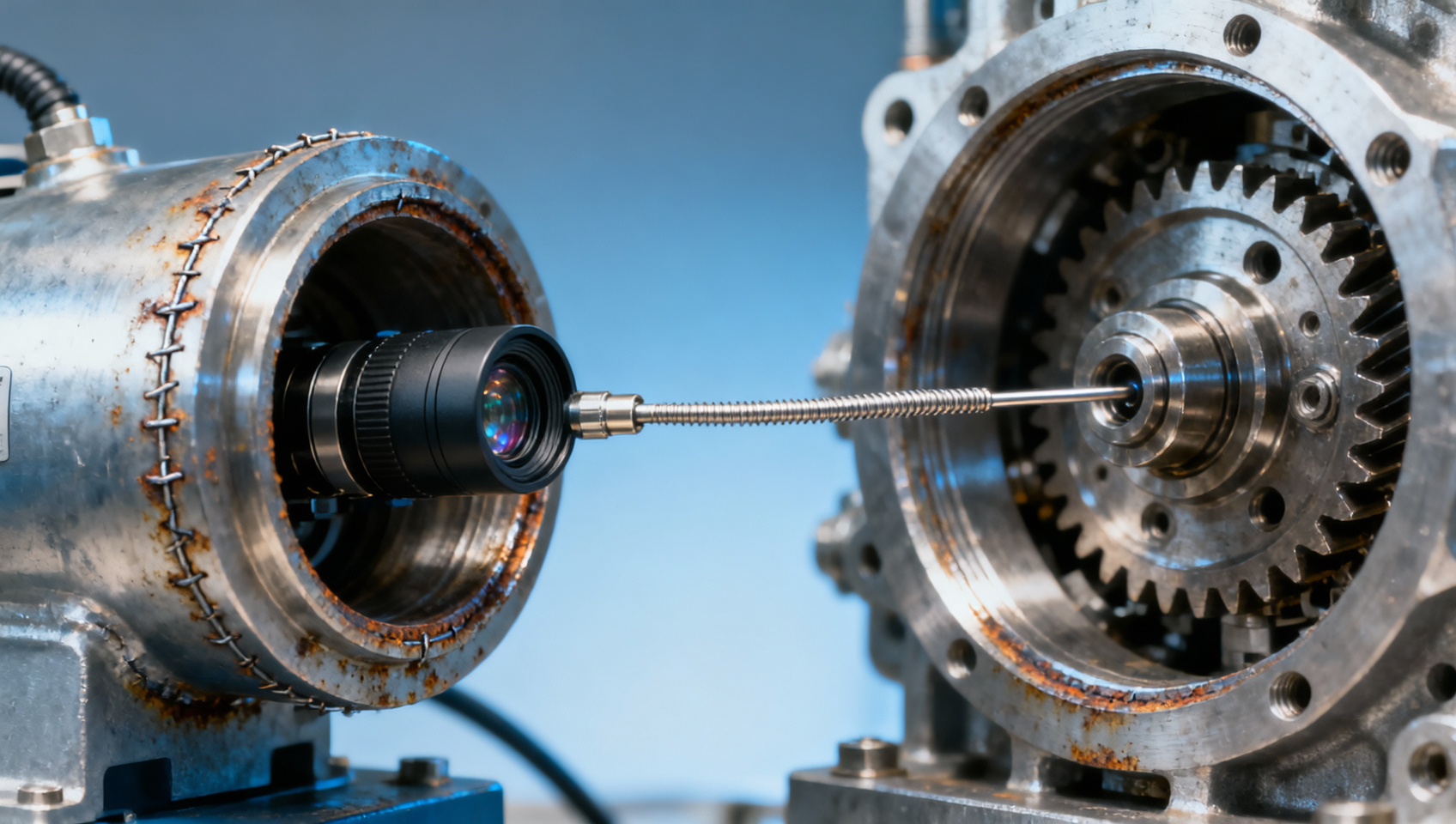
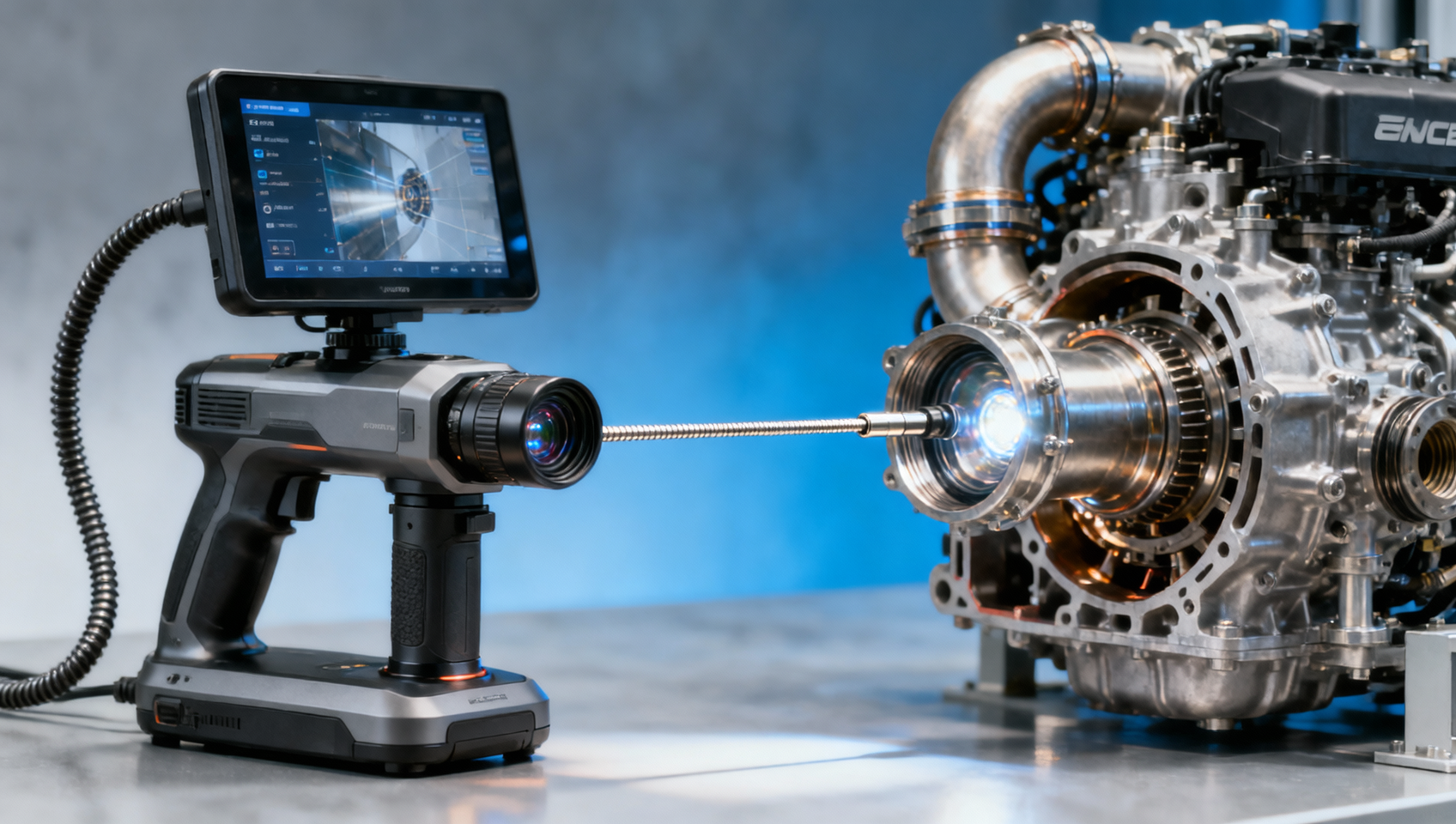
When access is limited and precision matters, industrial endoscopes and borescope inspection camera solutions become essential for fast, non-destructive inspection. From maintenance teams and operators to procurement managers and decision-makers, choosing the right tool can reduce downtime, improve safety, and support smarter asset management. This guide explores what to evaluate when selecting industrial endoscopes for tight spaces.
Across power systems, process plants, fabrication shops, transport assets, HVAC infrastructure, and mechanical assemblies, many critical defects begin in areas that cannot be seen directly. Weld porosity inside pipes, corrosion behind access panels, deposits in heat exchangers, and wear inside gear housings are common examples. Opening equipment for visual confirmation often adds 2 to 8 hours of labor, raises safety exposure, and may interrupt production longer than the inspection itself.
Industrial endoscopes help bridge that gap. For operators, they support quicker fault isolation. For maintenance teams, they reduce unnecessary disassembly. For procurement professionals, they create a measurable path to lower life-cycle cost. For decision-makers, they improve inspection coverage while supporting compliance, uptime, and planned maintenance strategies.
Why Tight-Space Inspection Demands Specialized Industrial Endoscopes
A consumer-grade camera may appear sufficient for a simple visual check, but industrial inspection environments are harsher and less forgiving. Tight spaces often involve bend radii below 50 mm, limited lighting, oil mist, vibration, high humidity, and temperatures that may range from 0°C to 60°C in routine work, with some specialized probes tolerating more. In these conditions, image stability, probe durability, and articulation quality matter as much as resolution.
The real value of a borescope inspection camera is not just seeing inside a cavity. It is seeing enough detail to make an operational decision. Can a crack be distinguished from residue? Is pitting superficial or progressive? Is a blockage local or extended deeper into the line? In many facilities, a 10-minute internal check can determine whether a machine returns to service, moves to planned shutdown, or requires immediate isolation.
This is especially relevant in sectors where unplanned downtime is expensive. A short inspection delay in a utility room, compressor skid, or production line may affect multiple downstream operations. If an endoscope avoids even one unnecessary teardown per month, the payback period can be significantly shorter than expected, particularly for assets with high labor access costs.
Typical industrial use cases
Tight-space inspection appears in more applications than many buyers initially assume. It is used inside tubing, boilers, turbines, pumps, castings, weldments, valves, gearboxes, ducts, engines, and structural cavities. In facility maintenance, it supports internal checks behind walls, above ceilings, and inside conduits where invasive opening would increase restoration costs.
- Mechanical maintenance: checking bearings, gear teeth, internal seals, and lubricant contamination in housings with limited access.
- Process and piping inspection: viewing deposits, scaling, corrosion, weld quality, or obstructions inside tubes and pipelines.
- Electrical and utility spaces: assessing cable routing, conduit condition, junction areas, and confined enclosures before intervention.
- Fabrication and QA: inspecting inaccessible weld roots, casting cavities, machined bores, and assembled components before shipment.
Common hidden costs of poor tool selection
Selecting on price alone can create operational inefficiency. A probe that is too thick for a 6 mm access point, too short for a 1.5 m cavity, or too rigid for a double bend may make inspection impossible. Likewise, low light output or poor articulation can result in repeat entry attempts, extending task time and increasing the chance of probe damage.
The table below shows how inspection conditions affect the required industrial endoscope configuration.
The key takeaway is straightforward: tight-space inspection is not one problem but several at once. Access size, path geometry, contamination level, viewing angle, and reporting needs all affect tool performance. A capable industrial endoscope is therefore part optical device, part access solution, and part documentation platform.
Core Selection Criteria: What Buyers and Users Should Evaluate
Choosing the right unit starts with the inspection task, not the catalog headline. Resolution matters, but it should be evaluated alongside probe diameter, insertion length, articulation, field of view, lighting, battery runtime, storage, and reporting workflow. In practical use, a lower-resolution system with better access control may produce more useful inspection evidence than a higher-resolution device that cannot reach the target area reliably.
For operators, the first three questions are usually physical: how small is the entry point, how far must the probe travel, and how many turns must it make? For procurement teams, the next set of questions is broader: how frequently will it be used, what environments will it encounter, and what support or replacement cycle is acceptable over 12 to 36 months?
Another point often missed is display and reporting quality. If inspection images are used only for live viewing, a basic screen may be enough. If findings will support maintenance approval, supplier claims, quality release, or internal audits, image capture, annotation, and file export become more important. In those cases, the device should fit the plant’s documentation process, not just the technician’s hand.
Technical factors that affect real-world usability
- Probe diameter: Common industrial ranges include 4 mm, 6 mm, and 8 mm. Smaller diameters improve access but may reduce robustness or light output.
- Working length: Typical lengths range from 1 m to 3 m. Longer probes increase reach but can reduce handling precision in narrow passages.
- Articulation: Fixed, 2-way, and 4-way designs serve different path complexities. For branched or offset viewing, articulation is usually worth the premium.
- Camera and illumination: LED brightness control, anti-glare performance, and close-focus ability often determine whether a surface defect is interpretable.
- Ingress and durability: In wet, dusty, or oily environments, suitable sealing and easy-clean sheath design reduce service interruptions.
Selection matrix for different buyer priorities
Different stakeholders look at the same product differently. The comparison table below aligns key purchasing priorities with the most relevant industrial endoscope features.
A useful buying approach is to rank requirements in three levels: mandatory, preferred, and optional. This prevents overbuying. For example, a plant inspecting standard pipe interiors every week may need a 6 mm articulated probe and durable housing, but not a premium measurement overlay if the images are only used for maintenance screening.
At the same time, under-specifying can be just as costly. A low-cost unit that fails after repeated exposure to coolant, dust, or abrasive residue may have a lower purchase price but a higher 24-month ownership cost once replacement frequency, downtime, and operator frustration are included.
Matching the Endoscope to the Application Environment
Not every tight space presents the same inspection challenge. A food-grade stainless line, a refinery valve cavity, an HVAC duct, and a gearbox housing all require different priorities. The correct industrial endoscope configuration depends on three environmental layers: physical access, contamination profile, and decision objective. In other words, where you inspect, what surrounds the target, and what conclusion you need to make.
For example, in mechanical equipment, the goal may be to identify wear, scoring, or foreign debris. In process systems, the priority may be deposit thickness, corrosion signs, or blockage location. In electrical infrastructure, the task may focus more on routing, obstruction, moisture presence, or damage confirmation. These differences directly shape the needed lens angle, lighting intensity, and insertion flexibility.
The most efficient teams often create an application map before procurement. This can be done in 4 steps: list major inspection points, record access dimensions, define environmental conditions, and identify the reporting requirement. That process avoids buying a generic tool that fits only 50% of real tasks.
Application-based recommendations
The table below provides a practical cross-reference between common industrial scenarios and recommended configuration priorities.
One practical lesson from field use is that contamination control should not be treated as a minor detail. Residual oils, fine particulate matter, and water ingress are among the most common reasons for shortened service life. If the equipment will be used in 3 or more departments, cleaning protocol and probe handling discipline should be part of the rollout plan from day one.
Environmental and operational risk checklist
- Confirm whether the inspection path includes sharp turns, threads, burrs, or abrasive edges that may cut or scrape the insertion tube.
- Check whether the target area is dry, damp, oily, or chemically exposed, because each condition affects sealing and cleaning needs.
- Determine whether the inspection is a one-time diagnosis, monthly preventive routine, or pre-shutdown verification process.
- Align the device output with internal reporting practice, especially if image records must be retained for 6 months, 12 months, or longer.
In many organizations, the most successful purchase is not the most advanced device on paper. It is the one that fits the widest set of actual work orders while remaining simple enough for repeated use by trained technicians across shifts.
Procurement, Deployment, and Total Cost Considerations
Industrial endoscope procurement should be evaluated as an operational capability, not just a tool purchase. The initial unit price is only one component. Accessories, probe replacement intervals, training time, support responsiveness, software compatibility, and inspection reporting efficiency all affect return on investment. For many B2B buyers, a 12-month ownership view is more useful than a single purchase comparison.
A practical deployment plan often includes three phases. Phase 1 is requirement mapping and trial confirmation. Phase 2 is operator onboarding and procedure setup. Phase 3 is performance review after 30 to 90 days of use. This structured approach helps both procurement and maintenance teams verify whether the selected borescope inspection camera is reducing access time, preventing unnecessary disassembly, and producing actionable images.
Service support also deserves attention. If the device is used in mission-critical maintenance, delayed repair can remove a valuable troubleshooting resource from the team. Buyers should clarify lead times for replacement probes, accessory availability, calibration or inspection procedures where applicable, and expected response windows for technical support.
Questions procurement teams should ask suppliers
- What access diameters and insertion lengths can the proposed system reliably support in daily industrial use?
- What consumables or wear items typically require replacement over 12 to 24 months?
- What is the recommended cleaning process after exposure to oil, dust, moisture, or fine particulates?
- How are images and videos exported, stored, and integrated into maintenance or QA records?
- What training materials, quick-start guides, or application support are available for multi-site rollout?
Common procurement mistakes
The first mistake is buying by resolution headline alone. The second is selecting one probe size for all jobs without validating access points. The third is ignoring operator usability. If the control interface is difficult, image capture is slow, or articulation is inconsistent, field adoption drops quickly. A device that sits in a cabinet contributes no value, regardless of specification sheet quality.
The fourth mistake is failing to define acceptance criteria before purchase. Good criteria might include inspection completion time, image usability, access success rate, cleaning time, and fit with existing maintenance workflow. Even 5 simple metrics tracked over the first 8 to 12 weeks can show whether the investment is performing as intended.
For enterprise buyers, standardization across sites can be beneficial if 60% to 80% of use cases are similar. However, highly specialized assets may justify a mixed fleet strategy, where one general-purpose industrial endoscope handles routine inspections and one advanced articulated system is reserved for critical or complex tasks.
Maintenance Practices, Training, and FAQ for Long-Term Value
Even a high-quality industrial endoscope can underperform if handling practices are weak. Probe damage, lens contamination, improper storage, and battery neglect are frequent causes of reduced service life. In plants with rotating teams or contractors, short training sessions of 30 to 60 minutes can substantially improve consistency in probe insertion, lighting adjustment, image capture, and post-use cleaning.
Maintenance discipline should be proportionate to usage. A unit used once per week may only need routine cleaning and visual checks. A device used daily in oily or wet conditions should have a more formal inspection schedule, including sheath examination, articulation response check, connector review, and storage condition control. This is particularly important where replacement lead time may extend from 7 days to several weeks.
Documentation is another long-term value driver. Saved images are more useful when they include location, asset ID, date, and defect description. Over time, this creates a visual inspection history that supports trend-based maintenance rather than one-off troubleshooting. For facility managers and decision-makers, that means better planning and fewer reactive interventions.
Routine care checklist
- Inspect the probe sheath before and after use for cuts, abrasion, or deformation, especially after passing threaded or rough-edged openings.
- Clean the lens and insertion tube using the method appropriate for the contamination type; avoid aggressive materials not approved for the device surface.
- Store the system in a dry, protected case and avoid tight coil radii that may stress the insertion tube over time.
- Check battery condition and charging routine so the unit is ready for urgent maintenance calls without delay.
FAQ: key questions from operators and buyers
How do I choose the right probe diameter?
Start with the smallest actual access point and leave reasonable clearance for insertion. If the opening is 8 mm, a 6 mm probe is often more practical than an 8 mm probe. Also consider bends and edge conditions, not just the nominal opening size.
What insertion length is usually needed?
For many general industrial tasks, 1 m to 1.5 m covers routine inspection. Longer lengths up to 3 m are useful for deep cavities, ducting, tubes, and remote access points, but they should be matched with handling stability and image quality.
Is articulation always necessary?
No. For straight access paths, a non-articulating or basic design may be enough. For offset surfaces, internal branches, or defect confirmation behind components, 2-way or 4-way articulation often makes the difference between partial and complete inspection.
How long is the typical deployment cycle?
For standard procurement, validation and onboarding can often be completed within 1 to 3 weeks, depending on supplier response, internal approval steps, and whether site-level training is required.
What should decision-makers monitor after purchase?
Track reduction in disassembly tasks, inspection completion time, repeat fault investigation rate, and percentage of usable inspection records. These 4 indicators usually show whether the investment is improving maintenance efficiency and inspection confidence.
Industrial endoscopes for tight spaces deliver the most value when the selection process is tied directly to access conditions, inspection goals, documentation needs, and long-term service realities. The right borescope inspection camera can shorten diagnostic time, lower unnecessary teardown work, improve safety in restricted areas, and support better maintenance decisions across multiple asset types.
For research teams, operators, buyers, and enterprise leaders, the priority is clear: choose a solution that fits real inspection paths, holds up in industrial conditions, and integrates with your maintenance or quality workflow. If you are evaluating options for plant operations, facility management, EPC projects, or industrial sourcing, contact us to discuss your application, compare suitable configurations, and get a tailored recommendation for tighter, safer, and more efficient inspections.
Expert Insights

Chief Security Architect
Dr. Thorne specializes in the intersection of structural engineering and digital resilience. He has advised three G7 governments on industrial infrastructure security.
Related Analysis
Core Sector // 01
Security & Safety
- Industrial Endoscopes for Tight SpacesAuthor :Precision Metrology Expert

- Borescope Inspection Camera Buying TipsAuthor :Precision Metrology Expert

- Overhead crane pendant control latency isn’t just about cable length — EMI from nearby VFDs plays a bigger roleAuthor :Precision Metrology Expert

- Photoelectric sensors misfire near stainless steel surfaces — is your emitter alignment compensating for reflectivity?Author :Precision Metrology Expert

- Proximity sensors wholesale units vary widely in sensing distance consistency — temperature hysteresis explains whyAuthor :Precision Metrology Expert

- Convex safety mirrors indoors and outdoors need different lensesAuthor :Precision Metrology Expert

- JD, Meituan, Alibaba Accelerate Entry into Auto Sales, China's Smart Mobility Services Going Global May Drive Exports of Vehicle Hardware and System IntegrationAuthor :Precision Metrology Expert

- Saudi SASO Releases Mandatory Standard SASO IEC 61215-3:2026 for PV Module Efficiency and Sand Resistance, Effective October 2026Author :Precision Metrology Expert