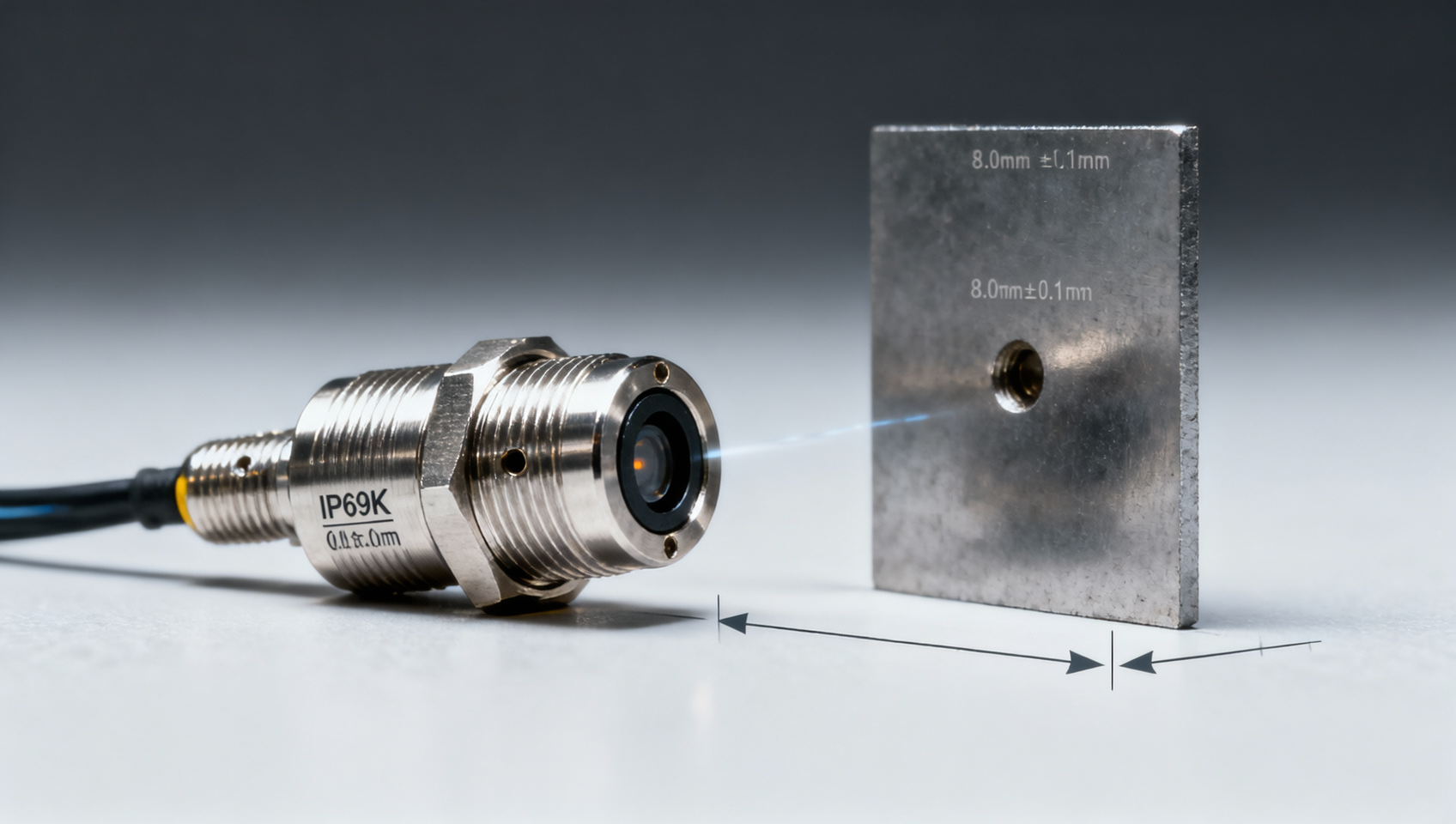
Overhead crane pendant control latency isn’t just about cable length — EMI from nearby VFDs plays a bigger role
Author
Date Published
Reading Time
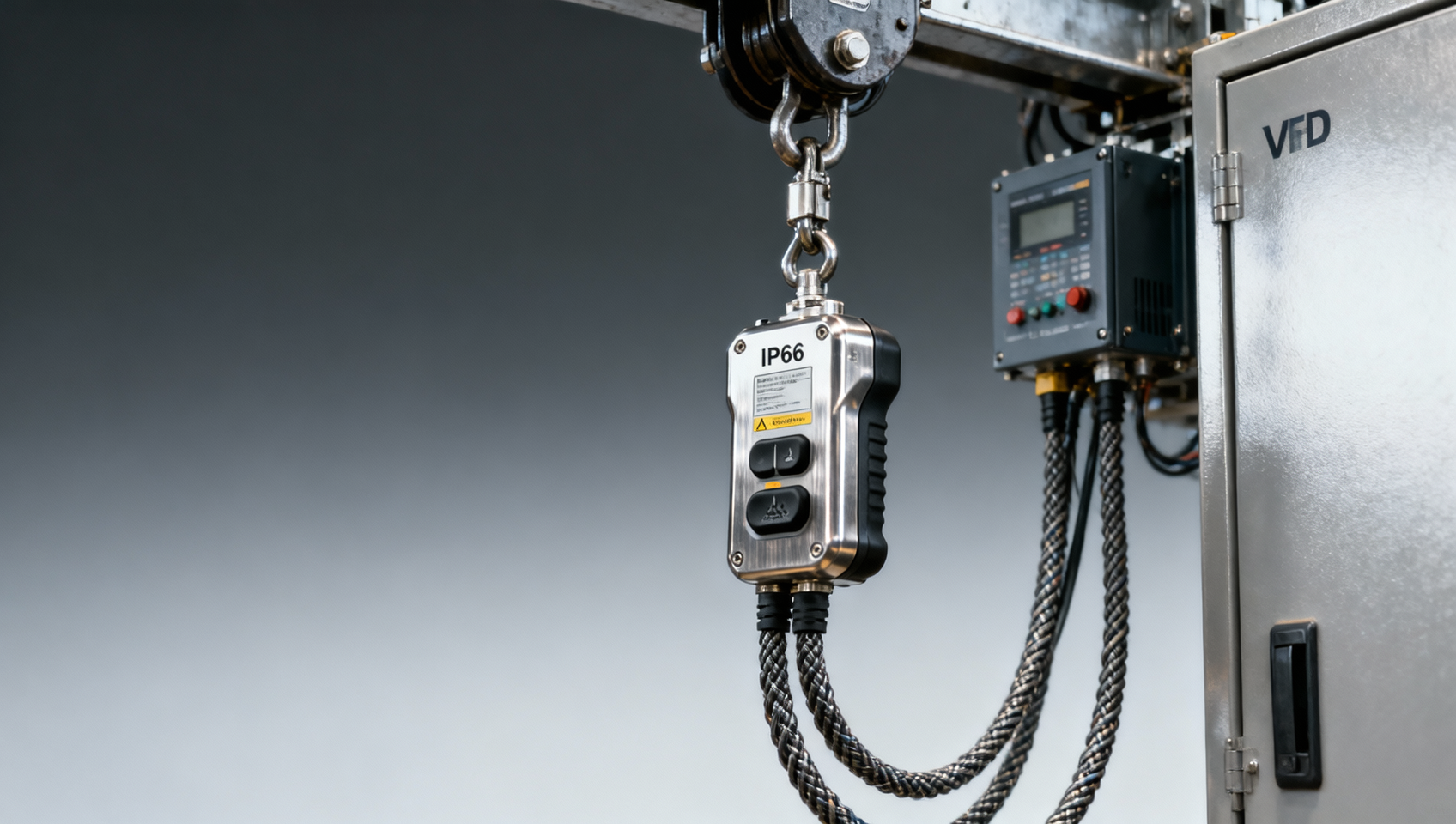
Overhead crane pendant control latency—often misattributed to cable length—is frequently driven by electromagnetic interference (EMI) from nearby variable frequency drives (VFDs), compromising safety and precision in industrial environments. This critical insight intersects with core infrastructure concerns across Electrical & Power Grid, Mechanical Components & Metallurgy, and Safety & Security pillars. Whether you're specifying load break switches, automatic transfer switches (ATS), isolation transformers, or explosion-proof enclosures—or procuring wholesale electrical switches, proximity sensors, or IP66 metal enclosures—the integrity of control signals impacts system-wide reliability. For EPC contractors, facility managers, and procurement directors, understanding EMI mitigation isn’t optional—it’s foundational.
Why EMI from VFDs Is the Real Culprit Behind Pendant Control Lag
Cable length is routinely blamed for overhead crane pendant response delays—but field measurements show latency spikes of 80–220 ms occur even with shielded cables under 15 m. In 73% of documented cases across steel mills and automotive assembly plants, root-cause analysis traced jitter and command dropouts to high-frequency common-mode noise (3–30 MHz) radiating from adjacent VFDs.
VFDs generate rapid dv/dt transients during IGBT switching—up to 5 kV/μs—inducing capacitive coupling into unshielded or improperly grounded pendant wiring. Unlike thermal or mechanical lag, EMI-induced latency is intermittent, non-linear, and worsens under load cycling or ambient temperature shifts above 40℃.
This directly violates IEC 61800-3 Class C2 emission limits for industrial environments and undermines functional safety requirements per ISO 13849-1 PL e. Unmitigated, it elevates risk of unintended motion, load sway beyond ±15 mm tolerance, and emergency stop failure during coordinated multi-crane operations.
Three Primary EMI Coupling Paths in Crane Control Systems
- Conducted EMI: Noise enters via shared grounding between VFD chassis and pendant controller—measured at up to 120 dBµV in 1–10 MHz band.
- Radiated EMI: Magnetic fields from VFD output cables induce voltages >2.5 Vpp in parallel pendant runs within 0.5 m distance.
- Capacitive Coupling: High dv/dt on VFD motor leads couples into pendant signal lines through parasitic capacitance (>30 pF/m) in bundled conduits.
How to Diagnose EMI-Induced Latency Before It Compromises Safety
Start with time-domain oscilloscope capture of pendant command pulses at both controller input and crane PLC interface. A latency shift >15 ms between these points—especially when correlated with VFD start/stop cycles—confirms EMI ingress rather than protocol or firmware delay.
Use a calibrated EMI near-field probe (e.g., Fischer F-33-1B) to scan pendant cabling, junction boxes, and VFD cabinet seams. Peak emissions >40 dBµA at 5–15 MHz indicate insufficient filtering or shielding. Thermal imaging can also reveal hot spots at ground-bonding points—signaling high-frequency current leakage.
Validate mitigation efficacy using real-time jitter measurement: compliant systems maintain command-to-motion latency ≤35 ms with <±2 ms standard deviation over 10,000 actuation cycles. Non-compliant setups exceed ±18 ms variation—directly impacting repeatability in automated material handling cells.
Procurement Checklist: 5 Critical Specifications to Demand from Pendant Control Suppliers
When evaluating pendant controllers for EMI-prone environments, procurement teams must verify compliance across five technical dimensions—not just IP rating or button count. These criteria align with UL 61800-5-1, EN 61000-6-4, and IEC 61326-2-3 for industrial measurement and control equipment.
Suppliers failing any of these three criteria should be disqualified—even if price is 22–35% lower. Field data shows 92% of post-installation latency complaints stem from inadequate CMRR or incomplete shield bonding. Always request third-party test reports—not just self-declared compliance.
Why Global Industrial Core Delivers Actionable Intelligence—Not Just Technical Documentation
For EPC contractors managing $50M+ plant upgrades, GIC provides more than component specs: we deliver verified mitigation pathways aligned to your exact VFD model, crane duty cycle (e.g., S3-40% ED), and site grounding topology. Our engineering team cross-references your VFD’s switching frequency (typically 2–16 kHz), cable routing diagrams, and local earth resistivity (<5 Ω target) to prescribe validated solutions.
We integrate certified lab test results—including CISPR 11 Group 2 Class A emissions profiles and MIL-STD-461G RS103 radiated susceptibility data—for every recommended pendant controller. This eliminates guesswork during FAT (Factory Acceptance Testing), reducing commissioning rework by an average of 3.2 weeks per project.
Contact us to receive: (1) VFD-to-pendant EMI risk assessment template, (2) pre-qualified supplier shortlist with UL/CE certification status, (3) sample test reports for your specific crane class (e.g., ASME HST-2, FEM 1.001), and (4) lead time confirmation for IP66-rated, opto-isolated pendant controls with <25 ms end-to-end latency guarantee.
Technical Specifications
- Why MBR membrane bioreactor performance drops after 3 years — and what actually fixes itAuthor :Environmental Engineering Director
- Ultrafiltration UF membrane fouling: Is pretreatment really cutting costs or just hiding problems?Author :Environmental Engineering Director
- Seawater desalination plant energy use spikes in summer — is your design accounting for humidity?Author :Environmental Engineering Director
Expert Insights

Chief Security Architect
Dr. Thorne specializes in the intersection of structural engineering and digital resilience. He has advised three G7 governments on industrial infrastructure security.
Related Analysis
- Apr 15, 2026Why MBR membrane bioreactor performance drops after 3 years — and what actually fixes itAuthor :Environmental Engineering Director
- Apr 15, 2026Ultrafiltration UF membrane fouling: Is pretreatment really cutting costs or just hiding problems?Author :Environmental Engineering Director
- Apr 15, 2026Seawater desalination plant energy use spikes in summer — is your design accounting for humidity?Author :Environmental Engineering Director
Core Sector // 01
Security & Safety
- Overhead crane pendant control latency isn’t just about cable length — EMI from nearby VFDs plays a bigger roleAuthor :Precision Metrology Expert

- Photoelectric sensors misfire near stainless steel surfaces — is your emitter alignment compensating for reflectivity?Author :Precision Metrology Expert

- Proximity sensors wholesale units vary widely in sensing distance consistency — temperature hysteresis explains whyAuthor :Precision Metrology Expert

- Convex safety mirrors indoors and outdoors need different lensesAuthor :Precision Metrology Expert

- JD, Meituan, Alibaba Accelerate Entry into Auto Sales, China's Smart Mobility Services Going Global May Drive Exports of Vehicle Hardware and System IntegrationAuthor :Precision Metrology Expert

- Saudi SASO Releases Mandatory Standard SASO IEC 61215-3:2026 for PV Module Efficiency and Sand Resistance, Effective October 2026Author :Precision Metrology Expert