
Convex safety mirrors indoors and outdoors need different lenses
Author
Date Published
Reading Time
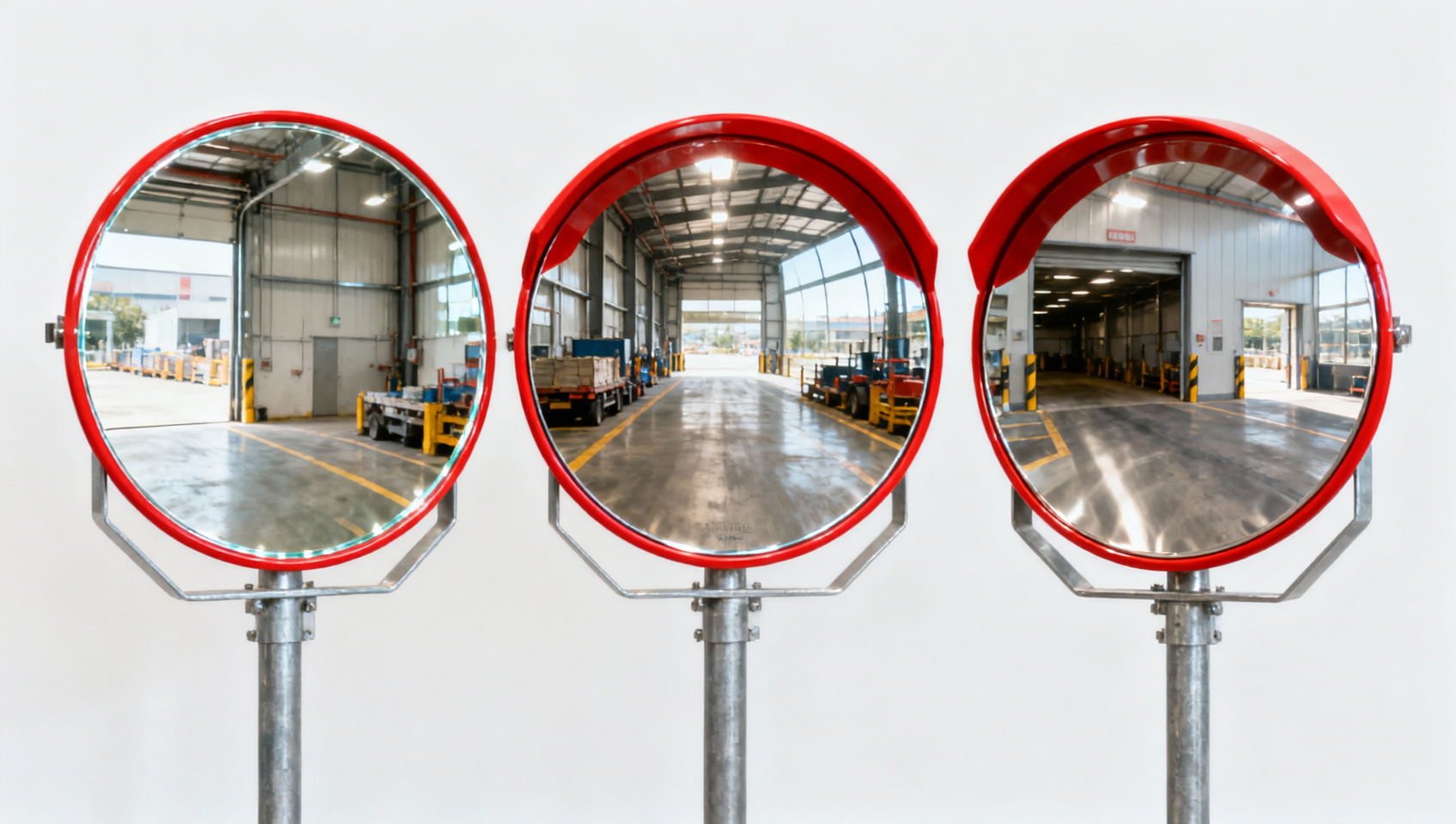
Choosing the right convex safety mirrors for indoor and outdoor use is not just about visibility—it is about durability, image clarity, and long-term safety performance. For buyers, operators, and facility planners comparing convex safety mirrors, understanding how lens materials, weather resistance, and application environments differ can prevent costly mistakes and improve traffic, warehouse, and site safety from day one.
Why indoor and outdoor convex safety mirrors should not use the same lens
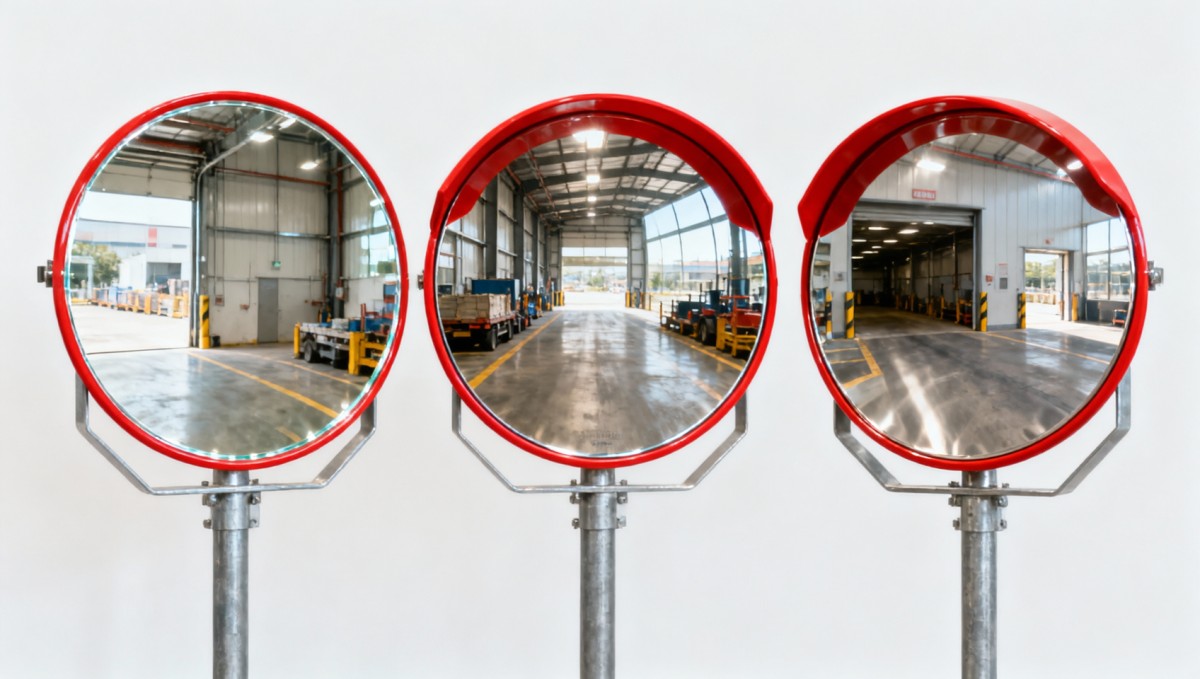
At first glance, many convex safety mirrors appear interchangeable. In practice, indoor and outdoor installations place very different demands on the lens. A mirror in a warehouse aisle may face dust, forklift vibration, and artificial lighting for 8–16 hours per day. A mirror at a yard entrance or loading bay may face rain, UV exposure, temperature swings, and impact from windblown debris across all four seasons.
This difference matters because the lens determines three critical outcomes: image clarity, service life, and maintenance burden. For operators, a distorted or cloudy view can delay reaction time at blind corners. For procurement teams, the wrong lens can trigger repeated replacement cycles within 12–24 months instead of delivering stable use over a longer maintenance interval.
In industrial and commercial environments, convex safety mirrors are often deployed in 3 main categories: interior pedestrian-vehicle intersections, semi-covered transition areas such as docks, and fully exposed outdoor traffic points. Each category has its own risk profile. Treating them as one product family without lens differentiation often leads to overspecification indoors or underprotection outdoors.
What changes between indoor and outdoor use?
The lens must respond to environmental stress. Indoor convex safety mirrors usually prioritize sharp reflection, lower weight, and cost-efficient daily use. Outdoor convex safety mirrors need stronger resistance to UV, moisture, wider temperature ranges, and more robust housings. In some facilities, the same site may require 2 different mirror specifications within 20–50 meters of each other.
- Indoor locations usually emphasize visibility under controlled lighting, easier cleaning cycles, and reduced impact risk in aisles or corridors.
- Outdoor locations require resistance to yellowing, water ingress, wind load, and seasonal exposure from direct sun to freezing conditions.
- Semi-outdoor locations such as canopies or loading docks often need a hybrid decision, not the cheapest indoor lens and not always the heaviest outdoor configuration.
For information researchers and decision-makers, the practical question is not “Which mirror is better?” but “Which lens system fits the operating environment, inspection frequency, and replacement tolerance?” That is the point where technical selection becomes a safety and budget decision.
Lens material comparison: acrylic, polycarbonate, and stainless steel options
When buyers compare convex safety mirrors, lens material is usually the first filter. The most common options in the market are acrylic, polycarbonate, and polished stainless steel. Each performs differently in reflection quality, impact resistance, weatherability, and maintenance. The right choice depends on whether the installation is indoors, outdoors, or in a mixed environment with moderate exposure.
The table below summarizes how these lens types are typically evaluated in industrial, logistics, parking, and facility safety applications. It is intended as a procurement aid, not as a substitute for product-specific technical sheets.
For most indoor convex safety mirrors, acrylic is often selected because image quality is easy to read at short-to-medium distances. For outdoor convex safety mirrors, polycarbonate or stainless steel is more often considered, especially when the mirror is exposed continuously for 24 hours a day and inspected less frequently than indoor units.
How should procurement teams read this comparison?
A good procurement decision weighs at least 4 variables together: exposure level, impact risk, cleaning frequency, and expected replacement cycle. If the site has regular monthly inspections and low impact risk, a lighter indoor lens may be sufficient. If the mirror is mounted at an exterior gate and checked only once per quarter, a stronger weather-resistant lens is usually the safer choice.
Quick material selection logic
- Choose acrylic when reflection precision and interior cost control matter more than exposure resistance.
- Choose polycarbonate when the mirror may face knocks, windborne particles, or mixed indoor-outdoor use.
- Choose stainless steel when vandal resistance, corrosion exposure, or public-facing durability is a top concern.
This material-first approach reduces misalignment early in the sourcing cycle. It also helps operators and facility managers explain why two mirrors of similar diameter can have very different total ownership value over 2–5 years.
Which application scenarios need different convex safety mirror lenses?
Environment is the real decision engine behind mirror selection. A warehouse cross aisle, a school parking exit, a distribution center dock, and a factory perimeter road all use convex safety mirrors for blind-spot reduction, but they do not demand the same lens behavior. The more exposure variables increase, the more carefully the lens and housing should be matched.
Indoor scenarios
Indoor convex safety mirrors are commonly used in warehouses, production corridors, underground parking transitions, hospitals, and retail stock areas. In these spaces, typical mounting heights and sightlines are designed for shorter viewing distances. Image clarity and lightweight installation usually matter more than resistance to rain or prolonged UV radiation.
For forklift operations, the key concern is often reaction time at intersections where visibility is blocked by racks or pallets. In these conditions, the mirror should provide a stable image without excessive warping. Typical review points include whether the mirror can withstand routine dust, occasional vibration, and cleaning every 2–4 weeks without losing surface quality.
Outdoor and semi-outdoor scenarios
Outdoor convex safety mirrors are more likely to be installed at gate exits, car park corners, access roads, logistics yards, and external pedestrian-vehicle crossings. Here, sunlight, water, temperature variation, and wind become major factors. A lens that looks acceptable at installation can lose readability if it yellows, crazes, or accumulates surface damage after long exposure.
Semi-outdoor zones create a frequent sourcing mistake. Loading docks, covered ramps, and canopied entrances are not fully protected. Moisture, airborne contaminants, and indirect sunlight still affect the mirror. These locations often require a lens with better durability than a standard indoor unit, even when full outdoor specifications are not necessary.
The following table can help site planners align common locations with suitable lens priorities before requesting quotes or technical confirmation.
A scenario-based review avoids the common mistake of buying by diameter alone. Diameter affects viewing area, but lens suitability determines whether the mirror remains usable after 6 months, 18 months, or multiple seasonal cycles in the field.
What should buyers, operators, and decision-makers check before purchase?
For B2B sourcing, mirror selection should move beyond a simple catalog comparison. Procurement teams need a repeatable framework that captures technical fit, installation conditions, and supply practicality. A low unit price can become expensive if the lens fails early, the mounting kit is unsuitable, or the mirror does not meet the viewing need at the actual corner or roadway.
Five key checks before placing an order
- Confirm the environment type: fully indoor, semi-outdoor, or fully outdoor. This single distinction eliminates many wrong options.
- Review lens material and surface protection, especially if the mirror will face UV exposure, moisture, or repeated cleaning.
- Check mounting hardware suitability for wall, pole, beam, or rack installation, and whether vibration or wind load is expected.
- Align diameter and curvature with viewing distance and corner geometry instead of copying another site blindly.
- Verify supply details such as sample availability, lead time, spare parts, and replacement policy for damaged units.
For many industrial projects, a practical sourcing cycle includes 3 steps: site review, technical confirmation, and trial installation. In medium-scale deployments, a sample review period of 7–15 days can reduce specification errors before a larger batch order. This is especially useful when the site includes both warehouse interiors and outdoor traffic points.
Common cost and risk mistakes
One common mistake is selecting indoor acrylic mirrors for exposed gates because they look clearer at first and cost less. Another is overspecifying heavy outdoor mirrors for internal corridors where lighter, more economical options are easier to install and maintain. Both decisions create avoidable inefficiency—either through premature replacement or unnecessary upfront spend.
Operators should also consider maintenance frequency. If mirrors are cleaned weekly with proper soft materials, some lenses will hold up well. If cleaning is irregular or aggressive chemicals may be used, surface wear can accelerate. A purchasing choice should therefore reflect not only installation risk but also the site's real maintenance discipline.
Useful questions to send a supplier
- Is this convex safety mirror recommended for constant outdoor exposure or only for sheltered areas?
- What lens material is used, and is UV stabilization available for outdoor applications?
- What mounting options are included for wall or pole installation?
- What is the typical lead time for sample units and standard production quantities?
These checks are especially relevant for EPC contractors, facility teams, and multi-site buyers who need procurement consistency across projects. A standardized checklist saves time and makes quote comparisons more meaningful.
Compliance, maintenance, and common misconceptions
Convex safety mirrors are simple products, but they still belong to a broader safety management system. Buyers should pay attention to general product quality, material suitability, and installation appropriateness. Depending on the region and application, adjacent project requirements may also refer to broader compliance expectations such as CE, ISO-based quality systems, or site-specific safety rules, even if the mirror itself is not selected only by a single certification mark.
FAQ: practical questions from the field
Can an indoor convex safety mirror be used outdoors temporarily?
It can be used temporarily in some cases, but it is usually not a sound long-term decision. Short-term use in a covered area may be acceptable during a transition period of a few weeks, but continuous exposure to sun, rain, and temperature changes can shorten service life and reduce visibility much faster than expected.
Are larger mirrors always better?
No. A larger diameter expands field of view, but installation height, angle, distance, and curvature all affect usability. In a tight interior aisle, a moderate-size mirror with proper positioning can outperform a larger mirror installed at the wrong angle. Selection should match the actual sightline, not just a size preference.
How often should mirrors be inspected?
A practical routine is a visual check every month in normal facility use and more frequent checks in high-traffic or exposed outdoor areas. Seasonal review is also important for outdoor convex safety mirrors, especially after heavy rain, strong wind, or extreme temperature changes. Inspection should include lens clarity, fastener condition, and mounting stability.
What are the most common buying misconceptions?
The 3 most common misconceptions are that all convex mirror lenses perform the same, that diameter alone determines safety value, and that outdoor use only requires a stronger bracket. In reality, the lens, backing, housing, and installation method work together. Ignoring one of these elements can undermine the entire safety benefit.
For organizations managing multiple sites, maintenance planning should be documented along with product selection. A mirror that remains legible and securely mounted after repeated inspections is more valuable than one that only performs well on the first day of installation.
Why work with Global Industrial Core for convex safety mirror evaluation and sourcing support
Global Industrial Core supports industrial buyers, facility managers, and project teams that cannot afford weak product decisions in safety-critical environments. When evaluating convex safety mirrors for indoor and outdoor use, the challenge is rarely limited to one product page. It involves interpreting environmental exposure, balancing operational risk, checking material suitability, and aligning technical choices with procurement schedules.
Our value lies in structured decision support across security and safety applications. For teams comparing multiple options, we help clarify the questions that matter most: Which lens is suited to your site conditions? Which specification fits your installation method? What lead time is realistic for samples, pilot quantities, or project rollout over 2–4 weeks or longer? Which compliance expectations should be reviewed before approval?
What you can discuss with us
- Parameter confirmation for indoor, semi-outdoor, and outdoor convex safety mirror applications.
- Product selection based on lens material, mounting method, and exposure level.
- Lead time review for sample support, trial installation, and batch procurement.
- Customized sourcing advice for EPC projects, warehouses, logistics hubs, and industrial campuses.
- Discussion of certification expectations, documentation needs, and quotation alignment.
If your team is comparing convex safety mirrors and needs a clearer path to specification, budgeting, or supplier communication, contact Global Industrial Core with your application details. Share the installation environment, quantity range, mounting conditions, and project timeline, and we can help you narrow the lens choice, identify procurement risks, and move toward a more reliable purchase decision.
Technical Specifications
Expert Insights

Chief Security Architect
Dr. Thorne specializes in the intersection of structural engineering and digital resilience. He has advised three G7 governments on industrial infrastructure security.
Related Analysis
- Apr 14, 2026How accurate is a true RMS multimeter on VFD signals?Author :Precision Metrology Expert
- Apr 14, 2026When a digital oscilloscope wholesale quote looks cheap at firstAuthor :Precision Metrology Expert
- Apr 14, 2026What changes when an ozone generator goes commercial gradeAuthor :Environmental Engineering Director
Core Sector // 01
Security & Safety
- Convex safety mirrors indoors and outdoors need different lensesAuthor :Precision Metrology Expert

- JD, Meituan, Alibaba Accelerate Entry into Auto Sales, China's Smart Mobility Services Going Global May Drive Exports of Vehicle Hardware and System IntegrationAuthor :Precision Metrology Expert

- Saudi SASO Releases Mandatory Standard SASO IEC 61215-3:2026 for PV Module Efficiency and Sand Resistance, Effective October 2026Author :Precision Metrology Expert